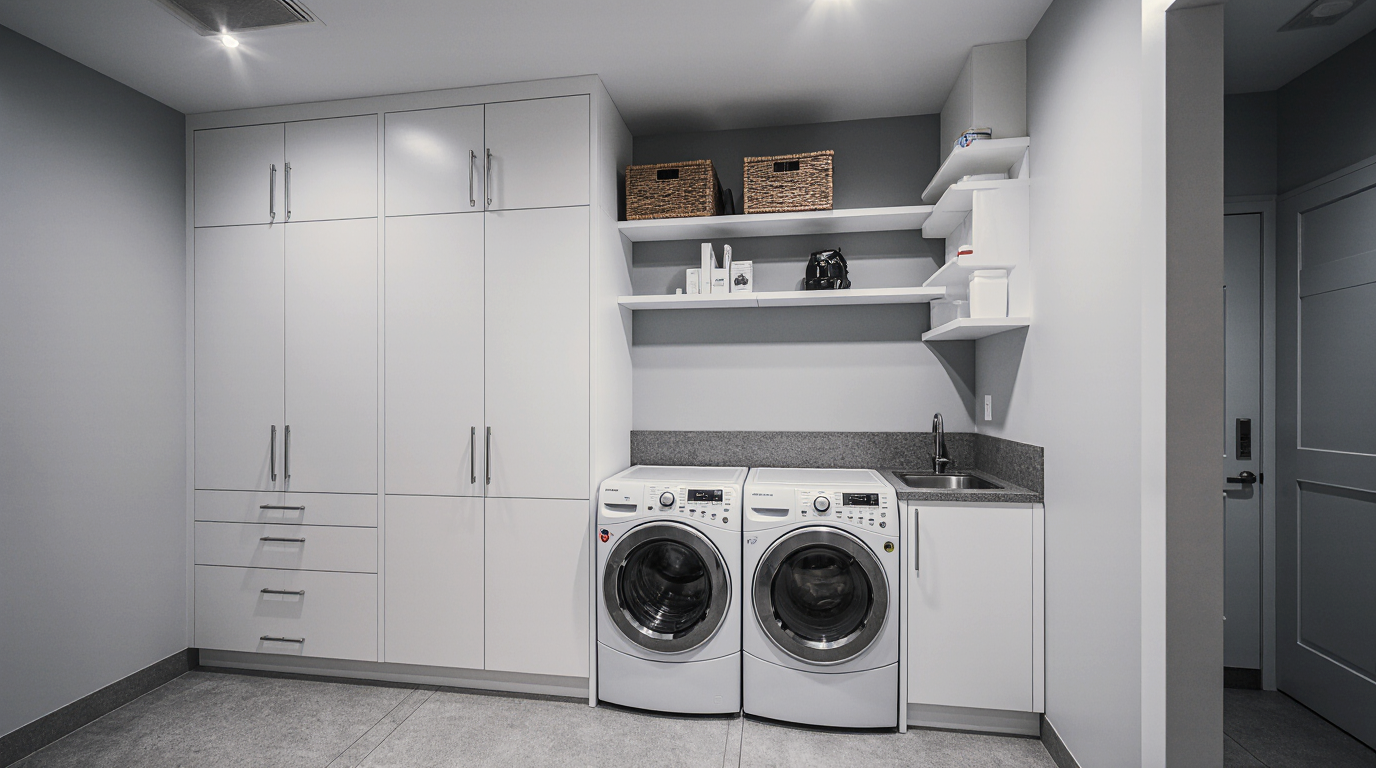
Repurposing a section of the garage into a exclusive laundry center represents one of the most valuable home remodeling efforts a homeowner can undertake. This remodel transcends mere convenience; it represents a major shift in household management effectiveness that elevates the entire home's livability. When planning a garage laundry conversion, the primary consideration focuses on zoning and environmental control. Garages inherently possess different ambient conditions than in-home rooms, often exposed to temperature fluctuations, dust, and moisture, which influence appliance longevity and user comfort. Consequently, successful design begins with thorough foundational work, emphasizing moisture mitigation and HVAC integration. Flooring selection is paramount; poured concrete, a standard garage feature, requires careful sealing. The application of an industrial sealant or high-grade, water-resistant Luxury Vinyl Plank (LVP) is indispensable. These materials provide the necessary durability to withstand the significant weight of fully loaded appliances, resist staining from chemical spills, and offer a unified, cleanable surface that combats potential mildew growth common in less climate-controlled areas. In addition, the proximity of the laundry area to the home's main structure necessitates attention to sound attenuation. Modern washers, particularly throughout high-speed spin cycles, generate high decibel levels. Incorporating high-density acoustic insulation within the shared wall cavity, along with selecting appliances boasting inverter motor technology or the Quiet Mark certification, converts the space from a noisy chore zone into a manageable extension of the domestic sphere.
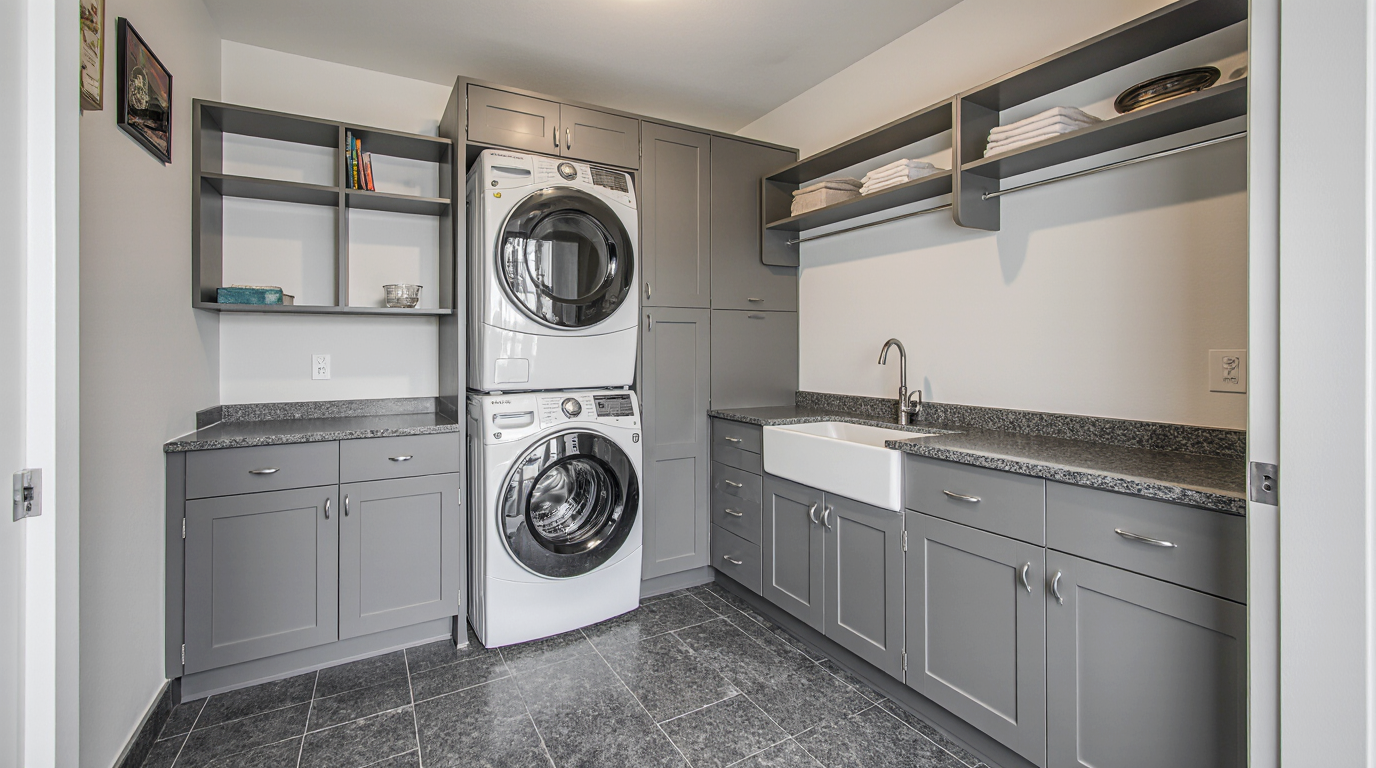
The layout demands a focus on ergonomic workflow to maximize the utility of the often-constrained garage footprint. Where possible, a side-by-side placement of the washer and dryer along the longest available wall is often the most space-conscious strategy. However, for smaller footprints, vertical stacking is a key element of space maximization. When stacking, ensure the dryer is a comfortable height for the primary user to safely transfer wet clothes, possibly necessitating a compact, sturdy step stool that can be stored neatly beneath a nearby folding station. The creation of a dedicated folding and sorting surface is perhaps the most impactful element of any functional laundry design. This surface should ideally span the width of the appliances and be constructed from a material that is both non-porous and easily wiped clean, such as quartz composite or high-pressure laminate, offering a vast expanse for folding, sorting bins, or even temporary staging of ironing tasks. For garages where this surface is a luxury, incorporating fold-down or retractable countertops secured with heavy-duty hardware is an smart space-saving solution that provides utility on demand without permanently impeding traffic flow or access to the vehicles.
Storage architecture in a garage laundry room must prioritize resilience and organization. Traditional drywall cabinets may deteriorate due to garage humidity swings. Opting for closed cabinetry constructed from moisture-resistant materials, such as treated plywood boxes with durable melamine or laminate finishes, ensures longevity. Vertical storage solutions are key; utilize the often-untapped wall space above and beside the appliances for shelving. However compliance with visual cleanliness and to adhere to the principles of organized aesthetics, all cleaning agents, stain removers, and small necessities should be housed within attractive, opaque containers or inside those closed cabinets. Introducing a utility sink is strongly advised, serving as a critical area for hand-washing delicates, pre-soaking heavily soiled items, or cleaning tools, effectively preventing messy tasks from migrating into the home's main plumbing fixtures. If space is too tight for a full sink, consider a smaller, deep slop sink or an over-the-appliance roll-out drying rack system utilizing dowel rods, which offers critical air-drying space without occupying permanent floor area.
Lighting should actively counteract the typically dim nature of a garage environment. Relying solely on a single overhead fixture is inadequate for detailed work like stain treatment or ironing. Implement a layered lighting approach: bright LED strip lighting installed directly under any overhead cabinets over the folding counter provides essential task illumination, minimizing shadows. Painting the walls a lighter, reflective color, perhaps a crisp white or a pale, clean hue, significantly increases the perceived brightness of the space. Think of the transitional zone. If the laundry room is positioned near the exterior garage door, consider integrating mudroom functionality. This could involve installing durable, waterproof flooring that extends slightly into the entry area, coupled with robust peg systems or a small locker unit for dropping muddy shoes, wet outerwear, and sports equipment directly into the wash cycle vicinity, thereby keeping the mess at the threshold of the home. Every design decision, from the power supply rating necessary for the dryer to the material chosen for a hanging rod, must reflect a commitment to long-term, heavy-duty performance within the unique microclimate of the garage. This thoughtful execution transforms a neglected corner of the property into an indispensable utility hub.