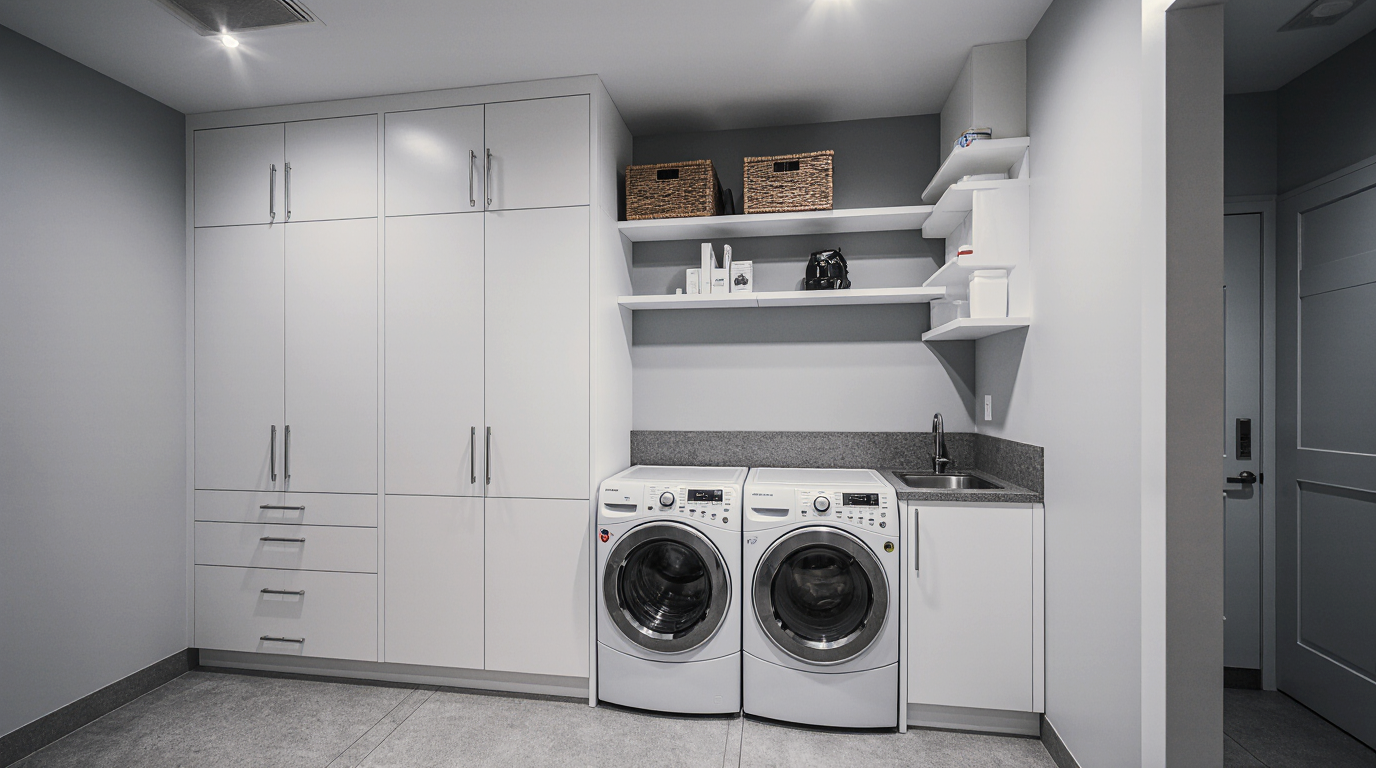
Converting a section of the garage into a dedicated utility space introduces a unique design challenge that professional space planners embrace. The most significant hurdles are often environmental—wild swings in heat and cold, dust, and humidity—which must be tackled before design flourishes are made. The most crucial step in any successful garage laundry design is achieving environmental separation. This might involve installing proper insulation, potentially using closed-cell spray foam for superior thermal performance, and ensuring robust, dedicated ventilation systems. A typical moisture removal unit is often insufficient; consider an industrial-grade ventilation unit powerful enough to manage the moisture load produced during the drying cycle, venting directly to the exterior to prevent condensation buildup on the walls and stored items. This attention to HVAC integration is what separates a quick installation from a valuable home feature.
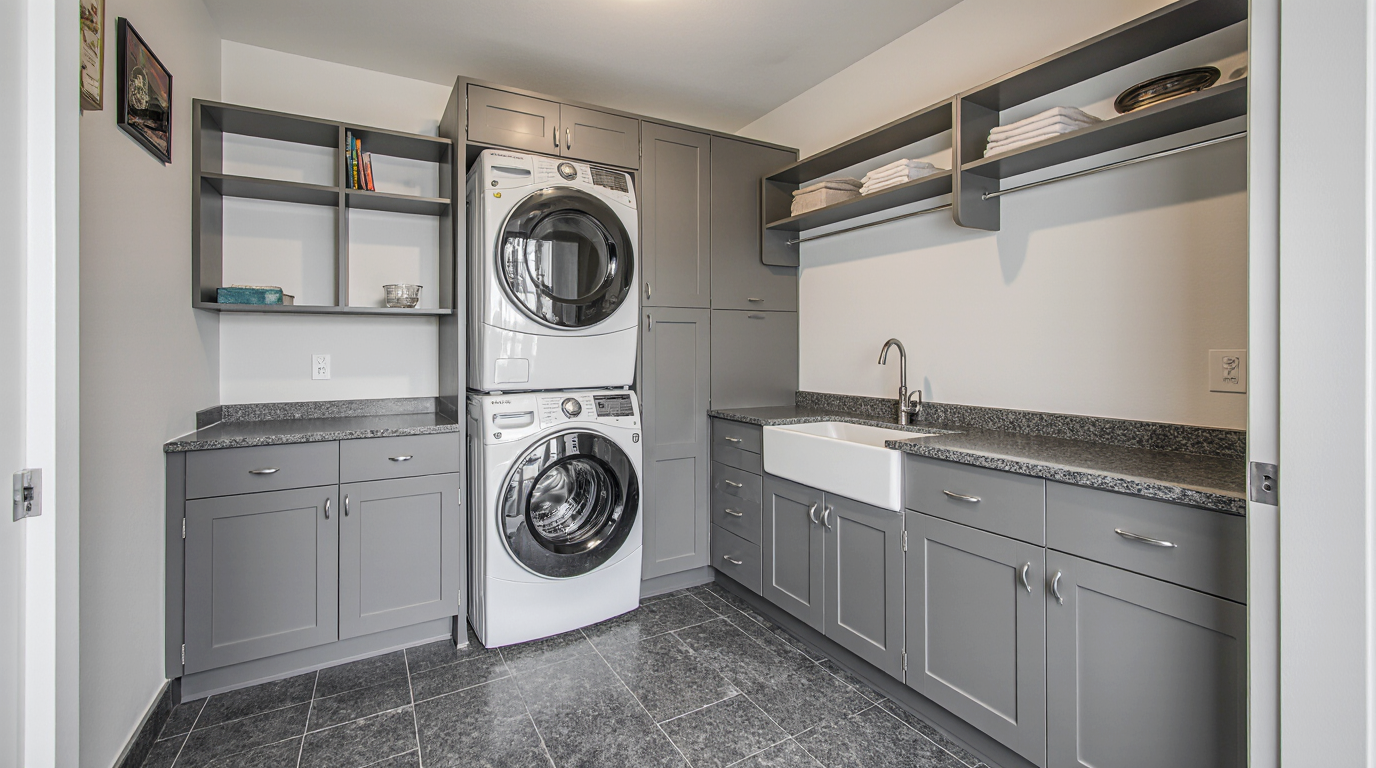
With the environment stabilized, the focus turns toward appliance selection and configuration. In a garage environment, where utility area must be shared with vehicle storage or workbench areas, vertical integration is absolutely essential. The decision between a traditional layout and a stacked washer and dryer unit is heavily influenced by the horizontal space available. If your space is limited horizontally, choosing to install a vertical tower liberates valuable surface area for critical workflow steps. This counter space is non-negotiable for smooth processing; it is the primary main staging area for sorting, folding, and the spot-treating of stains. For maximum utility, a continuous work surface, ideally constructed from a material resistant to water spotting and standard cleaning agents—perhaps a durable solid surface or a high-grade, epoxy-sealed butcher block—should span the width of the appliances and any adjacent cabinetry.
Storage architecture is the backbone of a highly functional service area, especially one that must resist the visual clutter inherent in a typical workshop environment. The guiding principle here is to make the most of wall height. While open shelving allows for quick identification and convenient retrieval of staples like detergent or dryer sheets, it must be used selectively to preserve an uncluttered aesthetic. For true visual decluttering, incorporate floor-to-ceiling cabinetry with concealing fronts—a tough, laminated exterior that handles slight climatic changes more effectively than traditional paint. Within this storage matrix, dedicated areas need to be established. A dedicated nook for cleaning tools such as a mop, broom, or shop vac, perhaps utilizing a pegboard system painted a clean, unifying color, ensures that non-laundry related tools don't migrate into the clean zone. Building in concealed laundry bins directly into the lower cabinetry run, often placed beneath the countertop, is a sophisticated technique to keep dirty textiles out of sight until laundry day, significantly enhancing the room's perceived cleanliness.
The functionality of a garage laundry room is vastly improved by incorporating a utility sink, often called a slop sink. This feature relocates the dirtiest chores—pre-treating heavily soiled items, rinsing paint brushes, or dealing with pet accidents—away from the primary living areas. The sink basin should be deep, opting for high-impact acrylic or cast iron for durability. The plumbing for this area requires careful consideration during the initial utility mapping phase to consolidate runs and minimize installation complexity. Consider a faucet with a pre-rinse sprayer attachment for maximum versatility.
Aesthetic integration is where the garage space moves beyond a simple service location to a designed area. Since the garage often features concrete flooring, addressing this surface is crucial for both comfort and style. If a full tear-out and replacement are not feasible, investigate durable surface treatments. Applying a decorative pattern or using a durable two-part epoxy kit can transform drab grey concrete into a surface that looks like stone or has a sophisticated, high-gloss finish. This coating should also offer enhanced protection against stains and corrosive materials. Lighting must be superior to standard garage fare. Abandon low-lumen incandescent bulbs for high-CRI (Color Rendering Index) LED fixtures. Strip lighting installed directly under upper cabinets casts an ideal glow on the counter, while flush-mount, high-lumen ceiling fixtures flood the space with light, which is essential for visibility and proper laundry tasks.
Consider the entry point into the main house. If the laundry room acts as a transition zone, often merging with a mudroom function, add a half-height partition or perhaps a track and sturdy, cleanable drape. This establishes a demarcation line, providing a feeling of privacy and distance between the work zone and the living area, even where the garage is a single, large volume. Each design choice, from the height of the ironing board mount to the color palette chosen for the walls—typically pale shades to brighten the naturally dim space—must be considered a strategic decision to turn this functional corner into a truly effective, resilient, and pleasant part of the household system. This comprehensive strategy guarantees the value of the modification is achieved not just in functionality, but in its seamless integration into the household's daily rhythm.