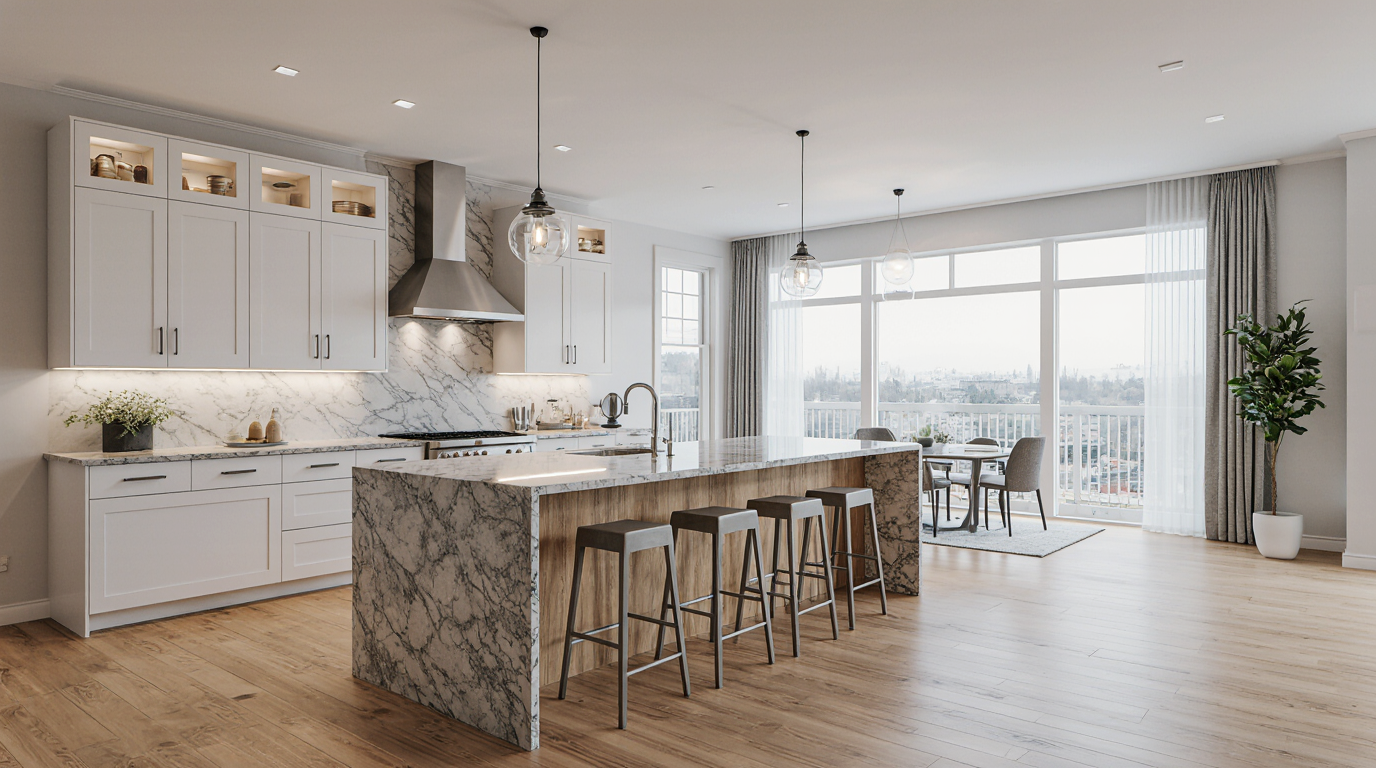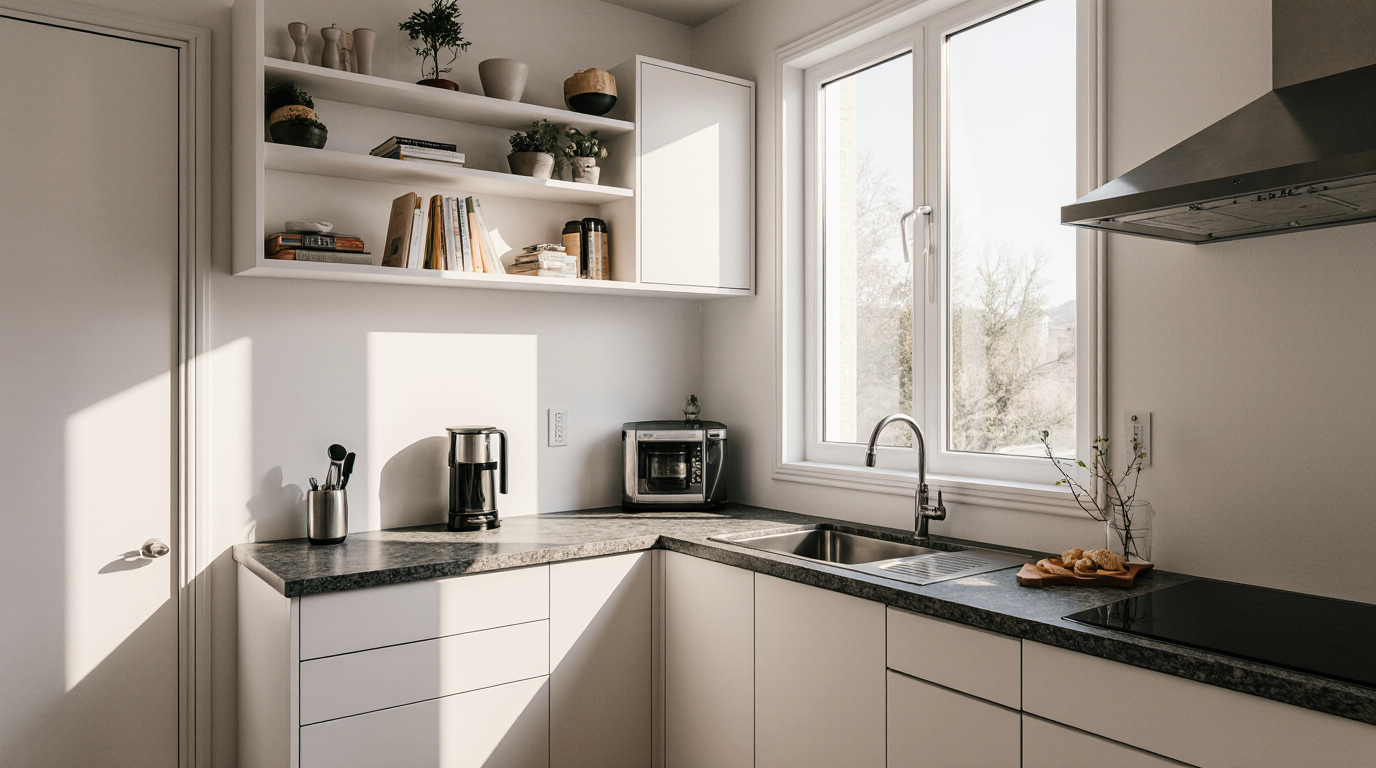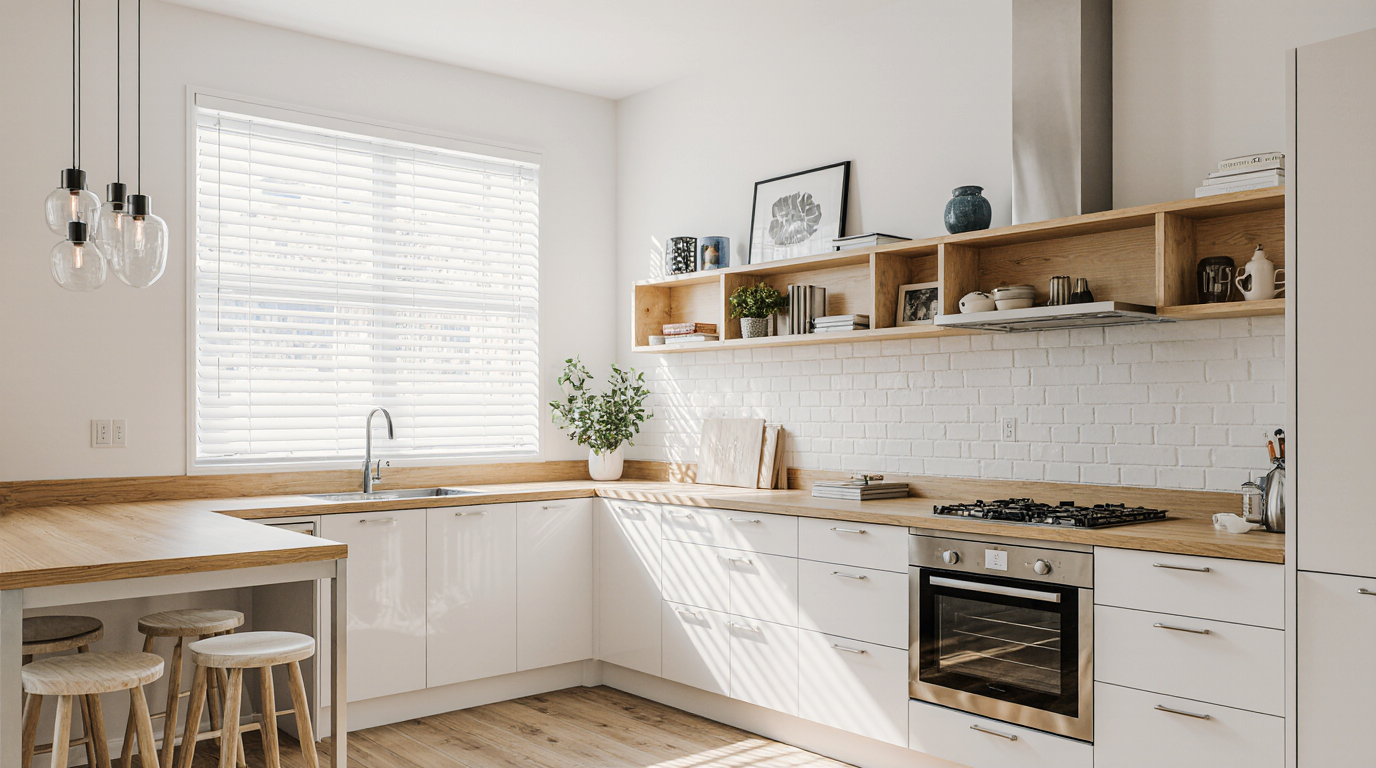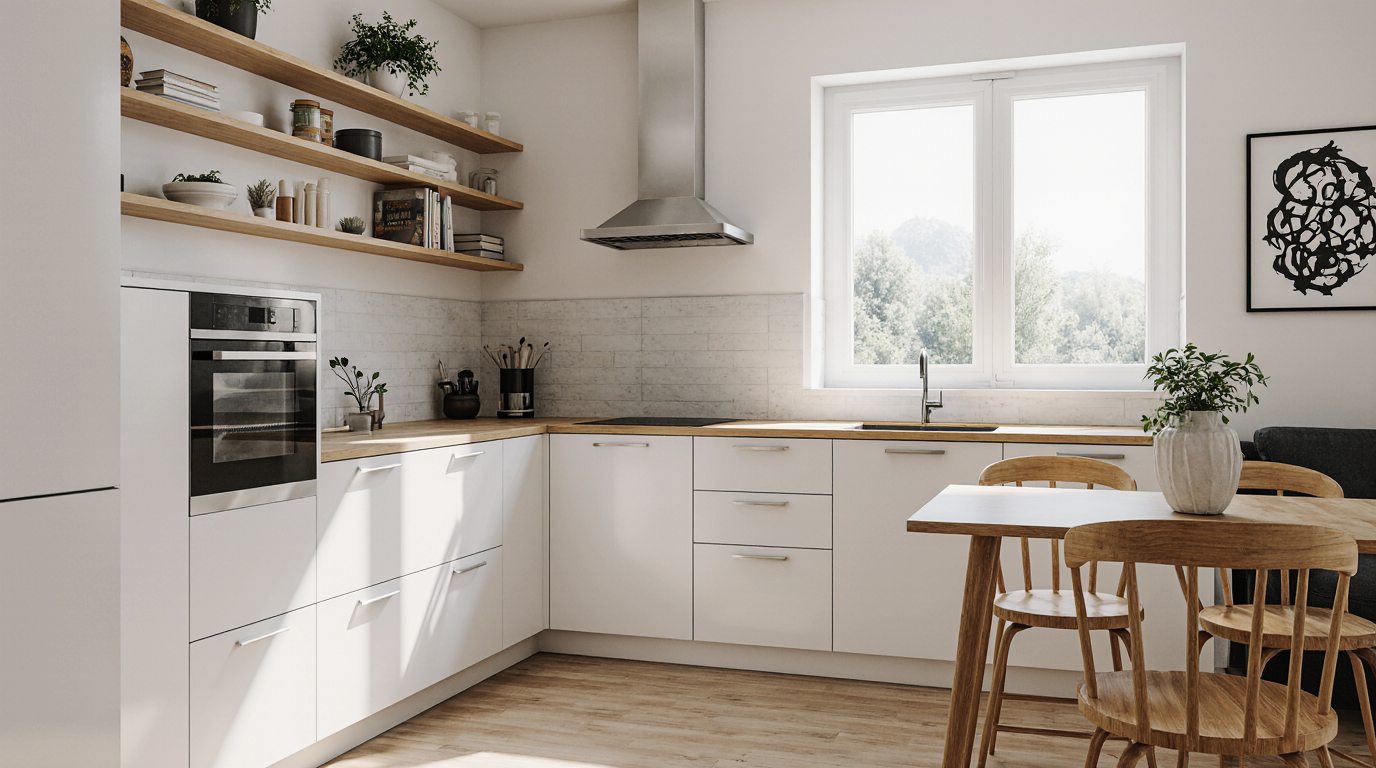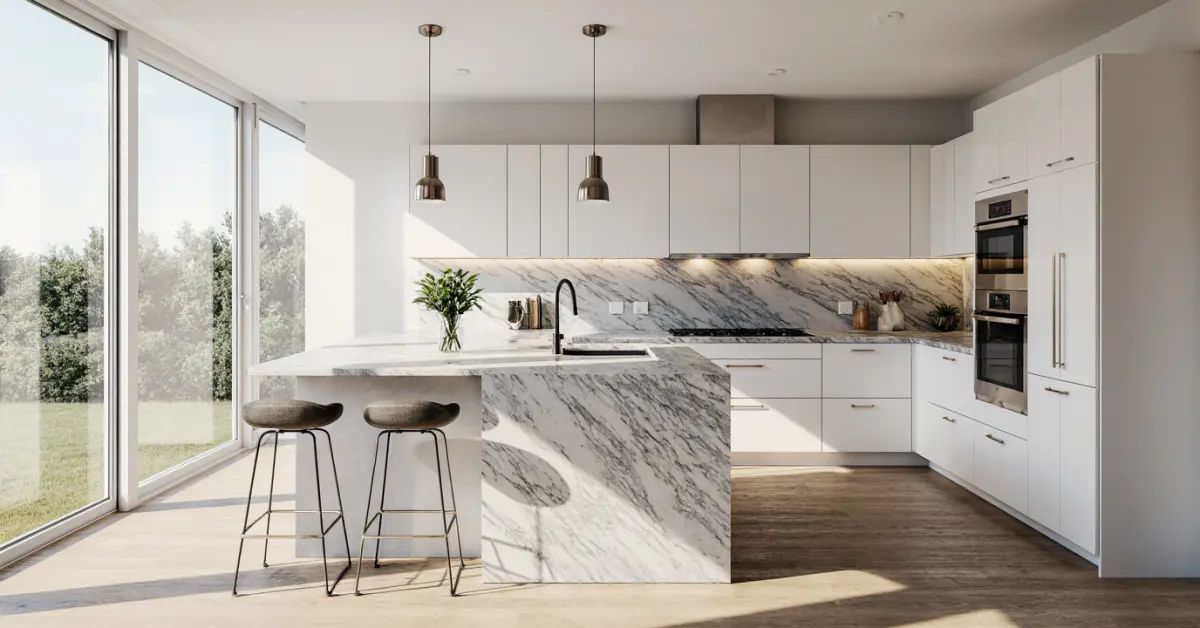
A recent client with a beautiful bayfront home in the Harbor Acres neighborhood wanted to renovate their dated U-shaped kitchen. The layout felt cramped and blocked the stunning water views. The initial plan was to open it up, but the client was fixated on a massive central island. After three weeks of back-and-forth, we realized the core issue wasn't the island; it was how to create an efficient, open-concept space perfect for entertaining that didn't feel like a commercial kitchen. The solution was an L-shaped layout, but not the one they had in mind.
L-Shaped Kitchens in Sarasota: An Executive Summary
As a specialist who has designed and executed kitchen projects across Sarasota for over 15 years, I see the L-shaped
As a specialist who has designed and executed kitchen projects across Sarasota for over 15 years, I see the L-shaped layout as a uniquely strategic tool for our coastal environment, not just a space-saving necessity. It's about orienting the home's social hub toward the view—be it a golf course, a canal, or the Gulf—while creating an incredibly efficient work triangle. The success of this layout here depends entirely on adapting it to our high-humidity, high-wind, and salt-air conditions, which standard design templates fail to address.
- Ventilation is non-negotiable: Proper ventilation, often exceeding standard code minimums, is critical to prevent moisture buildup and mold, especially in kitchens with large windows facing the water.
- Material choices are climate-driven: Standard MDF or particleboard cabinet boxes will fail. Marine-grade plywood for cabinet construction is the baseline for longevity in Sarasota's climate.
- The “work triangle” is secondary to workflow and view lines: In Sarasota homes, the primary goal is often creating an open flow for entertaining that capitalizes on the view, making the traditional work triangle a secondary consideration to the overall floor plan integration.
- HOA approvals dictate timelines: In communities like Lakewood Ranch or Palmer Ranch, the Design Review Committee (DRC) approval for any exterior-facing changes (like a new window or vent) can add 30-60 days to the project timeline before a permit is even filed.
The Planning Failures That Derail L-Shaped Kitchens Here
The most common missteps with L-shaped kitchens in this area stem from underestimating our environment. Homeowners see a design in a national magazine and try to replicate it, not realizing the materials and construction methods are completely unsuitable for a home on Bird Key. This leads to warped doors, corroded hardware, and delaminating finishes within a few years.
Another frequent error is poor integration with outdoor living spaces. An L-shaped kitchen is perfect for connecting to a lanai or an outdoor kitchen, but many designs create traffic jams. The door to the patio ends up right in the middle of the cooking zone, creating a constant bottleneck during gatherings. We have to plan the flow for people, not just for the cook.
The Most Expensive Failure: Ignoring Humidity in Material Selection
The costliest mistake I see is choosing cabinet materials based on aesthetics alone, ignoring the persistent high humidity. A client insisted on a specific type of high-gloss laminate cabinet from a European brand for their Lido Key condo. Despite warnings, the visual appeal won. Within three years, the edges of the doors and drawer fronts began to swell and delaminate. The core material, not designed for our subtropical climate, had absorbed ambient moisture. The “savings” from choosing that product were erased by the cost of a full replacement, which was nearly 40% higher than opting for a humidity-resistant material from the start.
How the Design and Build Process Works in Practice
A successful L-shaped kitchen project in Sarasota follows a clear, structured process that accounts for local regulations. It begins with a deep dive into the homeowner's lifestyle and the home's orientation. We then move into schematic design, where we map out the layout, appliance placement, and workflow, paying special attention to window and door locations to maximize views and natural light without compromising function.
Once a design is approved, we create detailed construction documents for permitting with Sarasota County or the relevant municipality. This includes structural details for any walls being moved and specifications that meet the Florida Building Code, especially wind-load requirements for windows and doors. After permits are secured, material procurement and construction begin, managed in phases to minimize disruption.
Key Selection Criteria for a Sarasota Project
- Demonstrated experience with coastal construction: Ask for examples of projects on the barrier islands. The challenges of building on Siesta Key are vastly different from an inland project.
- Verified licensing and insurance: Ensure their contractor's license is active with the Florida Department of Business and Professional Regulation (DBPR) and that they carry proper liability and worker's compensation insurance.
- Knowledge of local HOA review boards: A designer familiar with the architectural review processes in communities like The Meadows or Prestancia can save months of delays.
- Relationships with marine-grade material suppliers: They should have established supply chains for materials like corrosion-resistant stainless steel (316L grade for outdoor kitchens) and marine-grade plywood.
Comparing the L-Shaped Layout to Other Configurations
The L-shaped layout is incredibly versatile, but it's not the only option. Homeowners often consider a U-shaped or galley kitchen as alternatives. The decision depends heavily on the room's dimensions, the importance of an island, and the desired connection to adjacent living spaces. In Sarasota, the choice often comes down to balancing efficiency with the desire for an open, airy, view-oriented space.
| Indicator | L-Shaped Layout with Island | U-Shaped Layout | Galley Layout |
|---|---|---|---|
| Openness & View Maximization | Excellent | Fair to Poor (often encloses the space) | Good (if one wall is open to living area) |
| Traffic Flow for Entertaining | Excellent (keeps guests out of the work zone) | Poor (often creates a dead-end) | Poor (can become a narrow corridor) |
| Work Triangle Efficiency | Good (can become spread out in large kitchens) | Excellent (most compact) | Excellent (most efficient for a single cook) |
| Suitability for Small Spaces | Very Good | Good (requires wider footprint) | Excellent |
When an L-Shaped Kitchen Is Not the Right Choice
An L-shaped layout is not ideal for very long, narrow rooms, where it can make the space feel unbalanced and result in an inefficiently long path between key appliances. In these cases, a galley kitchen is often a more practical and ergonomic solution. Furthermore, if a homeowner’s priority is maximizing countertop and cabinet space above all else, a U-shaped kitchen will almost always provide more linear feet of storage, though often at the cost of an open feel.
A Safe Hiring Checklist for Your Kitchen Project
Hiring the right team in Sarasota goes beyond looking at a portfolio. You are hiring for technical expertise specific to our coastal conditions. A beautiful design that fails in three years due to moisture is a failed project. Use this checklist to vet potential partners.
- Verify their Florida Certified General Contractor (CGC) or Certified Residential Contractor (CRC) license is active and complaint-free on the state's DBPR portal.
- Request proof of liability insurance specifically listing your property address before any work begins.
- Ask for at least three local references for projects completed within the last two years, preferably in a similar coastal setting to your own.
- Review a sample contract to ensure it includes a clear scope of work, payment schedule, and protocols for change orders.
- Confirm they will be pulling all necessary permits themselves; a request for the homeowner to pull a permit is a major red flag.
- Discuss their material specifications. Ask directly what grade of plywood they use for cabinet boxes and what type of hardware they specify for waterfront homes.
- Clarify their process for navigating HOA or condo association approvals and how that time is factored into the overall project schedule.
Decisions That Ultimately Determine the Outcome
Two key decisions separate a smooth, successful L-shaped kitchen renovation from a frustrating and costly one in this market. The first is committing to a realistic budget that accounts for the higher cost of durable, climate-appropriate materials from the outset. Expect to pay a 15-20% premium for marine-grade plywood cabinet boxes over standard options—an investment that pays for itself in longevity.
The second, and more critical, decision is trusting the process. Once you have vetted and hired a qualified professional, resist the urge to make significant design changes after materials have been ordered. The supply chain for high-quality components can be long, and a late-stage change to the layout or appliance model can trigger a cascade of delays and unforeseen costs.
The Exact Moment the Majority Gets It Wrong
The most common point of failure happens during appliance selection. Clients fall in love with a specific refrigerator or range early on, often before the layout is finalized, and then try to force the kitchen design to fit around it. The correct approach is to finalize the layout first, establishing the ideal workflow and zones. Only then should you select appliances that fit the functional and spatial parameters of that perfected layout. This prevents the entire design from being compromised by a single appliance's dimensions.
Practical Answers About Operations in Sarasota
Navigating the local building environment is as important as the design itself. The bureaucracy can be complex, and understanding the key pressure points is crucial for a project that stays on time and on budget.
Navigating Sarasota County Permitting for a Kitchen Remodel
For a simple L-shaped kitchen remodel with no structural changes, a permit may not be required if you are only replacing cabinets and countertops. However, the moment you move electrical outlets, alter plumbing lines, or change a window, a permit from the Sarasota County Building Department is mandatory. The plan review process typically takes 2-4 weeks, assuming the submitted plans are complete and compliant with the Florida Building Code.
The Impact of HOA Design Review Boards
In master-planned communities like Lakewood Ranch or Palmer Ranch, the Homeowners Association (HOA) Design Review Committee (DRC) has the first say. They are primarily concerned with aesthetics and conformity. Any change visible from the outside, including a new kitchen window style or an exhaust vent location, requires their approval *before* you can even apply for a county permit. This process can add an additional 30-60 days to your project timeline and should be the very first step after finalizing your design.
Florida Building Code and Coastal Construction Requirements
If your L-shaped kitchen is part of a project in a home located in a wind-borne debris region (which includes all of Sarasota's barrier islands), any new windows or glass doors must be impact-rated. Furthermore, the anchoring of cabinetry, especially tall pantry units, must be specified to withstand significant structural stress. These are not suggestions; they are code requirements enforced by local inspectors, and they directly impact both the cost and the installation method for your kitchen.