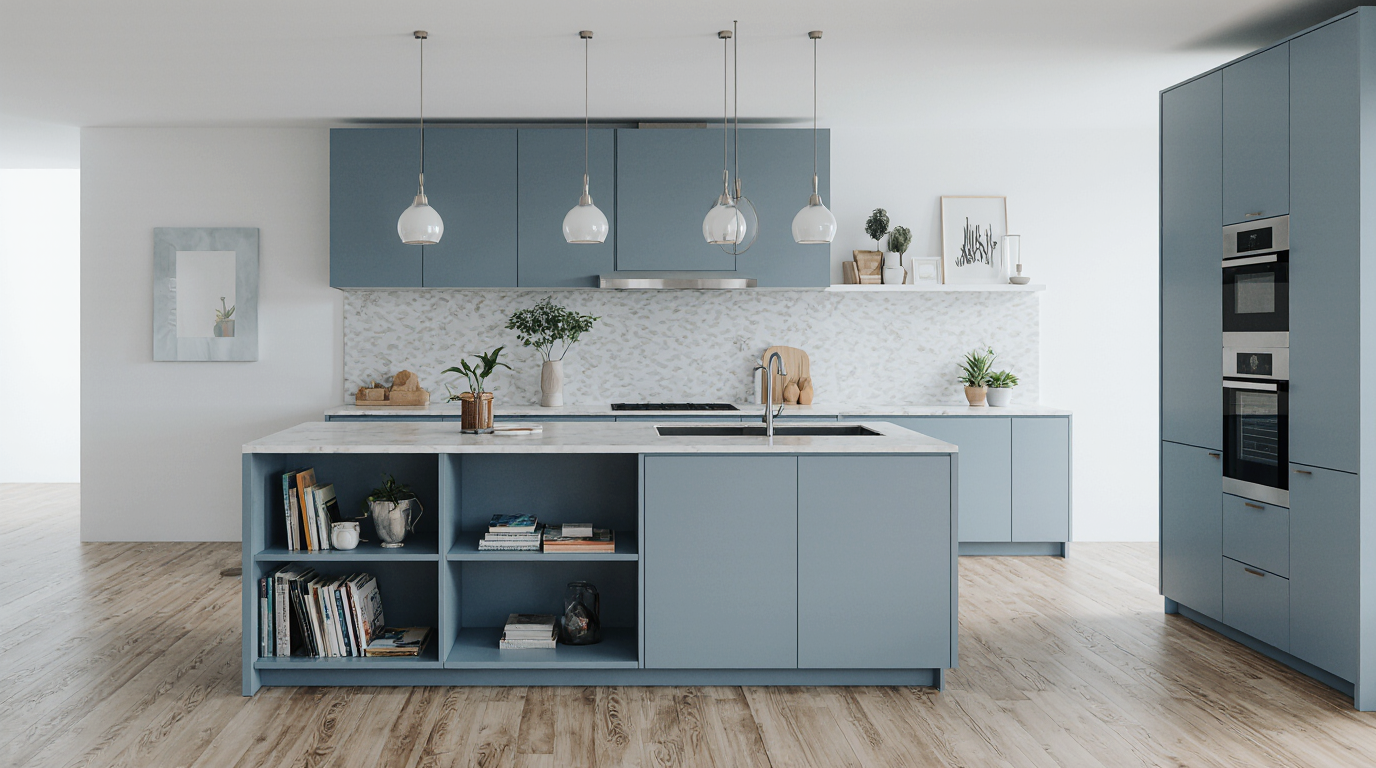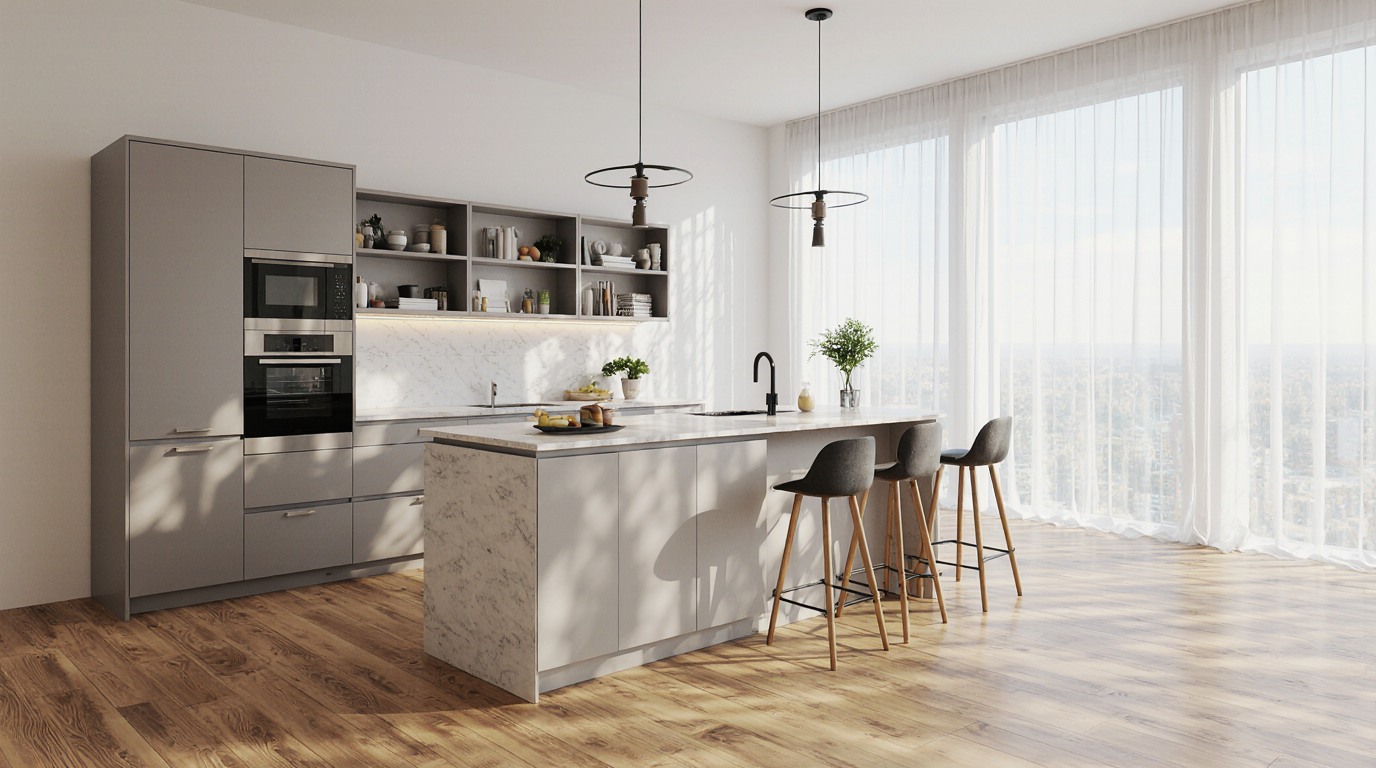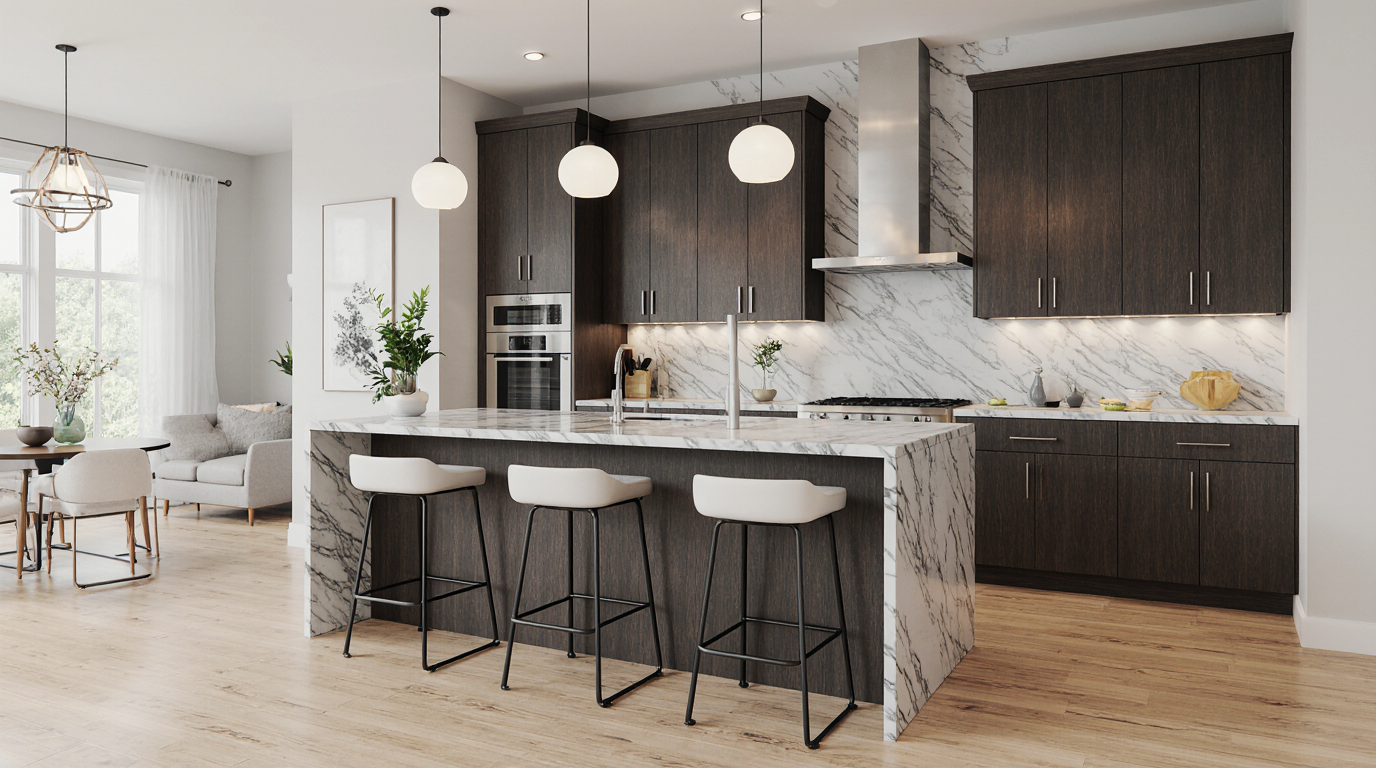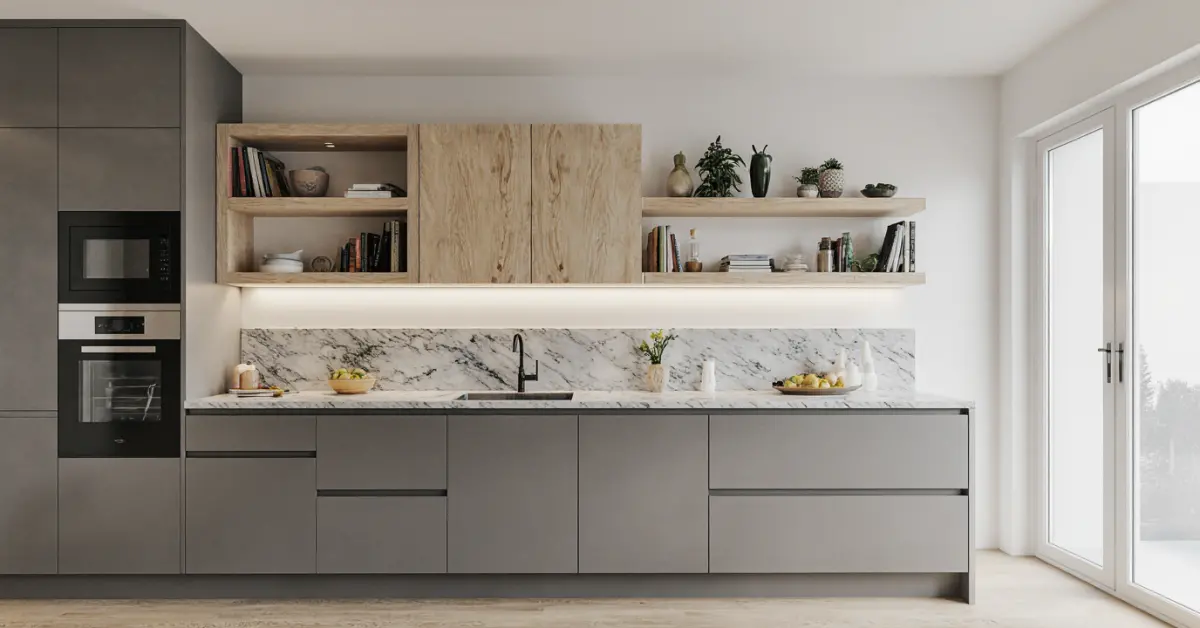
The biggest mistake in designing a small Sarasota kitchen isn't choosing the wrong layout; it's selecting materials based on how they look in a national design magazine. What appears stunning in a dry Arizona climate can become a swollen, peeling disaster here in less than 24 months. The most critical design element for a small kitchen on the Gulf Coast is one you can't see: the core material of your cabinetry and its resistance to constant, salt-laden humidity.
The Sarasota Small Kitchen: A Summary of Priorities
From my direct experience renovating condos downtown and bungalows in Arlington Park, a successful small kitchen design
From my direct experience renovating condos downtown and bungalows in Arlington Park, a successful small kitchen design in this city is a technical exercise disguised as an aesthetic one. It's about creating an illusion of space while building for resilience against our coastal environment. The focus must shift from maximizing every inch with clever drawers to ensuring the fundamental structure of the kitchen can withstand 80% humidity and salt air. It’s a balance between clever ergonomics for small footprints and robust material science.
- Material Durability: Plywood construction (not particle board/MDF) is the minimum standard; marine-grade plywood is the wisest investment for homes near the water.
- Ventilation Strategy: Proper ventilation is not a luxury but a structural necessity to combat moisture and prevent mold, especially in compact, enclosed spaces.
- HOA Compliance: For the many condos in Sarasota, the HOA design review board's requirements often dictate appliance placement, plumbing modifications, and finish palettes, adding weeks to the project timeline.
- Light Maximization: Design choices should prioritize reflecting natural light, using glass, high-gloss finishes, and under-cabinet lighting to make the space feel larger than its physical dimensions.
Planning Failures That Compromise Small Kitchens
The most common planning failures I see in Sarasota are rooted in underestimating our environment. Clients fall in love with a particular cabinet style or a budget-friendly countertop without considering how those materials will perform when subjected to our unique climate. This oversight leads to premature aging, functional problems, and costly replacements down the line.
The Most Expensive Failure: Ignoring Humidity's Impact on Cabinetry
The costliest error is opting for standard medium-density fiberboard (MDF) or particle board cabinets with thermofoil or basic paint finishes. I was called to a project in a beautiful condo overlooking Sarasota Bay where the two-year-old kitchen cabinets were visibly swelling at the seams. The owner had saved about 20% on the initial installation by choosing a budget-friendly option. The repair involved a complete tear-out and replacement, costing nearly 150% of the original cabinet budget because the damage was irreversible. This isn't a rare occurrence; it's the predictable outcome of using materials not specified for a humid, coastal region.
The Design and Build Process in Practice
A small kitchen renovation in Sarasota follows a distinct path dictated by local regulations and environmental factors. The process begins with a deep analysis of the space's limitations and the client's lifestyle, but quickly moves into technical specifications that are non-negotiable for longevity in this climate. It’s a multi-stage process involving design, material procurement, permitting, and meticulous installation.
Key Selection Criteria for a Sarasota Project
- Cabinet Construction: Insist on seeing a cross-section of the cabinet box. It must be plywood. Ask specifically about the glue and edge banding used and whether they are rated for high-humidity applications.
- Hardware Specification: All hinges, pulls, and drawer glides should be stainless steel or have a certified marine-grade finish to resist corrosion from salt air, a major issue even for homes not directly on the water.
- Contractor Licensing and Insurance: Verify their license with the Florida Department of Business and Professional Regulation and ensure they carry specific liability insurance that covers work within multi-unit condo buildings, which often have stricter requirements.
- HOA and Permitting Experience: The contractor must demonstrate a history of successful submissions to Sarasota's notoriously meticulous HOAs (especially in communities like Palmer Ranch or downtown condos) and the City of Sarasota's permitting office. This experience can save months of delays.
Comparing Design Approaches for Small Spaces
When faced with a small kitchen, homeowners in Sarasota typically consider a few different routes. A full custom design offers the most optimization but comes at a premium. Semi-custom and stock cabinetry offer faster turnarounds but with significant trade-offs in durability and space efficiency. The right choice depends on budget, timeline, and how long you plan to own the property.
| Indicator | Full Custom Design | Semi-Custom Cabinetry | Stock (Big-Box) Cabinetry |
|---|---|---|---|
| Material Resilience (Humidity/Salt) | Highest (Marine-grade options) | Variable (Plywood upgrade essential) | Lowest (Often MDF/particle board) |
| Space Optimization | Total (Cabinets built to exact dimensions) | Moderate (Standard sizes with fillers) | Low (Large filler panels waste space) |
| Typical Timeline (Design to Install) | 12-20 weeks | 8-14 weeks | 4-8 weeks |
| HOA Approval Likelihood | High (Detailed plans provided) | Moderate (May require extra documentation) | Can be difficult without professional plans |
When a Full Custom Design Isn't the Right Choice
A full custom kitchen is not the best path for everyone. If you are renovating a rental property with a tight budget and high tenant turnover, or if you plan to sell the home within 1-2 years, the return on investment for high-end, marine-grade custom work might not be realized. In these scenarios, a well-chosen semi-custom line with a plywood box upgrade offers a pragmatic balance of improved durability over stock options without the higher cost and longer lead time of a fully bespoke project.
Safe Hiring and Project Checklist
Hiring the right team in Sarasota goes beyond checking references. It requires verifying specific, localized knowledge and credentials. A beautiful portfolio of projects from another state is not a reliable indicator of success here. The physics of our climate demand a different level of expertise.
- Confirm the designer/builder has completed at least five projects within Sarasota city or county limits in the last two years.
- Ask for proof of sourcing for marine-grade plywood or specially treated materials suitable for coastal applications.
- Verify their familiarity with the Florida Building Code's requirements for anchoring cabinets, especially in high-velocity hurricane zones (HVHZ).
- Request a detailed project schedule that specifically includes a buffer for HOA design review, which can take anywhere from 30 to 60 days in many Sarasota communities.
- Ensure the contract explicitly states that all hardware (hinges, pulls, screws) will be stainless steel or carry a corrosion-resistant warranty.
- Check for specific riders in their insurance policy for working in condominium buildings, which protect you from liability for damage to common areas or adjacent units.
- Discuss their plan for managing dust and debris in a small, occupied space, particularly in a condo with shared ventilation systems.
Decisions That Determine the Outcome
Two small kitchen projects in Sarasota can start with the same budget and footprint but end with vastly different results in terms of usability and longevity. The difference almost always comes down to a few key decisions made at the outset, long before the first cabinet is ordered. It's about prioritizing the invisible structure over the visible finishes.
The Exact Moment the Majority Gets It Wrong
The critical error happens during the material selection phase. Most clients, guided by popular design shows and websites, focus first on the door style, the color, and the countertop. We spend weeks debating shades of white or the veining in a quartz slab. The conversation should start with the cabinet box construction and ventilation. By prioritizing aesthetics over the core engineering, homeowners allocate the bulk of their budget to finishes, leaving too little for the structural elements that will actually protect that investment from our climate. The right approach is to lock in the budget for plywood construction, proper venting, and corrosion-proof hardware first, and only then see what finishes that budget allows. It’s a less exciting conversation, but it's the one that prevents catastrophic failure.
Practical Answers About Operations in Sarasota
Navigating a kitchen renovation here involves more than just design and construction. It means dealing with specific local entities and their processes. Understanding these bureaucratic and logistical hurdles is key to a smooth project.
Navigating Condo Association and HOA Reviews
In Sarasota, especially in downtown high-rises or planned communities, the Homeowners Association (HOA) is effectively the first permitting authority you face. They have their own set of architectural guidelines that can be stricter than city code. You must submit a full package—drawings, material samples, contractor credentials—for their review. This process is not a formality; I've seen projects delayed two months because the proposed cabinet color was not on the pre-approved palette or the contractor's insurance didn't meet the association's minimum coverage. Always get this approval in writing before any demolition begins.
Permitting with the City of Sarasota
Any kitchen project that involves moving plumbing, electrical, or walls requires a permit from the City of Sarasota's Building Division. A simple cabinet swap does not. The cost of a basic interior remodel permit can start around $200-$400 but increases with the project's valuation. The key bottleneck is the plan review. For a small kitchen, this can take 2-4 weeks. Failing to get a permit for work that requires one can result in fines and significant issues when you eventually sell the property.
Florida Building Code and Small Kitchens
The Florida Building Code (FBC) has specific implications for kitchens, even small ones. For example, electrical outlet placement is strictly regulated, requiring outlets for every countertop section of a certain size. Furthermore, if you are replacing a window or exterior door as part of the kitchen renovation, it must meet current impact-resistance standards for our wind-borne debris region. This isn't an optional upgrade; it's a legal requirement that adds cost but is essential for safety and insurability.