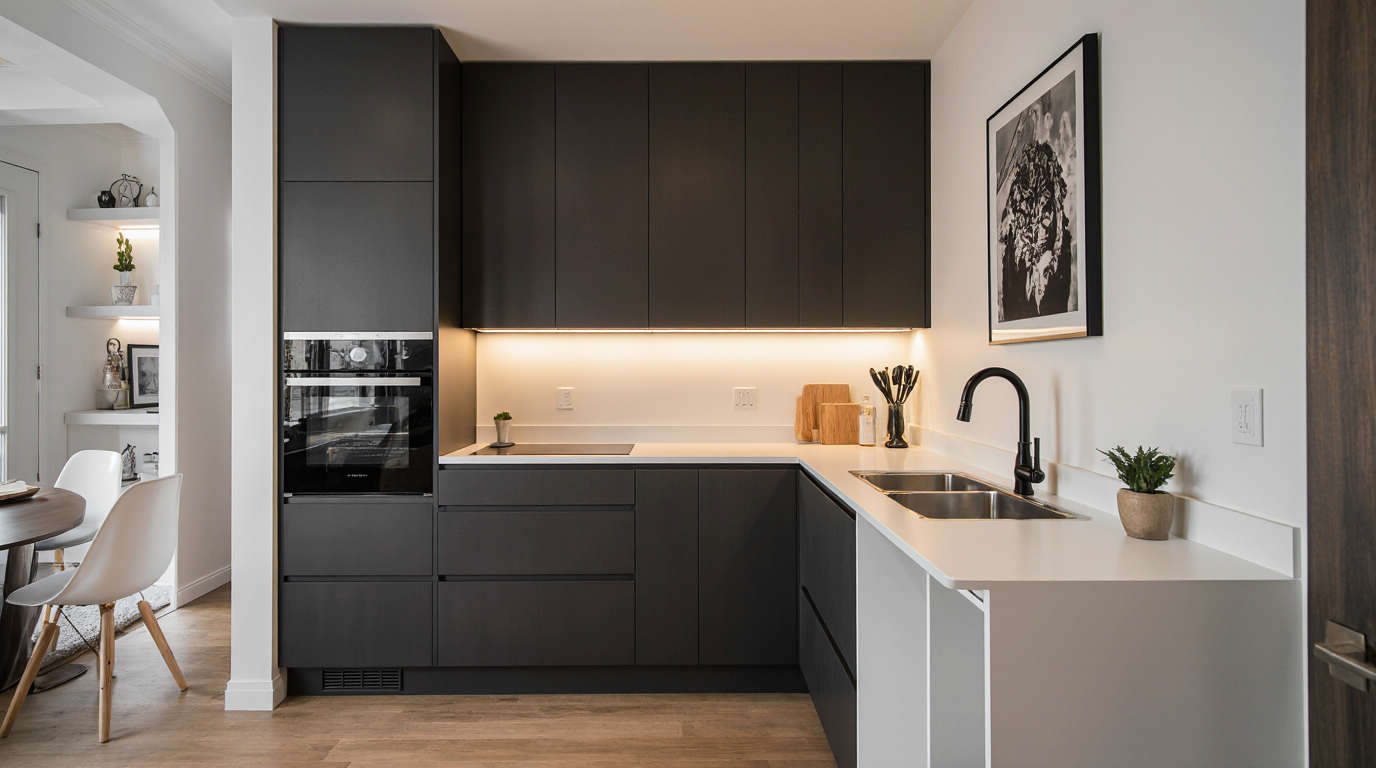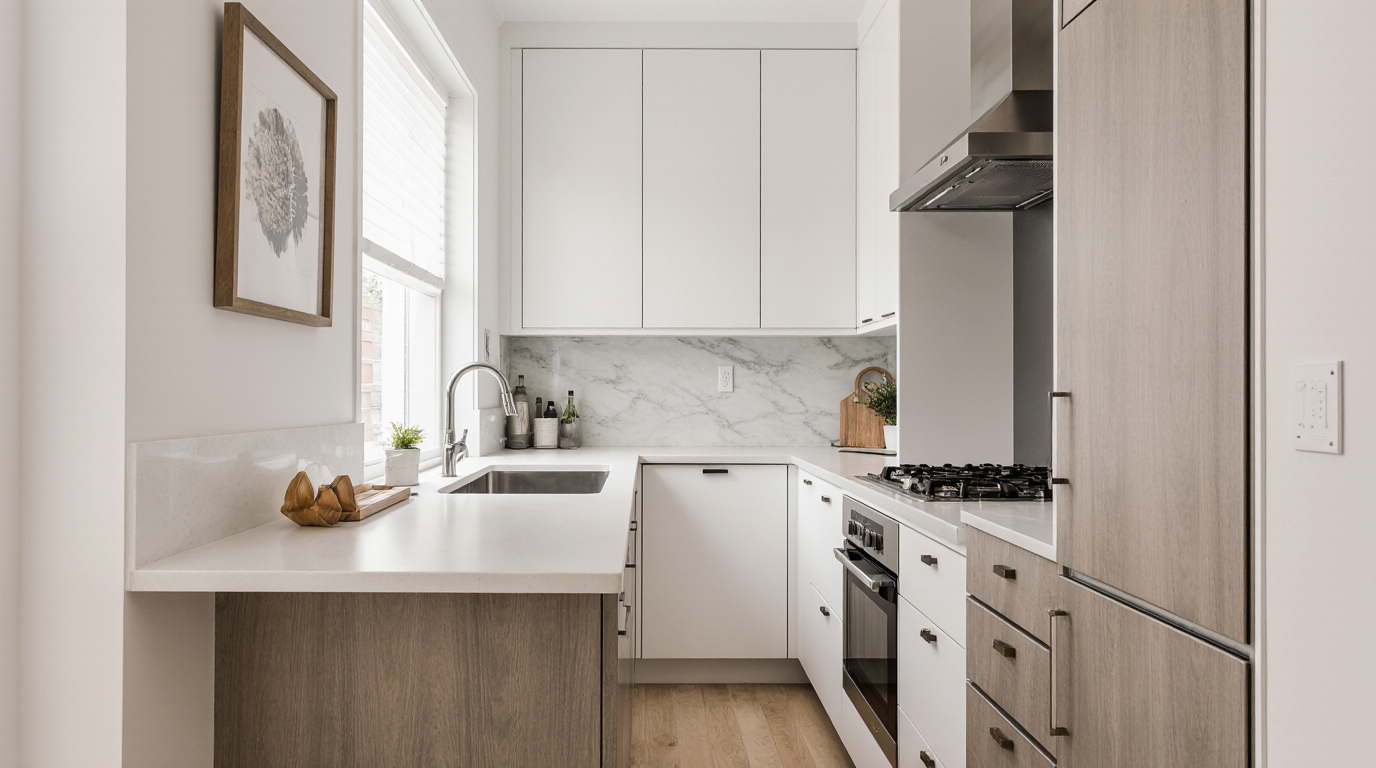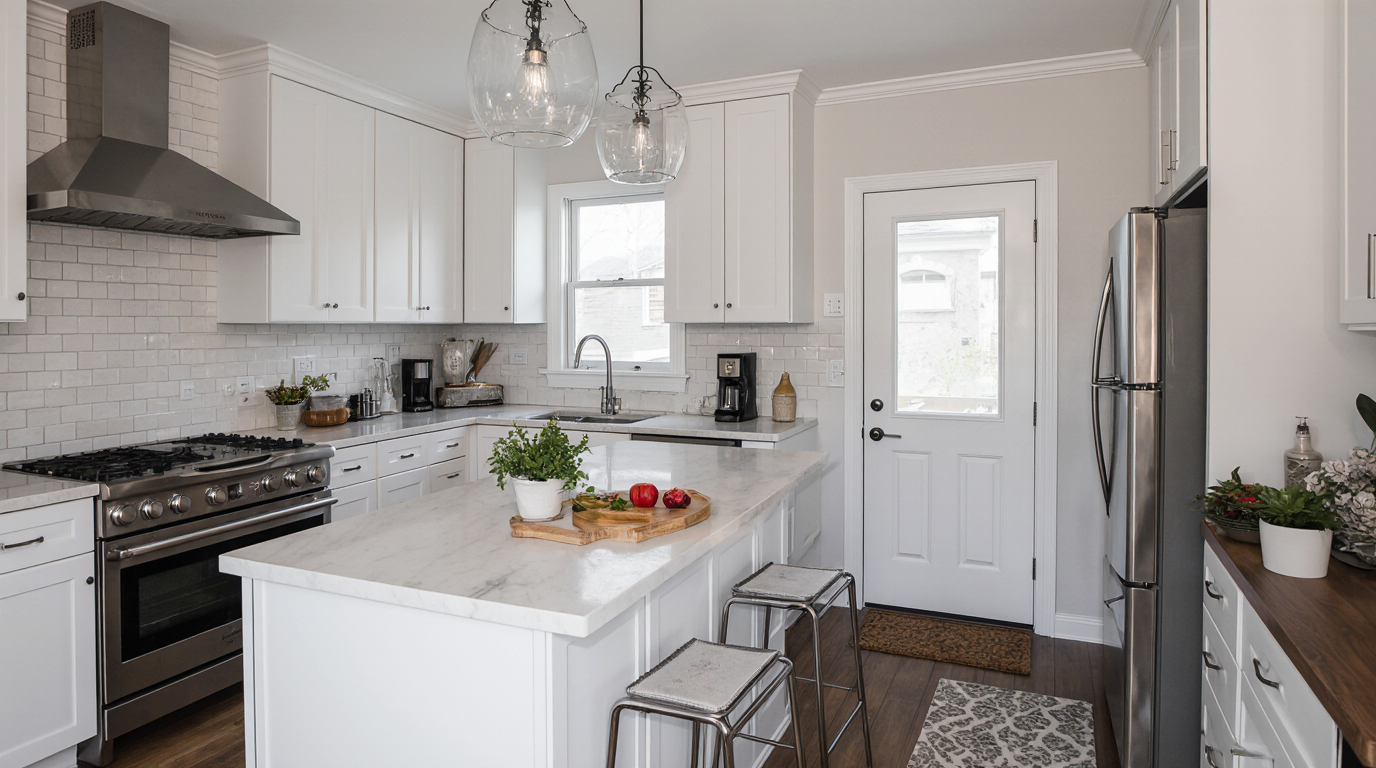
In Sarasota, the average timeline for a condo association's design review board to approve a kitchen remodel can stretch to 60 days. For a seasonal resident hoping to complete a project between April and October, that two-month buffer isn't a statistic—it’s the difference between enjoying their winter retreat and spending it in a construction zone. This is the first, and often most underestimated, hurdle in a tiny kitchen renovation here.
The Sarasota Tiny Kitchen Remodel: A Synopsis
From my direct experience executing these projects in Sarasota, a successful tiny kitchen remodel hinges on three
From my direct experience executing these projects in Sarasota, a successful tiny kitchen remodel hinges on three non-negotiable pillars: preemptive space planning that integrates multi-functional components, material specification designed for high humidity and potential salt air exposure, and a deep understanding of local condo association and permitting timelines. Getting any one of these wrong turns a project that should enhance value into a source of costly delays and premature material failure.
- Core Challenge: Maximizing functionality and perceived space within a small footprint while adhering to strict local building codes and association rules.
- Material Priority: Marine-grade plywood for cabinet boxes is a baseline, not an upgrade, to combat humidity-induced warping.
- Regulatory Bottleneck: Condo association (COA) or HOA design review is often a longer process than the city's permit issuance.
- Financial Insight: The cost per square foot is often higher than in a large kitchen due to the density of mechanicals, custom-sized appliances, and intricate cabinetry work required.
Planning Failures That Inflate Costs in Sarasota
The most significant errors in a small kitchen project occur long before the first cabinet is ordered. They are strategic miscalculations rooted in underestimating the local environment and regulatory landscape. A common one is choosing standard big-box store cabinets without considering the humidity, leading to delamination and swollen doors within a few years.
The Most Expensive Failure: Ignoring the Condo Association's Fine Print
The costliest mistake I consistently see is treating the condo or homeowner association's approval as a mere formality. A client with a condo on Lido Key planned a beautiful, efficient kitchen but failed to check the COA's specific rules on plumbing modifications. Their plan to move a sink by two feet—a minor change—was rejected because the association bylaws prohibited altering any in-wall plumbing lines. The entire design had to be scrapped, custom-ordered cabinets couldn't be used, and they lost their deposit with the fabricator. The project was delayed by four months and incurred thousands in redesign and restocking fees, all because a 30-page rulebook went unread.
The Remodeling Process in Practice
A tiny kitchen remodel here follows a structured, multi-layered approval process. It begins with an intensive design phase where every millimeter is planned, followed by material selection focused on durability. Once a design is finalized, it's submitted to the building's COA or the neighborhood's HOA for architectural review. Only after their approval can we submit for permits with the City of Sarasota or Sarasota County, depending on the location.
Selection Criteria for a Sarasota Specialist
- Proven COA/HOA Navigation: Ask for specific examples of projects completed in high-rises downtown or communities like Palmer Ranch. They should know the process and people involved.
- Humidity-Proof Material Portfolio: Their proposed materials should default to options like marine-grade plywood substrates, solid wood doors (species resistant to moisture), and corrosion-resistant hardware.
- Licensed and Insured for Multi-Story Work: Remodeling in a condo requires specific liability insurance and contractors licensed to work in multi-unit dwellings, a different credential than for single-family homes.
- Supplier Network for Compact Appliances: They must have established relationships with vendors who supply high-end, European-sized, or panel-ready appliances that are crucial for small-space design.
Comparing a Full Remodel to Alternatives
For a tiny kitchen, a full gut renovation isn't the only option. Homeowners often consider refacing existing cabinets or a simple appliance swap. However, the return on investment and long-term performance differ significantly, especially in the demanding Sarasota climate where underlying issues like mold or water damage are common in older condo buildings.
| Factor | Tiny Kitchen Remodel | Cabinet Refacing | Appliance & Countertop Swap |
|---|---|---|---|
| Humidity Resistance | Excellent (with proper materials like marine-grade plywood) | Poor to Fair (existing cabinet boxes are often low-grade particle board) | No improvement to cabinetry structure |
| Space Optimization | Excellent (layout can be completely reconfigured for efficiency) | None (layout is fixed) | Minimal (only if new appliances are smaller) |
| HOA/Permitting Complexity | High (requires full design review and building permits) | Low to Moderate (often no permit needed, but HOA approval may be) | Low (usually no approvals needed unless plumbing is moved) |
| Typical Cost Range | $35,000 - $75,000+ | $8,000 - $15,000 | $10,000 - $20,000 |
When a Full Remodel Is the Wrong Choice
A full-scale tiny kitchen reconstruction is not the right path if your primary goal is a quick, cosmetic update before selling in the next 1-2 years. The high upfront investment and the lengthy approval process in many Sarasota condos mean you are unlikely to see a full financial return in such a short period. In this scenario, a professional refacing combined with new countertops and a stylish backsplash offers a faster, more cost-effective way to boost market appeal without the disruption and financial outlay of a gut remodel.
Safe Hiring Checklist for Your Project
Vetting a contractor in Florida goes beyond checking for a license. For a project as nuanced as a tiny kitchen in a Sarasota condo, the verification must be far more rigorous to avoid liability and ensure a successful outcome.
- Verify their Florida Certified General Contractor (CGC) or Certified Building Contractor (CBC) license is active and without complaints on the state's DBPR portal.
- Request a Certificate of Insurance showing both General Liability ($1M minimum) and Workers' Compensation, with your condo association named as an additional insured.
- Confirm they have completed projects in your specific building or a similar one; they should understand the rules for elevator use, work hours, and debris removal.
- Ask how they handle material acclimation. All wood products should be delivered to the site and allowed to acclimate to the condo's interior humidity for at least 72 hours before installation.
- Review their contract for language specifying how unforeseen conditions (e.g., mold or rotted framing discovered during demolition) are handled, both in terms of cost and timeline.
- Ensure the payment schedule is milestone-based (e.g., upon permit issuance, cabinet delivery, final inspection) and not heavily front-loaded.
- Check their familiarity with Florida Building Code, particularly the requirements for anchoring upper cabinets in coastal wind zones.
Decisions That Determine the Outcome
The success of a high-end kitchen remodel in a small space isn't defined by the cabinet color or countertop material. It's determined by a few critical decisions made at the very beginning. The most important is prioritizing function over form in the initial layout. You can always upgrade a finish, but you can't easily fix a dysfunctional workflow that makes cooking a chore.
The Exact Moment the Majority Gets It Wrong
The critical error happens during the appliance selection phase. Most homeowners choose their appliances based on brand reputation or features first, then try to design the kitchen around them. In a tiny kitchen, this is backward and destructive. The correct approach is to design the most efficient cabinet layout first, and then select the narrowest, most space-efficient appliances (like 24-inch refrigerators or 18-inch dishwashers) that fit seamlessly into that optimal plan. This single shift in sequence is what separates a cramped, compromised kitchen from a small but mighty culinary workspace.
Practical Answers About Operations in Sarasota
Navigating the operational side of a remodel in Sarasota involves specific local hurdles. These are not about design; they are about the bureaucratic and logistical realities of getting the job done in this unique market. Understanding them is key to a smooth project.
Navigating the City of Sarasota's Permitting Maze
For any tiny kitchen remodel involving moving plumbing, electrical, or walls, a permit from the City of Sarasota Building Department is required. The initial plan review can take 4-6 weeks. The key is to submit a complete and accurate set of drawings prepared by a qualified designer or architect. Incomplete submissions are the primary cause of delays, sending your project to the back of the line.
Meeting Condo Association Insurance and Work Rules
Virtually every condo association in Sarasota requires contractors to provide proof of liability insurance, often with a minimum of $1 million in coverage, and to name the association as an insured party. They also enforce strict work hours (typically 9 AM to 4 PM, Monday-Friday) and rules about using service elevators and protecting common areas. Violating these rules can result in fines and work stoppages, which ultimately fall on you, the owner.
Florida Building Code and Cabinetry Anchoring
In this part of Florida, the building code has specific requirements for structural integrity due to hurricane risk. While it primarily affects windows and roofing, it also extends to interior components. For upper cabinets, inspectors often want to see robust anchoring into wall studs, not just drywall. A knowledgeable contractor will use longer, structural screws and may add blocking inside the wall during the framing stage to ensure a connection that far exceeds standard installation practices.