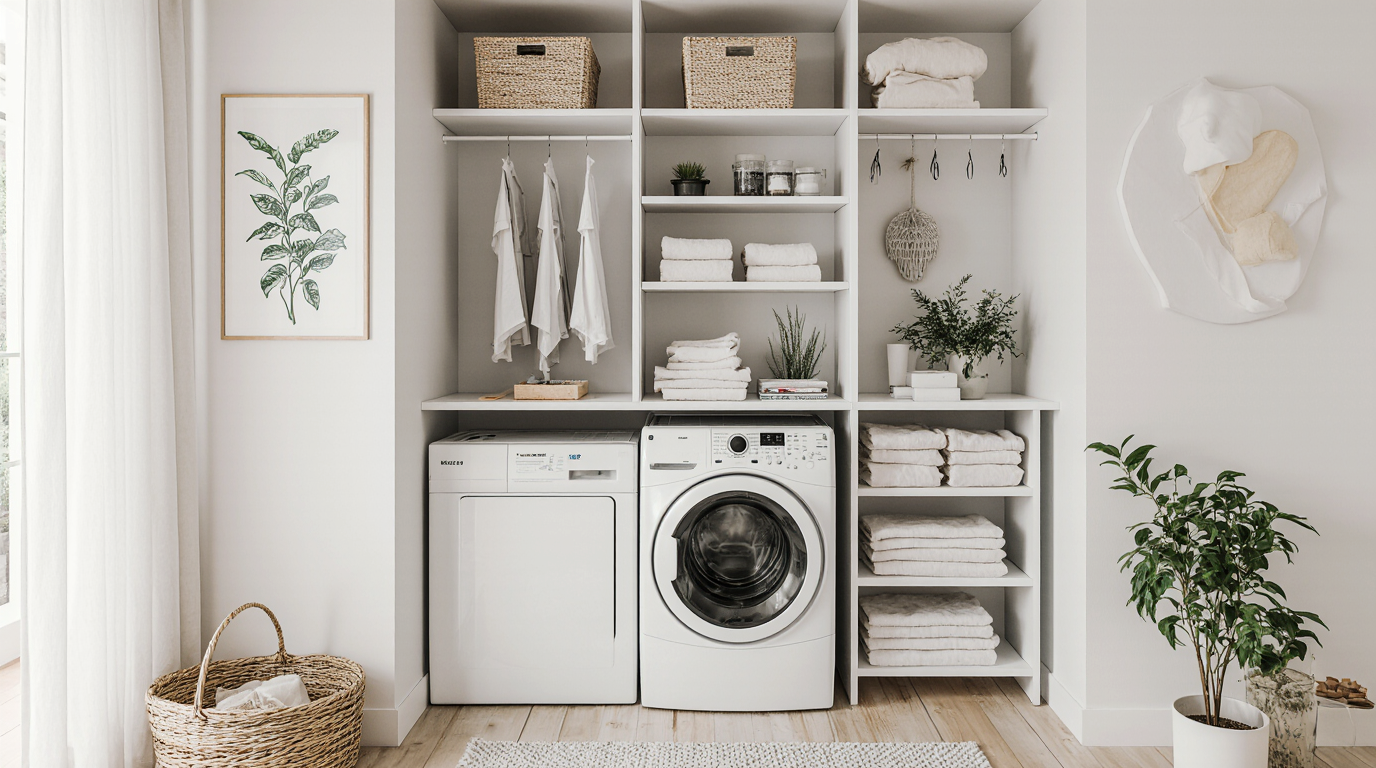
The modern home, regardless of its dimensions, demands peak utility, and the laundry room, often confined to a tight area, is a prime candidate for creative planning. Converting a small nook or a tight closet into a highly efficient and stylish sanctuary requires a commitment to vertical integration and a careful choice of finishes. The ultimate goal is not merely to house the appliances but to create a hardworking sanctuary that improves the experience of household maintenance, making the most of every single available space.
A key principle in maximizing a small laundry area is the strategic deployment of appliances. The choice between a traditional side-by-side setup and a stacked configuration is often dictated by available width versus ceiling height. When space is at an true limitation, the vertical stack becomes the clear winner, immediately freeing up vital horizontal surface area. This reclaimed space can then be dedicated to the critical functions of sorting, treating, and folding. Consider the profound impact of incorporating countertop depth that extends over the machines; this surface becomes your prep station. If standard depth gets in the way, look toward shallower, custom-depth units or strategic placement that allows a pull-out folding shelf to extend only when needed. The core principle here is dynamic space utilization, where surfaces are revealed and tucked away according to the task at hand, ensuring every moment of use is efficient.
Beyond the machines, the true magic in small laundry room design lies in leveraging the unseen dimensions. The walls must become your go-to solution for holding items. Move past conventional cupboards; envision floor-to-ceiling solutions where high-mounted shelving utilizes the volume as high as possible. For items used less frequently, such as seasonal stain removers or backup supplies, the highest shelves provide the perfect, unobtrusive storage. For everyday essentials, open floating shelves crafted from a warm material like butcher block introduce a touch of organic texture that counters the often utilitarian look of white appliances and tile. For specialized storage, the introduction of pegboard systems offers amazing versatility. A painted or finished pegboard allows for the customization of tool placement—hangers, dustpans, lint rollers, and even small caddies for delicates—keeping them within arm's reach without occupying counter space. This commitment to visual organization minimizes clutter, which is the biggest challenge in compact rooms.
The aesthetic treatment of a diminutive laundry room must actively work to make the room seem larger. Light reflectance is paramount. A palette dominated by crisp whites, pale grays, and soft off-whites on the walls and primary cabinetry will immediately foster an illusion of greater volume. However, this neutral canvas provides the perfect backdrop for strategic application of pattern and color. Wallpaper, once reserved for living areas, is now a powerful tool in this small-scale laboratory. A bold graphic pattern or a subtle, nature-inspired print on one wall or even the ceiling can serve as a design anchor, drawing the eye away from the room's physical boundaries. Similarly, the flooring choice can add character. A classic checkerboard tile in black and white introduces architectural rhythm and depth, guiding the eye across the floor plane. If a full tile floor is not feasible, an area rug featuring a rich, vintage pattern can add warmth and charm, instantly transforming the space from a mere closet to a designed corner.
Utility Integration demands smart hardware and accessories. A simple hanging rod, perhaps placed strategically below a window to capitalize on natural airflow for air-drying delicate items, is absolutely necessary. Opt for rods in materials like brushed brass or matte black to tie into any chosen hardware finishes, creating a cohesive design narrative. For sorting, resist the urge to use large, clumsy plastic hampers. Instead, integrate narrow, rolling canvas baskets or slim, pull-out hampers tucked neatly beneath the counter or flanking the machines. These containers can be color-coded for lights, darks, and delicates, enforcing workflow discipline. Furthermore, consider the back of the door. This underutilized space can house over-the-door shoe organizers repurposed to hold dryer balls, spare dryer sheets, or cleaning rags.
The sink area, if one exists, requires equally thoughtful planning. In a truly tiny footprint, a wall-mounted utility sink or a console sink offers functionality without sacrificing essential floor space beneath it, allowing for the placement of a slim storage unit or a waste bin. If a traditional vanity is unavoidable, select one with drawers over standard cabinet doors, as drawers offer superior access to the depth of the storage space, preventing that common scenario where items are lost to the back corner of a dark cabinet.
Illumination is the critical finishing touch. Relying solely on a single overhead bare bulb will cast unflattering shadows and make the small space feel cave-like. Implement layered lighting. This could involve installing slim, low-profile LED strip lighting beneath upper cabinets or shelves to illuminate the workspace, complemented by a small but statement-making fixture, perhaps a mini-chandelier or a modern, geometric pendant, as an eye-catching piece. This thoughtful illumination will enhance the chosen finishes and make the act of doing laundry feel decidedly less like a chore and more like a managed, pleasant task within a well-considered environment. Every inch must serve a dual purpose: function first, backed by uncompromising aesthetics. The result is a compact laundry zone that feels intentionally designed, not merely contained.