Modern Laundry Room Design
The contemporary laundry room seamlessly evolves beyond its previous status as just a chore space to emerge as a thoughtfully designed extension of the entire home, cleverly blending aesthetic functionality with superior performance standards.
Contemporary design wholeheartedly embraces smart technology integration, a crucial element where machines boast self-regulating capabilities, alongside remote operation via smartphone apps and enhanced energy efficiency, all steering the entire household operation toward a more sustainable model. A significant, dominating trend currently involves the merging of the laundry space with the mudroom, thereby forging multifunctional laundry-mudroom hybrids that deliver dual purposes. This convergence capitalizes on smaller footprints by incorporating essential elements like durable, easy-to-clean flooring—which frequently moves beyond traditional tile to include options like hardwood flooring for added warmth—alongside built-in benches, dedicated hooks for gear, and highly organized storage conveniently accommodating both cleaning supplies and outdoor essentials.
Stylish storage solutions are absolutely paramount in the pursuit of achieving a truly clutter-free environment. Designers frequently specify custom-built solutions, such as pull-out ironing boards that are cleverly concealed within drawers, vertical storage cabinets designed specifically to maximize available wall space, and floating wood shelves that inherently offer visual lightness while simultaneously allowing for the display of select, aesthetically pleasing objects. The current design sensibility leans heavily toward minimalist design, drawing profound inspiration from Japanese and Scandinavian aesthetics, which dictates a preference for raw wood accents, muted color palettes, and premium fittings crafted from metals such as brushed nickel or bronze. Lighting design is absolutely crucial; the practice of layering illumination, perhaps implemented through LED strips beneath shelving units, effectively ensures the space is both bright and inviting, successfully avoiding the sterile, harsh feel of older utility rooms. Furthermore, the essential element of incorporating resident-centered design actively means viewing the room as a comfortable, usable zone, which might involve adding a multipurpose counter for sorting and folding tasks. This approach emphasizes flow and accessibility, with some forward-thinking homeowners even ensuring ADA compliance through thoughtful layout planning. Finally, bold tile backsplashes and unexpected décor pieces are strategically utilized sparingly to inject personality without ever overwhelming the streamlined, modern look, thereby successfully transforming this chore zone into a genuinely pleasant, indispensable area of the home.
Modern Laundry Room DecorTransforming your laundry area from a purely functional space into a stylish sanctuary is a key movement in modern home design. The goal of modern laundry room decor is to blend high-end aesthetics with supreme functionality, creating a space you find pleasure in spending time in. Think sharp edges, minimalist hardware, and a deliberate clutter-free environment. This approach often incorporates muted tones—think crisp whites, pale charcoals, and dark blue touches—which serve as a sophisticated setting for more interesting materials, like wooden storage or geometric tile backsplashes.
Lighting plays a crucial, often unrecognized, role in modern decor. Instead of just using basic overhead lights, try placing discreet LED bars below cabinets or using focused light behind open shelves to emphasize decor or necessary items. These fixtures should be chosen not just for brightness, but as decorative features in their own right. A well-lit modern laundry room feels cleaner, airier, and significantly more inviting, turning the chore of laundry into a better routine.
Material selection is paramount for achieving that sleek, current style. Durable, low-maintenance surfaces are favored, such as quartz or solid-surface countertops, which resist stains and provide a seamless surface for folding clothes. Pair these with high-quality, full-overlay cabinetry that hides all the unsightly plumbing and supplies. The hardware, if visible, should be discreet—perhaps matte black pulls or clever, built-in no-handle features—to maintain the room's uncluttered appearance.
Integrating smart technology is another facet of modern decor. While not strictly decorative, the seamless integration of smart washers and dryers that fit flush with cabinetry contributes to the overall minimalist feel. Furthermore, consider stylish but useful elements like sophisticated laundry baskets made of natural fibers or durable cloth that complement your color scheme, replacing basic utility baskets.
The successful modern laundry room is a perfect marriage of style and practicality. It’s about curating the space with intention, ensuring all visible components add to a harmonious, tranquil, and productive setting. This thoughtful design elevates the space beyond simple usefulness.
Modern Laundry Room IdeasA common starting point for creating a contemporary utility space is to effectively maximize vertical room. Forget the standard basic shelf above the machines; think complete vertical organization. Tailored units, often featuring a mix of concealed cupboards for supplies and open shelving for displaying attractive organizational items, are the ideal solution here. These custom solutions ensure that the room suits exactly to the homeowner's individual requirements, whether it's space for hanging delicate items or storing specialty detergents.
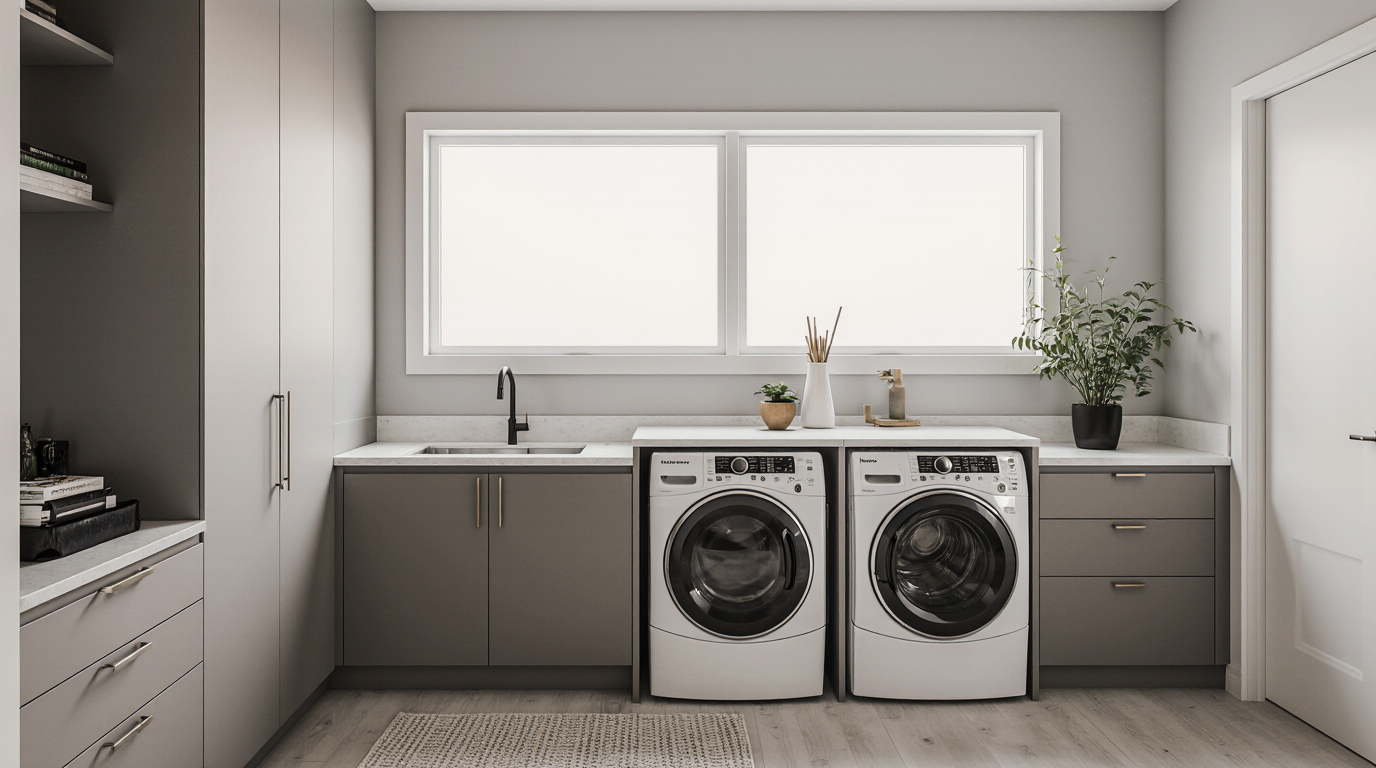
A popular idea involves creating a true "laundry station" concept. This often means installing a continuous countertop that runs across the top of both appliances. This surface provides ample room for sorting and folding without interruption, and it can be achieved even in smaller spaces by using stacking units. To enhance this space, consider installing a stylish retractable drying rack above the folding station that is fully hidden when not in use, preserving the modern visual simplicity.
The choice of colors is crucial for achieving a modern aesthetic. While white and gray dominate, introducing a striking but refined feature wall—perhaps a dark gray or a subtle pale green—can add depth without sacrificing the contemporary feel. This is often done using big tiles with subtle veining that mimics natural stone but offers superior durability and simpler maintenance.
Exposed storage, when styled correctly, is a key modern element. Instead of merely storing different containers, utilize uniform, beautifully designed containers for items like detergent pods, dryer sheets, and spot cleaners. Labels must be simple and easy to read. This thoughtful arrangement turns essential items into decorative vignettes, adhering to the "everything has a place" mantra of modernism.
The utility basin is an area not to be forgotten. In a modern setup, this is often upgraded to a deep, undermount stainless steel or composite sink set level with the work surface. Instead of a standard faucet, opt for a high-arc, commercial-style pull-down faucet in a matte finish like brushed gold or black, which acts as a functional piece of industrial-chic art.
Modern Laundry RoomsContemporary wash areas stand out through a dedication to clean aesthetics and optimized functionality. They are a far cry from the cramped, chaotic rooms of the past and adopt a holistic design approach where every component serves both a practical and visual purpose. The emphasis is heavily placed on clean sightlines and minimizing visual noise, making the space feel integrated into the main flow of the house.
A key feature that distinguishes truly modern rooms is the strategic combination of washing machines and dryers. Matching finishes, such as sleek white or stainless steel, contribute significantly to the cohesive look. Furthermore, integrating these appliances by surrounding them with custom millwork ensures they look built-in rather than simply placed against a wall, lending an air of architectural thoughtfulness to the utility space.
Flooring in up-to-date designs often feature large-scale floor tiles. These tiles have minimal seams, leading to a visibly smoother and broader floor. Materials like alternatives such as polished concrete or porcelain are preferred for their natural water-resistance and ease of sweeping, aligning perfectly with the low-maintenance ethos of modern design.
Functionality is frequently concealed using clever organizational systems. This includes specialized drawers designed for sorting lights, darks, and delicates directly at the point of use, removing the necessity for several large baskets cluttering the room. Cabinet interiors might feature pull-out ironing boards or concealed trash/recycling centers, ensuring the floor area remains clear and neat.
The transition from the hallway or kitchen into the laundry area should feel intentional. This can be achieved by utilizing a sleek, solid door—like a pocket door or a contemporary slider, that allows the room to be hidden entirely when not needed, maintaining the home’s unified, elegant aesthetic.
Contemporary Laundry RoomThe contemporary laundry room champions an up-to-the-minute approach to utility space, frequently taking inspiration from luxury kitchen and bath layouts. This style focuses on brightness, space, and tactile, high-quality finishes, despite being a space for routine chores. It’s a space built for efficiency that doesn’t compromise on architectural appeal.
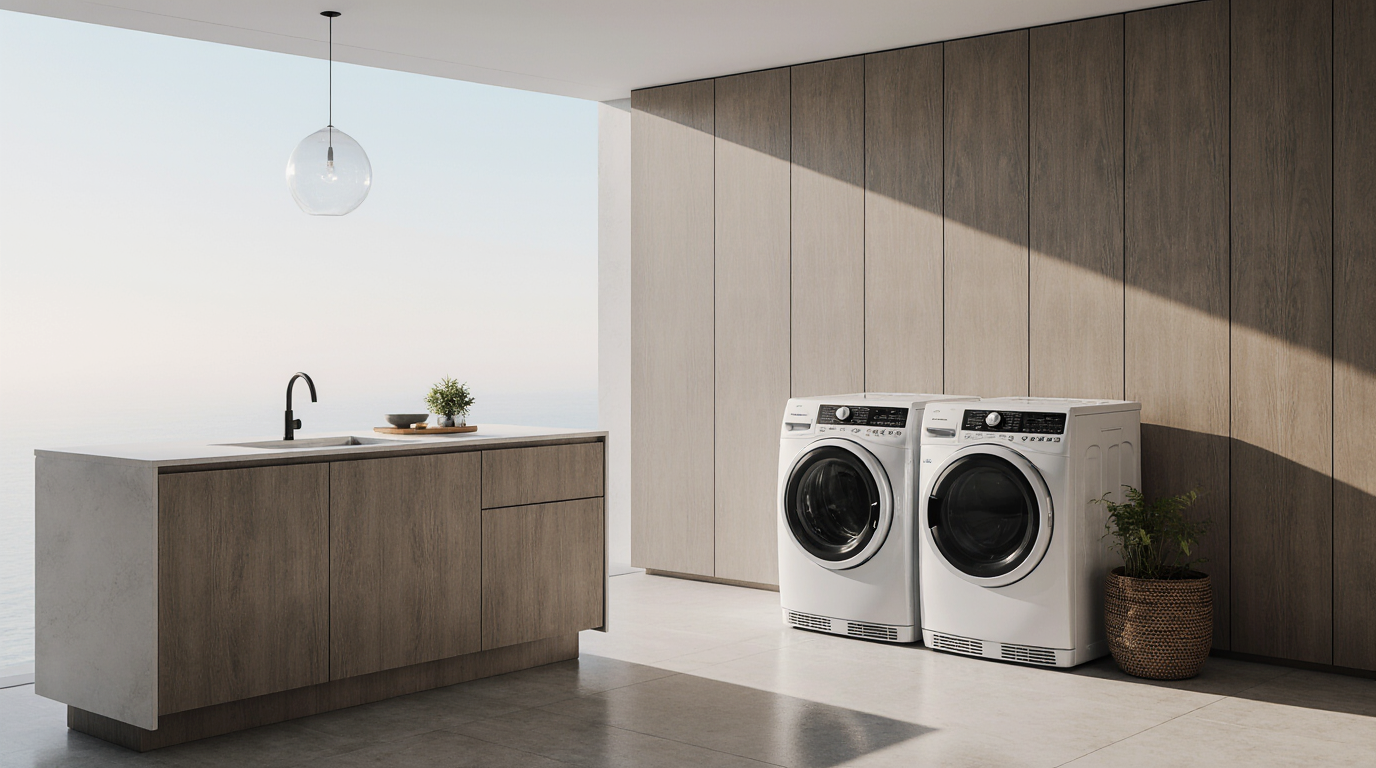
One strong characteristic of contemporary design is the use of bold, yet balanced, materials. This might involve combining cool, white quartz worktops with rich, horizontally-grained oak veneer cupboards. The contrast adds a dynamic look while avoiding excessive decoration. Hardware selection is very discreet or absent altogether, favoring push-to-open mechanisms for cabinet fronts.
Lighting choices in a contemporary setting are seldom ordinary. Recessed lighting offers superior, uniform workspace lighting, but it is frequently complemented by a sole statement pendant over the folding area or washbasin. This fixture acts as the room's centerpiece, often featuring an abstract shape or an exposed bulb design, acting as a focal point.
A crucial element is the dedicated processing area. Contemporary rooms go further than just stacking units. They often feature a smaller, tiered counter reserved for soaking or manual washing tasks, perhaps utilizing a sink made of a unique material like honed black granite. This separation aids in streamlining tasks and maintains the cleanliness of the folding space.
The approach to wall treatments is also contemporary. Instead of standard wall coatings, you might see walls clad in textured wallpaper that mimics natural fibers or perhaps tall subway tiles installed in a surprising layout, such as a vertical stack or herringbone design. This creates a rich texture and gives the room a luxurious feel.
Contemporary Laundry DesignContemporary laundry design focuses intently on creating a seamless, high-performance environment that reflects current trends in minimalist living. The guiding principle is that if an item must be visible, it must be beautiful or highly functional, or preferably both. This intentional editing process yields a tranquil and well-organized area conducive to focused work and efficiency.
Achieving this look frequently requires meticulous consideration of where machines go. Where possible, machines are set into custom alcoves or under continuous countertops to create a unified horizontal plane. This integration minimizes the visual dominance of the machinery, allowing the surrounding architectural elements to take center stage and shine.
Color blocking is a powerful tool when styling modern utility rooms. Instead of a single neutral, the approach can be to apply a deep, bold color to an entire wall or all storage units—such as teal or ruby—while ensuring surfaces remain pale and illuminated. This contrast provides a striking yet refined look, setting a distinct tone for the room.
Organization systems must remain out of sight. Contemporary design abhors visible clutter. This means incorporating clever solutions like dedicated linen drawers, built-in pull-out bins in lower units, and tall, ceiling-height cabinets to maximize storage without wasted vertical gaps to maximize storage capacity without creating awkward dead space.
Water fixtures should align to the overall geometric design. Look for angular, geometric faucets and controls, often finished in matte black or brushed stainless steel, which provide a sharp, architectural edge. Even the laundry basket or drying rack, if left in the open, needs sleek contours and modern components, perhaps brushed metal or dark, smooth wood.
Modern Laundry Room DesignThe concept of a modern laundry room design transcends the idea of a simple work zone. Today's homeowners seek efficiency blended seamlessly with sophisticated aesthetics. This design approach prioritizes clean lines, uncluttered surfaces, and high-quality, durable materials. Think sleek cabinetry, perhaps with flush fronts or barely-there hardware, utilizing neutrals like cream, charcoal, or dark blue to foster a peaceful, tidy setting for chores. Smart storage solutions are paramount, ensuring that detergents, supplies, and linens have a designated, hidden place.
Functionality must anchor any modern renovation. This means integrating the latest appliances that offer superior energy efficiency and performance. Front-loading washers and dryers are standard, typically set one atop the other or situated beneath a counter to free up the area above them. Countertops themselves should be chosen for their resilience and low maintenance, favoring resilient, easy-to-care-for surfaces like quartz or solid composites over materials like granite or marble that can absorb spills from cleaning agents.
Lighting plays a crucial role in defining the modern look. Layered lighting systems are recommended, blending intense, practical lights above the work zones with gentler background illumination to improve the room's atmosphere. LED strip lighting installed under cabinets or along shelving offers superb brightness alongside a delicate, built-in feature that enhances the space's overall look.
Color palettes in modern laundry rooms often lean toward subtle yet powerful selections. While white and light gray form the backbone for an airy feel, a strong feature wall, maybe in a dark gray or a soft natural shade, can add dimension without making the room feel too busy. Natural elements, like floor coverings resembling wood or a simple geometric tile backdrop, stop the clean design from appearing too harsh or uninviting.
Contemporary Laundry Room DesignContemporary laundry room design shares many principles with modern aesthetics but often embraces a slightly warmer, more current interpretation of minimalism. While still favoring clean lines, contemporary design allows for greater material and shape variety, mirroring current interior design trends. This might include incorporating richer wood shades, tactile surfaces, or gentle arcs in cabinet or fitting selections.
The focus in a contemporary setting prioritizes efficient workflow and reduced visual clutter. Thoughtful layout planning guarantees an intuitive and effective route from sorting to washing, drying, and folding. Built-in features, such as dedicated ironing board drawers or clever hampers that drop directly into a cabinet, indicate the high degree of integration this style demands.
Incorporating smart technology represents another key feature of contemporary styling. Beyond the appliances themselves, it might involve integrating systems like voice control for illumination or automated humidity regulation via smart vents. Such tech is integrated flawlessly to back a highly capable, progressive area needing little hands-on management.
Texture is frequently used as a tool for introducing depth without excessive decoration. Consider a sophisticated matte-finish tile for the floor or a backsplash featuring a subtle, three-dimensional pattern. Such material textures create a substantial setting that contrasts nicely with the flat planes of the counters and cabinets seen in contemporary aesthetics.
A successful contemporary laundry space manages to seem both refined and welcoming. The result is an equilibrium between cutting-edge features and practical comfort. The space should serve as an extension of the home’s main living areas in terms of finish quality, instead of resembling an ignored service area hidden downstairs.
Laundry Modern DesignThe core appeal of a laundry modern design resides in its focus on minimalism and straightforward practicality. This style strips away unnecessary complexity, focusing only on what is essential for the laundering process. The result is a highly streamlined and inherently organized environment where order reigns supreme, resulting in more rapid and less annoying task management.
Key to achieving this look is the selection of flat-panel or slab-style cabinetry. Hardware options should be minimal, like hidden pulls or slender metal handles, to guarantee an uninterrupted visual sweep across the surfaces. Dark, grounding colors or crisp, bright whites work best to underscore the simple geometric foundations that define modern design.
When it comes to wall surfaces, an emphasis is often placed on large-format tiling or a single, continuous paint color. This eliminates visual noise from grout or patterns, strengthening the serene and tidy feel of the space. The goal is to create a serene backdrop for tasks that are often perceived as tedious.
Above the machines, consider open shelving, but only if it is meticulously styled. Should you choose open storage, employ consistent, non-transparent boxes or handsome, uniform vessels for things like clips or specific soaps. Such uniformity preserves the visual flow that is paramount to the modern look.
Furthermore, ensure that all plumbing and ventilation are as hidden as possible. Exposed pipes or utilitarian fixtures detract from the clean-lined goal. Investing in high-quality, well-concealed mechanicals is as important as choosing the perfect paint color when creating a genuinely modern laundry environment.
Laundry Room Decor ModernBeyond the basic fixtures, laundry room decor modern focuses on injecting personality and style into the essential work area. This decor must complement the underlying modern structure, meaning any decorative elements should be chosen for their form and purpose, rather than just ornamentation.
Wall art, for example, should favor minimalist compositions, simple typographic prints, or perhaps monochrome stills. These choices add visual interest without introducing the visual noise or intricacy of highly detailed, traditional artwork. Placed with care, they act as sophisticated focal points against the neutral backdrop.
Textiles, while functional, offer a prime opportunity for modern decorative flair. A luxury rug with clean lines—perhaps a simple geometric design in black and cream or a solid jute texture—can instantly warm up a tile floor. Similarly, fresh, cotton cloths hung neatly on sleek hooks add a touch of understated luxury.
Accessorizing the countertops requires restraint. Instead of cluttering the space with numerous bottles, decant everyday necessities like laundry soap, fabric softener, and dryer sheets into uniform, premium containers made of amber glass or matte ceramic. These matched containers act as decor themselves, unifying the look.
Finally, consider the functional hardware as decorative elements. Choosing a contemporary faucet with a sharp, angular design or opting for wall-mounted drying racks that fold away completely elevates the room. Every item brought into the space, even utilitarian ones, must contribute to the overarching theme of streamlined, modern sophistication.
Modern Laundry Room Decor IdeasExploring modern laundry room decor ideas often involves looking at how current interior designs utilize texture and subtle color pops. One highly effective idea is to incorporate elements that bridge the gap between the laundry room and a boutique spa environment, making the space feel like a retreat rather than a chore zone.
Consider creating a dedicated "folding station" that doubles as a display area. If you have a deep countertop, use a minimalist platform to corral your styled dispensers (as mentioned previously) and add a small, low-maintenance plant, like a succulent or snake plant, to introduce a living element that contrasts beautifully with hard surfaces.
For vertical storage, floating shelves are a preferred modern decor choice over bulky upper cabinets, provided they are kept tidy. Decorating these shelves can involve stacking perfectly folded white or light gray towels with a textured throw blanket draped over the edge. Keep the displayed items minimal and cohesive in color.
Lighting fixtures themselves can serve as the primary decor statement. Move away from standard builder-grade ceiling fixtures and install a sleek, linear pendant light or a semi-flush mount fixture featuring matte black metal or brushed nickel finishes. The fixture should complement the room’s hard lines.
A final, impactful decor idea involves thoughtful use of hardware and trim. If your room has wainscoting or beadboard (applied minimally, yet good for tactile interest), painting it the same color as the wall, rather than a contrasting white, creates a subtle, tone-on-tone visual interest that is distinctly modern.
Modern Laundry Room Design IdeasA modern laundry room design prioritizes both function and beauty, ensuring this utility space is a stylish part of your home. Contemporary design favors clean lines, minimalist hardware, and an uncluttered appearance. You might choose elegant, flat-front cabinets, maybe opting for a crisp white, a deep anthracite, or a natural wood grain. The goal is a space that feels intentional and sophisticated, transforming a chore hub into a pleasant area.
The selection of materials plays a significant factor in delivering a modern vibe. Opt for durable, low-maintenance surfaces such as quartz or solid surface countertops that resist moisture and stains. For flooring, select something both practical and stylish; oversized porcelain tiles mimicking concrete or slate are an excellent choice. Consider pairing these hard surfaces with textural elements, like a woven basket for linen storage or a subtle geometric pattern on a backsplash tile to add visual interest without introducing excessive detail.
Lighting is a feature that highlights modern design principles. Ditch the single overhead bulb for layered lighting solutions. Recessed lighting offers superb ambient light, and slim, linear pendants over the workspace or basin introduce a stylish element. Where feasible, incorporate LED strips beneath cabinets to illuminate the work area and showcase your selected materials. Effective lighting is critical for practical tasks and for establishing the contemporary atmosphere.
Functionality must be integrated flawlessly into the overall aesthetic. This often means prioritizing smart storage solutions. Wall-mounted shelving frees up counter space, and deep storage drawers can conceal detergents and cleaning products. Consider incorporating features like a built-in drying rack that folds away when not in use, or a dedicated space for sorting laundry into distinct hampers. Every element should serve a clear purpose.
Color palettes in modern laundry rooms typically lean towards a neutral spectrum—shades of gray, white, black, and natural wood. However, a strategic pop of color can add personality. This could be achieved through a vibrant accessory, like colorful laundry baskets, or by choosing a bold color for a single cabinet bank. This measured approach to color ensures the space avoids feeling sterile while keeping its modern style.
Modern Laundry Room MakeoverEmbarking on a modern laundry room makeover is an excellent opportunity to significantly improve your home's workflow and value. The initial phase involves performing a detailed review of the space to determine its biggest challenges—be it insufficient storage, dated plumbing, or weak illumination. Creating a comprehensive plan that outlines your budget and desired aesthetic, focusing heavily on maximizing vertical space, is the first step toward transformation.
A hallmark of a modern makeover is installing new washers and dryers. Replacing older, loud, or inefficient machines with stackable, front-loading models in sleek finishes like graphite or white instantly modernizes the look. Placing them on pedestals can provide crucial storage underneath while raising them to a more ergonomic height for loading and unloading. This decision establishes the overall feel for the rest of the project.
The transformation will hinge on optimizing the room's arrangement for better use. If space allows, introducing a countertop spanning the full length of the machines creates an expansive surface for folding clothes, which is a game-changer. Install custom or semi-custom built-ins to hide mess and achieve a sleek, unified appearance. Tailored cabinetry provides a polished, upscale look that is often missing with ready-made options.
Selecting a modern backsplash and wall color will determine the room's character. A simple, geometric tile or a slab of stone that matches the counter can bridge the gap between utility and style. For wall paint, stick to crisp whites or soft, warm grays to reflect light and keep the space feeling open, even if it is compact. The focus should be on texture and subtle contrast rather than busy patterns.
Don't overlook the smaller details that finish the modern styling. Swap out old, builder-grade fixtures for contemporary plumbing hardware—think matte black or brushed nickel faucets with clean lines. Choose contemporary, practical pulls and knobs for your cabinetry and drawers. These small yet significant updates unify the whole renovated space into a coherent and refined modern statement.
Modern Small Laundry Room IdeasWhen designing a modern small laundry room, the primary focus must be on functional, space-saving design to avoid a cluttered feel. Use height to your advantage. Utilize slender, floor-to-ceiling cupboards that draws the eye upward and maximizes every available inch of wall space for storage rather than allowing clutter to accumulate on the floor or on top of machines.
Embracing a set of pale tones is non-negotiable in tight quarters. Whites, pale grays, and light natural wood tones brighten the area, making the room feel noticeably bigger and airier. This strategy works great when paired with simple, handle-less cabinet fronts that present a streamlined look, reducing visual clutter.
You could put in a wall-mounted fold-down table that can be folded down when not in use. This offers the handy surface without constantly reducing the room’s limited footprint. If space allows, if you have a utility sink, search for fitted lids designed to fit over the basin, effectively creating a temporary countertop when needed.
Intelligent equipment selection drastically improve small laundry room functionality. Vertically arranged laundry machines are an standard solution, but also look into single-unit machines if space is at a premium. Look for models with quiet operations, as these small utility rooms are often situated near living areas and noise reduction is a big plus for modern homes.
To maintain a modern, uncluttered look, almost everything should have a designated, hidden spot. Use the inside of cabinet doors for storing minor tools or storing tools. Get uniform hampers that fit perfectly onto shelving units to corral loose supplies. By keeping surfaces clear, the small modern laundry room achieves a sense of calm and streamlined efficiency.
Small Modern Laundry Room DesignDesigning a small modern laundry room needs a firm hand to make both aesthetics and utility important. The design ethos should lean towards streamlined simplicity. Avoid overly ornate details or bulky hardware; instead, choose minimalist shapes for lighting, plumbing, and cabinetry to make the room feel as big as possible.
One highly effective design technique for small spaces is blending elements together. Where you can, try to match your counter finish to or works well with the finish of your appliances or the primary cabinet color. This design uniformity prevents chopping up the space in the room, tricking the eye into perceiving greater spaciousness.
For storage, look beyond standard cabinets. Exposed shelves with curated, uniform bins offers handy access while maintaining a clean aesthetic, provided you are sure you can keep them tidy. If open shelving looks too cluttered, choose tall, integrated cupboards with integrated features like hidden laundry baskets hidden behind seamless doors.
Illumination in a small modern space must be layered and unobtrusive. Linear LED lighting installed under upper cabinets gives focused light right where you need it for sorting and folding. Supplement this with flush-mount ceiling fixtures that provide ample, glare-free ambient light, avoiding anything that hangs too low and obstructs the sightline.
The choice of basin and tap is an essential consideration in compact areas. A deep, single-bowl utility sink is often more practical than a double-basin, and pairing it with a sleek, high-arc faucet allows for easier washing of awkward items without sacrificing counter space next to the basin. Each piece of hardware should be selected to be small and sleek.
Small Modern Laundry Room IdeasTo maximize the utility of a small modern laundry room, initiate by reevaluating the process. Many successful compact designs incorporate a countertop that extends over the machines, allowing the floor space underneath the countertop to be used for mobile bins or slide-out units rather than just static machines. This flexibility is key in tight layouts.
Embrace the power of built-ins to eliminate dead space. Custom millwork that fits snugly into alcoves or awkward corners ensures that each usable space serves a purpose. Consider designing a narrow, vertical pull-out pantry near the entrance for brooms, mops, or tall bottles of detergent, keeping them organized and off the main counter.
For a modern aesthetic in a small footprint, hardware selection should be subtle. Opt for recessed handles or touch-latch systems on cabinetry. This removes protruding hardware that can snag clothing or visually clutter the sleek surfaces characteristic of modern design, making the room feel smoother and less busy.
Color and texture are crucial elements to control in a small space. Utilize monochromatic schemes—for example, using shades of gray for the walls, floors, and cabinets—with only one element, such as the faucet or a rug, providing a contrasting accent. This visual continuity helps the eye travel smoothly across the space, enhancing the perception of size thereby maximizing perceived dimensions.
Modern Style Laundry RoomDesigning a modern style laundry room is about blending high functionality with sophisticated aesthetics. This space is no longer relegated to a dark corner but has become an integrated part of the contemporary home, demanding clean lines, high-quality materials, and smart storage solutions. The key to achieving this look is simplicity and intentionality in each component's specification. Think handle-less cabinetry, integrated appliances, and a monochromatic or muted color palette to foster a sense of calm and order.
The flooring and wall treatments play a crucial role in establishing the modern vibe. Large format tiles in concrete grey, crisp white, or a subtle marble-look porcelain are excellent choices as they minimize grout lines, contributing to that seamless, sleek appearance. Consider incorporating a textured backsplash, perhaps using linear mosaics or a matching stone surface that matches the countertop, to add visual interest without introducing clutter. Lighting should be layered, featuring bright, functional overhead lighting complemented by sleek under-cabinet strip lighting for task visibility.
Appliances in a modern laundry room are often counter-depth and stackable, or fully integrated behind custom paneling to disappear into the cabinetry design. Chrome or brushed nickel fixtures offer a subtle gleam that contrasts nicely with matte cabinet finishes. Furthermore, modern design embraces the concept of a dedicated folding station, often achieved with a large, uninterrupted countertop that spans the length of the main work area. This space transforms a chore zone into a highly organized workspace.
Smart storage is non-negotiable in this aesthetic. Custom built-ins, including deep drawers for detergent and supplies, concealed hampers, and dedicated hanging rods above the washer/dryer area, keep necessities out of sight. Open shelving should be used sparingly and styled minimally—perhaps with a few decorative but practical items like woven baskets or glass canisters for laundry pods. The goal is to maintain visual clarity where clutter tends to accumulate most easily.
Modern Small Laundry RoomA modern small laundry room thrives on maximizing efficiency, particularly through the use of verticality and elements that serve multiple functions. Since square footage is constrained, each component serves a well-defined role. The design philosophy here shifts from expansive countertops to thoughtful, built-in solutions that cater directly to the constraints of a compact area, ensuring the space remains neat and functional despite its size.
Stackable washer and dryer units are nearly always the cornerstone of a modern small layout. They efficiently utilize vertical real estate, releasing valuable floor space that can then be allocated to folding or storage solutions. Choosing models with modern finishes, such as crisp white or dark stainless steel, immediately elevates the room’s aesthetic to match contemporary standards, even when space is tight.
Vertical storage must be maximized through smart cabinetry and shelving installation. Rather than deep, cumbersome base cabinets, choose shallower wall-mounted units that run high up the wall. Consider installing a high-quality pegboard system or a narrow pull-out pantry next to the appliances for storing tall bottles of cleaner or supplies. These arrangements provide ample storage without limiting the user’s movement within the small area.
Color selection plays a significant psychological role in making a small room feel more expansive and updated. Light, reflective colors like bright white, pale grey, or soft pastels should dominate the walls and cabinetry. These hues bounce light around, suggesting more space. When selecting hardware, pick slim profiles or integrated finger-pull mechanisms to keep the sightlines as clean and smooth as possible.
A compact, yet functional, folding area can be achieved through a pull-down shelf installed above the machines or a narrow countertop placed on top of front-loading washers. In addition, incorporating a slim drying rack that folds flat against the wall when not in use is a great example of modern utility in a small footprint. These features guarantee that utility is not sacrificed for the sake of a streamlined modern look.
Modern Utility Room DesignsModern utility room designs focus on seamless integration and streamlined functionality, treating this practical area with the equal attention to design as the home's primary areas. The goal is to depart from the traditional cluttered mudroom aesthetic toward a well-structured, perhaps even beautiful, extension of the home’s general modern style. This frequently utilizes custom millwork and discreetly tucked away necessities.
A defining characteristic of modern utility design is the complete concealment of practical objects. Custom floor-to-ceiling cabinetry can house everything from ironing boards and vacuum cleaners to utility sinks that fold down from the wall when needed. When the room is inactive for laundry or maintenance, these closed doors present a monolithic, clean surface that aligns perfectly with modern minimalism.
The choice of surfaces greatly influences the modern feel. Durable, low-maintenance materials are key. Think about using quartz or solid surface countertops for durability against spills and wear, paired with wall finishes like large-format porcelain tile or moisture-resistant matte paint. A cohesive color story, often relying on neutral tones like charcoal, off-white, or muted sage, unifies the space.
Technology and efficiency are central to modern utility concepts. Incorporating features such as built-in charging stations for tools or handheld devices, excellent task lighting managed by motion sensors, and even built-in pet washing stations with high-quality, durable fixtures demonstrates a forward-thinking design approach. The utility room serves as a multi-functional service hub.
The layout should facilitate an efficient workflow. If the room serves as both a laundry center and an entry point from the garage or garden, create distinct zones. A designated "drop zone" with durable flooring, hooks for coats, and sturdy cubbies for shoes maintains organization. This zoning, all achieved within the modern aesthetic framework, prevents the utility space from descending into chaos.
Laundry Room Ideas ModernChoosing a modern aesthetic in the laundry room provides a wealth of creative possibilities centered on clean design and technological sophistication. Modern laundry room ideas go past mere practicality, focusing on creating a pleasant, almost spa-like atmosphere where routine work can be managed efficiently. This often starts with a deliberate color palette and the choosing of statement fixtures.
Consider a high-contrast color scheme for an striking modern impact. Pairing crisp white cabinetry with deep navy or charcoal grey walls creates a bold but enduring backdrop. On the other hand, for a softer contemporary look, favor warm minimalism by using light oak veneers for the lower cabinets contrasted with stark white uppers and walls. The crucial element is to maintain a limited, intentional color story.
Integrated technology is a further critical modern laundry room element. This includes smart washers and dryers that can be checked from afar, but also thoughtful integration of other elements. Think about installing an electrical outlet specifically for a small iron or steamer within a drawer, or under-mount lighting in cabinets that brightens automatically when you approach.
When considering the work surfaces, a thick slab of engineered stone, such as quartz with subtle veining, provides a durable, continuous surface great for tasks. To include airflow and an aesthetic flourish, consider installing industrial-style open shelving made of black metal and reclaimed wood for storing attractive essentials like premium detergents in clear dispensers.
Don't overlook the importance of the sink area. A deep, undermount utility sink paired with a streamlined, high-arc faucet in matte black or brushed gold quickly improves the space. If you have the room, including a dedicated drying area—perhaps a fold-down valet rod situated near a window with good light—ensures that delicate items are cared for properly while maintaining the room's sleek appearance.
Modern Utility Room IdeasModern utility room ideas focus on transforming a purely functional area into a highly organized and aesthetically pleasing component of the home. The effectiveness of these designs lies in their commitment to concealed storage and the use of high-quality, durable finishes that mirror contemporary interior trends. It’s about treating the utility space as a design opportunity.
One of the most impactful modern ideas is designing a fully integrated appliance wall. This requires designing custom cabinetry that surrounds the washer and dryer, allowing them to appear as built-in components of the architecture rather than standalone machines. Use full-overlay doors with push-latch mechanisms for a truly handle-less modern facade that completely hides the working parts of the room when closed.
For areas that work as a secondary mudroom or entryway, prioritize robust organization solutions. Instead of standard coat hooks, build integrated cubbies with individual ventilation slots for shoes and lower drawers for gloves and hats. Add durable, horizontal slat wall systems that allow for flexible placement of baskets and shelving, keeping the floor clear and the design inherently linear and modern.
Lighting should be treated as a design feature, not an afterthought. Utilize long, linear LED fixtures recessed into the ceiling for bright, even illumination. Supplement this with strip lighting installed beneath open shelves or inside cabinets to highlight items and add depth. The modern aesthetic demands sharp, clean lines of light.
Look into incorporating a multi-purpose folding surface that doesn't permanently occupy space. A sliding countertop that can be pulled out over the laundry machines when needed, or a section of butcher block that sits atop low base cabinets dedicated to potting plants or craft supplies, lets the area fluidly adapt to various household tasks while keeping the modern, uncluttered look preserved.
The contemporary approach to laundry room design transcends mere utility; it reimagines this essential space as an holistic, highly functional, and aesthetically pleasing component of the modern home. Moving far beyond the sterile, utilitarian closet of decades past, today’s laundry area is a testament to functional minimalism and high-efficiency living. The expectation is no longer just cleanliness, but an experience—one that demands thoughtful spatial planning and the incorporation of premium materials and smart technology. This evolution is driven by a desire to elevate everyday chores and maximize the return on investment in every square foot of the residence, especially as open-concept living blurs traditional boundaries. A truly successful design embraces the workflow optimization required for handling the constant cycle of laundry while simultaneously serving as a hub for organization or even a secondary productive workspace. This shift reflects a broader cultural appreciation for design coherence across all domestic zones.
A cornerstone of current laundry room aesthetics is the infusion of warmth and character, often achieved by adopting styles that favor natural textures. We see a strong move away from cold, hard surfaces toward materials that evoke a sense of calm and permanence. The integration of hardwood flooring, or high-quality porcelain tiles that convincingly mimic natural stone or timber, introduces a welcoming element previously reserved for living areas. This choice requires an expert understanding of moisture resistance and underlayment, ensuring longevity against potential leaks or humidity. Furthermore, the design lexicon is heavily influenced by Scandinavian and Japanese design principles, emphasizing clean lines, uncluttered surfaces, and a muted, earthy color palette. Think soft sage greens, serene blues, warm beiges, and crisp whites, often juxtaposed with matte black or brushed brass hardware for a touch of sophisticated contrast. Incorporating organic elements helps ground the space and fosters a more relaxed user experience.
The true engine of the modern laundry room is its smart technology integration. This is not just about having the latest machines, but about how those appliances interact with the space and the homeowner’s schedule. Energy-efficient washers and dryers that boast AI-driven load sensing—automatically adjusting water temperature, cycle time, and detergent dosage based on fabric type and weight—are becoming the standard. The ability to initiate a cycle remotely via a mobile application or receive diagnostic alerts directly to a device transforms time management. For specialized care, steam functions and dedicated delicate garment cabinets move beyond traditional folding, offering clothing care solutions previously reserved for dry cleaners. Integrating these large appliances requires precise utility access planning, ensuring discreet yet accessible placement for water lines, venting, and electrical supply, often necessitating consultation with certified plumbing and HVAC specialists. The technology should be intuitive and seamlessly woven into the room's fabric.
Storage solutions represent a critical design challenge and a major area of innovation. The goal is to achieve seamless organization where every item has a designated home, eliminating visual clutter. Custom-built cabinetry is favored over off-the-shelf solutions, maximizing vertical space with features like pull-out ironing boards recessed within drawers and tiered systems for sorting. The trend leans heavily toward closed storage to maintain the room's serene aesthetic, using deep drawers and tall cupboards to conceal detergents, linens, and cleaning tools. However, strategic use of floating wood shelves is employed to display curated items or functional baskets, adding visual depth without disrupting the minimalist intent. Integrated hamper systems, particularly those that tilt-out or are built directly into the lower cabinetry, replace bulky plastic bins, reinforcing the room’s polished look. This level of detail is crucial when considering the functional adjacency of the room, especially in hybrid designs ensuring that adjacent areas benefit from the same organizational principles.
Speaking of hybrids, the multifunctional laundry-mudroom space is a major design imperative for contemporary homes, especially those managing active lifestyles or homes with pets. This amalgamation requires durable, waterproof flooring with a good coefficient of friction to prevent slips. Thoughtful inclusions here involve sturdy bench seating for removing footwear, integrated coat hooks, and specialized utility sinks—often deep, farmhouse-style basins—perfect for pre-soaking or rinsing muddy items without splashing the main area. When this space also doubles as a workspace, attention must be paid to ergonomics and task lighting. Installing under-cabinet LED strips provides excellent illumination for folding, while a dedicated, well-ventilated nook can house a compact desk surface for managing household paperwork, turning chore time into productive downtime. It addresses the practical realities of family life head-on.
Layout efficiency dictates success in any size constraint. In smaller footprints, vertical stacking of appliances is non-negotiable, often paired with a substantial over-the-counter folding surface that spans the width of the units. This countertop should be a hard, non-porous material like quartz or solid surface composite to withstand the wear and tear of folding heavier items. For areas where space is too restricted for traditional layouts, the European laundry concept—integrating compact, high-efficiency machines behind disguised cabinetry in a hallway or kitchen utility nook—offers a viable, albeit smaller-scale, alternative. Conversely, in larger dedicated rooms, creating distinct work zones—one for machine operation, one for air drying/hanging, and one for folding/storage—improves traffic flow and minimizes bottlenecks during peak usage times. Designing for ADA compliance and universal access, even in residential settings, is an area of growing best practice consideration, ensuring wide door swings and accessible controls to cater to all members of the household across all life stages.
Personality and ambiance are achieved through carefully selected finishes and accents. A bold choice in tile backsplash—perhaps a geometric pattern or a vibrant hand-painted ceramic—can act as a striking focal point without overwhelming the room, as it is largely contained behind the appliances. The strategic addition of living greenery, such as low-maintenance, humidity-loving plants like the Snake Plant or Pothos, injects a vital organic texture that contrasts beautifully with modern technology. Lighting design is paramount; layered lighting—ambient ceiling fixtures paired with focused task lighting over work surfaces—is essential not only for aesthetics but for minimizing eye strain. Every design choice, from the cabinetry hardware to the selection of a simple, decorative area rug that adds comfort underfoot, contributes to transforming the laundry room from a place to avoid into a surprisingly delightful, highly optimized zone of the home, reflecting a commitment to holistic interior design. Small details make the biggest long-term impact on user satisfaction.