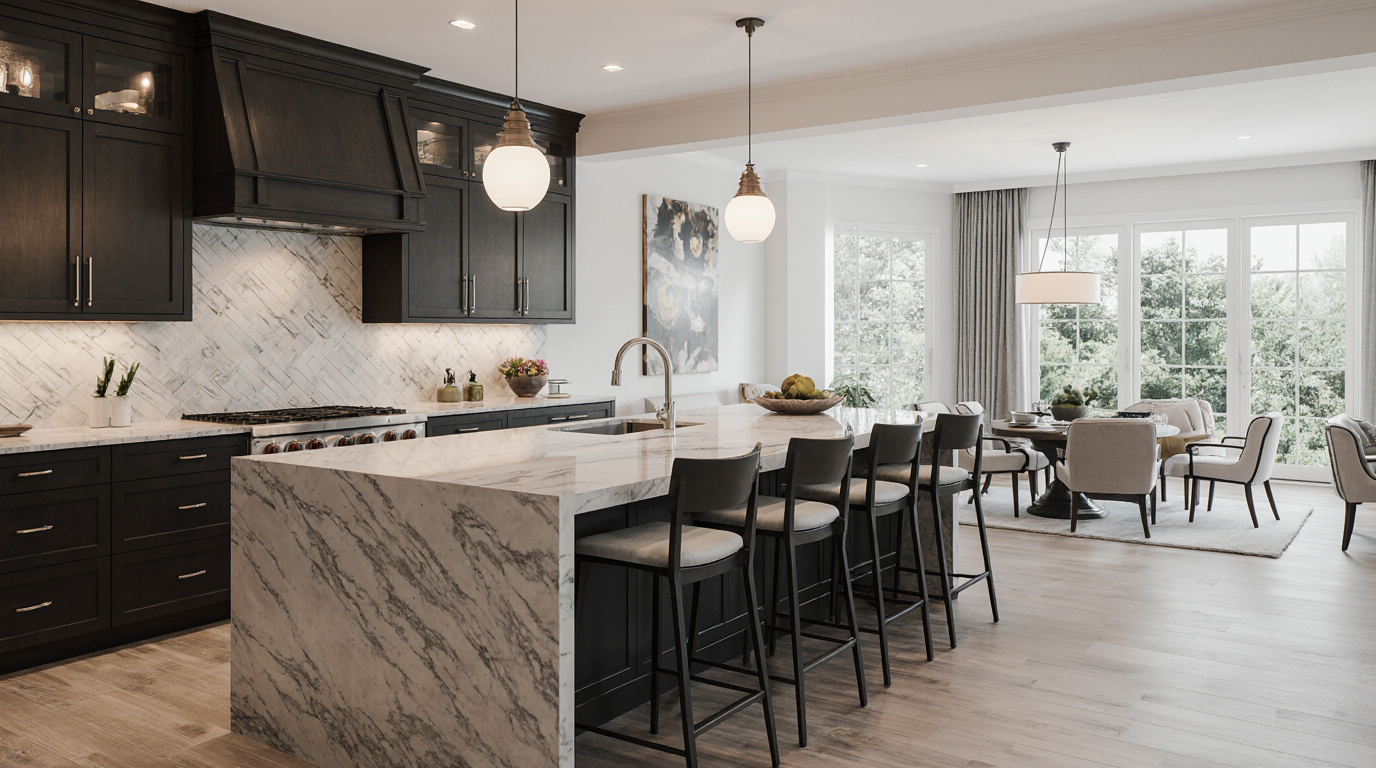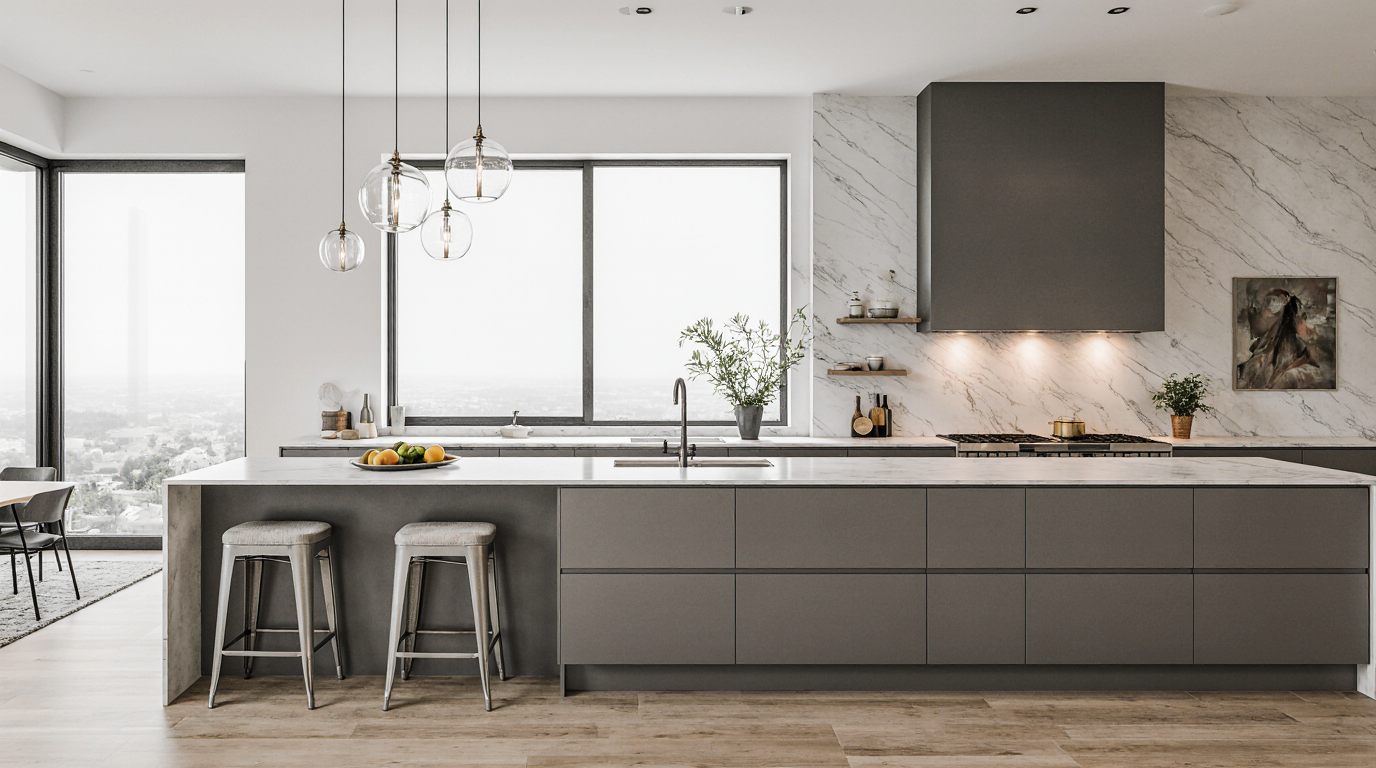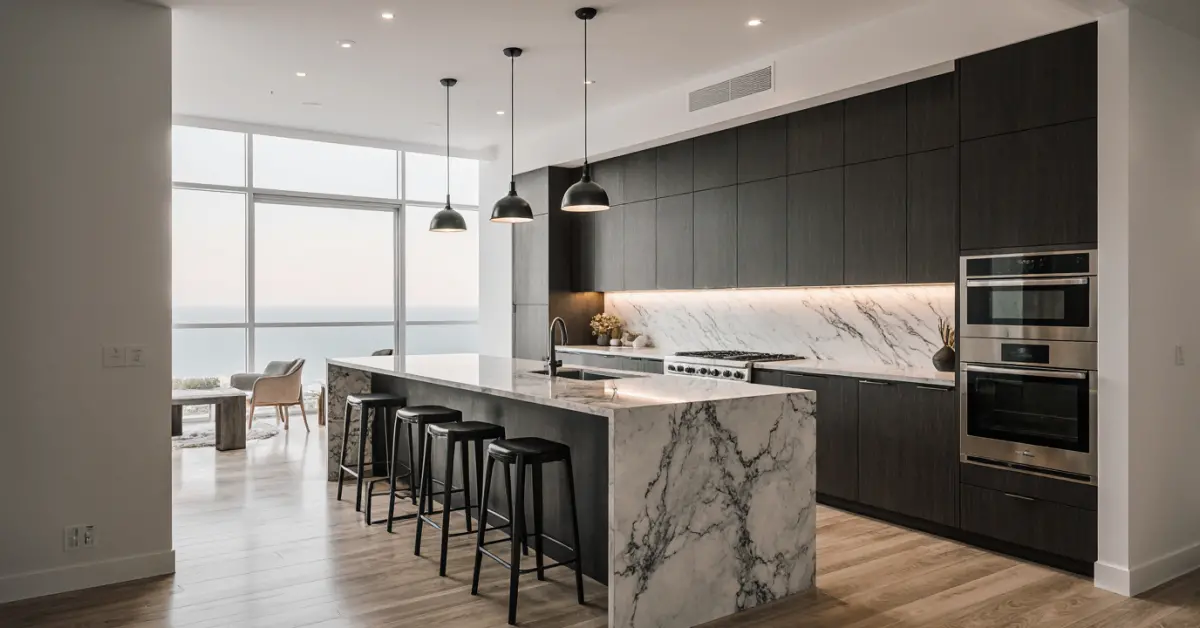
Why do so many Sarasota kitchen remodels end up with a layout that fights the homeowner every single day? It’s not because of a lack of inspiration or budget. The failure is almost always rooted in prioritizing appliance placement over the natural flow of movement dictated by our coastal, indoor-outdoor lifestyle. The most critical decision is not where the refrigerator goes, but how people will move between the lanai, the dining area, and the kitchen during a typical gathering—a detail that standard layout software completely ignores.
Sarasota Kitchen Layouts: An Executive Summary
From my direct experience designing kitchens from Siesta Key to The Meadows, a successful layout in Sarasota is less
From my direct experience designing kitchens from Siesta Key to The Meadows, a successful layout in Sarasota is less about adhering to a rigid work triangle and more about creating functional zones that accommodate our climate and social patterns. The goal is a layout that manages humidity, maximizes natural light without creating heat traps, and provides seamless transitions to outdoor living spaces. A layout that ignores the impact of salt air on ventilation and appliance longevity is fundamentally flawed for this area.
- Ventilation Strategy: The layout must facilitate cross-ventilation to combat ambient humidity, which influences everything from cabinet material choice to appliance placement.
- Indoor-Outdoor Flow: Access to the lanai or outdoor kitchen is a primary traffic path, not a secondary one. The layout should treat it as a main artery.
- Resilience to Elements: Material and appliance locations must account for intense UV exposure from large windows and the corrosive effects of salt air, especially in homes on the barrier islands.
- HOA Compliance: For communities like Lakewood Ranch or Palmer Ranch, the layout's external-facing elements (windows, vents) often require pre-approval, impacting the entire design timeline.
The Planning Failures That Inflate Costs and Timelines
The most significant layout planning failures I see in Sarasota occur when homeowners and designers apply generic, one-size-fits-all principles to our unique environment. A layout that works perfectly in a landlocked city can become a maintenance nightmare here, leading to unexpected costs and deep regrets after the project is complete.
The Underestimation of Humidity and Airflow
This is the most expensive mistake. A client with a beautiful home west of the Trail wanted a sleek, minimalist kitchen with large, uninterrupted cabinet faces and a powerful, commercial-style range. The layout placed the range on an interior wall with a standard vent hood. Within a year, the heat and moisture, trapped by our high ambient humidity and insufficient ventilation, caused the custom wood veneer on adjacent pantry doors to delaminate. The failure was designing for aesthetics without a corresponding mechanical ventilation plan suited for a humid climate. The rework cost nearly 20% of the initial cabinet budget because it required not just new doors but also retrofitting a more powerful, properly ducted ventilation system, which involved opening up finished drywall.
The Layout Design Process in Practice for Sarasota
A successful kitchen layout project in Sarasota follows a distinct process that integrates local factors from the very beginning. It’s not just about drawing boxes on a floor plan; it’s a multi-stage effort involving zoning, environmental assessment, and regulatory navigation. The process typically takes 4-6 weeks for design and approval before any demolition begins.
Key Selection Criteria for a Local Designer
When choosing a professional to design your kitchen layout in Sarasota, your questions should go beyond their portfolio. You are vetting their understanding of our specific building challenges.
- Experience with the Florida Building Code, 8th Edition: Ask for specific examples of how they address requirements for wind-borne debris regions, especially concerning window and door placements that are part of the kitchen layout.
- Portfolio of Waterfront or Barrier Island Projects: Designing a kitchen for a home on Longboat Key involves material and layout considerations (like specifying marine-grade plywood or stainless steel hardware) that are irrelevant inland.
- Proven Process for HOA Submissions: Request to see a redacted example of a design submission package for a major local HOA (e.g., The Founders Club, University Park). This demonstrates they understand the bureaucratic hurdles.
- Network of Local Marine and HVAC Specialists: A good designer doesn't work in a vacuum. They should have established relationships with HVAC contractors who understand make-up air requirements for high-CFM hoods in our tightly sealed new homes.
Comparing Layout Approaches for a Sarasota Home
Choosing a layout isn't just about picking a shape like a U-shaped or L-shaped kitchen. It’s about selecting a philosophy that aligns with your lifestyle, property type, and budget. Here in Sarasota, the choice often comes down to a fully open-concept plan, a zoned open-concept, or a more traditional enclosed kitchen.
| Indicator | Fully Open-Concept (Great Room) | Zoned Open-Concept (Defined Zones) | Traditional Enclosed Kitchen |
|---|---|---|---|
| HVAC & Humidity Control | Most challenging; requires a robust, unified system to manage a large, single air volume. | More efficient; allows for targeted ventilation and better humidity management within the kitchen zone. | Easiest to control; the smaller, contained space can be conditioned and ventilated independently. |
| Indoor-Outdoor Flow | Excellent; creates an expansive feel, ideal for homes with large lanais and pool decks. | Very good; uses islands or peninsulas to direct traffic flow to outdoor areas without disrupting the core work zone. | Poor; often creates bottlenecks at doorways, isolating the kitchen from outdoor entertaining spaces. |
| HOA Design Review | More scrutiny on window placement and exterior wall modifications that impact the building's facade. | Moderate scrutiny, as major structural changes might be fewer than in a fully open plan. | Least scrutiny, as work is typically contained within the existing footprint of the room. |
When a Traditional Enclosed Layout is the Right Choice
While the trend in Sarasota is overwhelmingly towards open concepts, a separate, enclosed kitchen is sometimes the superior choice. For serious home cooks who do a lot of high-heat or aromatic cooking, an enclosed layout is better for containing heat, steam, and odors. In a large, open great room, a powerful commercial-style range can overwhelm the central HVAC system and spread cooking smells throughout the entire living space, which is a significant trade-off for the open aesthetic.
A Practical Checklist for Your Kitchen Layout Project
Before you commit to a design or a contractor, use this checklist to ensure you've covered the critical bases specific to a Sarasota project. This isn't about cabinet colors; it's about the structural and functional integrity of your plan.
- Verify your property's location relative to the Coastal Construction Control Line (CCCL) if you are near the water, as this triggers stricter building codes.
- Obtain a copy of your community's Covenants, Conditions & Restrictions (CC&Rs) to identify any rules governing kitchen renovations, especially regarding noise, work hours, and exterior vent placement.
- Plan for appliance placement away from windows that get direct, intense afternoon sun to prevent premature failure of electronics and seals.
- Ensure the layout includes a designated "drop zone" near the entrance from the garage for groceries, which is crucial for functionality but often overlooked in small kitchen designs.
- Confirm that any kitchen island with a sink or cooktop has a detailed electrical and plumbing plan submitted with the permit application to the Sarasota County Building Department.
- If you're considering a U-shaped kitchen with an island, ensure there is a minimum of 42 inches of clearance on all working sides to avoid creating a cramped, dysfunctional workspace.
- Discuss the need for impact-rated windows and doors if the new layout involves altering exterior walls, as this is a non-negotiable requirement in our hurricane-prone region.
Decisions That Ultimately Determine a Layout's Success
Over the years, I've seen that the success of a kitchen layout in Sarasota hinges on a few key decisions made early in the process. These choices have far more impact than the final selection of countertops or backsplash tile. They are about the fundamental geometry and flow of the space.
The Moment Most Homeowners Get It Wrong
The critical error happens right at the beginning: homeowners fall in love with an appliance package and then try to design a layout around it. The correct approach is to finalize the functional layout first, based on movement patterns and workflow, and then select appliances that fit the layout. Forcing a 48-inch pro-style range into a layout designed for a 30-inch appliance creates a cascade of compromises in counter space, cabinet storage, and walkway clearance. I advise clients to define their zones—prep, cooking, cleaning, storage—and create an ideal workflow on paper before they ever step into an appliance showroom.
Navigating Practical Operations in Sarasota
Executing a kitchen layout design here involves more than just a good plan. It requires navigating local regulations, dealing with community associations, and understanding the practicalities of construction in our specific environment. These are the operational details that often surprise homeowners.
Permitting a New Kitchen Layout in Sarasota County
Any layout change that involves moving plumbing, electrical, or walls requires a permit from the Sarasota County Building Department. The process starts with submitting detailed plans. A common bottleneck is the plan review, which can take 4-6 weeks for a residential interior remodel. The permit fees are calculated based on project value, but a typical kitchen remodel can expect to pay several hundred dollars in base fees plus charges for each trade (electrical, plumbing, mechanical), often totaling over $1,000.
HOA Architectural Review Board (ARB) Approval
In master-planned communities, the HOA's ARB approval is a separate and preceding step to the county permit. They are concerned with aesthetics and conformity. For a kitchen, this means they will review window changes, exterior vent locations, and even the type of range hood if it's visible from outside. This process can add another 30 to 60 days to your pre-construction timeline, a critical delay for seasonal residents.
Addressing Florida's Hurricane Code in Kitchen Design
If your new layout includes altering an exterior wall for a larger window or a new door to the lanai, the entire assembly must meet the stringent requirements of the Florida Building Code for our Wind-Borne Debris Region. This means specifying and installing impact-rated windows and doors, which carry a significant cost premium over standard units. Furthermore, cabinet anchoring, especially for tall pantry units, must be robust enough to withstand structural stress, a detail inspectors in this region check carefully.