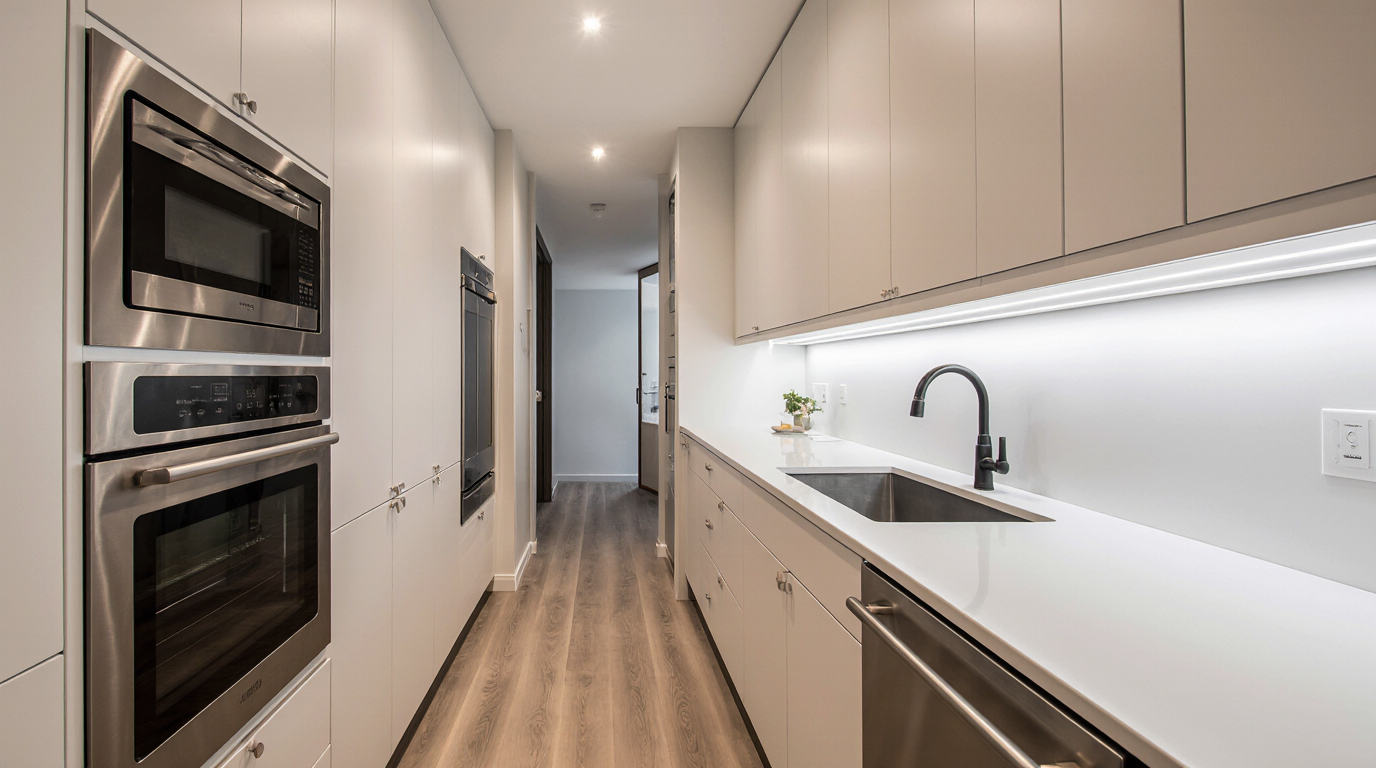
In many older Sarasota condos, particularly those lining the Bayfront or on Lido Key, the standard kitchen width is a mere eight feet. That eight-foot constraint isn't just a design challenge; it directly impacts your appliance budget, often pushing you towards specialized slim-profile refrigerators and dishwashers that can carry a 20-30% price premium over standard-sized models. This is the first financial reality check for anyone tackling a narrow kitchen remodel in this city, and it highlights how layout dictates cost before a single cabinet is chosen.
Executive Summary: The Sarasota Approach to Narrow Kitchens
From my direct experience remodeling constrained kitchens from Southside Village bungalows to high-rise units, success
From my direct experience remodeling constrained kitchens from Southside Village bungalows to high-rise units, success hinges on rejecting the standard 'work triangle' in favor of a hyper-efficient galley or single-wall workflow. The goal is to maximize every vertical inch and create an illusion of width through strategic material and lighting choices. The humid, salt-laden air of Sarasota dictates non-negotiable material standards, making shortcuts with lesser-grade materials a costly mistake within a few years. It's a game of inches where the right plan feels spacious and the wrong one feels like a hallway with appliances.
- Layout Strategy: Prioritize a single-wall or galley layout to optimize workflow and eliminate traffic bottlenecks.
- Material Imperative: Specify marine-grade plywood for cabinet boxes and solid wood or high-density composite for doors to combat humidity and prevent warping.
- Appliance Selection: Plan for counter-depth, slim-profile appliances from the outset to maximize floor space and maintain clean lines.
- Lighting Plan: A multi-layered lighting scheme (undercabinet, ceiling, and accent) is non-negotiable for making the space feel larger and more functional.
The Planning Failures That Shrink Your Narrow Kitchen Further
The most common misstep is focusing on aesthetics before function. Clients fall in love with a dark cabinet color or a bulky range hood they saw online, failing to realize these elements will visually suffocate an already narrow room. In a tight space, every single choice must serve the dual purpose of function and visual expansion. Ignoring this principle leads to a kitchen that is not only cramped but also frustrating to work in.
The Cabinet Depth Catastrophe
The costliest mistake is ordering standard 24-inch deep base cabinets without accounting for appliance door swings and walkway clearance. In a narrow Sarasota kitchen, this can reduce a functional walkway to a barely passable aisle, especially if a refrigerator door opens into the path. I’ve seen projects where this oversight meant the client couldn't fully open their dishwasher and refrigerator at the same time. The fix often requires re-ordering cabinets or appliances, causing significant delays and budget overruns.
How a Narrow Kitchen Renovation Unfolds in Sarasota
A successful project follows a strict sequence: layout confirmation, appliance specification, and then material selection. We begin by creating a to-scale floor plan that accounts for every inch, including crucial clearances required by the Florida Building Code. Once the layout is locked, we select all appliances, as their precise dimensions dictate the cabinetry plan. Only then do we move to the finishes, ensuring every choice supports the goal of an open, functional space.
Selection Criteria for a Sarasota Specialist
- Proof of Experience with Condo Renovations: They must understand the logistics of working in high-rises, including HOA approvals, limited elevator access, and noise restrictions common in downtown Sarasota and the barrier islands.
- A Network of Local Marine-Grade Suppliers: Ask where they source their plywood and hardware. A contractor who understands the threat of salt air will have established relationships with suppliers of corrosion-resistant materials.
- Demonstrated Expertise in Lighting Design: Their portfolio should show creative use of under-cabinet, in-cabinet, and layered ceiling lighting to make small spaces feel expansive.
- Verifiable General Liability and Workers' Comp Insurance: In Sarasota County, this is non-negotiable. A typical HOA will require a certificate of insurance listing the association as an additional insured before any work can begin.
Comparing a Full Remodel to Lighter Updates
Homeowners often wonder if a full gut renovation is necessary or if a cosmetic update will suffice. In a narrow kitchen, the layout is almost always the core problem. A simple cabinet refacing or countertop swap won't fix a dysfunctional workflow. The decision depends on whether the existing footprint is workable or fundamentally flawed. This is a critical distinction in evaluating the cost of updating your kitchen.
| Factor | Full Remodel | Cabinet Refacing & Countertops | DIY Painting & Hardware Swap |
|---|---|---|---|
| Workflow Improvement | High (Can completely reconfigure) | None (Layout is fixed) | None |
| Humidity Resistance | High (Can install new, appropriate materials) | Low (Covers existing, likely improper, materials) | Minimal |
| Typical Cost Range | $40,000 - $85,000+ | $9,000 - $20,000 | $1,000 - $3,000 |
| Property Value Impact | Significant | Moderate | Low |
When a Full Remodel is the Wrong Choice
A full remodel is not the right path if you plan to sell the property within 1-2 years. While it offers the highest return on investment long-term, you are unlikely to recoup the full cost in a short timeframe. In this scenario, a more modest update focusing on high-impact cosmetic changes like new countertops, a backsplash, and professional cabinet painting provides a better, faster return for the sale.
Safe Hiring and Verification Checklist for Your Project
Hiring the right team is more about verifying their process than just looking at photos of past work. A beautiful outcome can hide poor construction that will fail in Sarasota's climate. Due diligence at the hiring stage is the best way to protect your investment and ensure a lasting result, which is crucial when considering the average cost of a full kitchen remodel.
- Verify their Florida Certified General Contractor (CGC) license is active and without complaints on the state's DBPR portal.
- Request evidence of experience with projects in wind-borne debris regions, as specific anchoring techniques for cabinetry are required.
- Ask for a detailed scope of work that explicitly lists the materials to be used, including the grade of plywood for cabinet boxes.
- Confirm they will be pulling a permit from Sarasota County (or the City of Sarasota, depending on location); cosmetic updates may not require one, but any layout change absolutely will.
- Check their references with a specific question: "How did the team handle unforeseen issues during the project?"
- Review their proposed payment schedule. A demand for more than 25% upfront is a significant red flag.
Decisions That Determine a Successful Outcome
The single most important decision is committing to a design that prioritizes function over trends. In a narrow kitchen, this means choosing lighter colors, reflective surfaces like a glossy backsplash, and panel-ready appliances that blend seamlessly with cabinetry. I’ve seen clients insist on a dark, heavy traditional kitchen remodel style in a tiny galley space, and despite our best efforts, the result always feels oppressive and smaller than when we started.
The Moment Most Homeowners Get It Wrong
The critical error occurs during the appliance selection phase. Most people choose appliances based on brand reputation or features alone, without considering their physical impact on the space. You must finalize your appliance models before you sign off on the cabinet design. A refrigerator that is half an inch deeper than planned can ruin an entire run of cabinets, create a pinch point, and throw off the entire project timeline. This is not a detail to be figured out later; it is the cornerstone of the entire plan.
Practical Answers for Remodeling in Sarasota
Navigating the local requirements is as important as the design itself. Understanding the specific processes of Sarasota County and local HOAs can prevent months of delays and frustration. These are not just bureaucratic steps; they are safeguards that affect the safety and insurance of your property.
Navigating Condo Association Design Reviews
Most Sarasota condo associations have an architectural review committee that must approve all plans before any permit application is submitted. This process can take anywhere from 30 to 90 days. They will review material specifications, contractor insurance, and the plan for debris removal. Starting any demolition before receiving their official written approval can result in hefty fines and stop-work orders.
Permitting for Kitchen Layout Changes
If you are moving any plumbing, electrical, or walls—which is common in a tiny kitchen renovation to optimize space—a building permit is required from Sarasota County. The typical plan review process for such an interior remodel can take 4-6 weeks after submission. Factoring this into your timeline is essential, especially for seasonal residents who have a limited window for construction.
Florida Building Code and Cabinet Installation
The Florida Building Code has specific requirements for securing cabinets, especially in coastal areas like Sarasota. Cabinets must be securely anchored to wall studs to prevent them from becoming projectiles in a high-wind event. This is not merely a suggestion; it is a structural requirement that a licensed and insured contractor will follow, and it is something an inspector will verify during the final inspection.