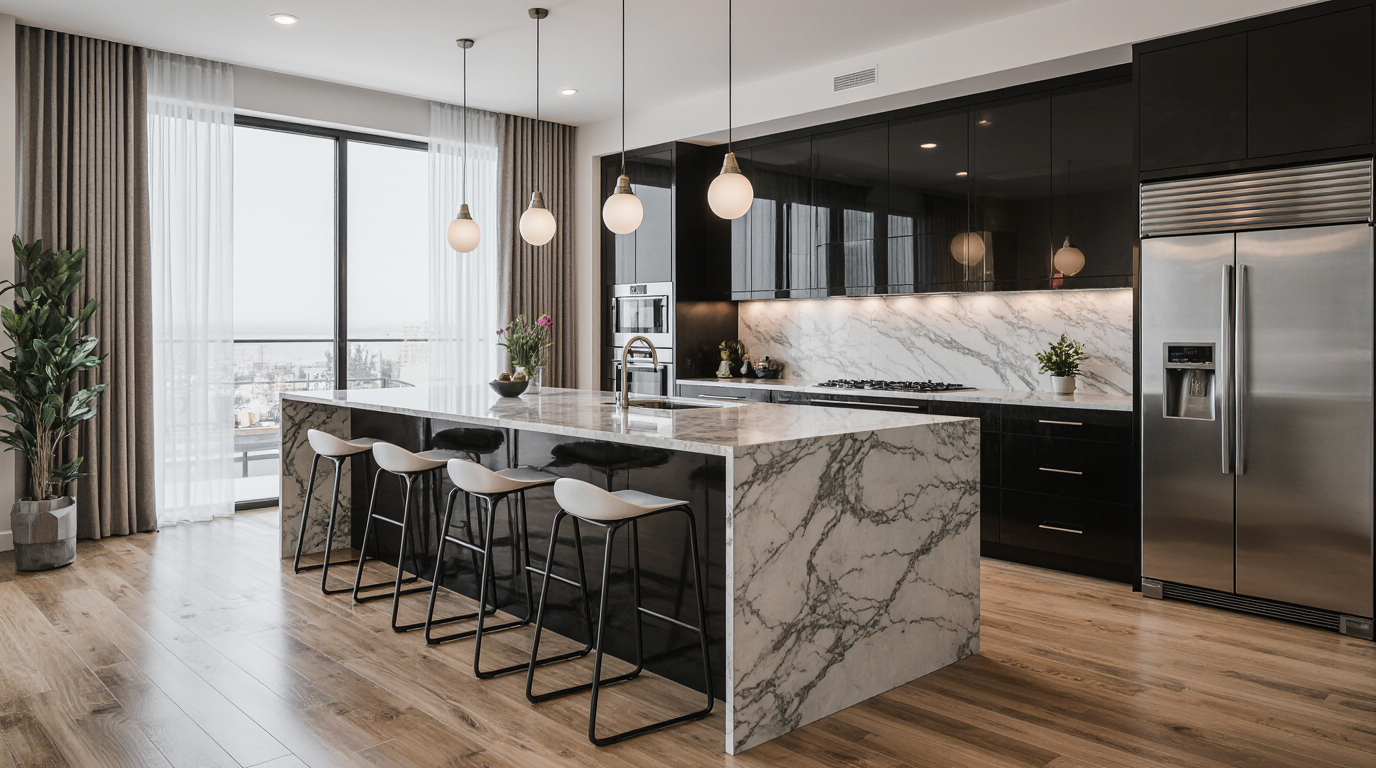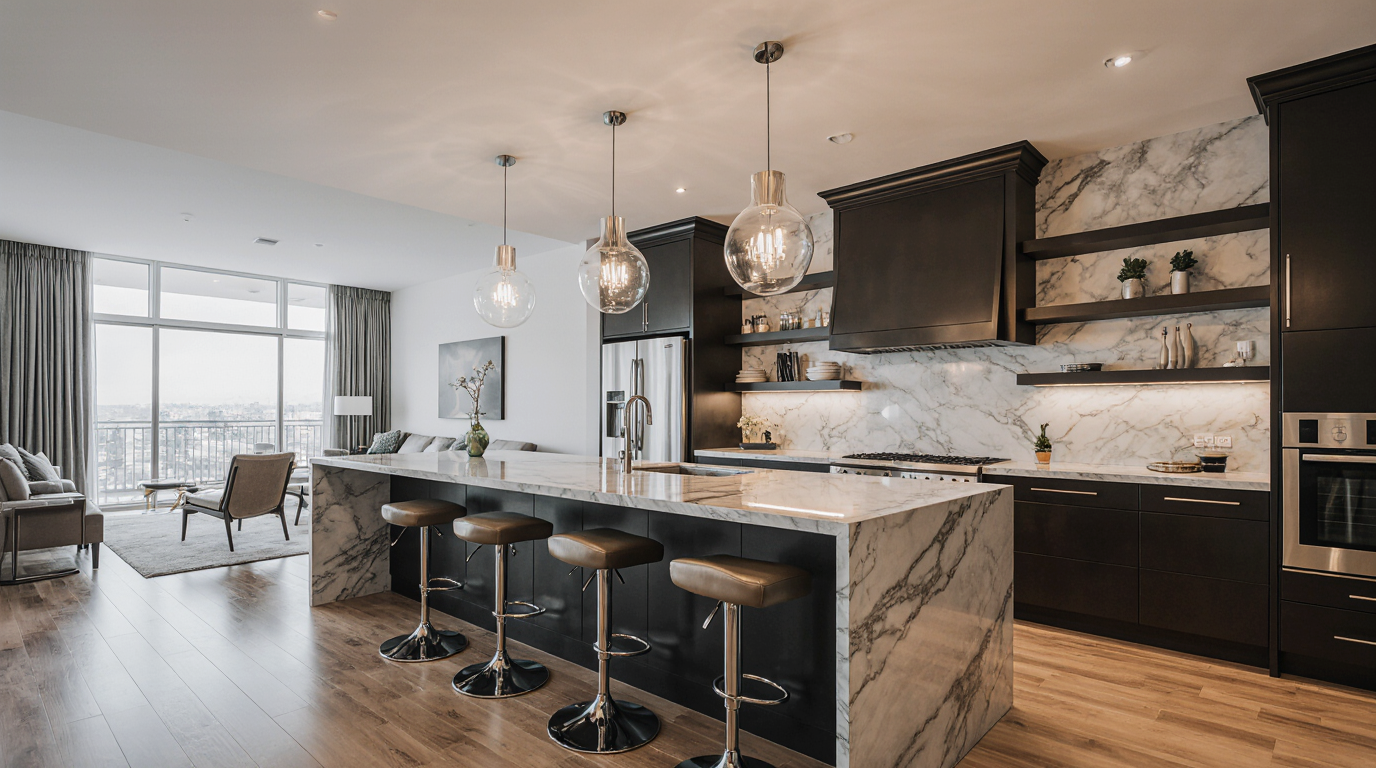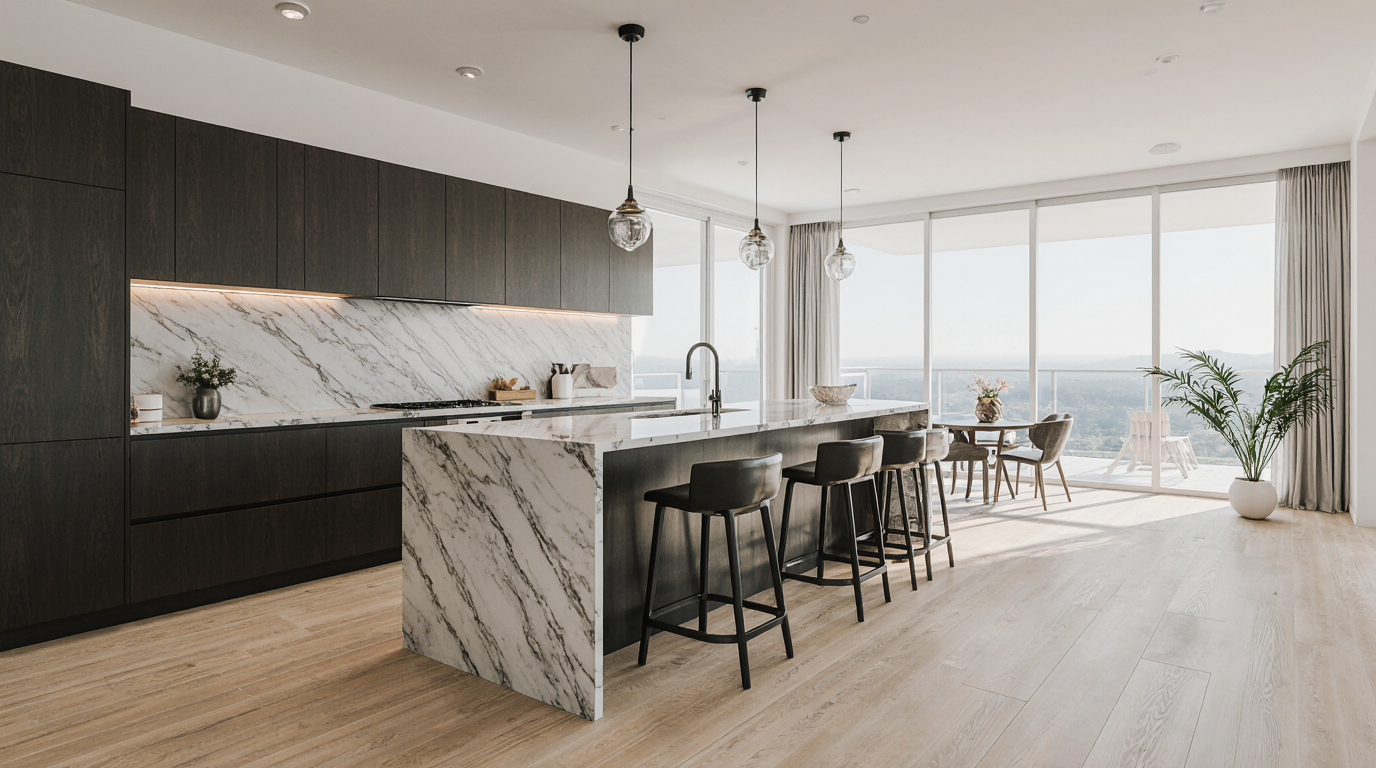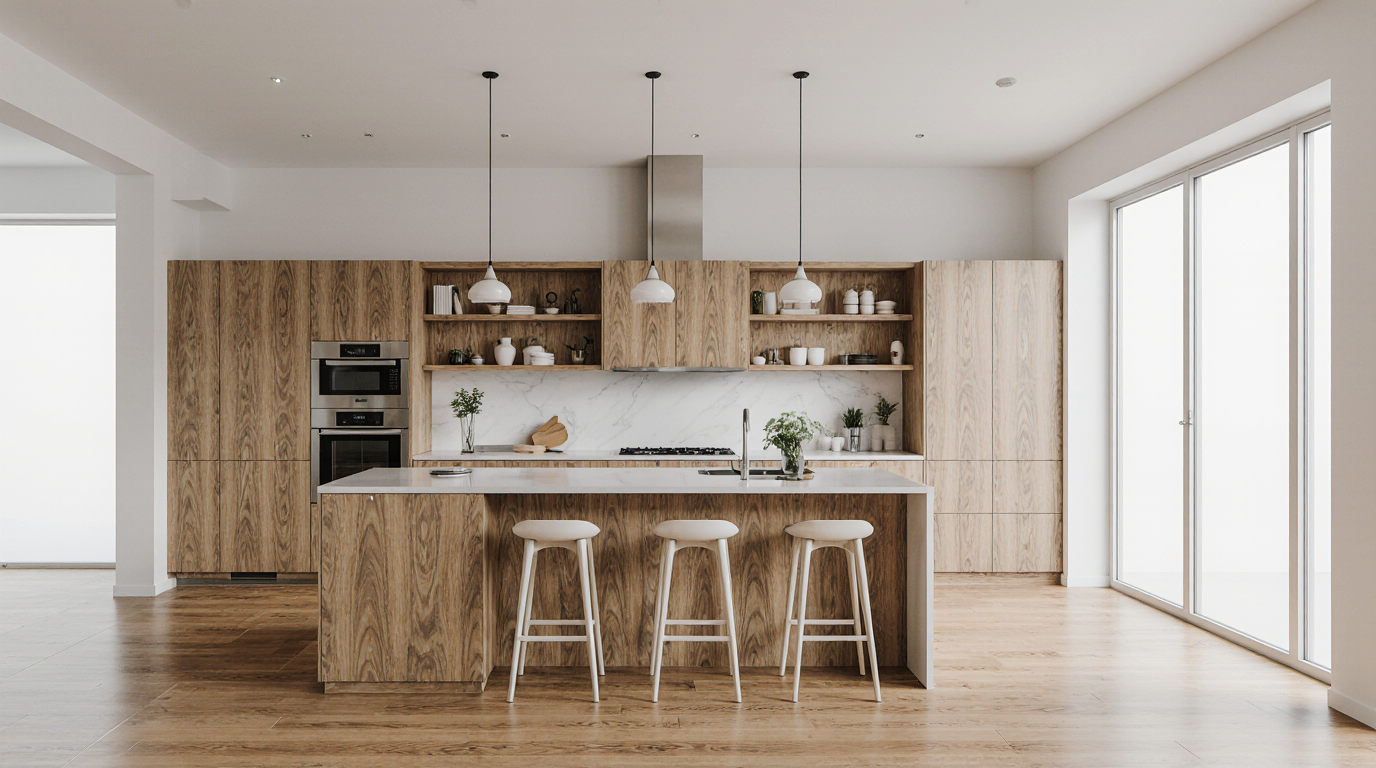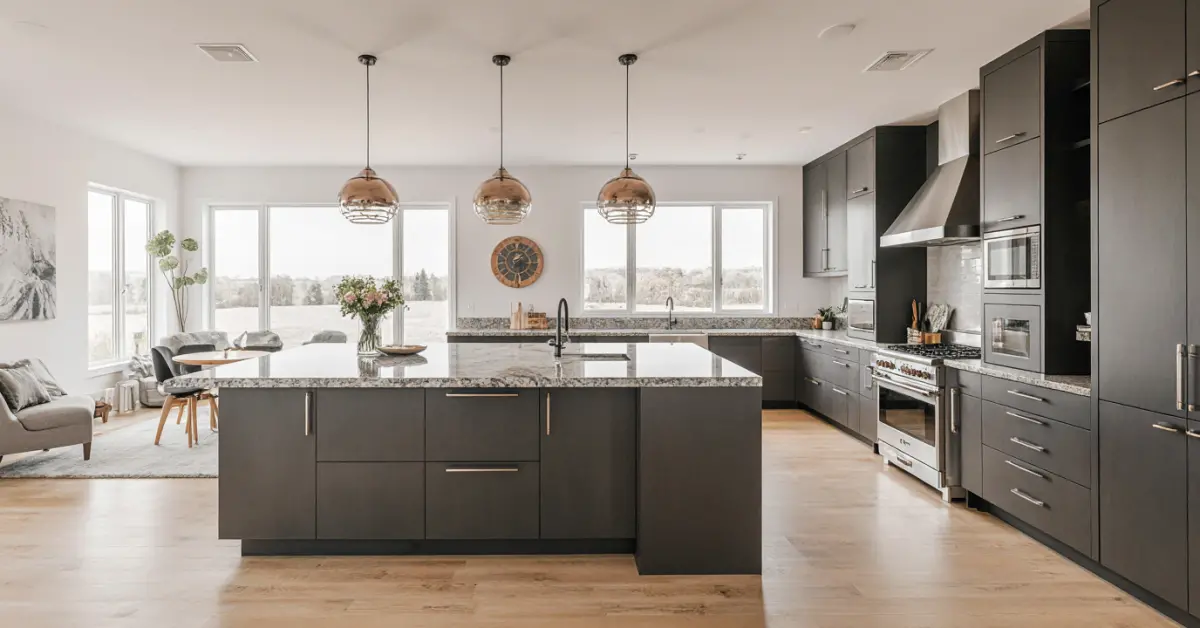
Why do so many visually stunning Sarasota kitchens become functionally frustrating within a few years? The issue is rarely the quality of the cabinets or the countertops. The failure is almost always rooted in a layout designed for a generic home, not a Sarasota home, ignoring the constant battle with humidity and the seamless indoor-outdoor flow our lifestyle demands.
Executive Summary: A Resilient Layout for the Sarasota Lifestyle
From my direct experience executing projects from Lakewood Ranch to the barrier islands, a successful Sarasota kitchen
From my direct experience executing projects from Lakewood Ranch to the barrier islands, a successful Sarasota kitchen layout is less about adhering to a rigid shape like a U-shape or L-shape and more about strategic adaptation to our environment. I've seen beautifully rendered designs fail because they didn't account for the path of humid air from an open lanai or the corrosive effect of salt spray on appliance placement. The best layouts here prioritize airflow, material durability, and a functional connection to outdoor living spaces, which are often the true heart of the home.
- Ventilation over Visuals: The layout must promote cross-ventilation, not trap moist, warm air.
- Material Zoning: Placement of wood, metal, and stone must consider exposure to sunlight and humidity.
- Indoor-Outdoor Transition: The path from the kitchen to the lanai or pool deck must be direct and unobstructed.
- Appliance Longevity: Locating sensitive electronics and stainless steel away from direct, prolonged salt air exposure is critical.
The Planning Failures That Haunt Sarasota Homeowners
The most common layout mistakes in Sarasota stem from underestimating our climate. A designer unfamiliar with coastal Florida might create a perfect "work triangle" on paper that, in reality, places a high-end refrigerator where it gets blasted by afternoon sun through a western-facing window, causing it to overwork and fail prematurely. Another frequent error is creating tight, enclosed layouts in smaller condos, which become humidity traps without constant, expensive air conditioning.
The Hidden Cost of Ignoring the Lanai
The most expensive failure I consistently see is treating the lanai door as just another exit. Clients invest heavily in beautiful, large sliding glass doors to merge their indoor and outdoor spaces. However, their kitchen layout forces a convoluted path around an island or peninsula to get from the grill to the sink. This functional disconnect effectively kills the indoor-outdoor concept. The result is a beautiful but impractical space where entertaining becomes a chore of navigating obstacles, and the lanai feels isolated rather than integrated.
How a Climate-Aware Layout Takes Shape in Practice
The process starts with an environmental audit of the space, not just measuring walls. We map the path of the sun, identify the primary sources of airflow (and humidity), and analyze how the family actually moves between the kitchen, living area, and outdoor spaces. Only then do we begin sketching layouts. This approach front-loads the problem-solving, ensuring the chosen design—whether it’s an open-concept galley or a large L-shaped kitchen with an island—is fundamentally suited to the home's specific Sarasota location.
Layout Selection Criteria for a Sarasota Home
- Proximity to Outdoor Cooking: Is there a clear, safe path from an outdoor grill on the lanai to an indoor prep sink or counter, avoiding main traffic zones?
- Appliance Placement vs. Salt Air: For homes on Longboat Key or Siesta Key, is the primary refrigerator or oven located on an interior wall, shielded from direct salt air infiltration when sliders are open?
- Resistance to Humidity Pockets: Does the layout avoid creating tight, unventilated corners where moisture can collect? This is critical for preventing mold and cabinet warping.
- HOA Sightline Compliance: In communities like The Founders Club, does the view from the main living area into the kitchen meet the aesthetic standards required by the design review board?
Comparing Layouts for a Sarasota Renovation
Choosing a layout isn't just about personal preference; it's a strategic decision with long-term consequences for maintenance, energy use, and property value. A layout that works perfectly in a landlocked city can be a liability here. The wrong choice can mean higher cooling bills, faster material degradation, and a less enjoyable living experience.
| Layout Type | Indoor-Outdoor Flow | Humidity & Airflow Management | Suitability for Entertaining |
|---|---|---|---|
| Open-Concept Galley | Excellent, provides a direct channel to the lanai. | Very good, promotes linear airflow. | Good, but can create bottlenecks if the aisle is too narrow. |
| Large U-Shaped Kitchen | Poor, often creates a dead-end that isolates the cook from outdoor areas. | Fair, can trap moisture in the corners if not properly ventilated. | Excellent for a dedicated cook, but poor for guest interaction. |
| L-Shaped with Island | Good, if the island does not obstruct the path to the sliding doors. | Good, generally open and allows for decent air circulation. | Excellent, the island becomes a natural social hub. |
When a Fully Open Layout Is the Wrong Choice
Despite its popularity, a completely open layout isn't always the best solution, especially in older Sarasota homes not built with modern HVAC and insulation. In these cases, removing all the walls can create a cavernous space that is incredibly expensive to cool. A more strategic approach, like a cased opening or a semi-open design, can preserve the feeling of spaciousness while providing better climate control and reducing energy consumption.
A Practical Checklist for Your Sarasota Kitchen Layout
Before committing to a design, walk through this checklist. Answering these questions can save you from costly revisions and long-term frustration. This is about ensuring your layout is as resilient and functional as it is beautiful.
- Confirm that the proposed layout does not place moisture-sensitive materials (like certain wood veneers) in direct line of humid prevailing breezes from the Gulf.
- Verify that all appliance specifications, especially for those near windows or doors, are rated for high-humidity environments.
- Check your HOA or condo association's design guidelines for any restrictions on moving plumbing or load-bearing walls, a common hurdle in communities like Palmer Ranch.
- Ensure the layout accounts for the Florida Building Code's requirements for anchoring cabinetry, especially in high-velocity hurricane zones (HVHZ), which cover all of Sarasota County.
- Plan for integrated dehumidification or enhanced ventilation within the pantry or enclosed cabinet sections, a small detail that prevents musty odors and mold.
- Map out the primary path from the garage to the refrigerator and pantry; a long, winding path becomes a daily annoyance.
Decisions That Determine a Layout's Success
The success of a kitchen layout in this region is decided long before the first cabinet is ordered. It's determined by the decision to prioritize local-environmental function over generic design trends. I've seen clients fixate on an island style they saw in a magazine, only to realize it creates a permanent roadblock to their lanai. The most successful projects are with clients who are willing to adapt their vision to the realities of living on the Florida coast.
The Moment Most Homeowners Get It Wrong
The critical mistake happens at the very beginning: homeowners fall in love with an appliance package before the layout is finalized. They'll buy a 48-inch pro-style range because it's a showstopper, and then force the entire kitchen design to revolve around it. The correct approach is to finalize the spatial flow and function first, then select appliances that fit the optimized layout. This ensures the layout serves your lifestyle, not the dimensions of a refrigerator.
Practical Answers for Your Sarasota Project
Navigating a kitchen renovation here involves more than just design choices. It requires an understanding of local regulations and environmental factors that can impact your project's timeline and budget.
How Does the Florida Building Code Affect Layout?
The Florida Building Code (FBC), particularly its sections on wind load and structural integrity, indirectly affects layout. For example, any changes to exterior walls for larger windows or doors to enhance a view must meet stringent hurricane-impact standards. This can dictate where you can and cannot place key elements of your kitchen. Furthermore, electrical outlets must be planned with GFCI protection, especially near sinks and in areas that could be exposed to moisture from open doors.
What Is the HOA Design Review Process Like?
In most planned communities in Sarasota, the Homeowners Association (HOA) design review is a formal, non-negotiable step. For a kitchen layout change, you will likely need to submit detailed floor plans and material specifications. The review board in a place like Lakewood Ranch will scrutinize everything from the visibility of a range hood from the living room to the noise rating of a dishwasher. Approval can take anywhere from 30 to 60 days, a critical timeline to factor into your project schedule, especially for seasonal residents.
How Does Proximity to the Water Impact Material Choices in a Layout?
For a home on Bird Key or any waterfront property, the layout must be planned with material longevity in mind. Salt air is corrosive. The layout should minimize the exposure of stainless steel appliances to direct sea breezes. We often specify marine-grade plywood for cabinet boxes (a 20-30% material upcharge that prevents delamination) and recommend hardware with a PVD (Physical Vapor Deposition) finish, which is far more resistant to tarnishing and pitting than standard brass or chrome.