Compact Laundry Room Makeover: Turning Tiny Areas into Stylish Efficiency
Designing a small laundry room presents a unique challenge that combines creativity, efficiency, and aesthetic appeal. Careful space planning ensures that even the tiniest laundry room becomes a highly practical and elegant environment. Beyond mere functionality, a thoughtfully designed laundry area increases home value and offers a pleasant, orderly workspace. The key to a successful small laundry room design lies in maximizing storage, incorporating smart appliances, and using visual tricks to create a sense of openness and luxury.
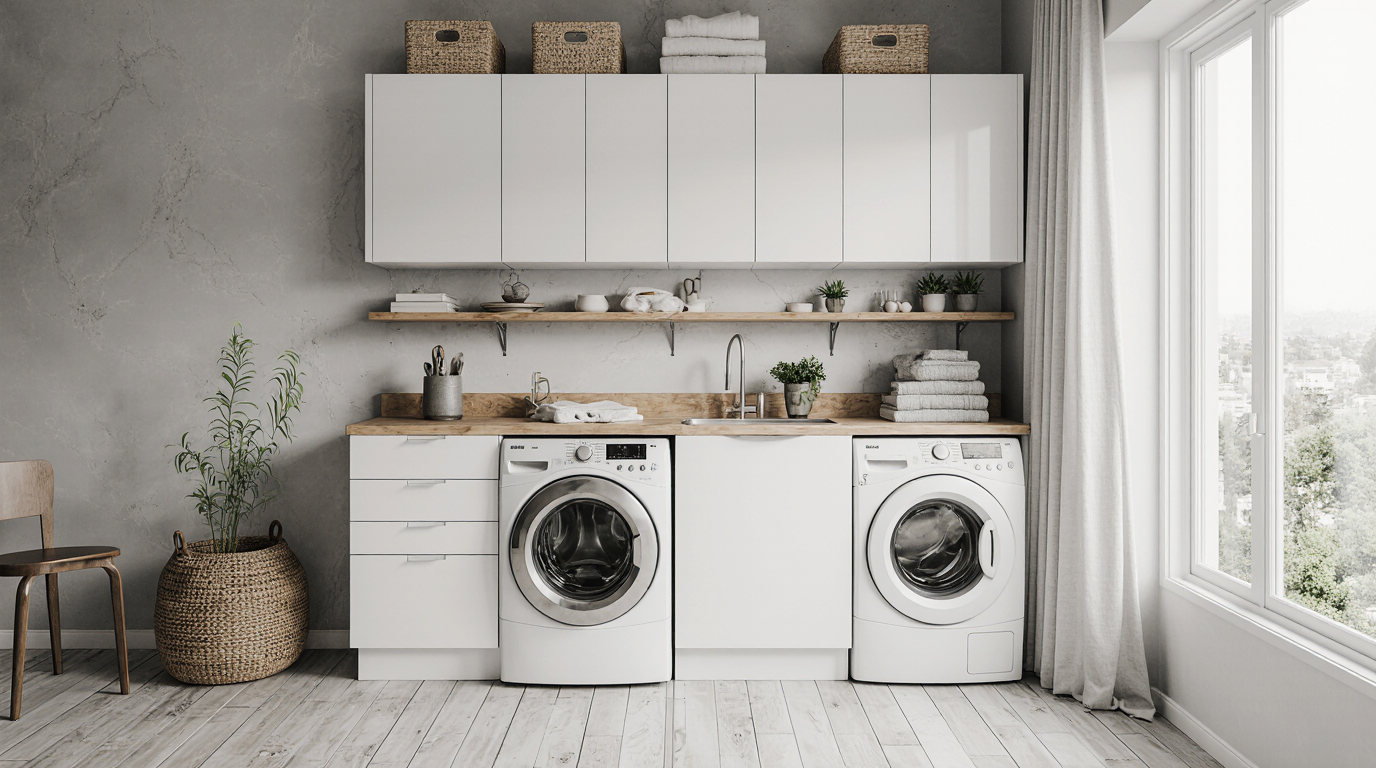
Appliance arrangement is crucial in tight laundry areas. Stackable laundry machines optimize vertical space, leaving more room for functional surfaces and organizational solutions. Choosing energy-saving, high-performance washers and dryers enhances both efficiency and convenience. Encasing machines in tailored cabinetry not only improves style but also promotes an organized, harmonious design. Tailored cabinetry surrounding vertical units provides storage for essentials, streamlining chores and maintaining order.
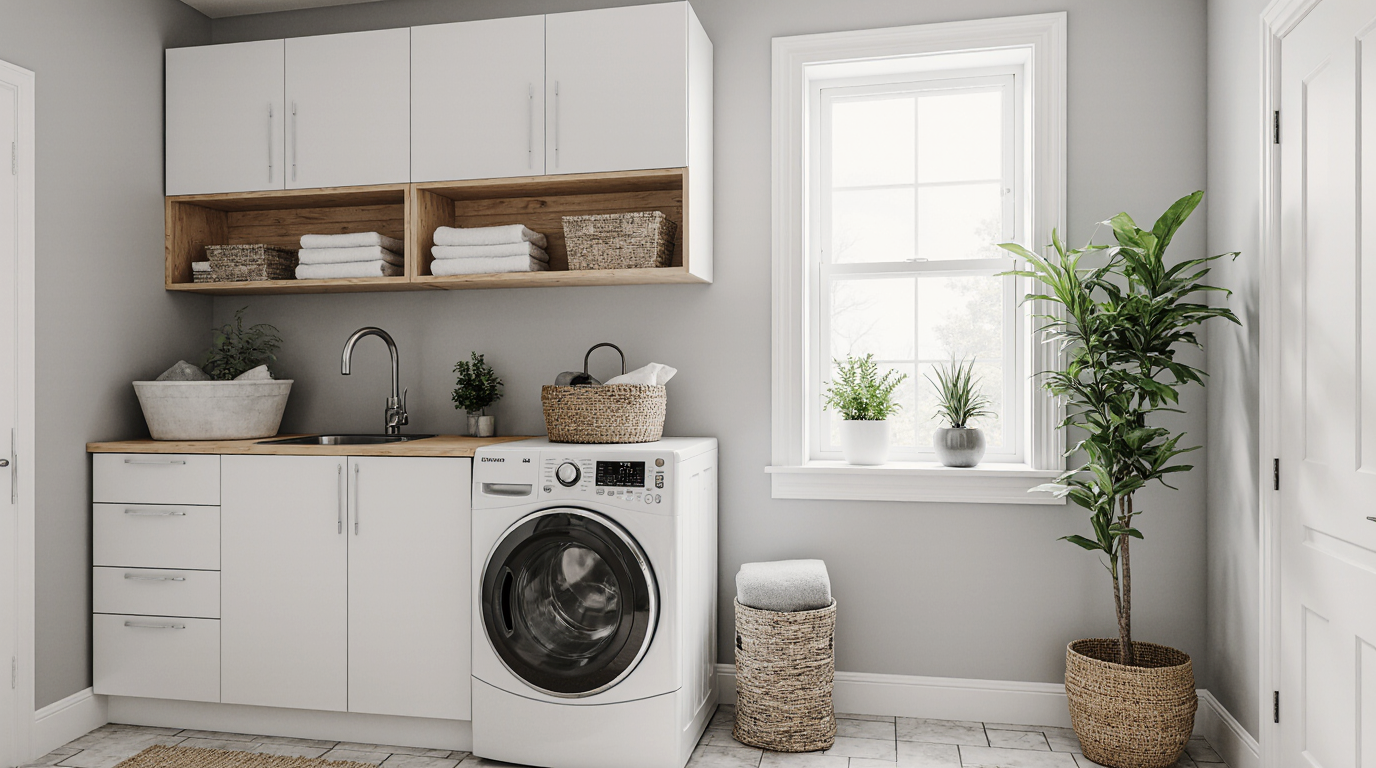
Storage solutions in a small laundry room need to be both practical and visually appealing. Utilizing wall shelves, sliding baskets, and built-in units maximizes space and accessibility. Designers often suggest installing wall-mounted drying racks or foldable ironing boards that can disappear into the wall when not in use. Smart use of height allows additional storage without sacrificing openness. Clever storage also extends to hidden compartments or sliding drawers for laundry hampers, ensuring that dirty clothes are contained and the room retains a clean, streamlined appearance.
Well-planned illumination makes small laundry spaces appear larger and more inviting. A well-lit laundry room feels larger, cleaner, and more inviting. Natural light is ideal whenever possible, but artificial lighting can be optimized with recessed ceiling lights, under-cabinet LED strips, or even decorative pendant lights above a folding counter. Bright, even lighting improves visibility for sorting and folding clothes while creating a more enjoyable space to work in. Incorporating mirrors amplifies brightness and creates an illusion of expanded room size.
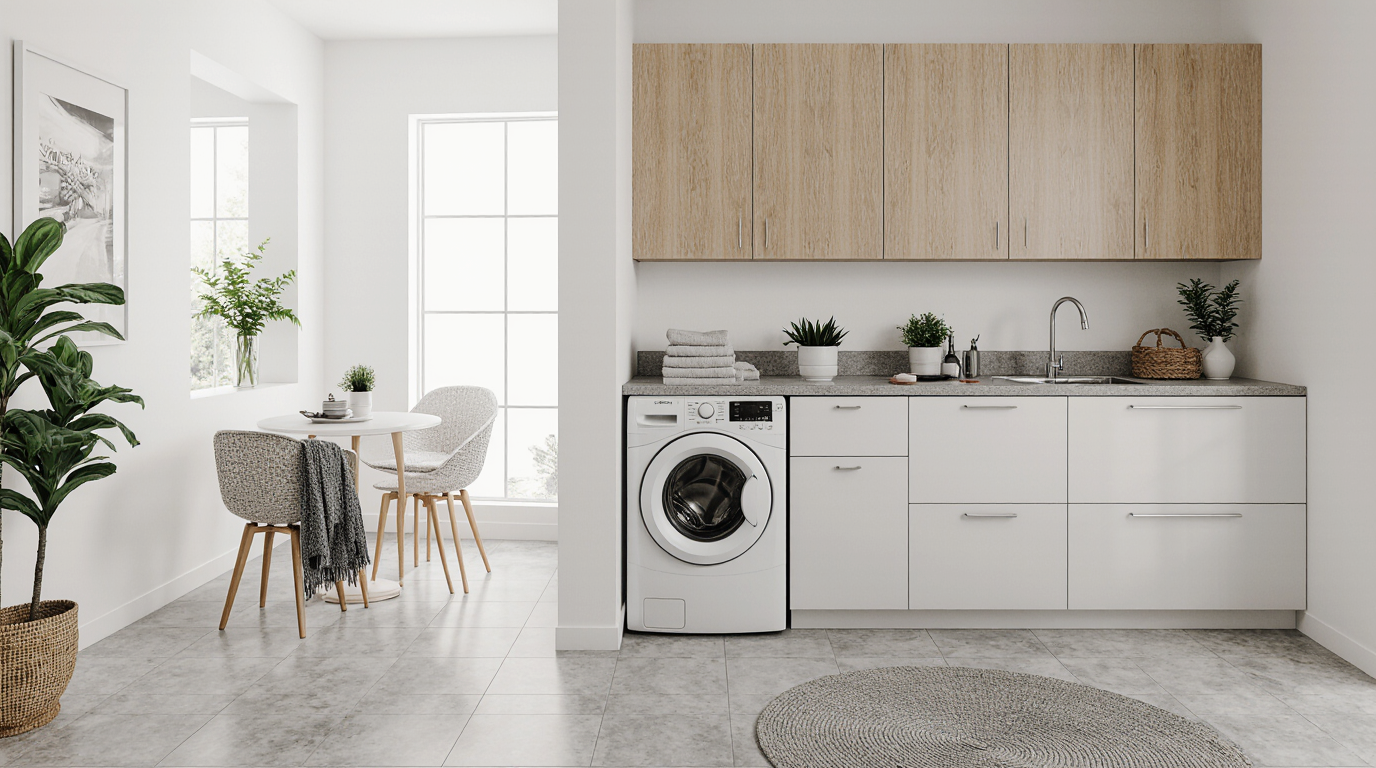
Choosing the right color palette significantly impacts the perceived size and mood of a compact laundry space. Gentle shades of white, gray, or pastel evoke openness and calmness. Contrasting trims or bold accents can add character without overwhelming the space. Incorporating wood, woven elements, and neutral tones adds depth, warmth, and timeless style. Thoughtful color coordination elevates the room’s mood and makes routine tasks more enjoyable.
Optimizing flow and task sequence ensures maximum efficiency in compact laundry areas. The room should be laid out to support the natural sequence of laundry tasks, from sorting and washing to drying and folding. Front-loading machines with overhead counters create versatile work surfaces, and adjacent sinks enhance functionality. Designers often highlight the importance of ergonomic layout in small laundry rooms, ensuring that every element, from shelves to machines, is easily accessible without unnecessary bending, stretching, or lifting. Efficient workflow reduces fatigue and streamlines household chores, making even the smallest laundry room highly functional.
Design details transform ordinary laundry rooms into visually appealing, elegant spaces. Decorative backsplash tiles behind sinks or counters, stylish cabinet handles, and coordinated storage baskets contribute to a cohesive design that reflects personal style. Even small touches, such as a framed artwork or a small plant, can add personality and visual interest. Many modern designs embrace minimalism, combining sleek cabinetry with hidden storage, while others incorporate a touch of vintage charm with retro appliances or colorful accents. Prioritizing comfort and pleasure in design ensures the laundry room is both practical and inviting.
Innovative solutions, such as fold-down drying racks, pull-out ironing boards, or multipurpose islands, are increasingly common in small laundry room design. Multi-functional elements maximize usability without expanding the physical space. Multi-functional furniture or modular units can also expand storage and usability, making even the most compact space highly versatile. Countertops serve dual purposes as folding surfaces and styling platforms.
Green design strategies combine functionality and environmental responsibility in small laundry areas. Incorporating eco-friendly machines, faucets, and materials lowers environmental footprint and operational costs. Sustainable choices are now standard, allowing efficient, stylish, and responsible spaces. Choosing appliances with advanced energy ratings, installing low-flow faucets, or using reclaimed wood for cabinetry are simple yet impactful ways to create a sustainable and stylish laundry space.
Maintaining order and minimizing clutter enhances both functionality and aesthetics in tight laundry spaces. Strategic storage solutions facilitate organization and reduce visual chaos. Smart placement of items by frequency optimizes workflow. An orderly, intentional layout transforms a compact laundry space into a sustainable, attractive environment.
From storage to aesthetics, each design choice shapes the room’s usability and ambiance. By combining strategic storage, smart appliances, thoughtful lighting, and aesthetic touches, even compact laundry spaces can become highly functional, organized, and luxurious. Strategic planning turns compact laundry rooms into functional, elegant extensions of the household layout. A perfect mix of practicality, design, and comfort converts tiny laundry spaces into luxurious, well-organized zones.