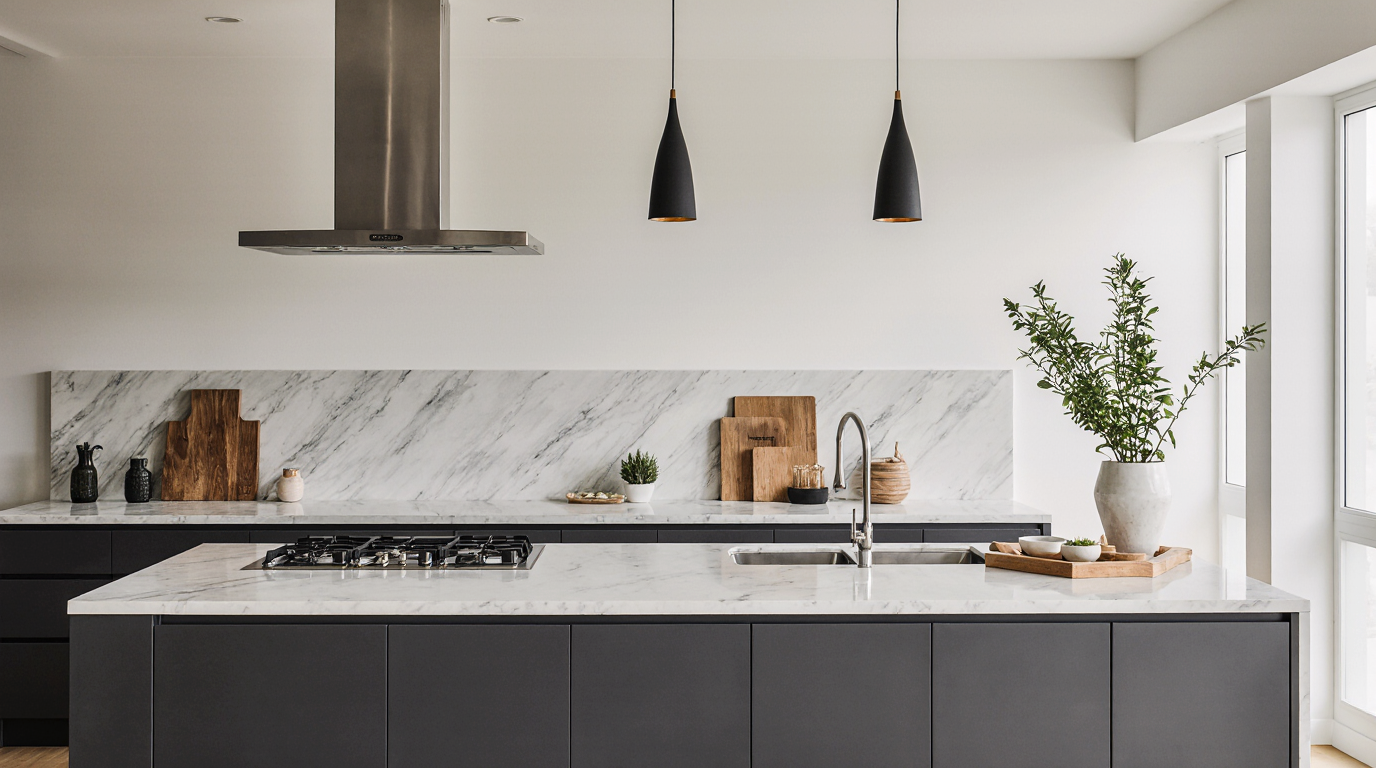
Executive Summary: A Sarasota Kitchen Redo
From my direct experience managing projects from Lakewood Ranch to Siesta Key, a successful kitchen redo in Sarasota
From my direct experience managing projects from Lakewood Ranch to Siesta Key, a successful kitchen redo in Sarasota hinges on one principle: planning for environmental resilience, not just aesthetics. The biggest budget overruns I see stem from underestimating the impact of our high humidity and salt-laden air on materials that perform well elsewhere. A successful project here requires a material-first approach, prioritizing long-term durability over short-term savings.
- Material Selection: Prioritize marine-grade plywood or high-density fiberboard (HDF) for cabinet boxes over standard particle board.
- HOA & Permitting Timelines: Factor in a minimum of 30-60 days for design review and approval from local HOAs, especially in master-planned communities or waterfront condos.
- Humidity & Ventilation: Integrate robust ventilation solutions that go beyond a standard range hood to actively manage ambient moisture.
- Hardware Specification: Use stainless steel (304 or 316 grade) or solid brass hardware to prevent corrosion from the salt air, a non-negotiable for barrier island properties.
Planning Failures That Inflate Your Final Cost
The most common planning failure I witness is treating a Sarasota kitchen remodel like one in a dry, inland city. Clients often bring inspiration photos with materials completely unsuited for our climate, like certain unsealed natural woods or standard MDF cabinetry. The issue isn't the initial quote; it's the cost of remediation a few years down the line when cabinet doors start to swell and refuse to close properly during the summer months.
Another frequent oversight involves older homes, particularly those west of the Trail. Many were built before modern moisture barrier standards. A gut renovation that doesn't address the underlying wall assembly and insulation can trap humidity, leading to mold growth behind your brand-new cabinets. It's a hidden problem that manifests months after the final check is written.
The Most Expensive Failure: Ignoring the Hurricane Code
The costliest mistake is assuming the Florida Building Code's hurricane requirements only apply to windows and roofs. For kitchens, especially those with large islands or extensive cabinetry on exterior walls, anchoring becomes critical. I’ve had to re-engineer installations because the initial plan didn't account for the structural load and wind uplift requirements. A failure here isn't just cosmetic; a city inspection can halt the entire project, forcing a costly tear-out and re-installation that adds weeks and thousands of dollars to the kitchen rebuild cost.
The Renovation Process in Practice
A kitchen redo in Sarasota is a multi-stage process governed by both municipal and community-level rules. It begins with a deep design phase where material science is as important as layout. Once plans are finalized, they are submitted to the Sarasota County Building Department for permitting, a process that, depending on complexity, can take 4-8 weeks. Simultaneously, if you live in a condo or an HOA-managed community like Palmer Ranch, a separate and often more stringent architectural review is required.
Once approvals are secured, demolition and construction can begin. This phase involves careful coordination of trades—plumbers, electricians, drywallers, and installers. The key is managing the timeline around our weather. For example, leaving a wall open during the peak of our rainy summer season without proper protection is a recipe for moisture intrusion that can compromise the entire project.
Selection Criteria for Sarasota Homeowners
- Local Environmental Experience: The contractor must demonstrate successful projects on the barrier islands (Lido, Siesta) or in waterfront areas, proving they understand salt air and humidity mitigation. Ask for addresses, not just photos.
- HOA Navigation Proficiency: Verify their experience with specific, notoriously strict HOAs. A contractor familiar with the rules of, for instance, the Longboat Key Towers' association, can save you months of delays.
- Transparent Material Sourcing: They must be able to explain why they recommend a specific grade of plywood or hardware finish, linking it directly to Sarasota's climate, not just brand names.
- Licensed and Insured for Coastal Work: Ensure their liability and workers' compensation insurance is current and adequate for projects in high-velocity hurricane zones (HVHZ), which covers much of the desirable coastal area.
Comparing a Full Redo with Lighter Alternatives
Homeowners often grapple with whether to commit to a full gut renovation or opt for a less invasive approach like refacing or a partial remodel. The decision depends heavily on the existing condition of your kitchen's “bones” and your long-term goals. For a small kitchen remodel, sometimes refacing is a smart, budget-conscious choice. But for many older Sarasota homes, it's merely a cosmetic fix for underlying structural and moisture issues.
This table breaks down the strategic differences for a typical 150-square-foot kitchen in our local market.
| Indicator | Full Kitchen Redo | Cabinet Refacing | Partial Remodel (e.g., Counters & Backsplash) |
|---|---|---|---|
| Moisture & Structural Integrity | Fully addresses underlying issues (mold, rot, poor insulation) | Masks existing problems; cabinet boxes remain vulnerable | No impact on structural or moisture issues |
| Typical Cost Range | $40,000 - $120,000+ | $9,000 - $20,000 | $5,000 - $15,000 |
| Layout Flexibility | Complete freedom to change footprint and workflow | None; layout is fixed | None; layout is fixed |
| Impact on Home Value | Highest potential ROI, especially in luxury markets | Moderate cosmetic uplift | Minor cosmetic uplift |
When a Full Redo Is the Wrong Choice
A full kitchen redo is not the right choice if you plan to sell the property within 1-2 years and the existing layout is functional. In this scenario, the high kitchen rebuild cost is unlikely to be fully recouped. A more strategic investment would be a cosmetic refresh—refacing, new countertops, modern hardware, and a fresh coat of paint. This provides a significant visual impact for a fraction of the cost and disruption, making the property more marketable without over-capitalizing.
Safe Hiring and Vetting Checklist
Hiring the right team in Sarasota goes beyond checking for a license. The unique challenges of our environment demand a higher level of scrutiny. Before signing any contract, I advise clients to verify every item on this list. This is especially true when considering a seemingly cheap kitchen remodel cost, as corners are often cut on materials and insurance.
- Verify their Florida Certified General Contractor (CGC) or Certified Building Contractor (CBC) license is active and complaint-free on the state's DBPR portal.
- Request a Certificate of Insurance showing both General Liability ($1M minimum) and Workers' Compensation coverage specific to Florida.
- Ask for at least three local references for projects completed within the last two years, with at least one in a waterfront or barrier island location.
- Confirm they will be pulling all necessary permits under their own license, not asking you to pull an “owner-builder” permit, which transfers all liability to you.
- Review a sample contract to ensure it includes a clear scope of work, a payment schedule tied to project milestones, and a specific clause about material specifications (e.g., “3/4-inch marine-grade plywood for all cabinet boxes”).
- Inquire about their specific process for protecting the rest of your home from dust and debris, particularly the HVAC system, which is critical in our dusty, humid environment.
Decisions That Determine the Outcome
The success of a kitchen project is sealed long before demolition begins. The single most critical decision is committing to a design and material list and then refusing to change it once the project is underway. Scope creep is the number one budget killer. Every change order, no matter how small it seems, creates a ripple effect, causing delays and cost increases that are disproportionate to the change itself.
My mini case study involves a client in a Lido Key condo. They had a perfectly planned project with marine-grade materials specified. Mid-project, they saw a trendy, porous natural stone countertop online and insisted on it, against my advice about its suitability for a humid, high-use environment near salt water. Within three years, the stone was stained and showing signs of pitting, requiring expensive restoration that negated any initial aesthetic gain. The right decision was made initially; the mistake was deviating from the climate-appropriate plan.
The Exact Moment the Majority Gets It Wrong
The moment most homeowners go wrong is during the material selection phase, specifically with cabinetry. They focus 90% of their attention on the door style and color and almost zero on the construction of the cabinet box. The box, not the door, is what fails in Florida’s humidity. I urge clients to reverse their focus: first, lock in the budget for the highest-quality, most moisture-resistant cabinet box construction you can afford (e.g., domestic marine-grade plywood). Only then should you select a door style and finish that fits within the remaining budget. This single shift in priority is the difference between a kitchen that lasts 30 years and one that starts failing in five.
Practical Answers About Operations in Sarasota
Navigating the local bureaucracy and physical constraints is a core part of any Sarasota renovation. The process is not intuitive, and understanding the specific local challenges, from permitting to condo board politics, is essential for a smooth project. These are not just administrative hurdles; they directly impact your timeline and budget.
Navigating Condo Association Design Reviews
Most Sarasota condo associations, especially along Gulf Stream Avenue or on the keys, have Architectural Review Committees (ARCs) with strict rules. They dictate everything from the hours construction can occur (often limited to 9 AM - 4 PM, Mon-Fri) to the types of flooring underlayment required for soundproofing. Submitting an incomplete package can delay your project by a month or more, as boards often only meet once a month. A contractor experienced with your specific building is invaluable here.
The Realities of Permitting with Sarasota County
Any kitchen redo that involves moving walls, plumbing, or electrical requires a permit from Sarasota County. A standard kitchen permit application, if properly submitted by a licensed contractor, typically takes 4-6 weeks for review and approval. However, projects in designated flood zones (common for waterfront properties) may require additional documentation and face more scrutiny, potentially extending this timeline. The permit fee itself is often a few hundred dollars, but the real cost is in the project delays if the plans are rejected and require revision.
Material Acclimation: The Unseen Requirement
One of the most overlooked steps is material acclimation. Wood flooring, cabinetry, and even some types of millwork must be delivered to the job site and allowed to sit in the home's ambient humidity for at least 72 hours (sometimes longer) before installation. Skipping this step, especially during our humid summers, causes materials to expand or contract after they are installed, leading to warped doors, buckled floors, and separated joints. It’s a non-negotiable step for a lasting installation in our climate.