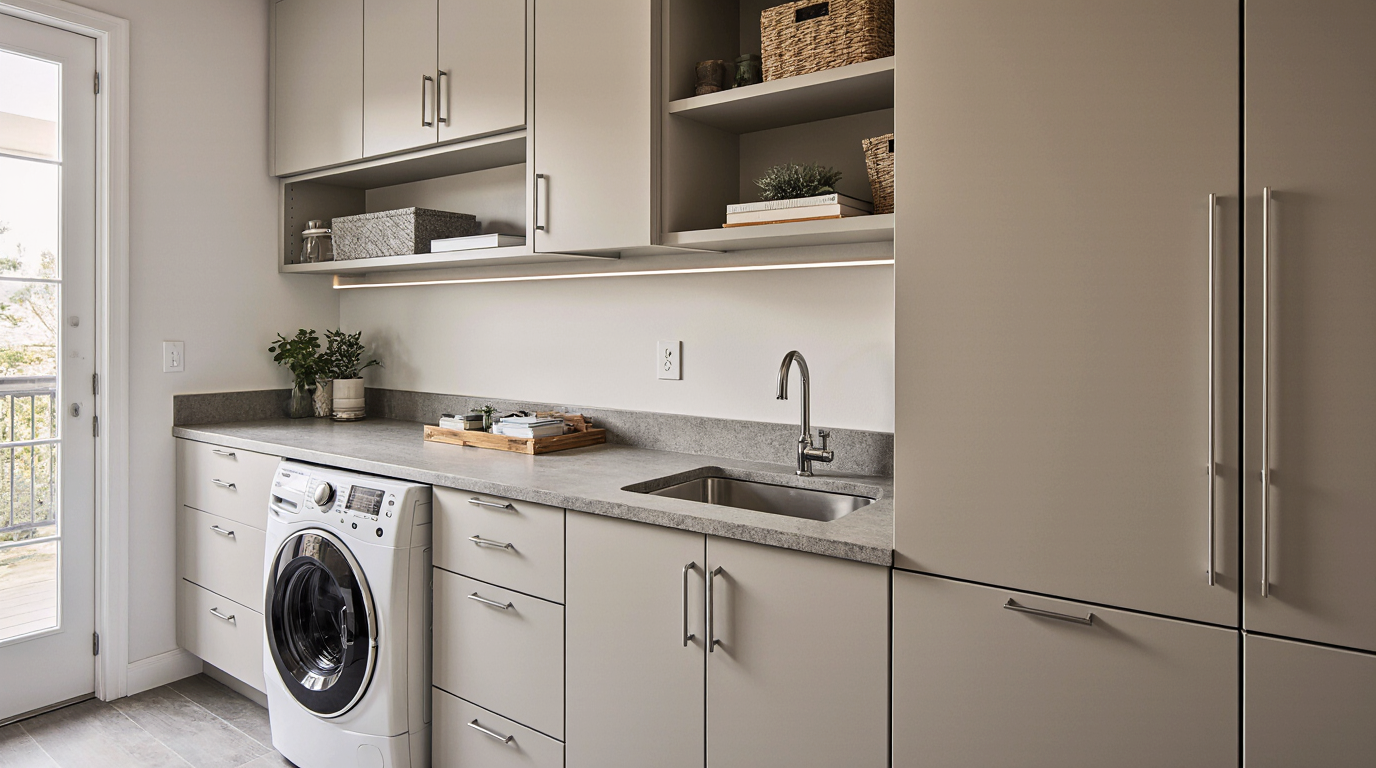
The current home demands greater demands from each square inch, and the utility room, or laundry room, is equally important. The era has passed when this space was confined as a forgotten alcove. Today's utility room decor is about blending visual appeal and peak performance. This area should be a haven of neatness, a place where the necessary task of garment care becomes an unexpectedly pleasant activity, supported by clever tech and well-considered elements that reflect the home's broader design language. True design authority in this space comes from seeing it as something more than just a utility spot, but as an extension of your living area, a hub for household management that deserves the same consideration as the kitchen or bath.
One of the most significant shifts in contemporary design centers on materials that bring visual warmth and durability. Moving past standard functional choices, consider the adoption of hardwood flooring or high-quality, large-format porcelain tiles that mimic natural stone or reclaimed wood. This choice immediately boosts the room’s perceived value and comfort level. For surfaces, the focus is placing emphasis on high-end components. Think further than conventional metals; incorporating brushed brass, matte black, or copper accents in your taps, mixers, and hardware injects a layer of bespoke sophistication. The countertop selection is crucial. Materials like engineered quartz or honed granite offer stain resistance and a luxurious tactile quality provide the perfect surface for the meticulous act of sorting or folding. A large, deep sink, perhaps farmhouse style, is a must-have is perfect for hand-washing delicate items or pre-soaking stained garments without splashback or concern for the surrounding cabinetry.
The structure you impose governs the room's performance. Well-designed containment is the backbone of a neat and productive area. Floor-to-ceiling units make the most of vertical dimensions, especially important in compact settings. These custom enclosures ought to have specific, marked sections—maybe premium slide-out bins or hidden receptacles to mask laundry until the wash cycle. For lesser-used items, like specialized cleaning agents or seasonal linens, overhead cabinets equipped with subtle underlighting create both ambiance and accessibility. Furthermore, the often-overlooked task of ironing is streamlined by incorporating pull-out ironing boards concealed within drawers, preserving precious floor space when not in use. When there is room, a nearby folding area—like a heavy-duty wooden top or an extended counter—offers a comfortable spot just for the final step.
Color palettes are largely influenced by clean, nature-inspired aesthetics from both the North and East, prioritizing uncluttered looks. This translates to soft, soothing green tones, serene blues that evoke purity, or warm, earthy shades that pair beautifully with raw wood accents. The main goal is to prevent a cold, clinical feel. Where it fits the design, using substantial, naturally shaped wooden shelves allows for showcasing curated things—like neat piles of linens or attractively bottled soaps—introducing depth and character. Even the way the machines are situated can enhance the design; paired units in modern colors like flat white or dark grey promote visual unity. Smart appliance integration is now standard, with washers and dryers that offer automatic load sensing and remote operation, signaling a move toward a less involved, more automated cleaning process.
The notion of blending the utility area's function is really taking off, especially where real estate is tight. Designing a blended washroom and transition zone combines duties related to entering and leaving. Incorporating elements like a built-in bench seating area with integrated storage underneath—perfect for dropping bags or removing shoes—alongside sturdy coat hooks creates a practical entry-point management system. This combination necessitates hard-wearing, moisture-proof flooring that can cope with soil and wetness carried in from outside. On the other hand, if you work remotely, adding a narrow pull-out writing surface or a specially illuminated nook can turn the room into a short-term office, enabling you to manage tasks without taking away from the main laundry purpose.
The element of personalization is what truly distinguishes a well-designed utility space. This room should feel lived-in and inspiring, not institutional. Introducing unexpected decor is essential. A thoughtfully chosen small rug can mark off an area and provide appealing texture beneath your feet. A strong tile design along the wall behind the washer/dryer or sink—perhaps using geometric shapes or vibrant colors—can serve as the main attraction. Even simple additions, like framed vintage laundry signs or contemporary botanical prints featuring lush greenery, breathe life into the environment. Flora that enjoys damp air, for instance, the Peace Lily or Mother-in-Law's Tongue, do very well here, improving the air while softening the severe angles of the machines and built-ins. A well-designed utility room is a testament to holistic home planning, a place where high performance meets high style, resulting in a space that genuinely enhances daily living.