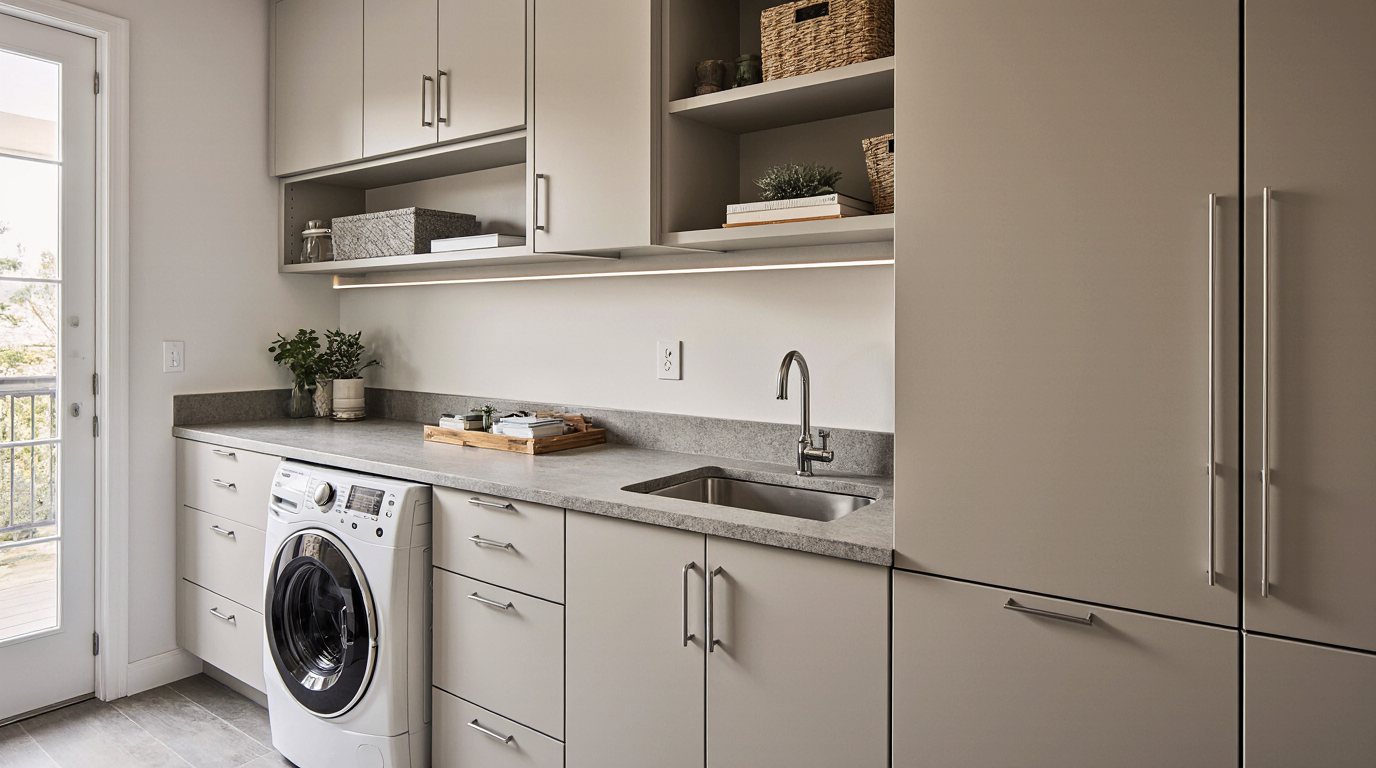
The progression of the washing space from a hidden, purely utilitarian corner to an integrated, multifunctional hub within the contemporary home demands a thorough reconsideration of its core elements, chief among them the storage units. As design experts promote aesthetic functionality and seamless integration, the decisions made regarding storage are not simply about hiding detergent bottles; they shape the room's overall performance and design presence. The trend for 2025 heavily favors tailored systems that maximize every vertical and horizontal plane, moving well past simple, off-the-shelf shelving units. We are beginning a phase where the utility room must function as a center of organization, often doubling as a mudroom, pet station, or even a temporary craft zone, demanding cabinet designs that are as adaptable as they are durable.
A major change involves embracing ceiling-height cabinetry. This strategy exploits the complete upward space, a vital step for maximizing storage in both expansive and smaller layouts. Cabinets that extend floor-to-ceiling streamline the aesthetic impact, creating a cohesive, uncluttered look that designers associate with high-end custom millwork. These vertical structures are perfectly suited for housing less frequently accessed items, such as seasonal linens, deep cleaning supplies, or specialized equipment, freeing up prime eye-level real estate for daily necessities. When implementing this, it is vitally important to confirm the materials selected—plywood or MDF with durable finishes—can withstand the constant thermal and humidity fluctuations inherent to laundry operations.
The concept of hidden laundry spaces is leading the next generation of cabinet design. Homeowners are steadily requesting that the entire appliance setup—washer, dryer, and associated plumbing—can be completely concealed when not in use. This is achieved through cleverly designed built-ins fitted with pocket doors or elegant barn doors that slide away completely. This level of concealment is crucial for open-plan living where the utility area might sometimes be visible from main living spaces. In addition, note the ingenuity in smaller features like pull-out laundry bins or integrated hampers built directly into the lower cabinetry runs. These elements remove the mess of freestanding baskets, promoting a peaceful, restful environment. A key technical consideration here is moisture management; when concealing machines, designers must build in necessary dehumidification or dehumidification solutions to prevent humidity trapping, which harms the cabinet's lifespan and air quality.
Smart storage solutions are rapidly moving from optional upgrades to expected features. This includes dedicated internal components that transform standard cabinet boxes into hyper-organized systems. Imagine sliding shelves positioned between stacked machines, perfectly sized to hold measured detergent pods or fabric softeners at an ergonomic height. Another game-changing feature is the concealed ironing station—a fold-down board built directly into a drawer system. For small spaces, modular storage systems that can be reconfigured as needs change are highly favored, often utilizing vertical stacking techniques. The incorporation of under-cabinet LED task lighting within the millwork itself is also essential, providing the bright, shadow-free illumination necessary for precise folding and stain treatment, moving beyond reliance on harsh overhead fixtures.
Color and material selection tell the story about the intended ambience of the modern utility room. While timeless white and gray cabinetry remains a safe choice, current authority leans toward warm, earthy color palettes—soft sage, deep navy, or muted terracotta—often achieved with matte finishes for a refined, soft quality. Mixing materials is also highly relevant; pairing painted cabinets with natural elements like reclaimed wood accents for open shelving or a built-in folding station introduces textural contrast. The countertop surface requires careful consideration; quartz is often specified for its stain-resistant properties and non-porous nature, making it a better choice than granite or marble in high-use areas where bleach or other chemicals might be present.
For maximum flexibility, opt for units that accommodate multiple uses. If the space acts as a transition zone, ensure the lower cabinets are strong enough to act as a custom sitting area, perhaps featuring custom cubbies for shoes or bags. If the room is adjacent to a living area, using consistent metal details from the kitchen—like aged brass pulls or matte black knobs—creates a cohesive aesthetic that makes the service space feel intentional from an afterthought to a deliberate part of the home’s overall design narrative. Ultimately, the success of any utility room cabinet design hinges on its ability to be invisible when work is done, yet easily reachable when chores start, proving that expert design transforms chores into a smoother process. The investment in custom-built-ins remains the gold standard for achieving this perfect balance of form and performance.