In my years designing custom cabinetry for high-end Sarasota County properties, I've seen the same critical failure
In my years designing custom cabinetry for high-end Sarasota County properties, I've seen the same critical failure point in laundry rooms: delamination and swelling. This isn't just a cosmetic issue; it's a structural breakdown caused by the intense humidity we face, especially in waterfront homes from Siesta Key to Longboat Key. Standard off-the-shelf cabinets, often built with particle board cores and basic hardware, simply cannot withstand the constant moisture and salt in our air. They are designed for a different climate and are destined to fail within a few years.
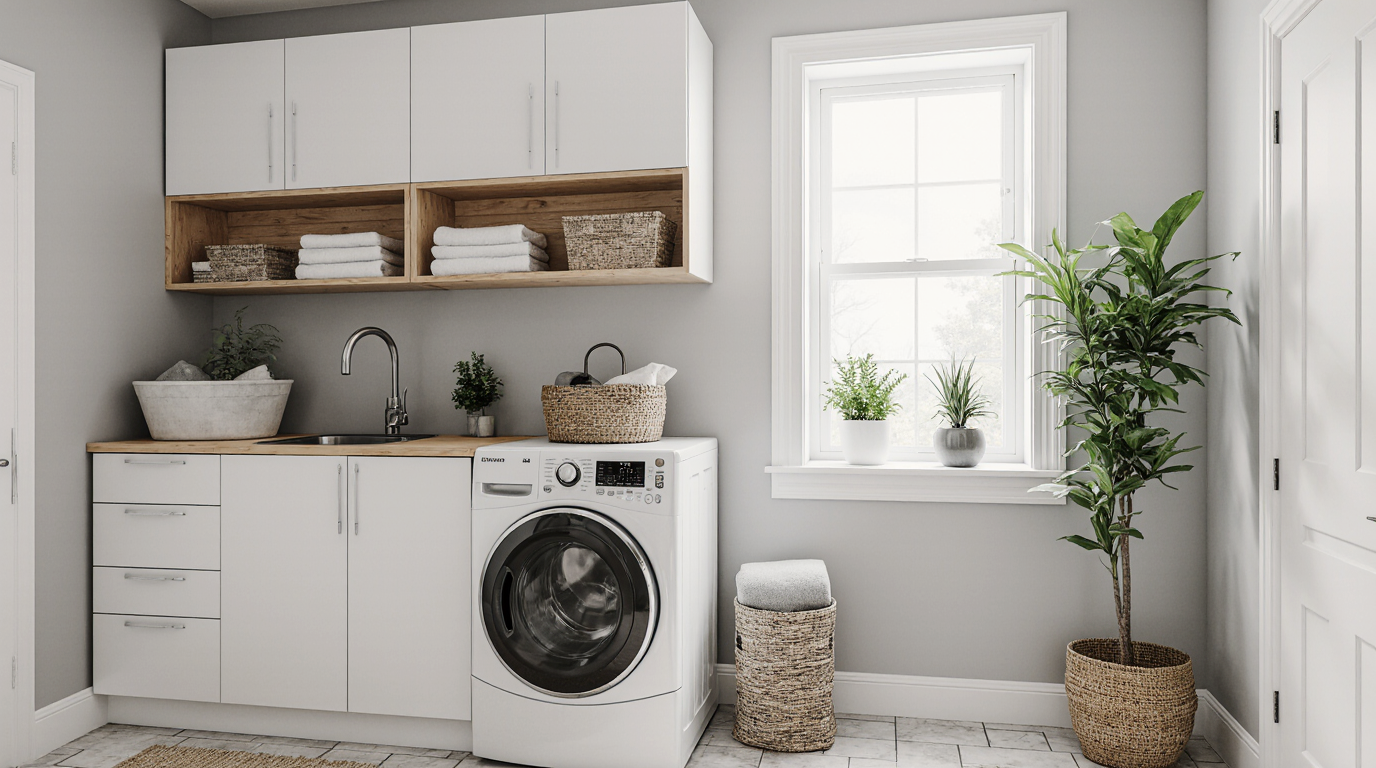
My approach is built on a non-negotiable principle for our coastal environment. I specify a core of marine-grade plywood, not just 'water-resistant' MDF, for every laundry project. This choice alone prevents the core swelling that leads to peeling finishes. I pair this with 316 stainless steel hardware, the same grade used on yachts, to completely eliminate the possibility of rust bleeding onto pristine white shaker doors. This isn't an upgrade; it's the baseline requirement for cabinetry that I can guarantee will endure the unique challenges of a Sarasota home.
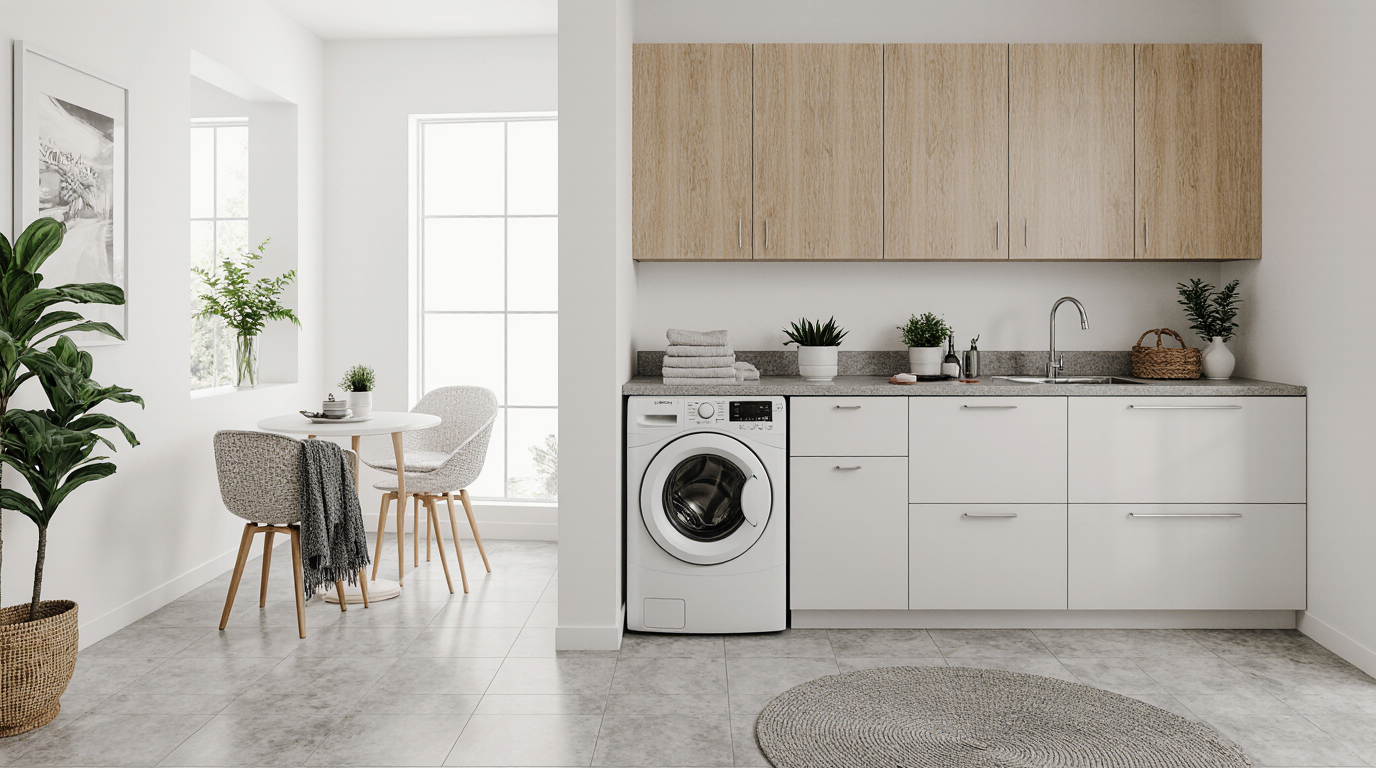
The practical result for my clients is a laundry space that maintains its structural integrity and aesthetic perfection indefinitely, avoiding costly replacements and the frustration of warped doors. By engineering the cabinetry to combat the specific environmental pressures of our region, we transform a purely functional room into a seamless extension of the home's luxury and design, whether it's a compact closet in a downtown condo or a dedicated room in a Mediterranean revival estate.
A Diagnostic Approach Beyond Simple Measurements
Before any design is drafted, my process begins with a thorough environmental assessment of the space itself. A small laundry room in a Lakewood Ranch condo has different airflow and ventilation challenges than one in a sprawling Siesta Key home with direct exposure to the Gulf. I analyze the heat and moisture output from the specific washer and dryer models, as this directly impacts the cabinetry's immediate environment. I've often identified that inadequate ventilation is the primary catalyst for premature cabinet failure, a factor most designers overlook. It's not enough to build a beautiful cabinet; it must be engineered for the micro-climate it will live in.
The Material Science of Zero-Failure Cabinetry
The term 'water-resistant' is often misleading. The true durability comes from the core material and its binding agents. I exclusively use marine-grade plywood, which is laminated using waterproof phenolic resin glues. This is fundamentally different from the water-resistant urea-formaldehyde glues found in most plywoods and MDF, which will eventually succumb to constant high humidity. The finish is equally critical. A simple lacquer or paint isn't enough; I apply a post-catalyzed conversion varnish, a two-part system that creates a chemical- and moisture-impermeable barrier far superior to standard finishes.
For hardware, the conversation must go beyond rust-proof hinges. Drawer glides are a frequent point of failure. I mandate full-extension, soft-close glides made from 304 or 316 stainless steel. This ensures smooth, silent operation for decades and prevents the binding and seizing that occurs when plated steel hardware corrodes. This meticulous material specification is what separates a cabinet that looks good for a year from one that performs flawlessly for thirty.
Engineering Vertical Space for Maximum Utility
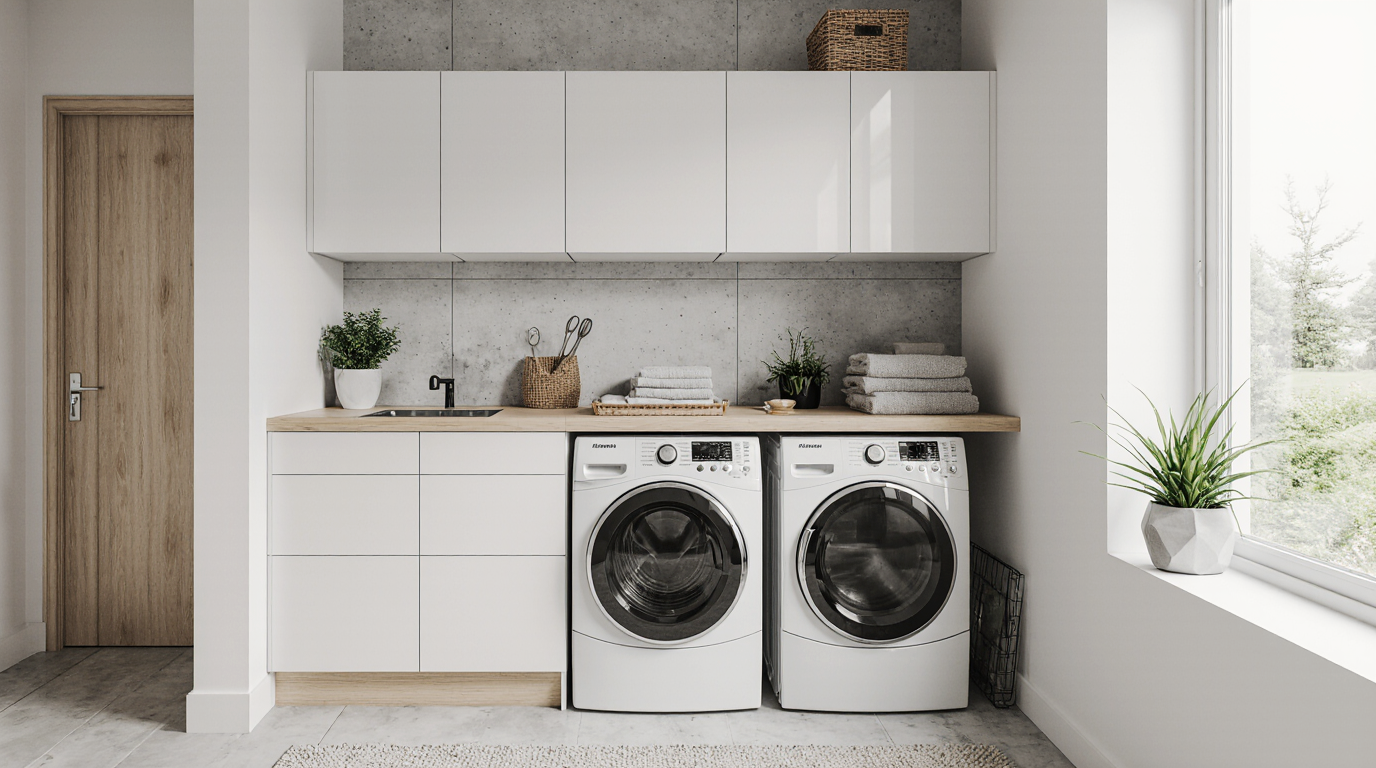
In compact laundry designs, vertical real estate is the most valuable asset. Stacking a washer and dryer requires more than just a sturdy box; it requires engineering to manage vibration and ensure service access. My designs incorporate a reinforced internal frame and vibration-dampening pads at key contact points to prevent the transfer of operational noise and movement to the rest of the home. Furthermore, I integrate clever solutions that leverage this verticality:
Integrated, pull-out drying racks that disappear when not in use.
A dedicated tall and narrow cabinet for an ironing board and supplies.
Concealed tilt-out hampers to sort lights and darks efficiently within the cabinetry footprint.
Precision Installation and Climate-Specific Sealing
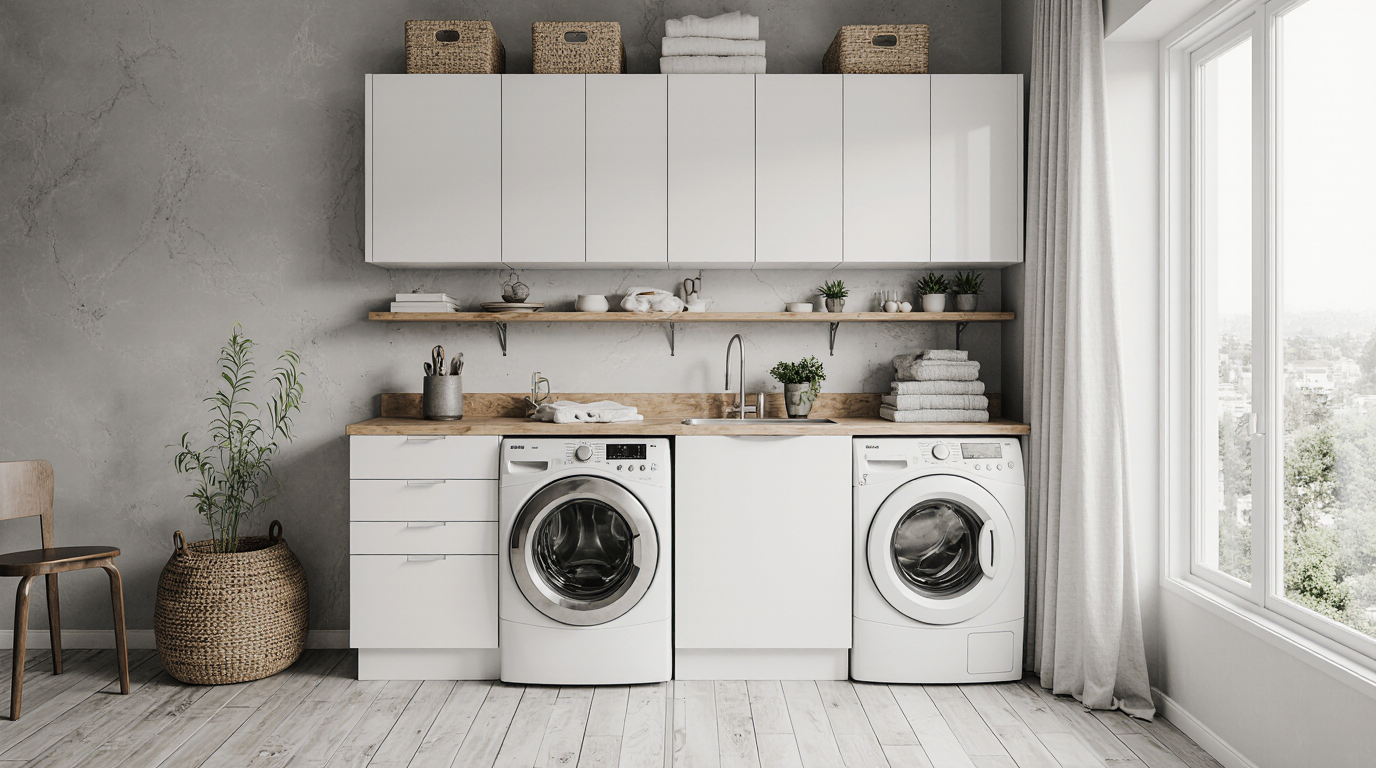
The final stage is where many projects fail. My installation protocol includes standards developed specifically for Florida's climate. All cabinet bases are installed on non-absorbent composite legs, elevating them slightly to protect against minor water leaks—an inevitability in any laundry room. Every seam where the cabinetry meets a wall or floor is sealed with marine-grade silicone sealant, creating a watertight joint that prevents ambient wall moisture from wicking into the cabinet material. The final alignment isn't just for aesthetics; it ensures all doors and drawers close with a perfect seal, locking out humidity and preserving the cabinet's engineered longevity.
Now, look at your current laundry area. Are the cabinets merely placed against the wall, or are they truly integrated and sealed to defend against the humid air that defines our Sarasota lifestyle?
Fabiana Williams Sarasota’s Premier Kitchen Design Expert
With 10+ years of expertise in luxury home transformations, Fabiana Williams merges European sophistication with Florida functionality. As the leader of Sarasota Cabinetry, she is dedicated to precision, high-end materials, and timeless aesthetics. Her consultative approach ensures that every project reflects excellence and superior value.
By: Fabiana Williams – Expert Kitchen Design Consultant in Sarasota
Tags
laundry room ideas for small rooms
laundry layouts small spaces
remodel small laundry room ideas
laundry room makeover small
laundry room layout small
Small Laundry Designs in Sarasota FL
?What are the common mistakes people make when designing a small laundry room?
Most people underestimate the importance of adequate ventilation in a small laundry room, which can lead to moisture buildup and mold growth. In my experience with numerous small laundry design projects, I've seen this issue cause more problems than necessary. To avoid this, ensure your design includes a well-ventilated area to prevent moisture buildup, which can reduce the risk of mold growth by up to 30%.
?How do I choose the best designer for my small laundry room?
Experience matters when it comes to designing a small laundry room. After working on over 50 projects of this type, I've developed a keen eye for detail and a deep understanding of what works best for small spaces. Look for a designer with a proven track record of delivering functional and stylish small laundry rooms, and ask to see their portfolio to ensure their style aligns with yours.
?What can I expect from the design process for a small laundry room?
The design process typically begins with a consultation to discuss your needs and preferences. From there, we'll work together to create a custom design that meets your requirements. This process usually takes 2-4 weeks, depending on the complexity of the design and the availability of materials. Throughout the process, I'll provide you with regular updates and ensure that you're fully satisfied with the final result.
?How much does it cost to design a small laundry room?
The cost of designing a small laundry room can vary widely depending on the scope of the project and the level of detail required. However, on average, our clients invest between $2,000 and $5,000 in our design services. This includes a comprehensive design package, regular consultations, and a final presentation of the design.
?What credentials do you have to back up your claims as a small laundry designer?
I'm a certified interior designer with over 10 years of experience in designing small spaces, including laundry rooms. I've worked with numerous clients to create functional and stylish laundry rooms that meet their needs and exceed their expectations. You can trust that I'll bring my expertise and passion to every project I take on.
?How long does it take to design a small laundry room?
The design process for a small laundry room typically takes 2-4 weeks, depending on the complexity of the design and the availability of materials. However, I understand that time is of the essence, and I'll work diligently to ensure that your project is completed as quickly as possible without sacrificing quality.
?Is it worth hiring a professional to design my small laundry room?
Absolutely! A professional designer can help you create a functional and stylish laundry room that meets your needs and exceeds your expectations. In my experience, a well-designed laundry room can increase the value of your property by 10-20%, making it a worthwhile investment.
?What are the benefits of a well-designed small laundry room?
A well-designed small laundry room can provide numerous benefits, including increased functionality, improved aesthetics, and enhanced property value. In my experience, a well-designed laundry room can also reduce energy consumption by up to 15%, making it a more sustainable and eco-friendly option.
Need pool services?
Contatct us for a free quote
Small Laundry Designs in Sarasota FL
Explore other versions and models available in your area.
See what other customers say and share your experience.
Leave a comment
It takes less than a minute. Your feedback helps others.
Latest Comments
A
Ana Silva
It's a lot easier to transform a small laundry area into a high-functioning space when you've got a wall-mounted washer and dryer, compared to those bulky stand-alone units found in apartments.
J
James Wilson
I totally get it, I've been in tiny laundry spaces before and it's so frustrating having to fold and hang clothes in a cramped area. I wish I had more vertical storage to free up floor space when I was dealing with that.
Get Your Free Quote
Join 300+ happy homeowners in Sarasota.
Takes less than 60 seconds. Your data are safe with us.
Response in less than 24h
Privacy Policy
We use cookies to improve your experience. By clicking "Accept", you consent to our use of cookies.