Small Laundry Room Design Ideas for Maximum Efficiency and Style
Converting a compact laundry area into an efficient and aesthetically pleasing zone demands thoughtful planning beyond choosing the correct machines. The key to an exceptional laundry room design lies in creating a balance between practicality and aesthetics. Even the tiniest rooms can become highly efficient areas when thoughtful planning meets creative solutions. Integrating clever storage solutions, bright illumination, and resilient materials guarantees optimal functionality and lasting convenience. A meticulously planned compact laundry room enhances daily chores while contributing to home aesthetics.
Choosing the right washing and drying units is foundational when designing an efficient compact laundry area. Modern compact laundry machines often come in stackable configurations to optimize floor area. These modern machines often include high-efficiency features and quiet operation, which are essential for small areas that might be adjacent to living spaces. Opting for energy-efficient appliances can reduce utility costs while maintaining high performance. Additionally, selecting machines with sleek, contemporary finishes enhances the room’s visual appeal, ensuring the laundry area feels cohesive and polished rather than cramped.
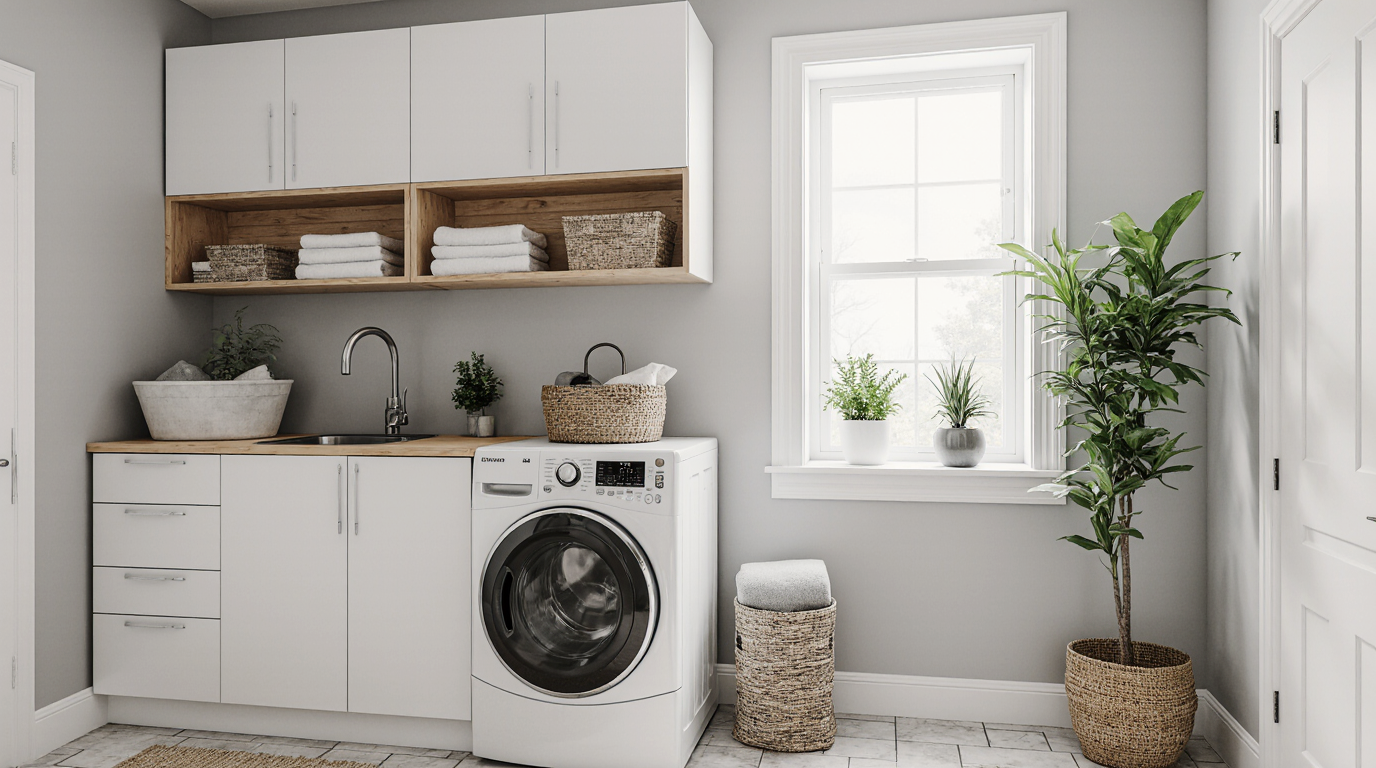
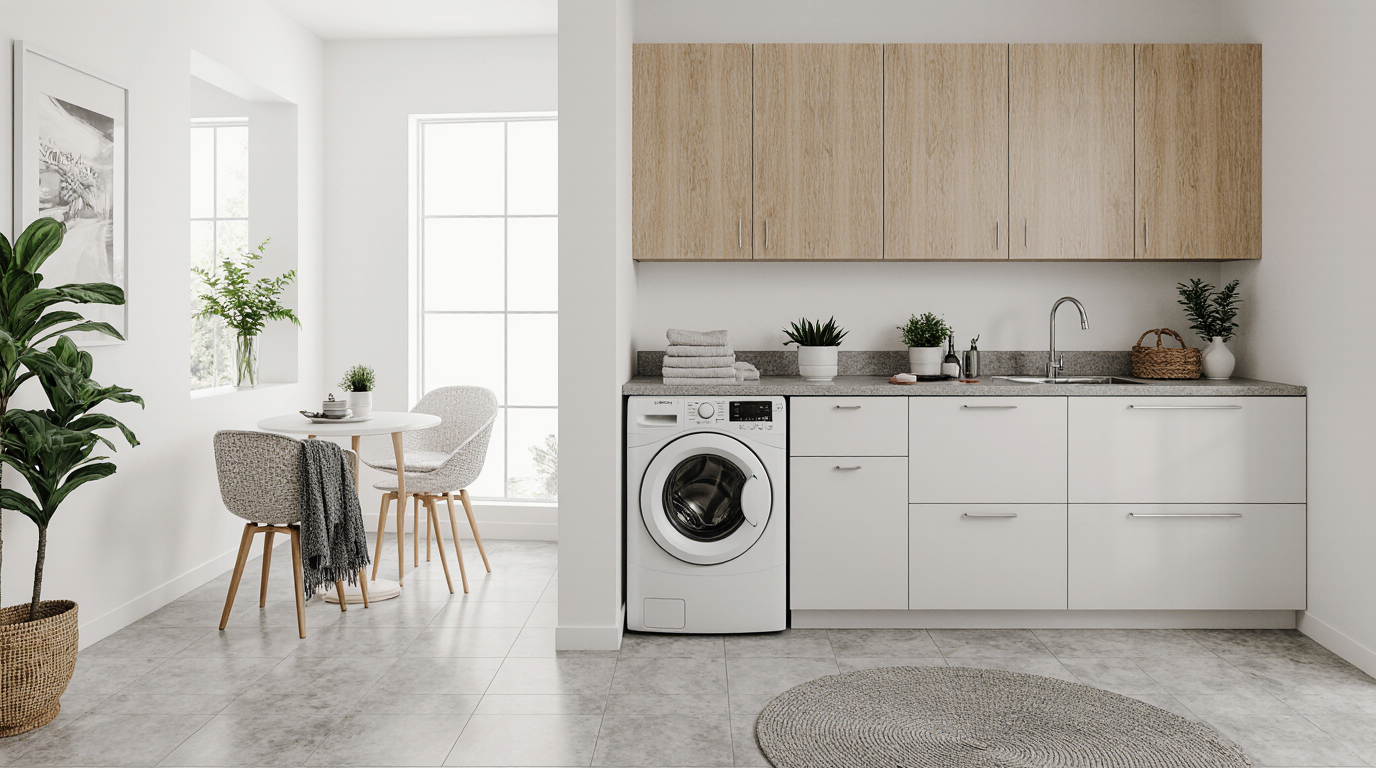
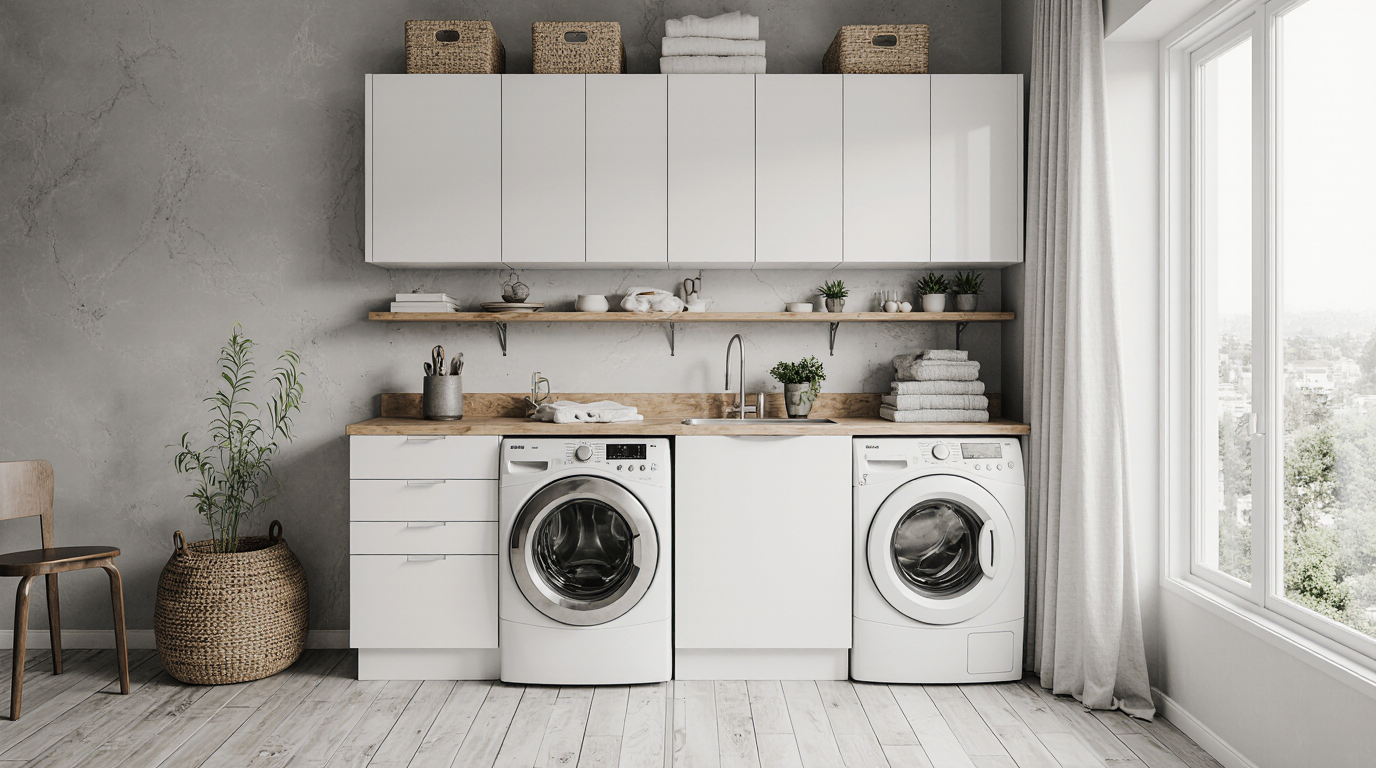
Storage solutions are critical in compact laundry layouts. Innovative cabinets turn unused or awkward areas into functional storage. Upper cabinets above the laundry machines optimize vertical space and supply storage efficiency. For areas with limited wall space, consider open shelving or floating shelves, which keep items accessible without overwhelming the room. Using baskets, bins, or labeled containers adds a level of organization that simplifies the laundry process. Incorporating custom cabinetry tailored to the room’s dimensions ensures that every inch is utilized effectively, blending functionality with a high-end design aesthetic.
Adding functional counter space transforms efficiency in compact laundry areas. Designated folding zones optimize workflow and keep laundry tasks organized. Robust surfaces such as quartz, laminate, or wood block endure repeated use, moisture, and heat exposure. Sliding or foldable counters offer flexible work areas for tight rooms without sacrificing space. Adding a functional counter enhances task efficiency and elevates the room’s visual style.
Illumination design is critical to optimize utility and atmosphere in small laundry spaces. LED lighting offers brightness and energy efficiency while preventing shadows in tight laundry rooms. Task lighting beneath cabinets targets work zones for optimal visibility. Maximizing sunlight through limited windows enhances the perception of space and openness. Thoughtful illumination improves both function and design, creating an inviting compact laundry environment.
The selection of flooring and wall materials also significantly impacts both functionality and style. Durable, moisture-proof floors safeguard small laundry rooms from spills and dampness. These materials are easy to clean and maintain, which is crucial in a space prone to messes. Walls painted in light, neutral tones can make a small room feel larger, while a bold accent wall or patterned backsplash can inject personality without overwhelming the space. Premium finishes combine aesthetics and durability, ensuring long-lasting appeal.
Multifunctionality is key in small laundry design. Integrating features such as a built-in ironing station, pull-out hampers, or even a small sink can increase efficiency and convenience. A utility sink is particularly valuable for hand-washing delicate items, pre-treating stains, or cleaning household tools. Efficiently arranged spaces can accommodate multiple features without feeling crowded. Multifunctional design ensures compact rooms remain efficient, organized, and stylish.
Even practical laundry rooms benefit from stylistic touches. Adding touches like stylish hooks for hanging clothes, decorative containers for detergents, or small potted plants can bring warmth and personality to the room. Reflective surfaces amplify light and visually enlarge small rooms. Small but thoughtful design accents contribute to a cohesive look that turns an ordinary laundry room into a room that is both functional and inviting. Careful attention to decorative and functional details enhances cohesion and sophistication.
Efficiency in a small laundry room extends beyond storage and appliances; workflow and organization are equally important. Zoning tasks into distinct areas enhances productivity and minimizes chaos. Maximizing height with rods or pull-down lines increases functional capacity. Streamlined zones and planning turn small laundry chores into effortless, well-ordered routines.
Hues and surface finishes impact perception and style in tiny laundry rooms. Soft colors expand space visually, while accent tones inject personality. Combining different surfaces enhances dimension and tactile appeal. Harmonizing finishes with the home’s aesthetic ensures visual consistency and unity.
Incorporating smart tech transforms compact laundry areas into advanced, convenient environments. Connected machines provide remote oversight, and intelligent lighting adapts to activity. Incorporating motion-sensor lights or touchless faucets enhances both convenience and hygiene. Intelligent design and appliances make compact laundry spaces more efficient, luxurious, and aligned with current lifestyle expectations.
Careful planning balances function, aesthetics, and space utilization in compact laundry areas. From machines to cabinetry, illumination, and accents, each detail ensures utility and harmony. Through strategic design, tiny laundry areas become organized, efficient, and attractive spaces, demonstrating that size does not limit style.