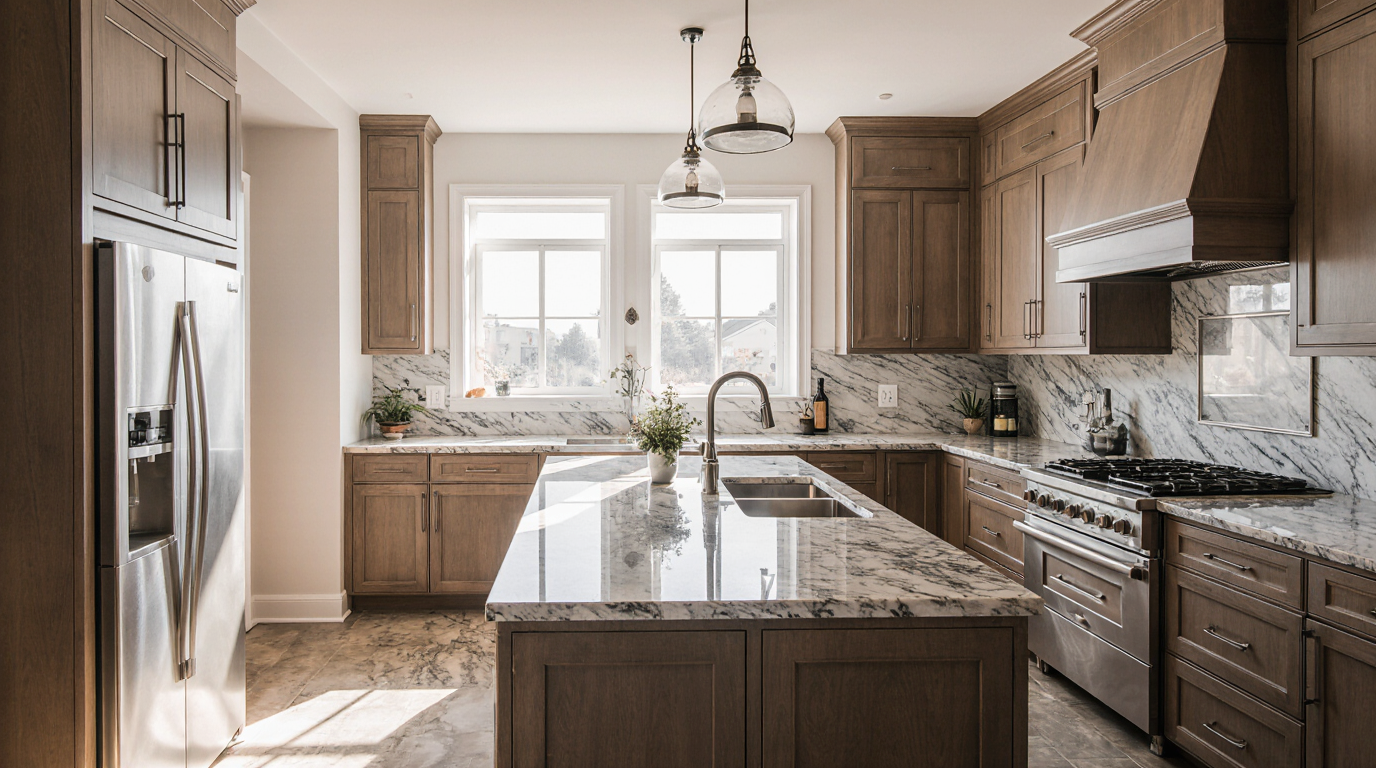
Structural Engineering and Vein Mapping for Quartzite Slabs
Before a slab of quartzite is even selected, my process begins with a structural analysis of the kitchen cabinetry and the subfloor. In many luxury condos and homes in Lakewood Ranch, the open-concept designs demand large, uninterrupted islands. A single slab of 3cm quartzite can exceed 1,000 pounds, and standard cabinet construction often lacks the necessary cross-bracing and reinforced gables to prevent long-term sagging. I engineer the cabinet boxes with ¾-inch marine-grade plywood, not particleboard or MDF, and incorporate hidden steel supports tied directly into the floor joists for islands over eight feet. This foundational work is non-negotiable for ensuring the stone never develops stress fractures from insufficient support.
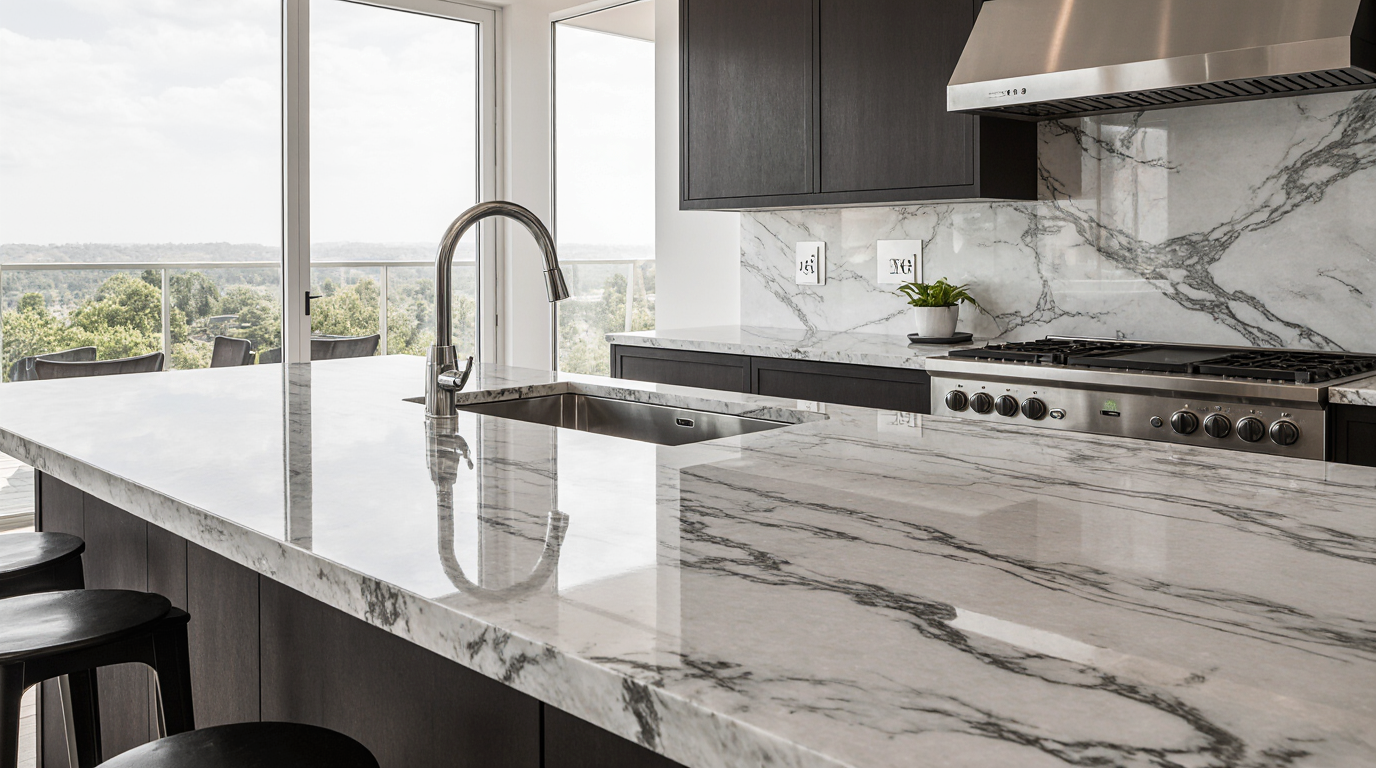
Furthermore, selecting the stone goes beyond just color. For kitchens requiring more than one slab, I perform a digital vein-matching layout. Using high-resolution photos of the exact slabs, I create a 3D model of the countertops to map out the cuts. This ensures that the natural, flowing veins of the quartzite continue seamlessly from one piece to the next, particularly at L-shaped corners or waterfall edges. This meticulous planning turns a simple countertop into a single, cohesive piece of art, eliminating the jarring, mismatched seams common in rushed installations.
Material Integrity: Distinguishing True Quartzite and Specifying Hardware
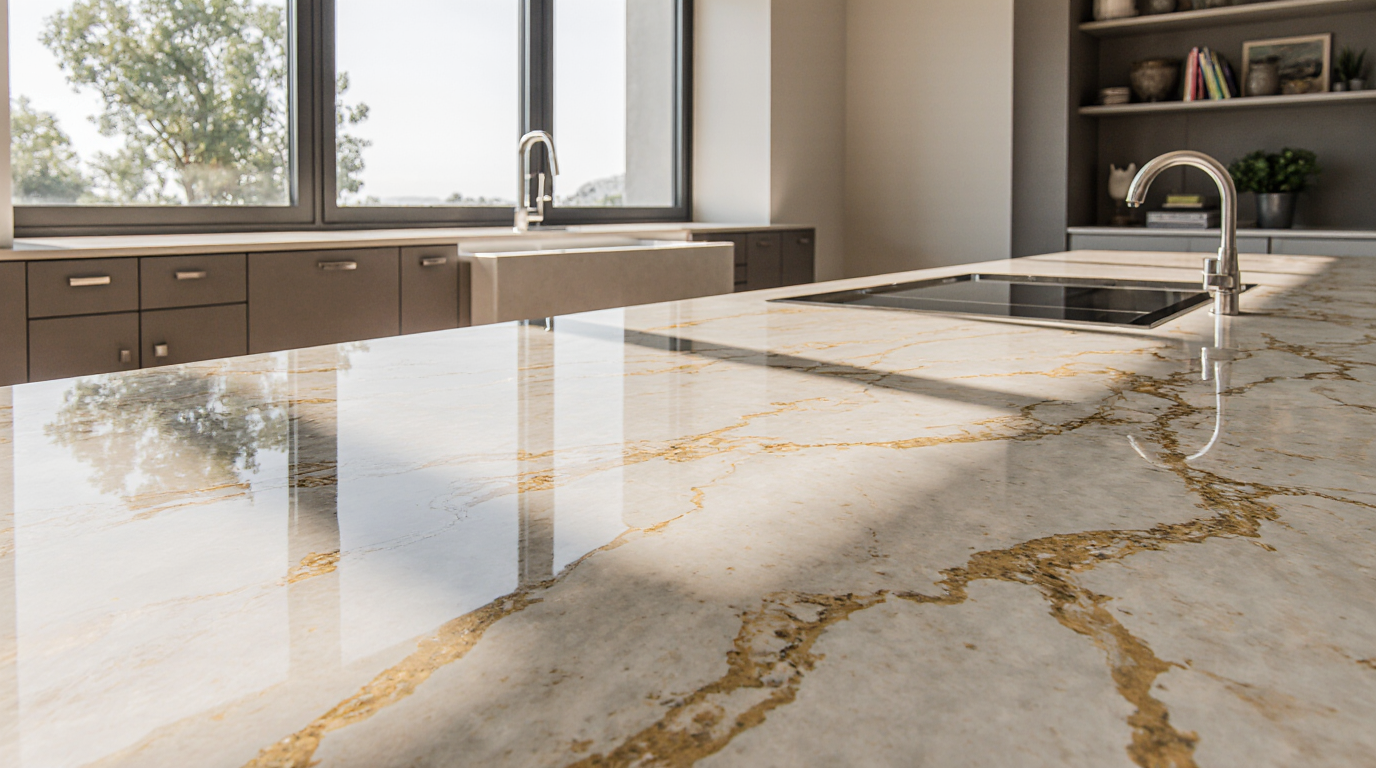
There's a significant amount of misinformation in the market, with softer stones like dolomite or marble being mislabeled as quartzite. I perform a glass scratch test and an acid test on a sample of the proposed slab to verify its geological composition. True quartzite is an incredibly hard, non-porous metamorphic rock that will not etch from lemon juice or vinegar. This verification is a critical quality control step to guarantee the client is getting the durability they're paying for. Stones like Taj Mahal or Perla Venata are excellent performers, but only if they are authentic.
Beneath the stone, every component must resist the corrosive effects of Sarasota's salty air. I exclusively specify stainless steel hardware, from the sink mounting clips to the cabinet fasteners. Even the drawer glides are high-grade systems with sealed bearings to prevent the salt-induced corrosion that causes seizing and failure. Standard zinc-plated hardware will show rust within a couple of years on Lido Key; my specification ensures a minimum 15-year lifespan without performance degradation.
The Fabrication and Installation Protocol
My fabrication process prioritizes precision to eliminate stress points in the finished countertop. Here is a breakdown of my non-negotiable steps:
- Digital Templating: I use a laser templating system to capture the exact dimensions of the cabinetry, accounting for wall undulations to ensure a perfect fit with minimal gaps. This is far more accurate than traditional cardboard or wood templates.
- Waterjet Cutting: For all sink and cooktop cutouts, I mandate the use of a CNC waterjet. Unlike a saw, a waterjet cuts without creating heat or micro-fissures in the stone at the corners, which are the most common points of future cracking.
- Rodding Reinforcement: On any section with a cutout, such as in front of the sink, I embed fiberglass or steel rods into channels cut on the underside of the stone. This provides crucial reinforcement to an inherently weak area.
- Seam Quality: I use a professional-grade seam setter that uses vacuum cups to pull the two pieces of stone perfectly level and tight, while the two-part epoxy is color-matched to the stone's primary color and veining. The result is a seam that is typically less than 1/16th of an inch and nearly invisible to the touch and eye.
Precision Leveling and Final Tolerances
The final installation is a game of millimeters. I set a maximum tolerance of 1/16th of an inch for levelness across a 10-foot span. Using shims made of non-compressible plastic, I ensure the entire countertop is perfectly level and evenly supported. This meticulous process prevents any rocking or flexing, which can lead to cracked seams or a fractured slab over time as the house settles. This attention to detail is what distinguishes a high-end, durable installation from one that will fail prematurely.
When was the last time you examined the seams on your countertops? Can you feel the edge of the stone with your fingernail, or is it a perfectly smooth transition?