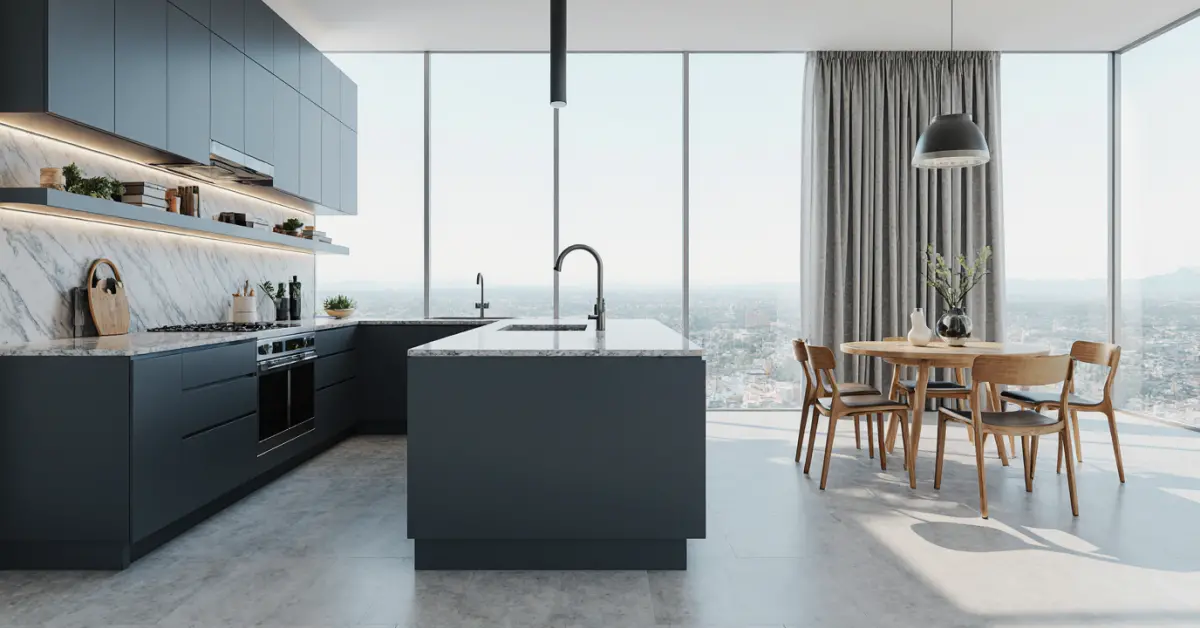
Your Two-Tone Kitchen: A Technical Summary for Sarasota Homeowners
From my direct experience executing these projects, a successful modern two-tone kitchen in Sarasota is less about the
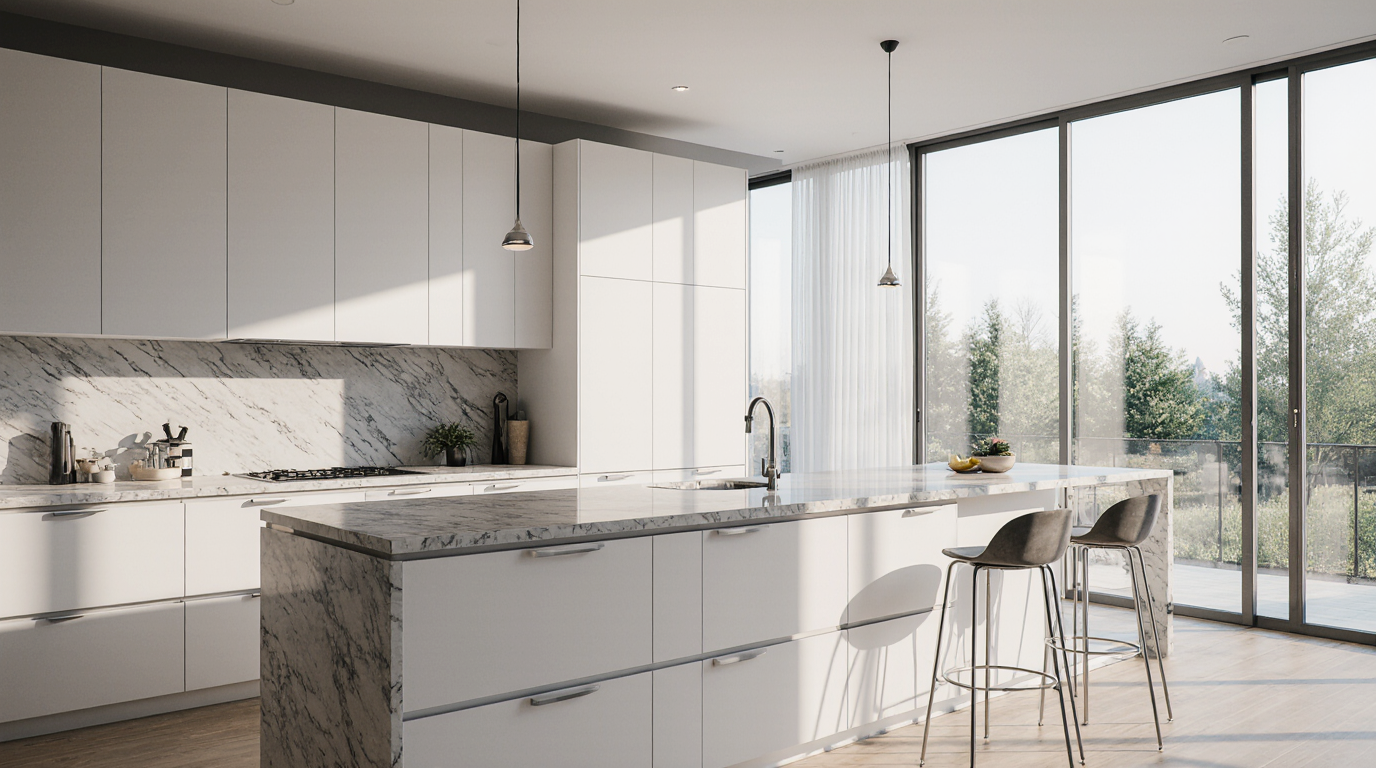
From my direct experience executing these projects, a successful modern two-tone kitchen in Sarasota is less about the color combination and more about the material science behind it. The intense UV light and persistent humidity dictate which materials will hold their color and structural integrity. A common failure I see is a beautiful high-gloss white upper paired with a dark wood veneer lower, where the veneer delaminates within five years because the substrate wasn't marine-grade. The entire project hinges on specifying materials that can withstand the local environment.
- Finish Durability: The primary failure point is not the cabinet box, but the finish. Factory-applied 2K polyurethane or high-quality acrylics are essential for color stability and moisture resistance.
- Substrate Selection: Standard MDF or particle board is a recipe for disaster. For any home east of I-75 and especially on the barrier islands, marine-grade plywood or high-density fiberboard (HDF) are non-negotiable for longevity.
- Hardware Specification: Salt air corrodes standard hinges and pulls. Specifying 304 or 316-grade stainless steel hardware is a critical, often overlooked, detail.
- Color Fading: Dark colors, especially blues and deep grays, absorb more UV radiation. The key is to use finishes with integrated UV inhibitors, a specification you must demand and verify from your cabinet maker.
Planning Failures That Compromise Two-Tone Designs
The most common planning error is focusing entirely on color swatches while ignoring the performance specifications of the materials those colors are applied to. A client will fall in love with a specific shade of navy blue for their island but fail to ask if the lacquer is rated for high-UV environments. The result is uneven fading, where the side of the island facing a west-facing window looks washed out in three years, completely ruining the two-tone effect.
Another frequent issue is a mismatch in material textures. Pairing a high-gloss, slick acrylic on the upper cabinets with a textured, open-grain wood veneer below can look fantastic initially. However, the high-gloss surface is unforgiving with fingerprints, while the textured veneer traps airborne grease and humidity, making it difficult to clean and maintain a cohesive, pristine look, a constant battle in Sarasota's climate.
The Most Expensive Failure: Ignoring Material Expansion Rates
The costliest mistake I've had to remediate stems from combining materials with different expansion and contraction rates without proper engineering. A client insisted on solid wood shaker doors for the lower cabinets (a dark gray) and sleek, handleless high-gloss acrylic uppers (white). In the first summer, the solid wood doors swelled from the humidity, causing them to bind and crack the lacquer at the joints. The acrylic uppers remained perfectly stable. The visual and functional failure required replacing all the lower doors with a more stable engineered product, effectively doubling the cost for that portion of the project.
The Two-Tone Process in Sarasota: From Concept to Installation
Executing a durable two-tone kitchen here is a multi-stage process heavily front-loaded with technical decisions. It begins with a deep dive into the home's specific environmental exposure—Is it on Longboat Key facing the Gulf, or inland in a newer Lakewood Ranch community? This determines the baseline material requirements. We then move to 3D modeling to visualize sightlines and how the color division will interact with natural light from windows and sliders throughout the day.
Once materials and colors are finalized, the fabrication process begins, which can take 8-12 weeks for high-quality custom work. During this time, we coordinate with other trades for plumbing and electrical rough-ins. The final step is installation, which for a high-end two-tone project, requires meticulous alignment to ensure the lines where the two tones meet are perfect. This process is often scrutinized by Architectural Review Boards in communities like The Concession, adding an approval layer that can tack on 30-60 days to the project timeline.
Selection Criteria for Sarasota Homeowners
- Climate-Appropriate Portfolio: Don't just look for pretty pictures. Ask to see 5-year-old projects located on Siesta Key or Lido Key to assess how their finishes have held up to salt and sun.
- Verified Material Sourcing: Request documentation for the materials being used, specifically for marine-grade plywood substrates and the chemical composition of the finishes (e.g., brand and type of polyurethane).
- In-House Finishing Capability: A cabinet maker who controls their own finishing (spraying, curing) can ensure a higher quality and more durable product than one who outsources it. This is a crucial quality control point.
- Understanding of Florida Building Code: Ensure they understand anchoring requirements, especially in high-velocity hurricane zones. Cabinets must be secured to withstand significant forces, a detail often overlooked by out-of-state fabricators.
Comparing Two-Tone Cabinets with Other Modern Styles
While two-tone is a powerful design choice, it’s not the only way to achieve a modern aesthetic. It's crucial to weigh its complexity and cost against simpler, yet equally impactful, alternatives that may be better suited to a homeowner's budget and maintenance tolerance, especially in the demanding Sarasota environment.
| Feature | Modern Two-Tone | Monochromatic High-Gloss | Textured Wood Veneer |
|---|---|---|---|
| Upfront Cost | High (Requires two separate material/finish runs) | Medium-High (Material cost is high, but process is simpler) | High (Veneer and labor are expensive) |
| Long-Term Maintenance | Complex (Two different materials may require different cleaning protocols and can age differently) | Moderate (Shows fingerprints and scratches easily but is simple to clean) | Moderate (Requires careful cleaning to avoid damaging the grain; can be susceptible to moisture) |
| UV/Humidity Resistance | Variable (Success depends entirely on specifying the correct materials for both tones) | Excellent (High-quality acrylics are very stable and non-porous) | Good (With proper marine-grade substrate and UV-inhibiting topcoats) |
When a Two-Tone Approach Is Not the Right Choice
A two-tone design is the wrong path for clients on a tight budget or those who prioritize speed. The complexity of managing two different material inventories and finishing processes invariably adds to both the cost and the timeline. If the project timeline is compressed—for instance, a seasonal resident trying to complete a renovation between May and October—a high-quality monochromatic scheme using a single, durable material like a German acrylic will deliver a faster, more predictable, and often more resilient result.
Safe Hiring Checklist for Your Sarasota Project
Hiring for a high-stakes cabinetry project requires looking beyond the portfolio. Your primary goal is to verify the builder's technical expertise in dealing with coastal conditions. These checks are critical before signing any contract.
- Verify their Florida contractor's license is active and they carry adequate liability and workers' compensation insurance.
- Ask for at least three local references for two-tone projects completed more than three years ago, preferably in waterfront areas.
- Request a detailed specification sheet that lists the exact materials, including substrate (e.g., "3/4-inch marine-grade fir plywood"), finish type (e.g., "Milesi 2K Polyurethane"), and hardware brand/grade (e.g., "Blum INSERTA with stainless steel finish").
- Confirm their familiarity with your specific neighborhood's HOA or condo association design review process and typical approval timelines.
- Inquire about their warranty, specifically asking how it covers finish failure like peeling, bubbling, or significant color fading.
- Ensure the contract specifies who is responsible for protecting adjacent surfaces during installation, a key detail in a finished home.
Decisions That Determine the Success of Your Two-Tone Kitchen
The ultimate success of a modern two-tone kitchen doesn't come from picking trendy colors like a deep blue island with white perimeter cabinets. It comes from prioritizing the physical properties of your materials over the initial aesthetic appeal. I've seen more projects fail from poor material choices than from poor color choices. For example, selecting a stunning but porous stone for a countertop that will be adjacent to a dark-colored island can lead to staining that ruins the entire look.
The most crucial decision is committing to the budget required for climate-appropriate materials. A client who tries to save 15% by opting for standard MDF instead of marine-grade plywood for their island in a Bird Key home has not saved money; they have simply pre-paid for a catastrophic failure that will cost 100% of the initial investment to fix in a few years.
The Exact Moment the Majority Gets It Wrong
The critical error happens right at the beginning, during the design phase. Most homeowners and even some designers approach a two-tone kitchen as a color-blocking exercise on a screen. They finalize the layout and the colors—a charcoal gray for the base, a crisp white for the uppers—before they have even had a serious conversation about materials. The correct approach is to select the performance class of the materials first, based on the home's location and the client's lifestyle, and only then select colors from within that qualified group of materials. This flips the entire process and prevents you from falling in love with a look that is fundamentally incompatible with our environment.
Practical Answers About Operations in Sarasota
Navigating HOA and Condo Association Design Reviews
In communities from Palmer Ranch to downtown Sarasota condos, your cabinet finish and color choices are often subject to review. Most associations have guidelines on the reflectivity of finishes (to prevent glare) and may have pre-approved color palettes. Submitting your full material specification sheet, not just color chips, is key. The typical review process in Sarasota County can add 30 to 45 days to your pre-construction timeline, a critical buffer to include in your project plan.
Understanding Florida Building Code for Cabinet Installation
The Florida Building Code (FBC) has specific requirements for how cabinets are anchored to the wall, particularly in coastal and high-velocity hurricane zones. The code dictates the type, size, and spacing of fasteners to ensure cabinets do not detach during a storm event. A knowledgeable installer will use structural screws anchored into studs, not just drywall anchors. This is not an aesthetic detail; it’s a structural safety requirement that your homeowner's insurance may scrutinize after a storm.
Managing Material Acclimation and Installation Timelines
You cannot take cabinets fabricated in a dry, air-conditioned workshop and install them immediately into a humid Sarasota home, especially during a renovation where the A/C might be off. Materials, particularly wood-based ones, need to acclimate on-site for at least 48-72 hours before installation to reach equilibrium with the ambient moisture. Skipping this step is a primary cause of joint separation and panel warping within the first six months. This acclimation period must be built into the installation schedule.