Laundry Room Cabinetry Engineering: A Protocol for Zero-Failure Storage in Sarasota's Climate
The Diagnostic Phase: Mapping Functional Zones and Mitigating Moisture Points
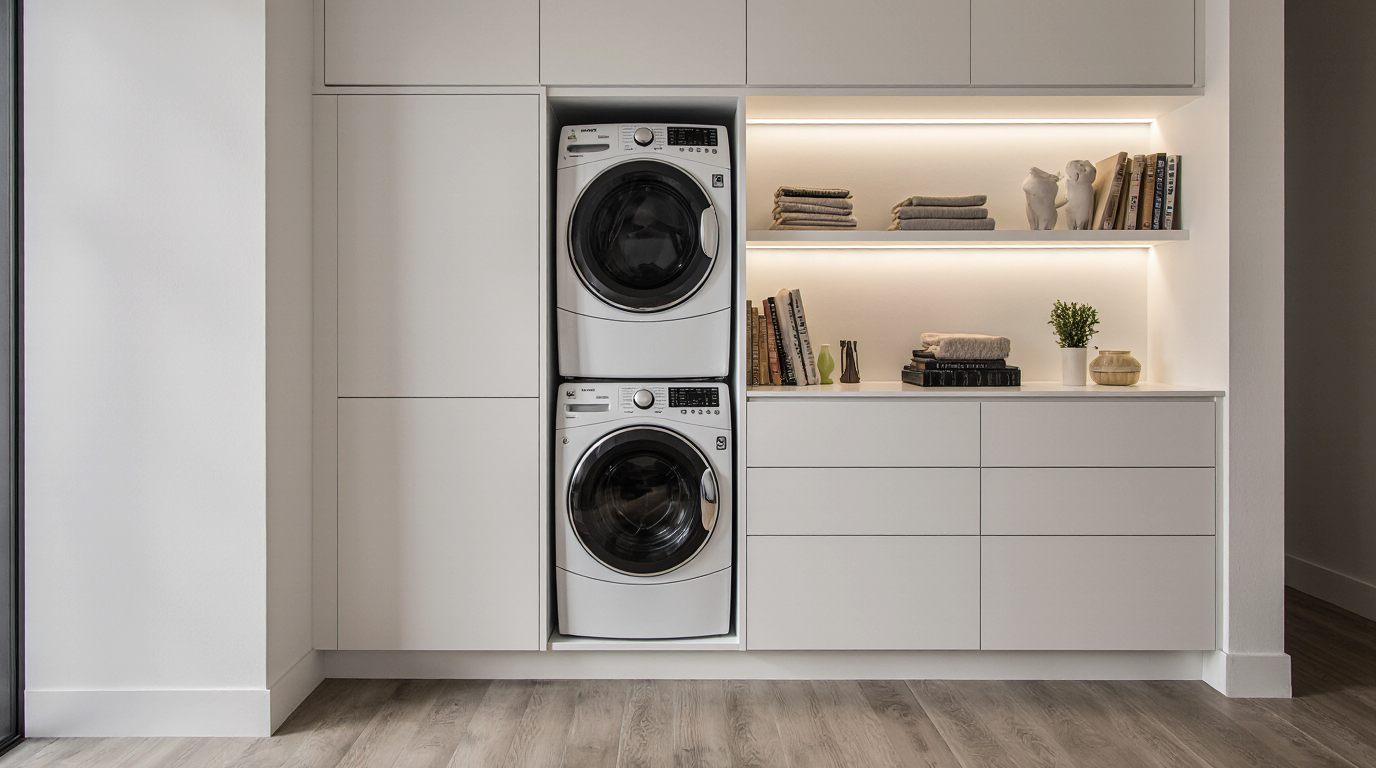
Before a single piece of wood is cut, my process begins with a functional and environmental audit of the space. I map the workflow from dirty laundry sorting to folding and storage, ensuring each zone is optimized. In a recent project in a Lakewood Ranch home, I identified that the client's biggest frustration was the lack of a dedicated folding surface. My solution was to engineer a countertop from non-porous quartz directly over the front-load machines, but with a crucial detail: I designed it with a 1-inch standoff from the back wall, creating an air gap to dissipate heat and moisture from the dryers.
I also meticulously locate all moisture points—the washer supply lines, the drain, and the dryer vent exhaust. These are the primary points of failure. My design protocol mandates that any cabinetry within a 24-inch radius of these points receives additional water-sealing measures internally, a step often overlooked that prevents slow, unseen leaks from compromising the entire installation.
Material Specification Beyond the Core Box
While the cabinet box construction is paramount, the finish and edge-sealing are what protect it. I specify a post-catalyzed conversion varnish, a finish typically reserved for high-end kitchens, for all laundry room projects. Its chemical resistance is superior to standard lacquer, meaning it won't break down from accidental spills of bleach or harsh detergents. For all exposed plywood edges, I use a polyurethane reactive (PUR) adhesive for edge banding. This creates a permanent, waterproof seal that is far more durable than standard EVA hot-melt glues, which can fail in the high heat and humidity cycles common in a Sarasota garage laundry room.
Cabinet Engineering for Maximum Utility and Airflow
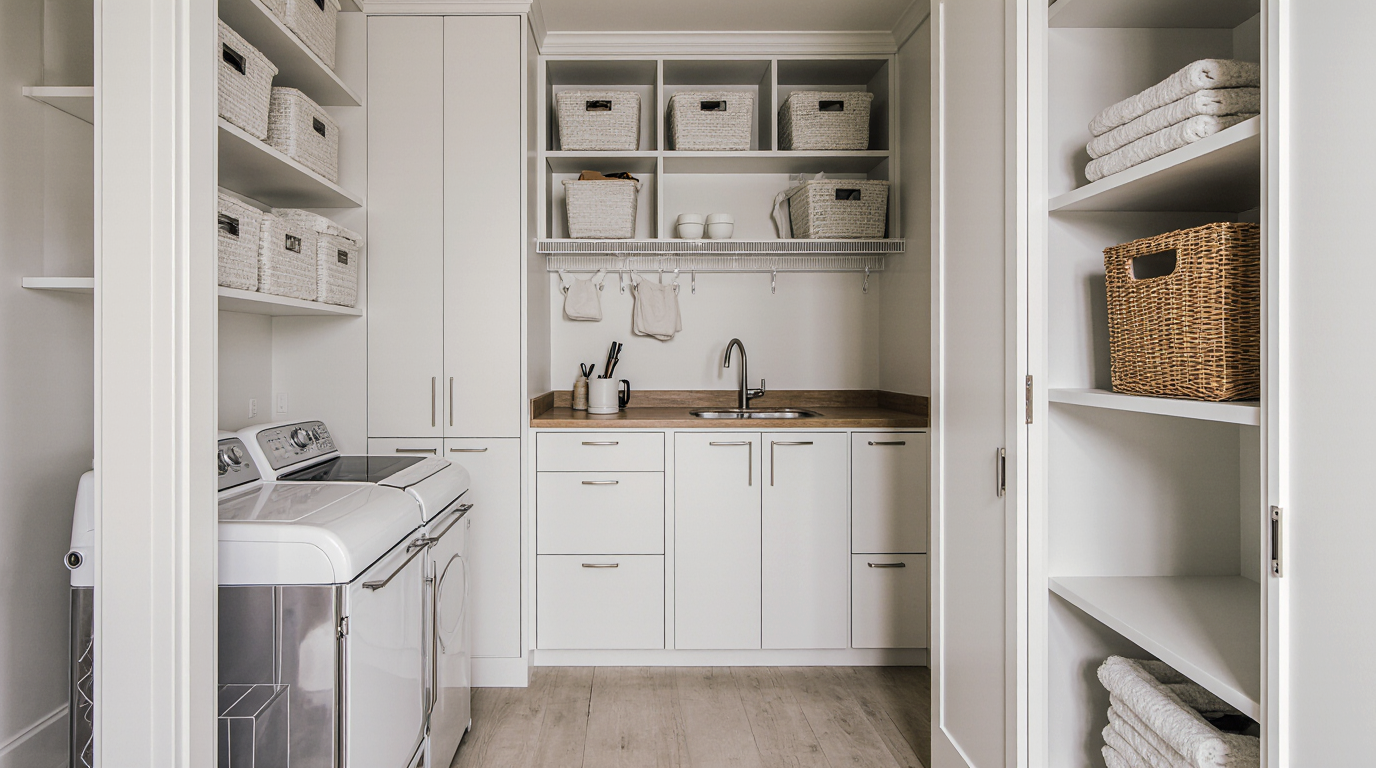
Intelligent storage design is more than just shelving. I focus on integrated solutions that solve specific problems. This includes full-height, soft-close pull-out pantries for detergents and supplies, which can increase usable storage in a narrow footprint by up to 40%. For a compact laundry closet in a Siesta Key condominium, I designed a system of retractable drying racks that folded flush into a cabinet facade, remaining completely hidden when not in use.
However, the most critical engineering detail I build into my laundry systems is passive ventilation. I design my cabinet bases with a recessed and vented toe-kick system, and I maintain a precise 3/4-inch gap between the cabinet backs and the wall. This creates a natural convection channel, allowing air to circulate and preventing stagnant, humid air from being trapped. This single detail is my primary defense against the musty odors and potential mold growth I so often discover in existing laundry rooms.
Precision Installation: Tolerances and Anchoring in Coastal Structures
The final assembly is where precision matters most. My standard for cabinet installation has a maximum tolerance of 1/16th of an inch for level and plumb, ensuring doors hang perfectly and drawers operate smoothly for life. All anchoring to the wall is done with 316 stainless steel fasteners, directly into studs. I never rely on the drywall alone.
- Scribing: Each cabinet and countertop is meticulously scribed to the wall. In the historic homes near downtown Sarasota, walls are rarely straight, and this process ensures a seamless, built-in look with no unsightly gaps.
- Hardware Calibration: I use a digital angle gauge to set all European-style concealed hinges, ensuring every door in a bank of cabinets aligns perfectly with a consistent 2mm gap.
- Penetration Sealing: Every cut-out for plumbing or electrical is sealed with 100% silicone sealant. This re-establishes the waterproof integrity of the cabinet box after it has been modified on-site, a critical final step.
With the cabinetry installed, I perform a final calibration of all drawers and doors, accounting for how the home might settle. This obsession with detail ensures the finished project not only looks flawless but functions without compromise. How much thought has been given to the airflow and structural anchoring of your current laundry room storage?