
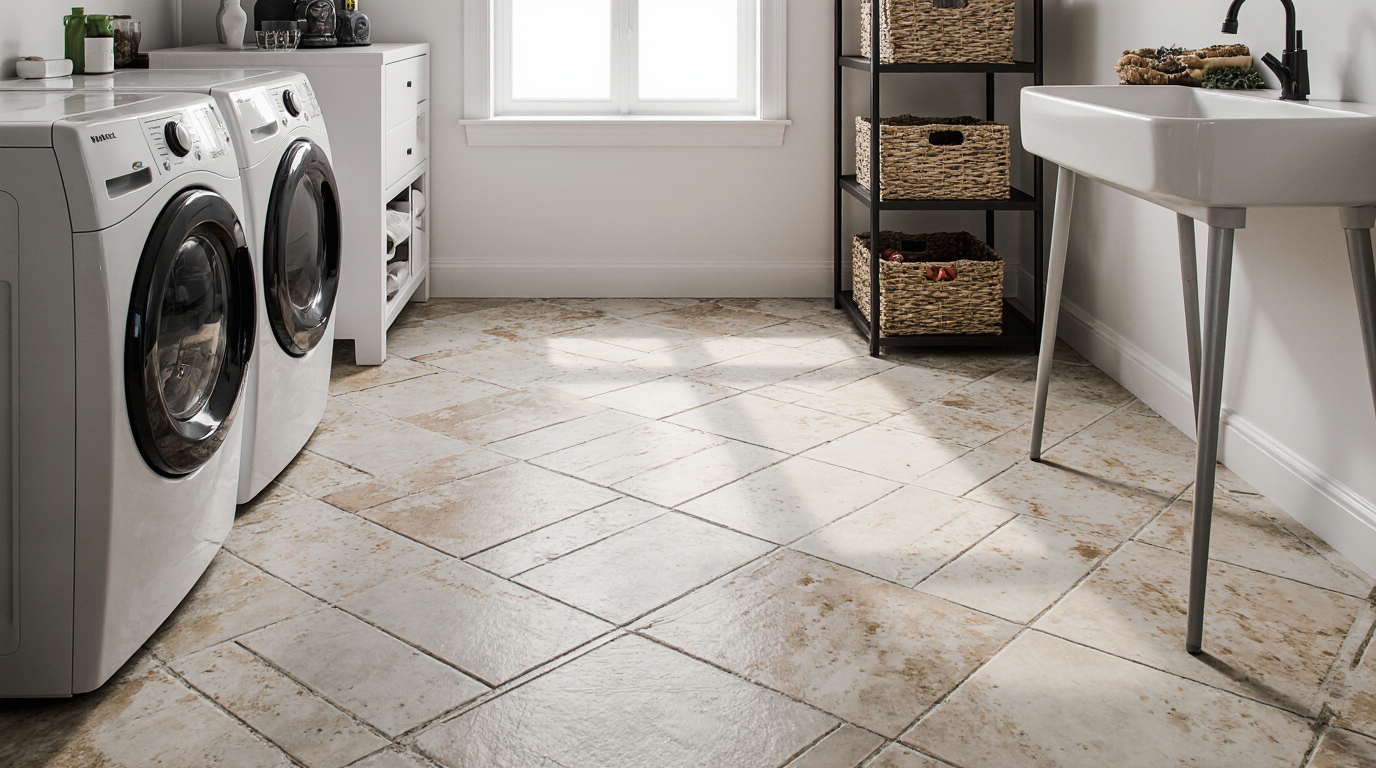
The floor in the utility area faces some of the harshest conditions of any surface in the house. This surface needs to endure the continuous rumbling and substantial mass of washers and dryers, resist the corrosive effects of detergents and bleach, manage potential water leaks, and, play a key role in the overall design narrative of the house. Selecting the appropriate tile is paramount to achieving a space that is both beautiful and brutally functional. As an expert in Laundry Room Design, I emphasize that the flooring decision moves far beyond mere color preference; it is a material science choice that dictates longevity and ease of maintenance.
Porcelain is widely considered the ultimate material for demanding laundry room applications. It is created using highly purified clay that is baked at intensely hot temperatures, resulting in a product that is exceptionally dense and has very low porosity. Its virtually non-existent porosity, often below one half of one percent, grants it natural resistance to moisture, a critical characteristic for any area where plumbing fixtures are present and minor floods are a possibility. Moreover, porcelain boasts excellent resistance to chips and fractures, creating a rigid, reliable foundation capable of supporting heavy, vibrating equipment without any risk of bending or failing, unlike some softer materials. Its surface is also highly resistant to stains from household chemicals, so that an accidental splash of solvent or detergent won't leave a lasting blemish. Contemporary porcelain offers truly stunning aesthetic flexibility; you can replicate the elegant appearance of authentic marble or granite, mimic the cozy feel of hardwood flooring, or the raw, urban appeal of concrete-look tiles—without sacrificing any of the material's unparalleled practical benefits.
While porcelain sets the benchmark, ceramic tile remains a respectable, often more budget-friendly alternative. Like porcelain, ceramic is simple to maintain and resists moisture, but they are generally less dense and slightly more porous than their porcelain counterparts. In a utility space that doesn't see heavy, constant activity, a premium, correctly installed ceramic floor can certainly be adequate, though one must consider that repeated, prolonged water exposure over many years might eventually lead to problems. To maximize the performance of any tile in this environment, the grout selection and application become a secondary, yet critical, layer of defense. It is absolutely essential to select an epoxy-based grout or a premium cementitious version that is properly sealed; it is a best practice. Applying a sealant stops liquids, grime, and cleaning byproducts from soaking into the vulnerable grout, since the grout lines are usually the most susceptible part of the installation, making the daily cleaning process dramatically easier.
When considering visual impact, the tile size and pattern dictate the perceived space and style. For achieving a clean, contemporary look, I strongly suggest using oversized porcelain tiles, like $24 \times 24$ inch squares or generously sized planks. The key advantage of this approach is the dramatic decrease in the number of grout joints—fewer breaks create a much cleaner, more expansive appearance that is naturally simpler to maintain. Minimizing the grout lines results in less upkeep and a polished, uninterrupted aesthetic, particularly when the grout is perfectly matched to the tile color.
Those looking to make a bold statement will find that decorative, patterned tiles are an excellent choice. Porcelain tiles that emulate the look of encaustic cement, featuring intricate geometric or Moroccan-inspired motifs, can elevate a purely functional space into a genuine style statement. A hidden benefit of these complex designs is their superior ability to hide stray fibers, dust, and small marks between regular cleanings. A checkerboard pattern—whether classic black and white or a softer neutral pairing—provides a timeless, vintage vibe that pairs beautifully with both contemporary and traditional cabinetry. For geometric patterns, it is crucial to observe how the pattern scale relates to the room's footprint; a pattern that looks balanced on a showroom floor might feel overwhelmingly busy in a compact space. In smaller areas, it is common practice to limit the assertive pattern to the floor surface alone, while keeping the walls and surrounding elements calm and unadorned to ensure the room remains balanced.
Focusing on safety, the texture of the tile and its slip-resistant properties are crucial design elements. In an area prone to standing water from a leaking pan or washer overflow, safety must be a leading criterion. Highly polished or glossy finishes are often relegated to wall applications where footing is not a concern. The best practice for floors is to choose a matte surface or one with a natural texture—like porcelain designed to mimic slate or a wood-look tile with a subtle grain—which increases the coefficient of friction ($\textCOF$), significantly improving traction on wet surfaces. Small, textured mosaic tiles, benefiting from the many grout lines that act as tiny slip-resistant barriers, are also a fantastic, though more complex to install, choice.
The selection of the floor's color is also a strategic decision. A brilliant white color provides a pristine, sharp appearance, but it immediately highlights every speck of dirt. The consensus among professionals for busy utility spaces favors grout in medium to dark tones, because they expertly conceal daily grime and minimize the need for labor-intensive, frequent deep scrubbing compared to lighter alternatives. Materials like brick-style porcelain laid in a herringbone pattern with a darker grout mimic the hardworking aesthetic of a classic factory floor while offering modern resilience. To achieve a brighter, more open atmosphere, shades of light grey, gentle taupe, or creamy off-white offer the desired lightness without the relentless upkeep required by true white. By synthesizing material science—choosing dense porcelain—with strategic design choices—like pattern scale and grout color—the laundry room floor transcends its utilitarian roots to become a foundational element of a highly efficient and aesthetically pleasing space.



