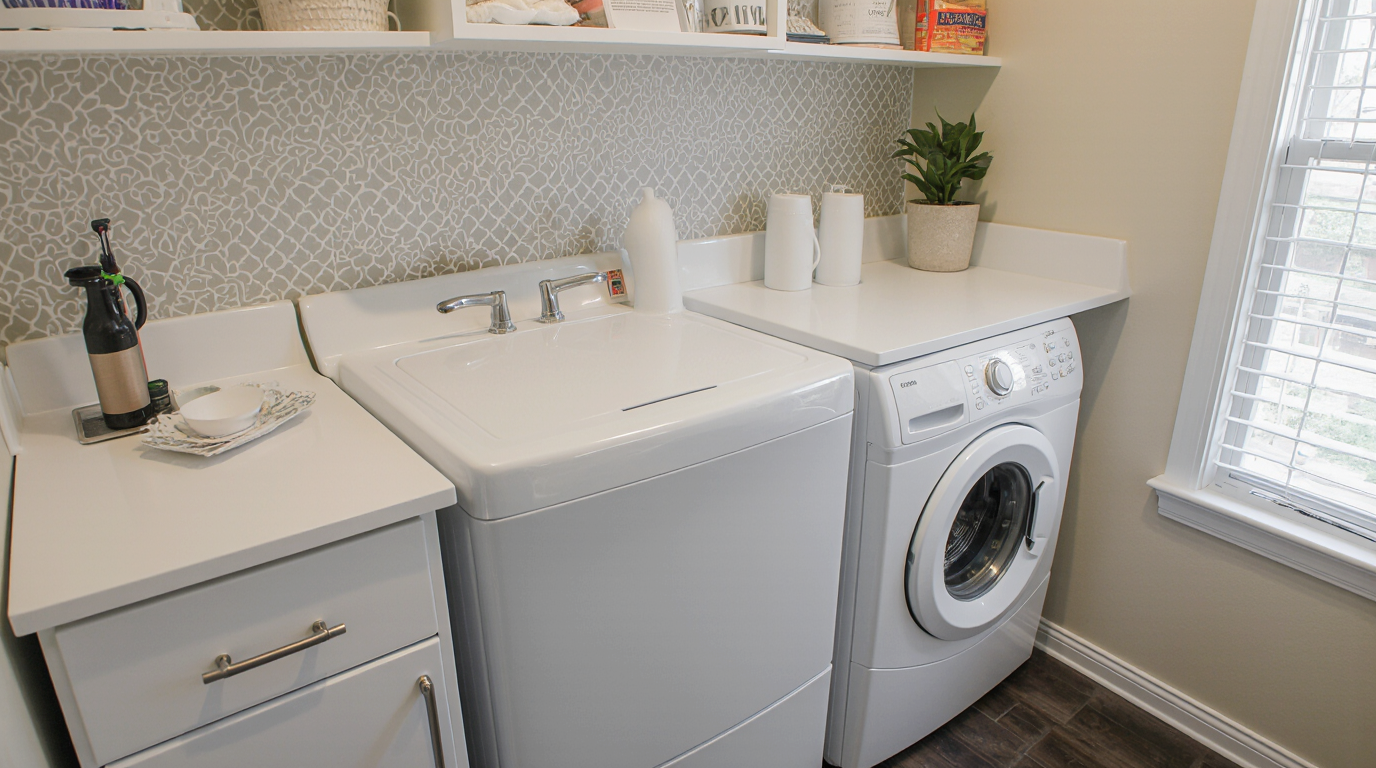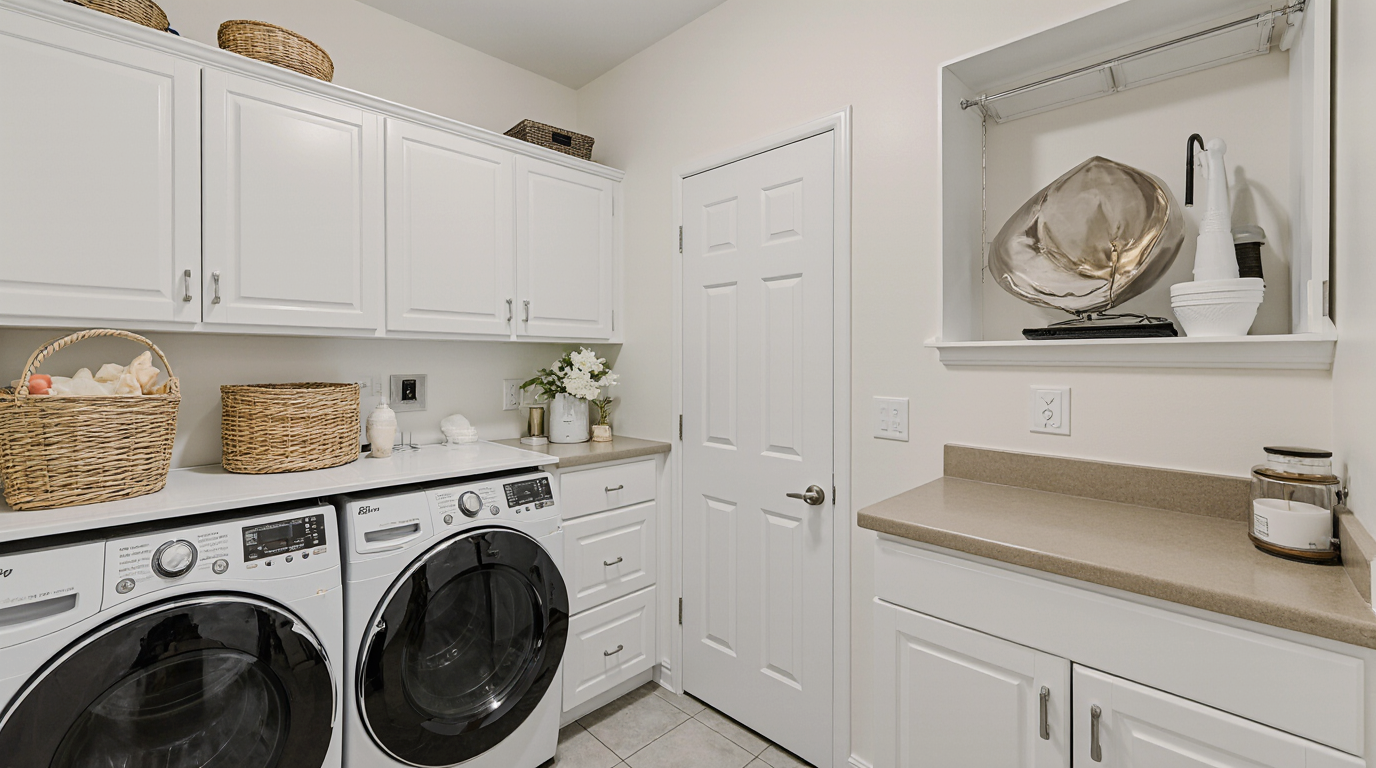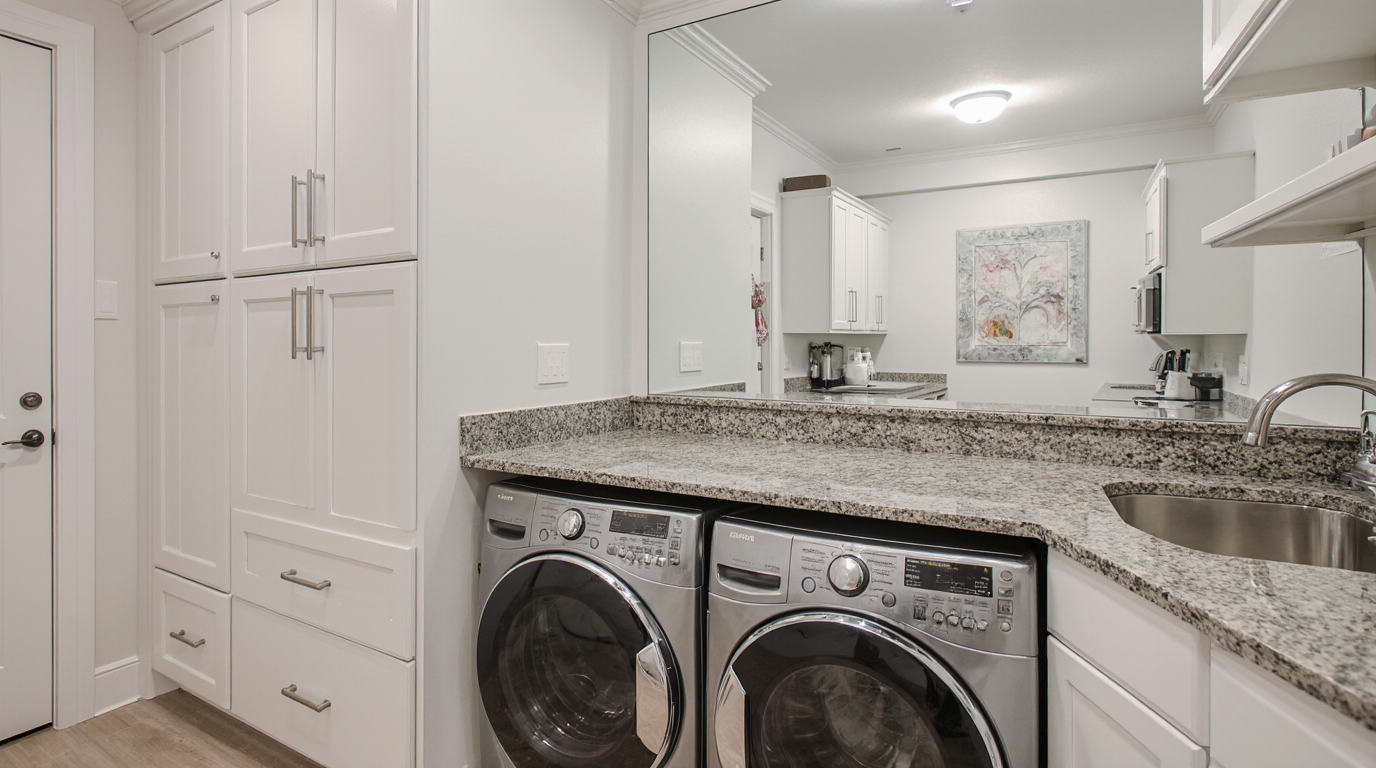
Diagnosing the Laundry Space: A Structural and Environmental Assessment
Before any material is selected, my process begins with a rigorous on-site analysis of the laundry room's micro-environment. I'm not just measuring for size; I'm assessing airflow, proximity to exterior walls exposed to salt spray, and the heat and moisture output of the specific washer and dryer models. In many Lakewood Ranch homes, for instance, laundry rooms are often located in interior spaces with less-than-ideal ventilation, creating a pocket of high humidity that is catastrophic for common cabinetry materials. My initial goal is to map these pressure points to engineer a countertop solution that actively combats them, rather than succumbing to them over time.
Material Specification: Beyond Surface-Level Aesthetics
Choosing the right countertop is a balance of aesthetics and engineering, especially here. While looks are important, the substrate and assembly method are what determine longevity. I often have to explain to clients why a beautiful quartz top can fail if it's bonded to an inadequate base.
- Engineered Quartz: This is my primary recommendation for the surface itself. Unlike porous natural stones, quartz is non-porous and resists staining from detergents and bleach. For projects in high-end condos on Lido Key, I specify large, seamless slabs to minimize joints where moisture could potentially penetrate over decades.
- Marine-Grade Plywood Substrate: For ultimate durability, I build the support structure from marine-grade plywood. This material uses waterproof glues and is designed to withstand constant moisture without swelling, delaminating, or losing structural integrity. It provides a far superior foundation compared to the standard MDF used in 90% of residential installations.
- Solid Surface (Corian/Hi-Macs): In certain contemporary designs, a solid surface material offers the ability to integrate the sink and countertop into a single, seamless unit. This completely eliminates the undermount sink seam, a notorious failure point for water intrusion, which is a significant advantage in our humid climate.
Fabrication and Installation Protocol for a Coastal Environment
The transition from raw material to a finished countertop involves a precise fabrication and installation protocol designed to create an impermeable system. My workshop process is tailored to address the specific challenges of Sarasota's environment. I ensure every cutout for a sink or faucet is meticulously sealed with a two-part marine epoxy, creating a waterproof barrier that prevents the substrate from ever being exposed to moisture. The support structure is planned to allow for adequate airflow underneath, preventing stagnant, humid air from being trapped against the cabinetry.
Precision Alignment and Long-Term Stability
Final installation is a game of millimeters. I focus on achieving a perfectly level surface, which is critical for front-loading washing machines that can generate significant vibration. I use heavy-duty mechanical fasteners instead of relying solely on adhesives, which can soften and fail in the high heat of a Florida garage or laundry closet. The final step involves applying scribe molding that is precisely cut to the contour of the wall. This not only creates a clean, built-in look but also seals the gap between the countertop and the wall, providing one final layer of defense against moisture. Does your current laundry setup account for the specific material stresses caused by Sarasota's year-round humidity, or is it simply a matter of time before you see the first signs of water damage?