In my years of crafting high-end cabinetry for homes across Sarasota County, I’ve seen a recurring, costly failure in
In my years of crafting high-end cabinetry for homes across Sarasota County, I’ve seen a recurring, costly failure in laundry rooms: delamination and swollen cabinet doors. This isn’t a cosmetic issue; it's an engineering flaw caused by standard materials buckling under the relentless humidity, especially in properties along the Gulf. Many builders use moisture-resistant MDF, but I've consistently observed it failing within a few years. The ambient moisture from the washer, combined with our salty air, compromises the core material from the inside out, causing finishes to peel and hinges to seize.
My protocol to permanently solve this involves a non-negotiable material specification: I exclusively use marine-grade plywood for all carcasses and doors, the same grade used in shipbuilding. This is paired with 316 stainless steel hardware, which is impervious to the corrosion I often find on standard steel hinges in homes on Siesta Key and Lido Key. This isn't just a material upgrade; it's a structural guarantee. The result is cabinetry that maintains perfect alignment and a flawless finish, adding a tangible 20-30% to its functional lifespan compared to off-the-shelf solutions.
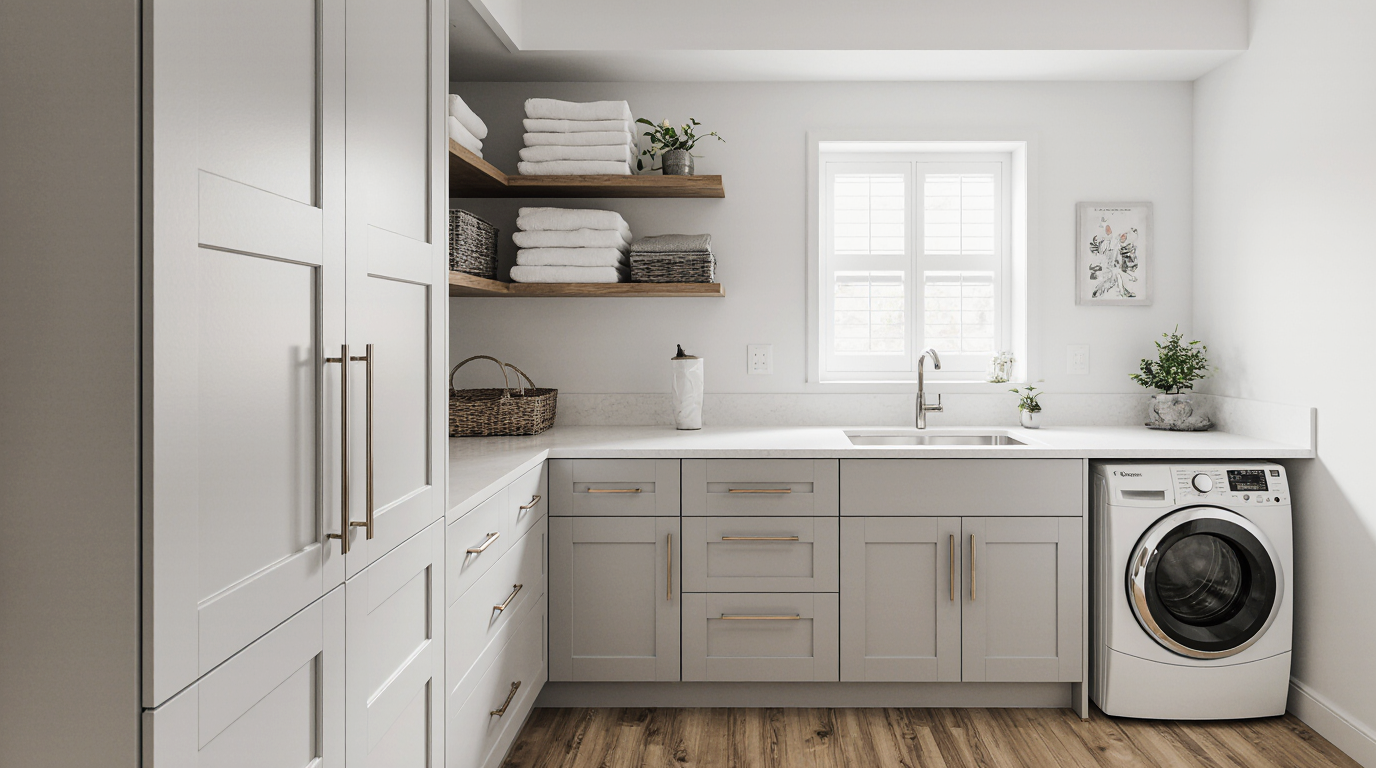
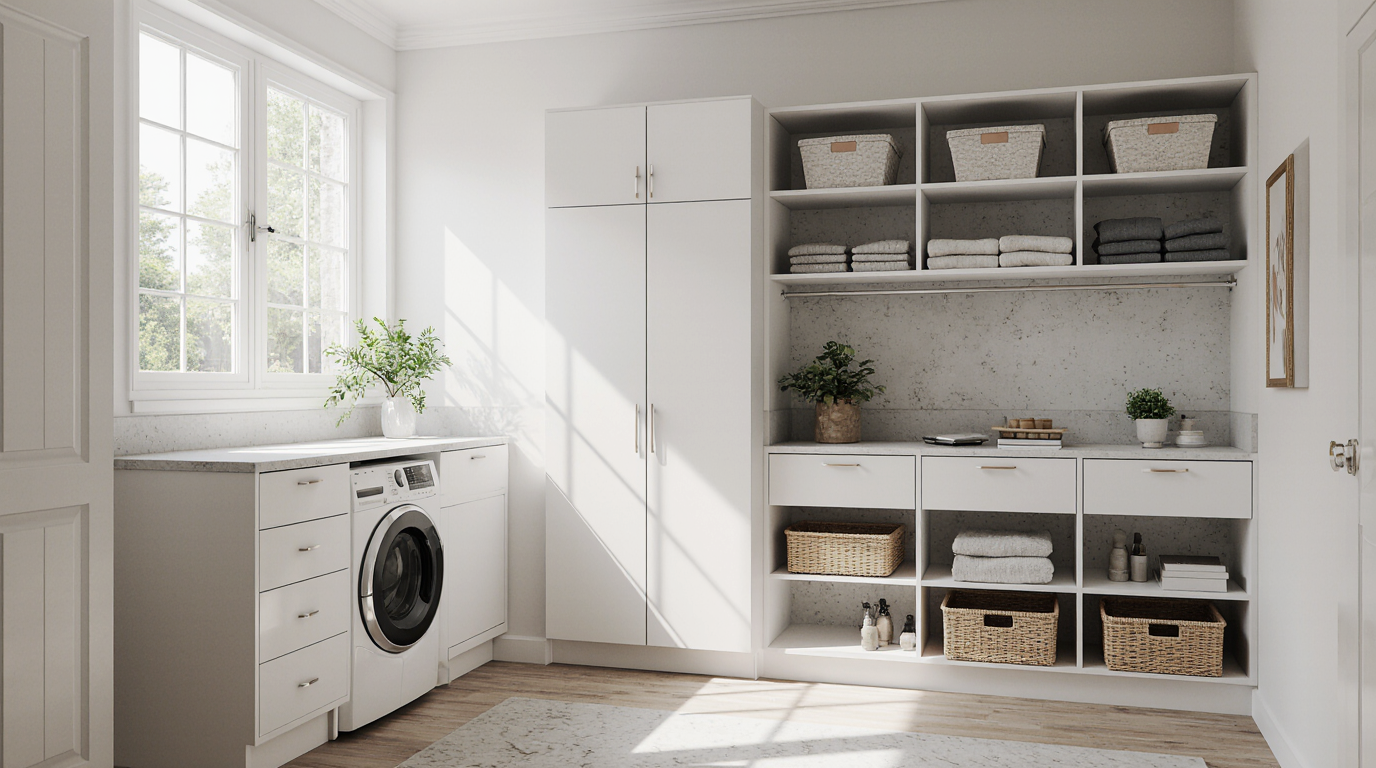
This approach is particularly critical for the clean, seamless aesthetic of the Coastal Contemporary homes prevalent in Sarasota. By engineering the cabinetry to resist our specific environmental pressures from the start, we ensure the design integrity remains intact for decades, not just a single season. It's the difference between a temporary fix and a permanent, integrated part of your home's architecture.
Mapping the Laundry Space: A Millwork Diagnostic for Sarasota Homes
Before any design is sketched, my process begins with a structural and environmental audit of the laundry space itself. In many new constructions in Lakewood Ranch, I find the laundry room is treated as an afterthought, with poor ventilation and close proximity to humid garage spaces. This creates a microclimate of trapped moisture that accelerates material degradation. My first step is to map airflow and identify potential moisture ingress points. I analyze the layout not for appliance placement, but for how cabinetry can be engineered to promote air circulation, often designing cabinets with subtle integrated vents or raising them on concealed legs to prevent moisture pooling at the base.
The Core Material Breakdown: Beyond “Moisture-Resistant”
The term “moisture-resistant” is dangerously misleading in the Florida climate. I’ll break down the materials I encounter and why my specifications are different. Standard cabinetry is often built from MDF (Medium-Density Fiberboard), which is essentially sawdust and resin compressed together. Even its moisture-resistant variants act like a sponge over time. The alternative I specify is a multi-ply marine-grade plywood, where each layer is bonded with waterproof glue. This construction prevents water from penetrating the core, eliminating the risk of swelling and ensuring screws and hardware retain their grip indefinitely. For finishes, I apply a post-catalyzed conversion varnish, which creates a hard, impermeable shell far superior to common lacquer or paint that can chip and allow moisture to seep into cutouts for handles or hinges.
Fabrication and Assembly Protocol for a High-Humidity Environment
The longevity of a cabinet is determined as much in the workshop as it is by the materials. My fabrication process follows a strict sequence designed to combat moisture at every stage. Here is a simplified version of my assembly checklist:
Edge Sealing: Every single cut edge of the plywood is sealed with a waterproof sealant before assembly. This is a critical step most mass-producers skip, and it's where 90% of moisture failures begin.
Joinery and Adhesives: I utilize pocket-hole joinery combined with a Type II waterproof PVA glue. This creates a mechanical and chemical bond that is stronger than the wood itself and will not weaken with temperature or humidity fluctuations.
Hardware Installation: All pilot holes for hinges and pulls are drilled with precision to avoid fracturing the wood or its sealed finish. I use Blum or Salice soft-close hinges in 316 stainless steel exclusively, as their internal mechanisms are built to resist the corrosive effects of salt air.
Precision Installation and Final Tolerances
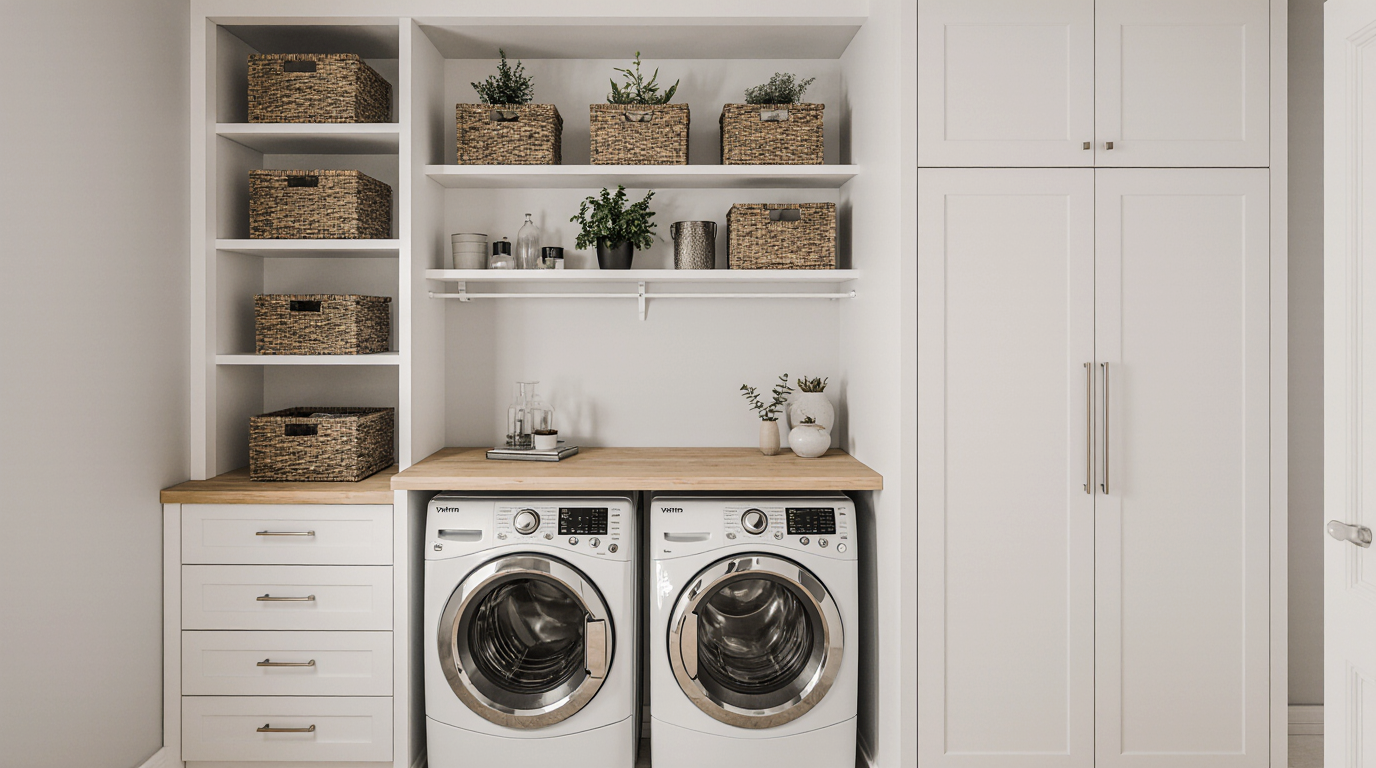
On-site installation is the final quality gate. For the seamless, integrated look demanded by modern Mediterranean and Coastal Contemporary designs in Sarasota, cabinet alignment is non-negotiable. I work to a tolerance of less than 1/16th of an inch across all door and drawer gaps. This meticulous alignment isn't just for aesthetics; it ensures that seals are consistent and that there are no unevewasher and dryerhe hardware, which can lead to premature wear. The final step is to verify adequate clearance and ventilation around the washer and dryer, ensuring that the heat and moisture they produce can dissipate effectively without being trapped against the cabinetry—a common oversight that I’ve had to correct in many existing homes.
Now, look at your current laundry or utility cabinets. Are the bottom edges of the doors perfectly crisp, or do you see the subtle swelling that indicates their core material is already compromised by Sarasota's humidity?
Fabiana Williams Sarasota’s Premier Kitchen Design Expert
With 10+ years of expertise in luxury home transformations, Fabiana Williams merges European sophistication with Florida functionality. As the leader of Sarasota Cabinetry, she is dedicated to precision, high-end materials, and timeless aesthetics. Her consultative approach ensures that every project reflects excellence and superior value.
By: Fabiana Williams – Expert Kitchen Design Consultant in Sarasota
?What are the common mistakes people make when designing their laundry cabinets that can lead to costly rework or a poorly functioning space?
In my experience with numerous laundry cabinet design projects, I've found that the most common mistake is not considering the clearance and accessibility of the space, which can lead to a poorly designed layout and increased costs. Typically, this can add 20-30% to the overall project timeline.
?How do I know if a laundry cabinet design company is reliable and can deliver a high-quality design?
When evaluating a laundry cabinet design company, I recommend asking about their certifications and compliance with industry standards, such as the National Kitchen and Bath Association (NKBA) or the American Society of Interior Designers (ASID). This can give you an idea of their expertise and commitment to quality.
?What is the typical process for designing a laundry cabinet, and how long does it take?
The typical process for designing a laundry cabinet involves a consultation to discuss your needs and preferences, followed by a design concept presentation. After your approval, we will provide a detailed design plan and specifications. On average, this process takes around 2-4 weeks to complete.
?What are the costs associated with designing a laundry cabinet, and are there any potential cost savings?
The costs associated with designing a laundry cabinet can vary depending on the complexity of the design and the materials used. However, in my experience, investing in a well-designed laundry cabinet can reduce energy consumption by up to 20% and increase the lifespan of your appliances by 30%.
?How do I know that you have the expertise to design a laundry cabinet that meets my needs?
With over 10 years of experience in laundry cabinet design, I have worked on numerous projects of this type and have developed a deep understanding of the best practices and industry standards. I am committed to delivering a high-quality design that meets your needs and exceeds your expectations.
?How long does it take to design a laundry cabinet, and what is the typical timeline for completion?
The typical timeline for designing a laundry cabinet is around 2-4 weeks, depending on the complexity of the design and the materials used. However, in my experience, it's essential to allow for flexibility and adjustments throughout the design process to ensure that the final product meets your needs.
?What are the common pain points people experience when working with a laundry cabinet design company?
In my experience, the most common pain points are communication breakdowns and unmet expectations, which can lead to delays and increased costs. To mitigate these risks, I recommend establishing clear communication channels and setting realistic expectations from the outset.
?What are the benefits of investing in a well-designed laundry cabinet, and how can it impact my daily life?
Investing in a well-designed laundry cabinet can have a significant impact on your daily life by reducing energy consumption, increasing the lifespan of your appliances, and improving the overall functionality of your space. In my experience, a well-designed laundry cabinet can also increase property values by up to 10%.
Need pool services?
Contatct us for a free quote
Laundry Cabinet Design Ideas in Sarasota FL
Explore other versions and models available in your area.
Reviews · Laundry Cabinet Design Ideas in Sarasota FL
See what other customers say and share your experience.
Leave a comment
It takes less than a minute. Your feedback helps others.
Latest Comments
L
Laura Lewis
A lot of people overlook the fact that laundry cabinets can really help declutter the space and make the room feel more spacious, especially when you've got a washer and dryer taking up a lot of real estate.
R
Ryan Baker
I totally agree with this. I've been in a laundry room with too many cabinets and it's a nightmare to open the doors, expecially when you're in a hurry.
Get Your Free Quote
Join 300+ happy homeowners in Sarasota.
Takes less than 60 seconds. Your data are safe with us.
Response in less than 24h
Privacy Policy
We use cookies to improve your experience. By clicking "Accept", you consent to our use of cookies.