Diagnosing the Core Failure in Sarasota Laundry-Bath Designs
Before any design is drawn, my first step is a technical assessment of the space's environmental load. A laundry-bathroom in a Lakewood Ranch estate faces different challenges than one in a Lido Key condo with direct Gulf exposure. The primary failure point I've identified in dozens of tear-outs is not the cabinet face, but the integrity of the cabinet box itself. Hot dryer exhaust, steam from the shower, and ambient subtropical humidity create a microclimate that relentlessly attacks wood composites. Standard particleboard and MDF act like sponges, swelling and weakening the joints, compromising the entire installation.
This is where off-the-shelf solutions fail. They are not engineered for the sustained moisture assault specific to our Florida climate. My methodology begins with mapping airflow and moisture sources to determine the necessary level of material resilience. It’s a diagnostic process that prevents the callbacks and premature replacements that I see as standard in the industry.
Material Specification: The Non-Negotiable Core of Durability
Once the environmental factors are clear, the material selection becomes a matter of engineering, not aesthetics alone. For any wet or high-humidity application, my baseline is marine-grade plywood. Unlike conventional plywood, it uses waterproof phenolic resin glues that prevent delamination under constant moisture. For the cabinet interiors, I specify a high-pressure laminate finish which creates a non-porous, easily cleaned surface that won't harbor mildew.
Hardware is the second critical component. I've seen beautiful custom cabinetry ruined by corroding hinges and drawer slides. For any project within a mile of the coast, I exclusively use 316 stainless steel, soft-close hardware. This specific alloy has a higher resistance to pitting and corrosion from salt air compared to the more common 304 grade. This is a small detail that adds over 70% to the functional lifespan of the moving parts of the cabinetry, ensuring smooth operation for years without the tell-tale signs of rust.
The Blueprint for a High-Performance Laundry & Bathroom Space
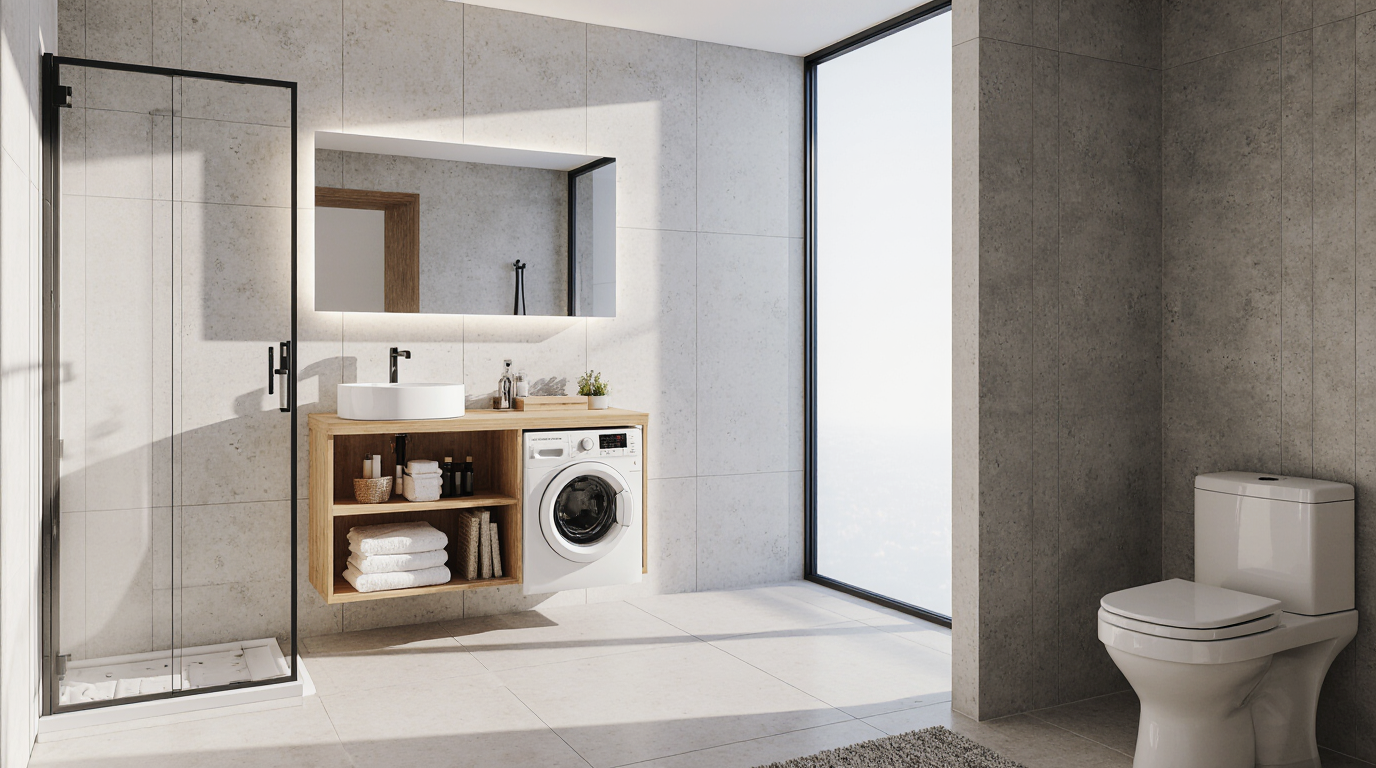
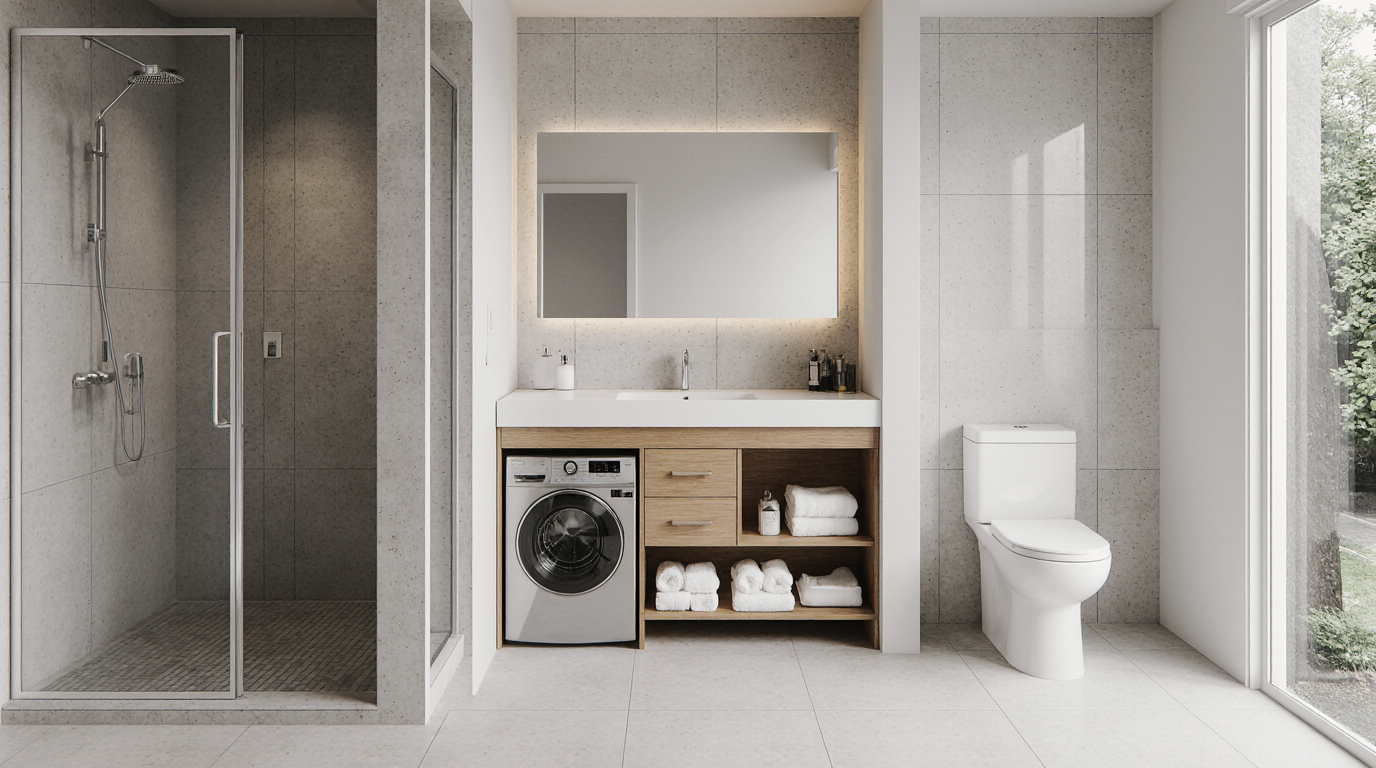
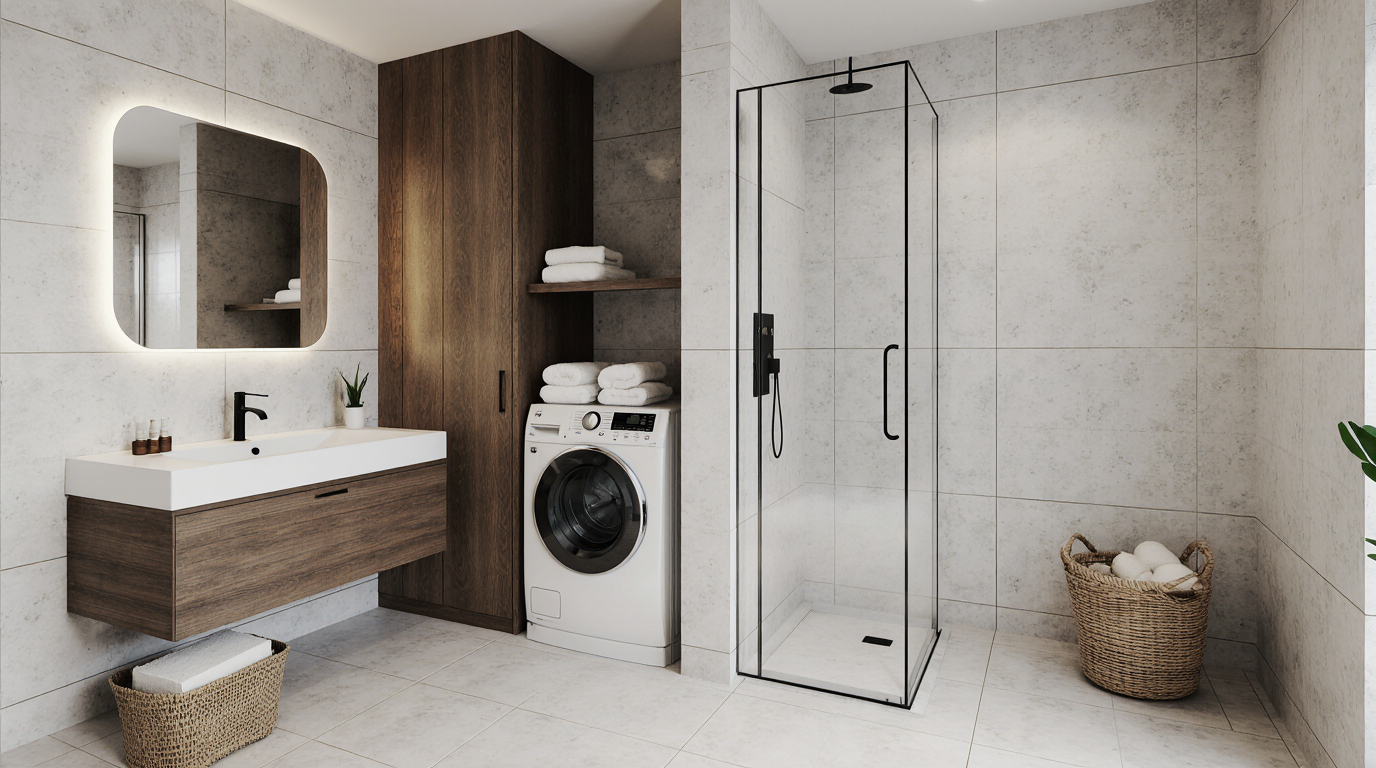
Effective design in a dual-function room is about more than just looks; it's about engineered workflow and maximizing every cubic inch. My process focuses on integrating function invisibly to maintain the clean lines expected in a high-end bathroom. This often involves a stacked vertical configuration for the washer and dryer, concealed behind full-height cabinet doors that match the vanity.
- Vented Appliance Cabinetry: I design custom ventilation channels within the cabinet structure to allow heat and moisture from the dryer to escape, preventing it from saturating the surrounding woodwork.
- Integrated Storage Solutions: This includes pull-out hampers, dedicated shelving for detergents with a waterproof drip ledge, and concealed ironing board cabinets. Every element is planned to reduce clutter and streamline the laundry process.
- Waterproof Base Construction: The cabinet's toe-kick and base are constructed from a solid composite material, not wood. This elevates the main cabinet box off the floor and ensures that even a minor water leak from an appliance won't wick up and destroy the entire unit.
Precision Installation and Environmental Sealing
The final stage is where the engineering truly comes together. A perfectly built cabinet can still fail if installed improperly. My installation protocol for wet areas is uncompromising. All cabinet boxes are sealed to the wall with a high-grade, mold-resistant silicone caulk, creating a barrier against moisture intrusion from behind. All plumbing cutouts are meticulously sealed with waterproof sealant to prevent vapor from entering the raw edges of the plywood.
The alignment tolerances are set to less than 1/16th of an inch, ensuring perfect door and drawer reveals that will not shift as the home naturally settles. This level of precision isn't just for appearance; it ensures the integrated seals and gaskets on the cabinet doors function correctly, keeping the interior dry and protected. This final step is what separates a standard installation from a piece of permanent, high-performance furniture. How are the wall-to-cabinet joints in your current bathroom sealed against inevitable moisture intrusion?