Dual-Purpose Bathroom and Laundry Room: Smart Design for Contemporary Homes
Designing a home area that balances both utility and elegance is often a complex endeavor, particularly when merging critical zones like the bathroom and laundry area. The concept of a bathroom and laundry room combo has gained significant attention in modern interior design, because it maximizes limited space without compromising on aesthetics or usability. An intelligently planned combo elevates home living by blending operational efficiency with sophisticated design, transforming ordinary tasks into streamlined, pleasurable experiences.
One of the most critical aspects of designing a combined bathroom and laundry area is ensuring proper spatial planning, Interior designers often stress that an intelligently structured layout is key, which involves careful consideration of plumbing, ventilation, and storage solutions. Properly locating washers and dryers ensures seamless interaction between bathroom and laundry functions. Compact or vertically stacked appliances are commonly advised to preserve open, airy aesthetics. With strategic layout and storage, even small areas can become highly functional without feeling cramped.
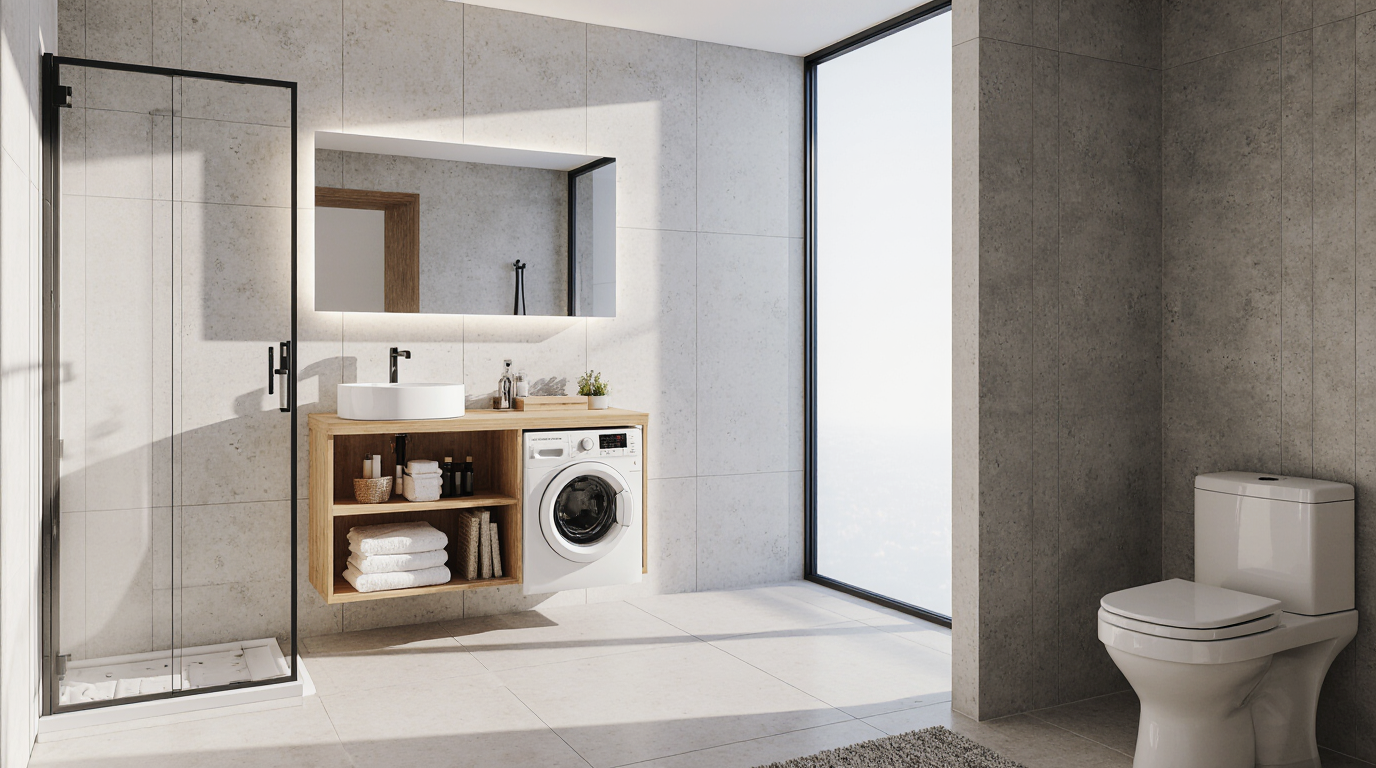
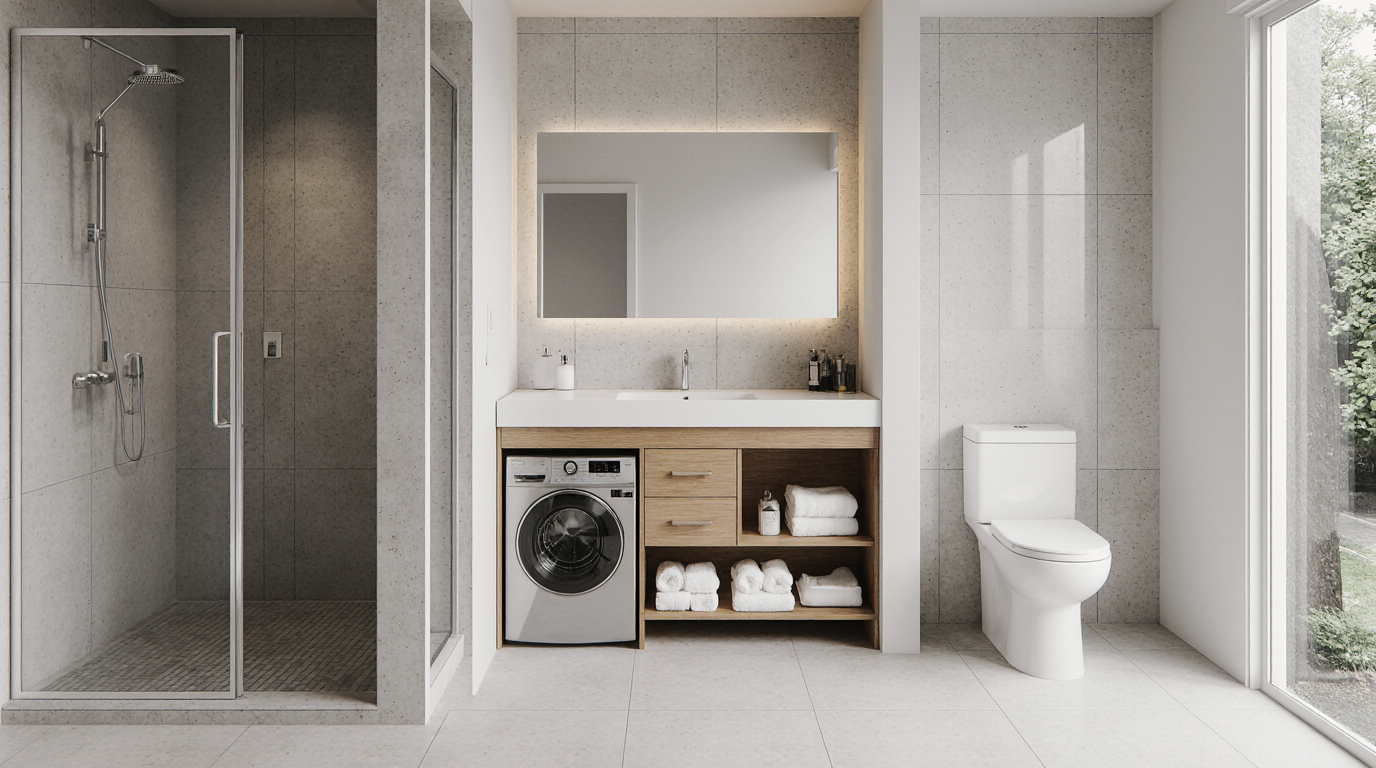
Storage solutions play a pivotal role in this integrated space. Bathrooms and laundry rooms both demand practical storage for essentials, including cleaning products, towels, toiletries, and laundry detergents. Contemporary built-ins and bespoke shelving elegantly hide machines yet offer generous space. Vertical storage strategies such as high cabinets and shelving units enhance capacity. Built-in drawers with soft-close mechanisms add sophistication and efficiency, ensuring that every inch serves a purpose without overwhelming the area.
Visual appeal plays a significant role alongside practicality, Coordinating surfaces, textures, and tones ensures a unified, attractive space. Neutral palettes, such as whites, beiges, and soft grays, often work well to make a small space feel larger and more open. Functional yet decorative tiling options protect surfaces while amplifying style. Artistic tiles, including mosaics or raised textures, enrich the visual narrative. Tiny yet thoughtful decorative interventions make the dual-purpose area feel polished and curated.
Lighting is a transformative element in this dual-purpose space. Illumination that balances task and ambient needs enhances efficiency and ambiance. Layered lighting strategies combining overhead lights, task lighting near the mirror, and subtle under-cabinet lighting create a versatile environment. LED integration beneath surfaces adds subtle elegance while aiding functionality. Natural illumination is encouraged to improve both ambiance and sustainable energy usage.
Air circulation is fundamental to preventing damage and maintaining comfort. Managing humidity and dampness is essential to avoid structural or health issues. Effective mechanical or natural ventilation ensures a hygienic, comfortable atmosphere. Modern ventilation integrates humidity and thermal control for durability and comfort. Supplementary measures, such as moisture barriers and dehumidification, are recommended.
Energy and water-efficient strategies are central to contemporary bathroom-laundry planning. Modern plumbing innovations combine efficiency with practicality. Similarly, energy-efficient washers and dryers minimize electricity usage, aligning with eco-conscious living. Some designers even incorporate smart technology, enabling homeowners to control water usage, monitor laundry cycles, and automate lighting for maximum convenience. Such solutions elevate convenience while demonstrating environmental responsibility.
Efficient task flow enhances usability in multi-purpose rooms. Strategic layout of functional zones streamlines chores and maximizes space. For example, a countertop above stacked appliances provides a perfect surface for folding clothes or organizing toiletries. A mix of visible and concealed storage balances accessibility with aesthetics. Predicting homeowner habits turns functional areas into polished, user-friendly environments.
Safety considerations cannot be overlooked in a combined bathroom-laundry space. Wet floors, electrical outlets near water sources, and heavy appliances require careful attention to design standards and building codes. Incorporating resilient flooring, secure electrical systems, and appliance fastenings ensures protection. Designers prioritize these elements without compromising aesthetics, seamlessly integrating protective features into the overall layout. Homeowners benefit from reassurance and functionality through integrated safety.
Custom design allows rooms to reflect individual tastes. Personal touches, including bespoke furniture, distinctive materials, and creative decor, enhance character. Statement mirrors, elegant faucets, and stylish hardware elevate the room’s appearance, making even routine chores feel more enjoyable. A careful mix of pattern, color, and material produces visual balance and a serene experience.
Finally, the adaptability of a bathroom and laundry room combo makes it a practical investment for the future. With the increasing demand for compact and versatile home designs, such spaces can accommodate evolving household needs without requiring extensive renovations. Strategic modular solutions sustain usability and elegance over time. Integrated design proves that efficiency and style can seamlessly coexist.
Creating a cohesive dual-purpose area relies on meticulous attention to every detail from spatial flow to decorative touches. Professional input guarantees that layout, materiality, and usability form a seamless whole. When executed correctly, the space merges efficiency, comfort, and style, turning chores into a streamlined, aesthetically pleasing activity.