Carving out a section of the garage into a dedicated washing area introduces a unique design challenge that interior architects relish. The initial hurdles are invariably environmental—temperature fluctuations, dust, and humidity—which must be resolved before design flourishes are considered. The most crucial step in a highly effective garage laundry design is ensuring climatic isolation. This might involve installing proper insulation, perhaps utilizing closed-cell spray foam for superior thermal performance, and guaranteeing robust, dedicated ventilation systems. A conventional residential vent is often insufficient; consider an industrial-grade ventilation unit powerful enough to manage the moisture load generated by the dryer, venting directly to the exterior to stop dampness forming on the walls and garage contents. This attention to climate control systems is what marks the difference between a quick installation from a long-term asset.
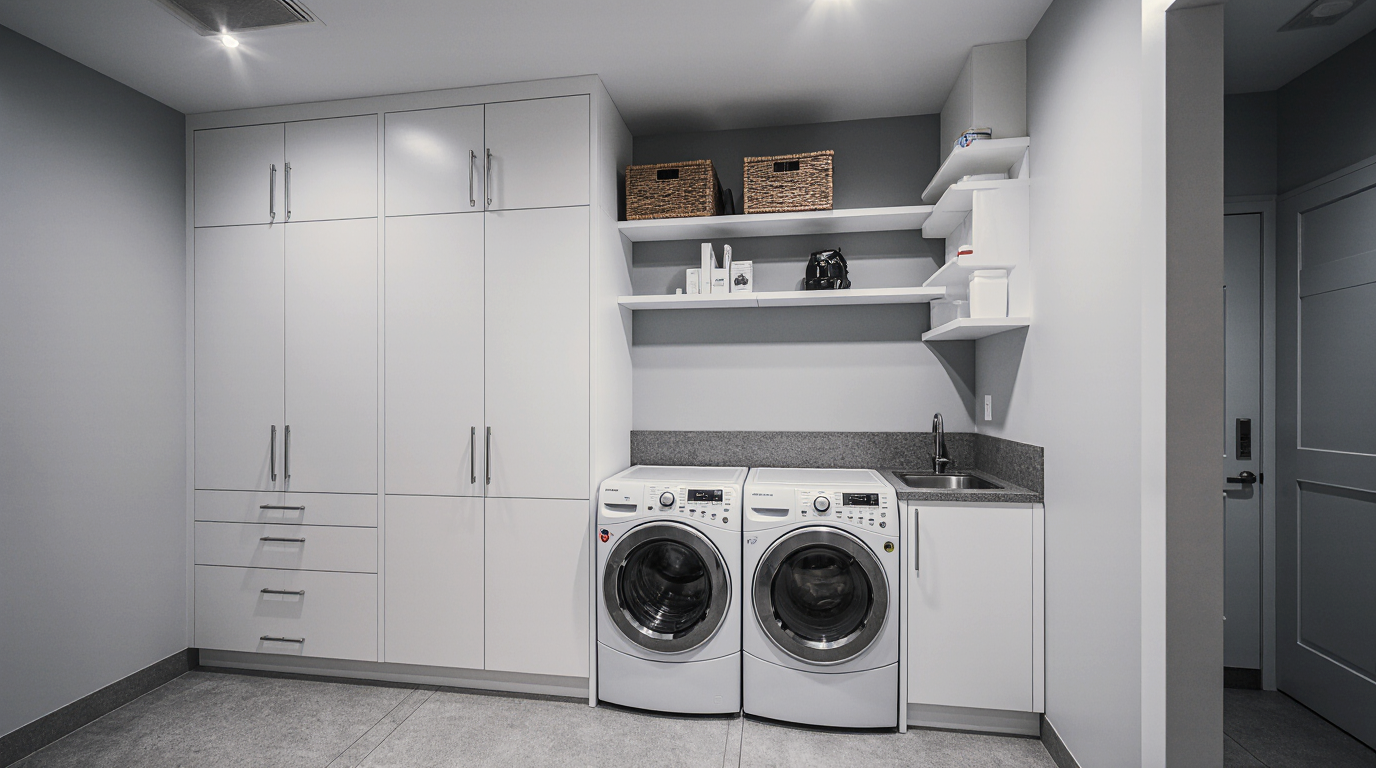
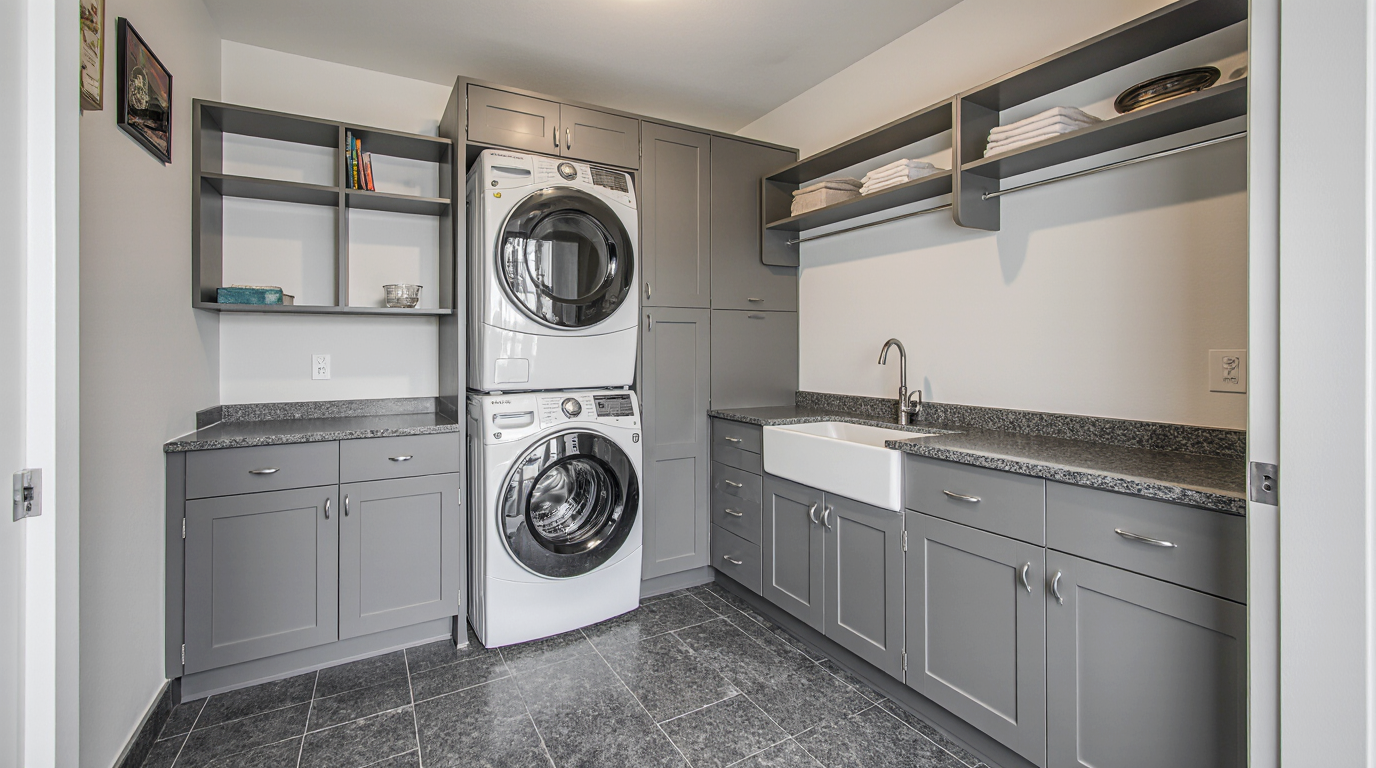
With the environment stabilized, the focus turns toward appliance selection and configuration. In a garage environment, where square footage is at a premium due to car parking or workbench areas, vertical integration takes top priority. The decision between a traditional layout and a vertical laundry tower is largely determined by the horizontal space available. If your space is limited horizontally, opting for a vertical tower liberates valuable surface area for critical workflow steps. This counter space is absolutely critical for streamlined operation; it is the primary the primary surface for sorting, folding, and the spot-treating of stains. For maximum utility, a continuous work surface, ideally constructed from a material resistant to water spotting and common household chemicals—perhaps a durable solid surface or a high-grade, epoxy-sealed butcher block—must extend across the entire run of the machines and surrounding storage.
Cabinetry design is the backbone of a well-designed utility space, especially one that must resist the visual clutter inherent in a typical workshop environment. The core strategy here is to capitalize on vertical real estate. While open shelving offers immediate visual feedback and easy access to frequently used items like detergent or dryer sheets, it must be used selectively to preserve an uncluttered aesthetic. For true visual decluttering, install tall, full-height units with solid, opaque doors—perhaps a durable, thermofoil finish that handles slight climatic changes more effectively than traditional paint. Within this storage matrix, specific zones must be designated. A dedicated nook for cleaning tools such as a mop, broom, or shop vac, perhaps utilizing a pegboard system painted a clean, unifying color, prevents garage equipment from encroaching on the washing area. Integrating pull-out hampers or linen baskets directly into the lower cabinetry run, typically positioned below the work surface, is a sophisticated technique to keep dirty textiles out of sight until laundry day, significantly enhancing the room's perceived cleanliness.
The functionality of a garage laundry room is made complete by adding a deep basin, often referred to as a laundry tub. This feature relocates the dirtiest chores—pre-treating heavily soiled items, rinsing paint brushes, or dealing with unforeseen messes—out of the main house. The sink basin should be deep, opting for high-impact acrylic or cast iron for durability. The plumbing for this area should be meticulously planned during the early design stage to consolidate runs and reduce construction difficulty. Consider a faucet with a pre-rinse sprayer attachment for maximum versatility.
Aesthetic integration is where the garage space moves beyond a mere utility shed to a designed area. Since the garage often features concrete flooring, treating this floor is essential for looks and feel. If a full tear-out and replacement are not feasible, explore high-performance floor coatings. Applying a decorative pattern or using a durable two-part epoxy kit can turn the boring floor into a surface that mimics tile or has a sleek, reflective sheen. This coating should also offer enhanced protection against stains and corrosive materials. Lighting needs to be much better than typical garage fixtures. Replace dim yellow lights for bright, color-accurate LED panels. Strip lighting installed directly under upper cabinets illuminates the work surface perfectly, while flush-mount, high-lumen ceiling fixtures ensure the entire area is bright and inviting, which is critical for accurate stain spotting and color sorting.
Think about the doorway to the home. If the laundry room serves a dual purpose, often combining with a changing area, incorporate a low wall or even a decorative, ceiling-mounted curtain track with a heavy-duty, washable fabric. This creates a visual boundary, providing a feeling of privacy and distance between the work zone and the living area, even in an open-plan garage structure. Every element, down to the placement of the iron rest to the color palette chosen for the walls—typically pale shades to brighten the naturally dim space—must be considered a strategic decision to turn this functional corner into a truly effective, resilient, and pleasant part of the household system. This holistic approach guarantees the value of the modification is achieved not just in functionality, but through its effortless fit into family life.