The modern utility space has developed into a dedicated design statement; it is decisively not just a small, noisy corner housing basic washers and dryers. Today, it stands as a vital hub of the modern home, a space demanding thoughtful architectural integration and elevated styling and finishing. Creating a truly elegant laundry space means harmonizing peak functionality with premium design elements, turning a necessary task into a surprisingly pleasant experience. This shift requires careful initial conceptualization, starting with the fundamentals of space utilization and the careful selection of premium materials.
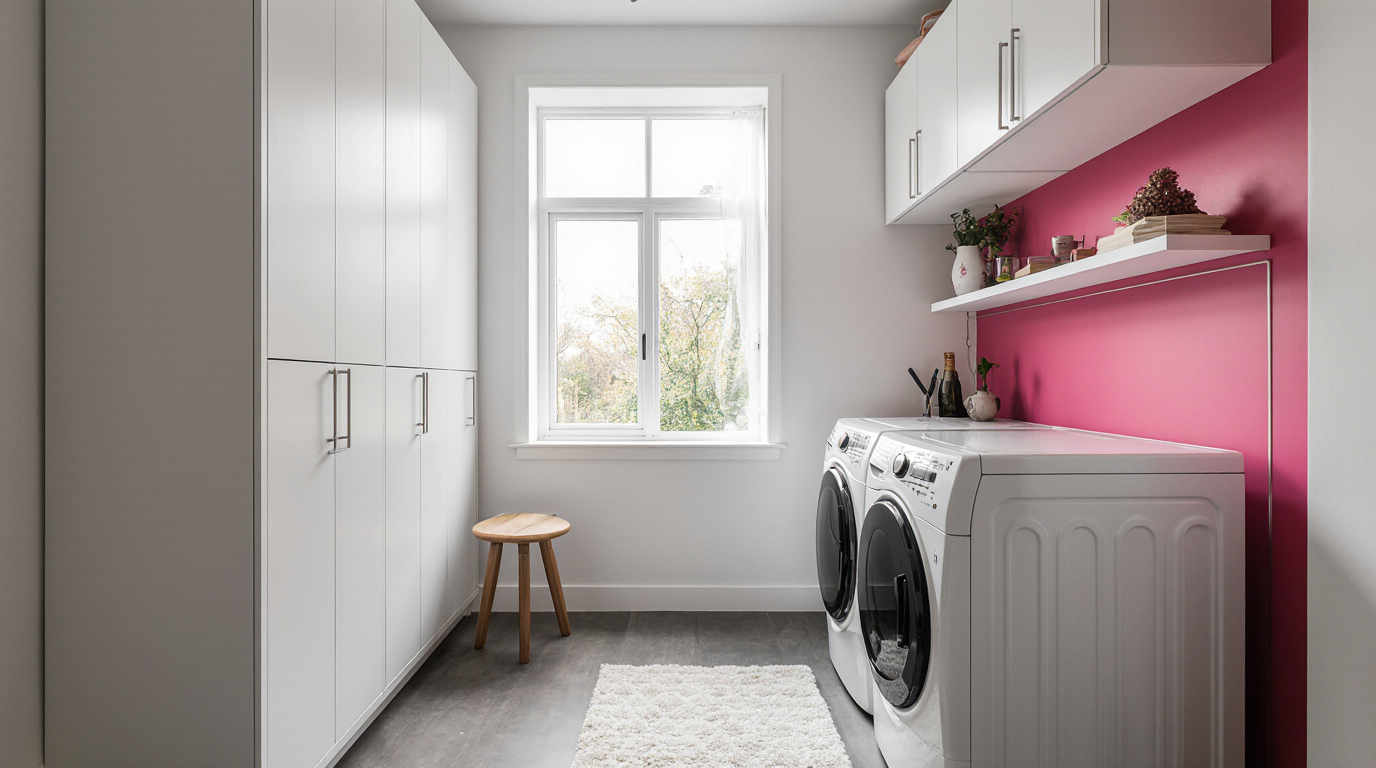
A key distinguishing factor between a basic utility room and a truly refined one is the commitment to custom cabinetry. Forget flimsy, off-the-shelf shelving; an elite wash space boasts full-height storage solutions crafted from high-quality hardwoods or durable, moisture-resistant MDF with sophisticated finishes. Consider clean-lined, contemporary flat-panel fronts, discreet, ventilated drawers designed to hide used textiles, and thoughtfully compartmentalized storage for laundry essentials and garment care items in an organized, dust-free manner. The selection of knobs and pulls is instrumental in defining opulence; choosing sleek finishes like aged bronze, satin brass, or dark iron handles instantly elevates the room’s perceived value and style.
The specifying the benchtop is a critical stage where practicality intersects with visual appeal. While laminate is cost-effective, true elegance is achieved with solid surfaces such as durable quartzite, sealed soapstone, or thick butcher block, provided they are properly sealed against potential water damage. Such premium materials ensure longevity, are easy to clean, and create a broad, seamless area ideal for garment preparation—a key component of ergonomic design. A substantial, seamlessly integrated basin, perhaps featuring a high-arc, commercial-style faucet in a matching hardware tone, adds a layer of professional capability while preserving the room’s sleek visual coherence.
Lighting design is frequently underestimated but is critical for both function and atmosphere. A truly elegant laundry room moves beyond a single, harsh overhead bulb. Rather, the design employs a combination of light sources. This typically begins with bright, high-CRI (Color Rendering Index) overhead fixtures to ensure true color representation when sorting whites and colors. This is enhanced with subtle linear task lighting placed beneath the upper units to illuminate the folding surface evenly, eliminating shadows. For a moment of aesthetic interest, integrate an attractive, statement fixture above the wash basin, treating it as a jewel in the room.
The flooring decision shapes the foundational aesthetic of the space. While practical considerations like water resistance are paramount, the aesthetic impact cannot be ignored. Oversized ceramic planks designed to replicate the texture of quarry stone or dark wood, frequently specified in highly durable synthetic compositions, offer a clean, continuous flow across the floor. For homeowners seeking a more artisanal touch, graphic encaustic tiles can introduce an eye-catching geometric or Moorish style that makes the floor a memorable design feature. The seams must be discreetly sized or perfectly tinted to the surface material to support the seamless effect.
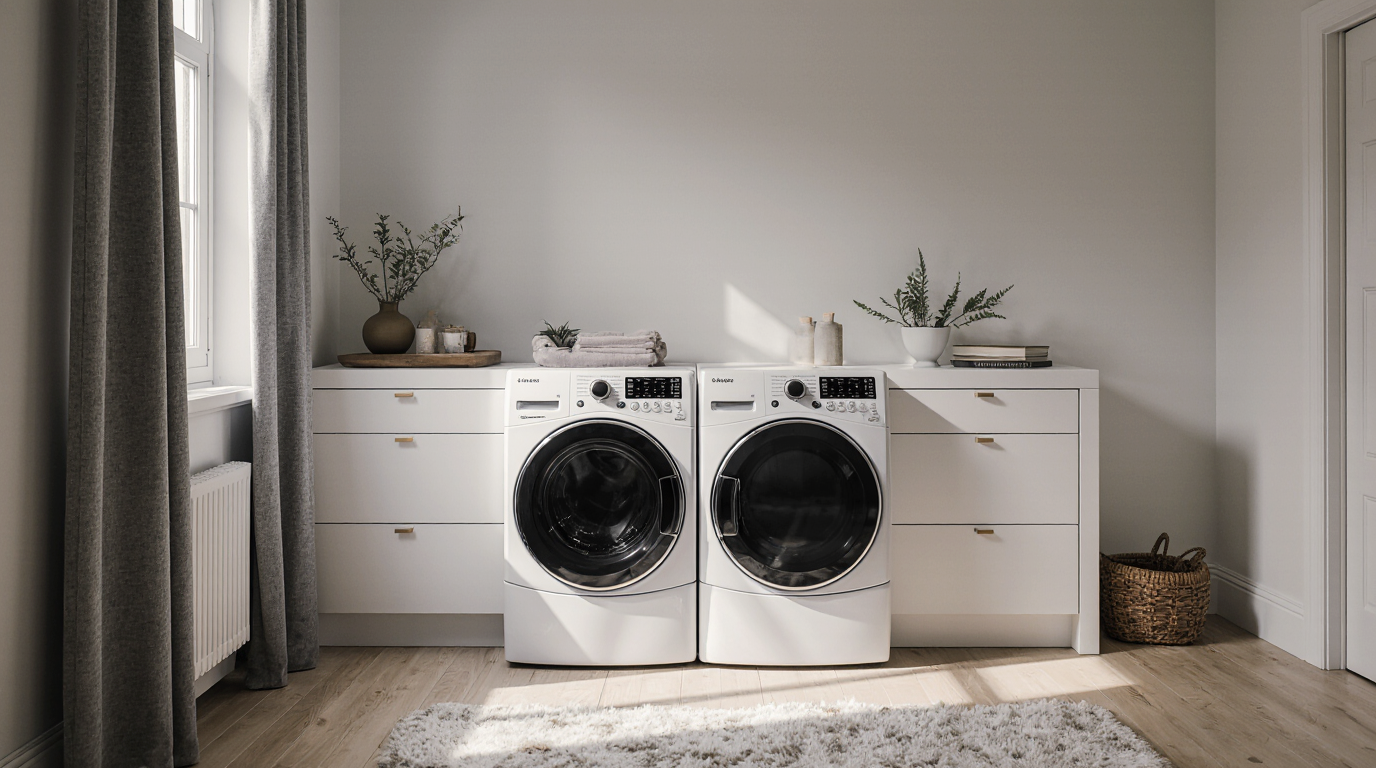
Concealing the technical aspects is the hallmark of high-end design. Rather than having freestanding machines dominate the visual field, ensure they are enclosed by paneling that suggests an integrated cabinet piece. To achieve the highest level of refinement, consider stacking high-efficiency units if space is a constraint, or opting for sleek, front-loading models arranged side-by-side. The trend toward smart appliances that offer app-controlled cycles and energy monitoring adds significantly more than mere ease of use but also to a more technologically advanced, curated environment.
Utilize the upward dimension to boost capacity. Beyond the standard upper cabinets, include a space-saving retractable clothesline system and is hidden completely when its function is complete. Dedicated hanging rods beneath upper cabinets facilitate the quick transfer of pressed or delicate garments, minimizing wrinkles and the need for ironing time—a major boost to task efficiency. For small items, custom-fitted drawer dividers for socks, dryer balls, and clothespins complete the meticulous planning of the interior space.
The overall mood in a luxurious wash space should be one of tranquility, not disarray. This is achieved through a strategic color palette. Warm neutrals, soft grays, muted blues, or deep charcoal tones create a foundation of quiet sophistication. Pops of color and texture may come from fabric choices, such as a woven floor mat featuring an attractive print from a resilient, flat-weave fabric, or through the inclusion of decorative baskets made of natural materials like wicker or woven seagrass. Such touches provide a counterpoint to the rigid shapes of the appliances and built-ins, infusing the space with material variety and a sense of peaceful escape.
Crucially, never neglect the details that personalize the space and acknowledge its purpose while maintaining a sophisticated veneer. A clever, recessed pressing area that unfolds from the wall or a purpose-designed cupboard with airflow for a standing clothes steamer demonstrates a focus on comprehensive functionality. The placement of artful, considered accessories—a framed print, a luxury scented candle, or a delicate arrangement of real or artificial flowers—indicates that the space has been styled with the same care as the main residential zones. This holistic approach, which merges functional engineering with high-level finishing, serves as the model for achieving a highly memorable and upscale utility space that acts as a valuable and functional extension of the property.