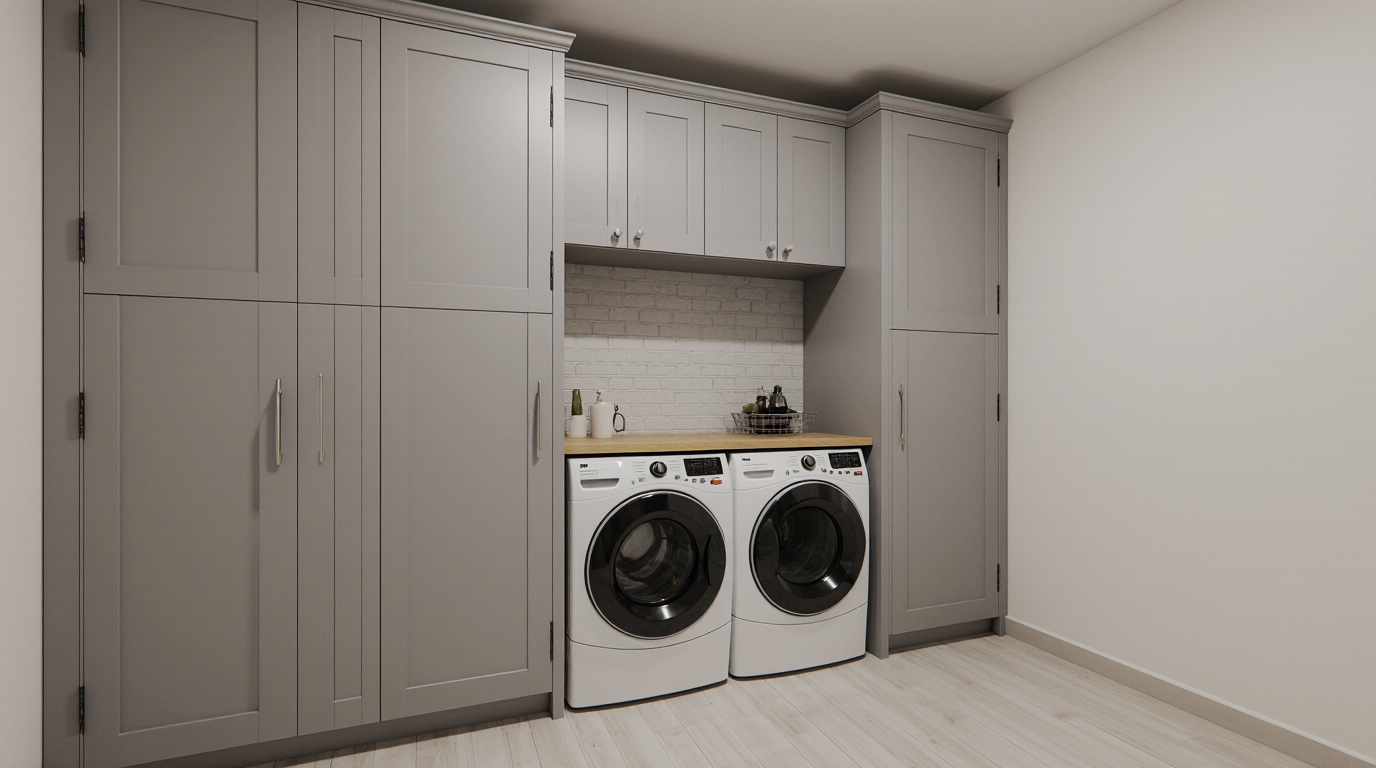
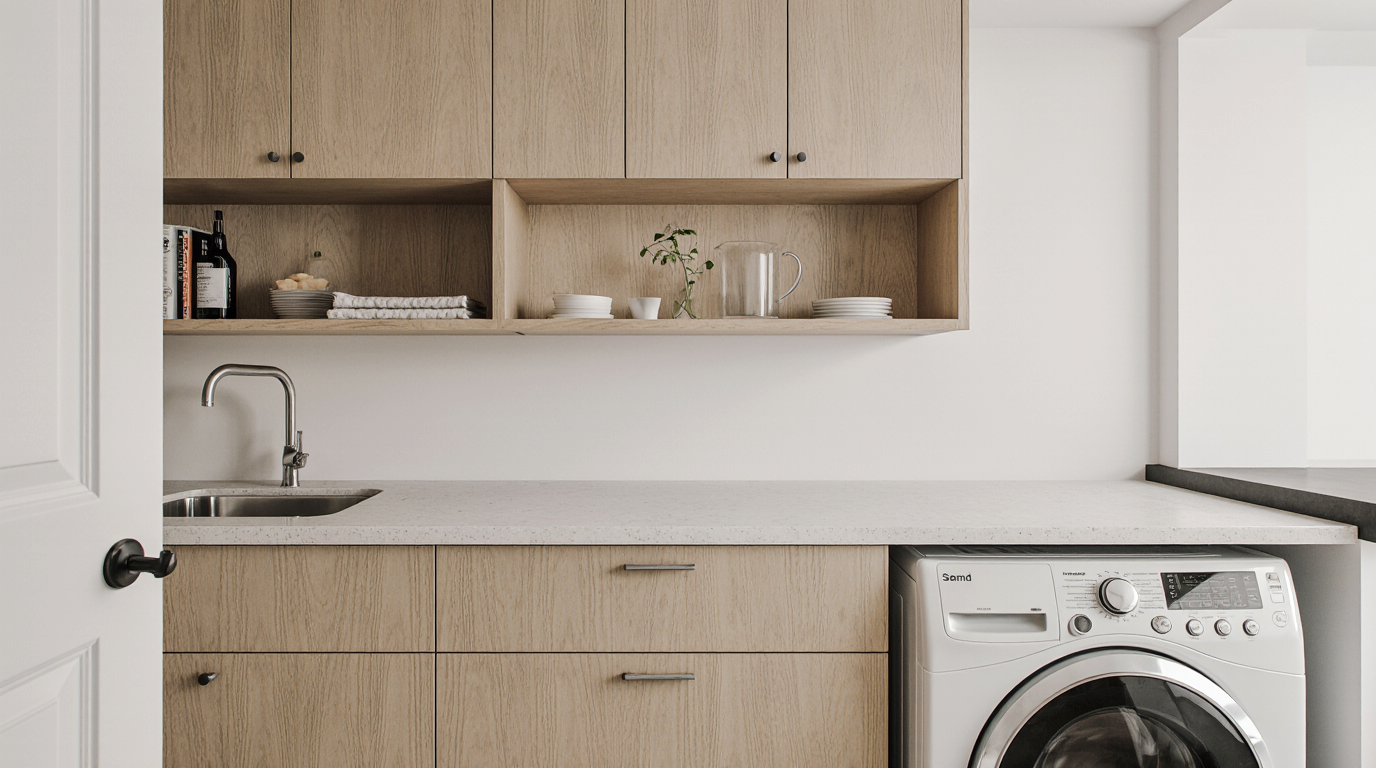
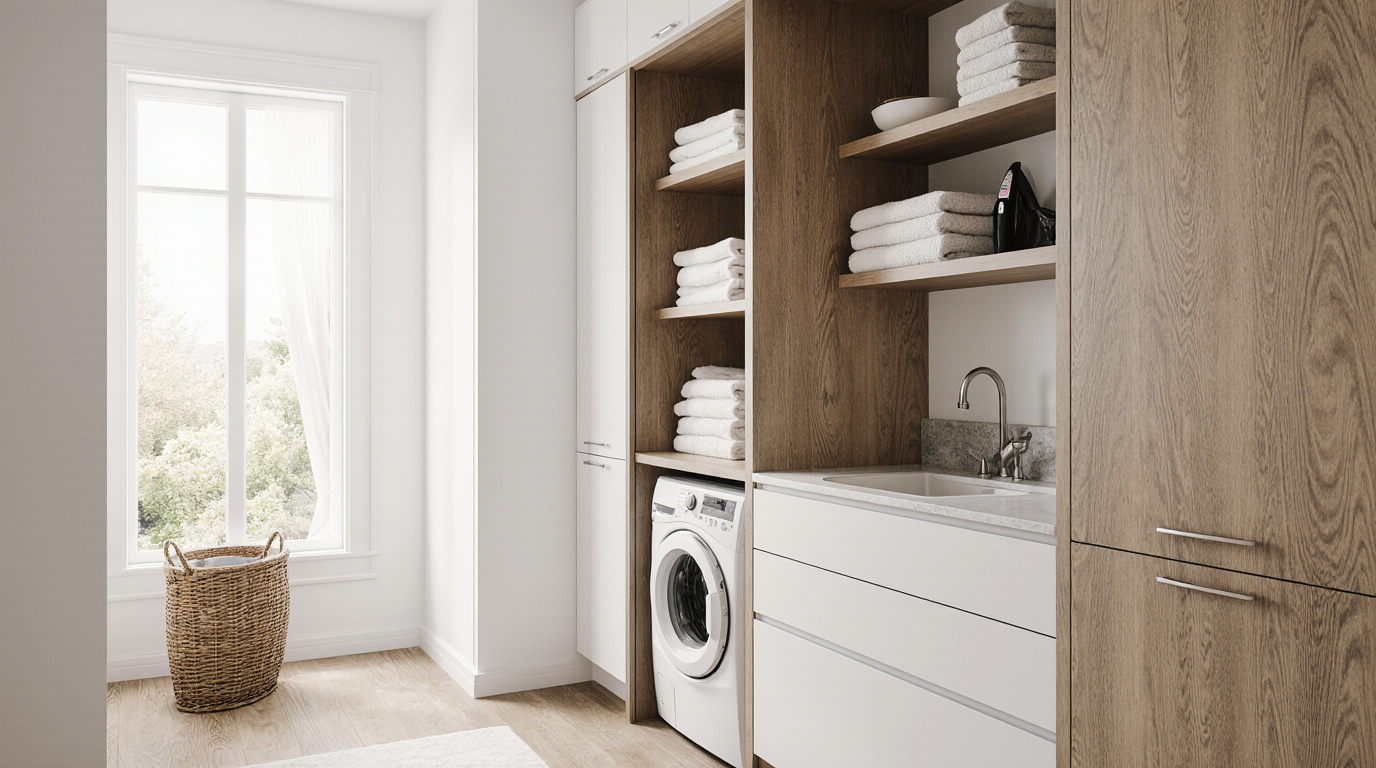
The 21st-century laundry room has moved beyond its simple service origins, shifting from a neglected corner typically found in the basement to a highly valued, holistic space within the new-age home's blueprint. As a expert in Laundry Room Design, I can confirm that the cabinetry is the absolute core of a highly efficient room, fundamentally dictating workflow, maximum storage, and the overall visual impact. Moving beyond mere appliance housing, smart laundry cabinets are the key factor of laundry room luxury and task-based efficiency. Our primary goal here is a detailed examination of designing this vital space, conforming to principles that guarantee a people-first content approach and authoritative depth.
The initial journey begins with a rigorous assessment of the physical constraints inherent to the room and the family's unique laundering volume and practices. This initial phase is the point at which space planning shifts from purely theoretical to absolutely crucial. Consider applying the work triangle concept—a principle typically applied in kitchens; a parallel logic is applicable here: the necessary path from the dirty hamper to the washer to the sorting area to the dryer and ultimately to the folding/storage zone must be seamlessly streamlined. Inadequate counter space strategically positioned above the machines for the task of folding is a frequently observed design pitfall. To alleviate this problem, consider specifying full-depth upper cabinetry rather than the reduced-depth units often seen in less thoughtful designs. This design choice makes it possible for the concealment of less attractive items—such as detergent pods, various stain removers, and small tools—while concurrently maintaining a pristine, uncluttered aesthetic.
Cabinet material selection is paramount for longevity, especially given the humid environment that is naturally inherent to laundry tasks. While standard particleboard is known to be budget-friendly, for a premium laundry space, select moisture-resistant MDF or, ideally, solid wood construction treated with robust, moisture-resistant finishes. The specific choice of finish is critically important for meeting the humidity challenge; thermofoil or a durable thermofoil application offers excellent resistance to swelling and warping, often superior standard laminate in wet zones. For a premium finish, explore lacquered cabinets, taking care they are thoroughly sealed against moisture ingress at the seams and edges.
Storage is the area in which bespoke cabinet solutions make the biggest impact. Think vertically to maximize every inch. Tall utility cabinets offer superior vertical storage for items like brooms, ironing boards (frequently accessorized integrated ironing board drawers or custom interior fittings), and bulk supplies. For the base units, it's best to bypass standard deep shelving whenever possible. The drawer system is the optimal choice. Deep, sturdy drawers facilitate logical categorization: one could be reserved laundry additives (bleach, softeners, scent boosters), a separate one for rags and cleaning cloths, and potentially a shallow drawer dedicated to organizing mesh bags used with delicates. Implementing drawer organizers made for small bottles is essential that inevitable avalanche as soon as a drawer is opened.
A defining element that significantly separates an average laundry room from an expertly designed one is the dedicated folding station. If space generously allows, an extended countertop that covers the washer and dryer provides the necessary surface. If the machines are stacked, this crucial surface must be securely cantilevered or supported by neighboring cabinetry. To further enhance this station, build in a pull-out sorting system. These are commonly heavy-duty wire baskets or bins, sometimes on glides, engineered to store three categories: Whites, Colors, and Delicates. This smart design strategy eliminates the need multiple freestanding hampers, significantly improving floor space utilization.
Furthermore, consider the often-overlooked necessity of air-drying solutions. A stunning laundry room should not give up functionality for those garments that require hanging. Incorporating a retractable drying rack that folds flush invisibly into the upper cabinetry is a designer's trusted for keeping intact that visual coherence. Alternatively, a custom-built drying rod installed within a recessed cabinet area, perhaps one that vents lightly or includes a humidity sensor, offers an excellent solution for cashmere or structured items needing to maintain their proper shape.
Illumination is a major role in both functionality and mood. Aside from general ambient lighting, task lighting placed inside the cabinetry itself is invaluable. Installing LED strip lighting beneath upper cabinets clearly illuminates the folding surface, making it much easier to spot stains or check fabric care labels. For a touch of sophisticated detailing, consider opting for glass-front cabinets for neatly displaying folded linens or attractive, matching storage canisters, as long as the contents are kept impeccably organized—this highlights how visual merchandising within the room comes into play.