Engineered Laundry Cabinets: A Framework for Lifelong Durability in Sarasota County Homes
My On-Site Analysis Protocol for Laundry Spaces
My process begins not with a tape measure, but with an environmental assessment. I check for ventilation efficiency, proximity to saltwater air intrusion, and ambient humidity levels, particularly in homes on Casey Key or Lido Key. I've seen beautifully designed laundry rooms fail because the designer ignored a poorly ventilated dryer duct that was pumping humid air directly onto cabinet surfaces. My first step is identifying these “micro-climates” within the room to inform the engineering of the cabinetry.
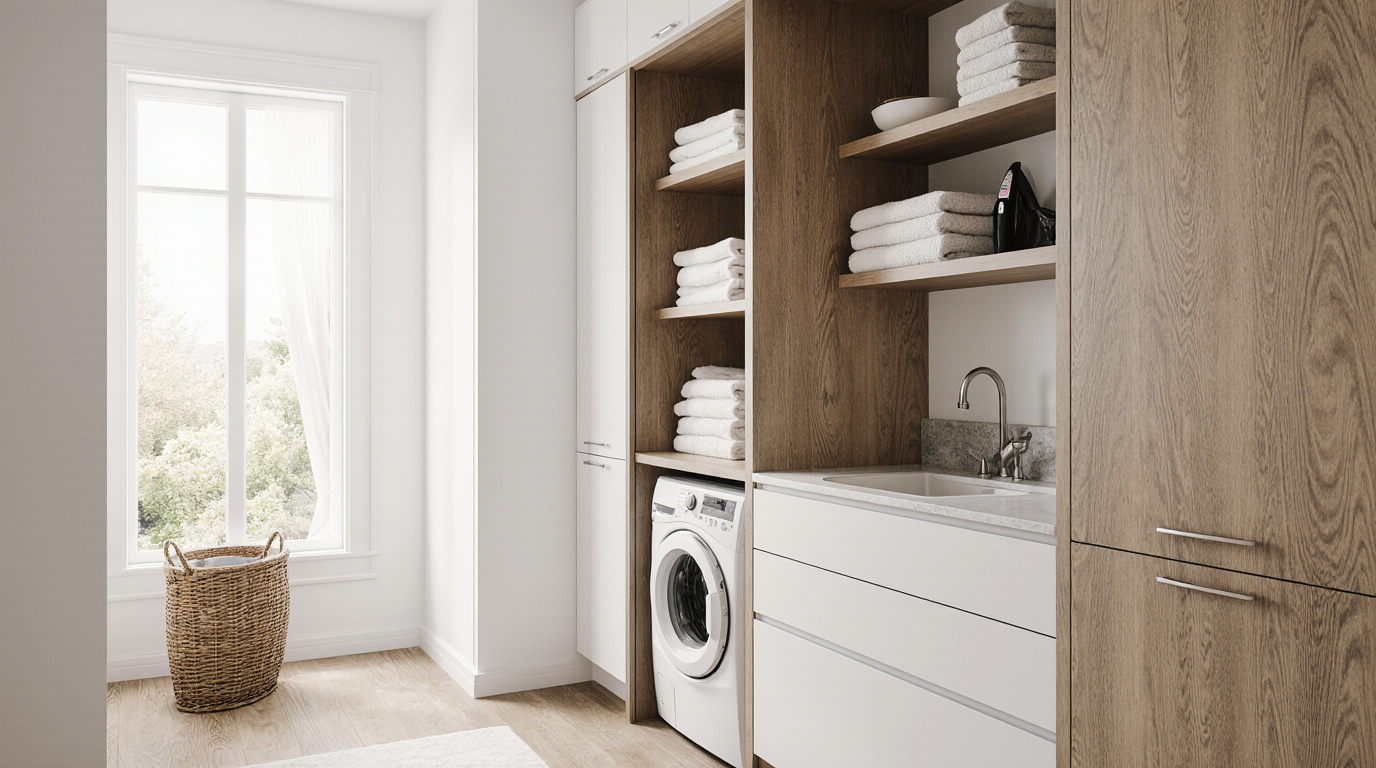
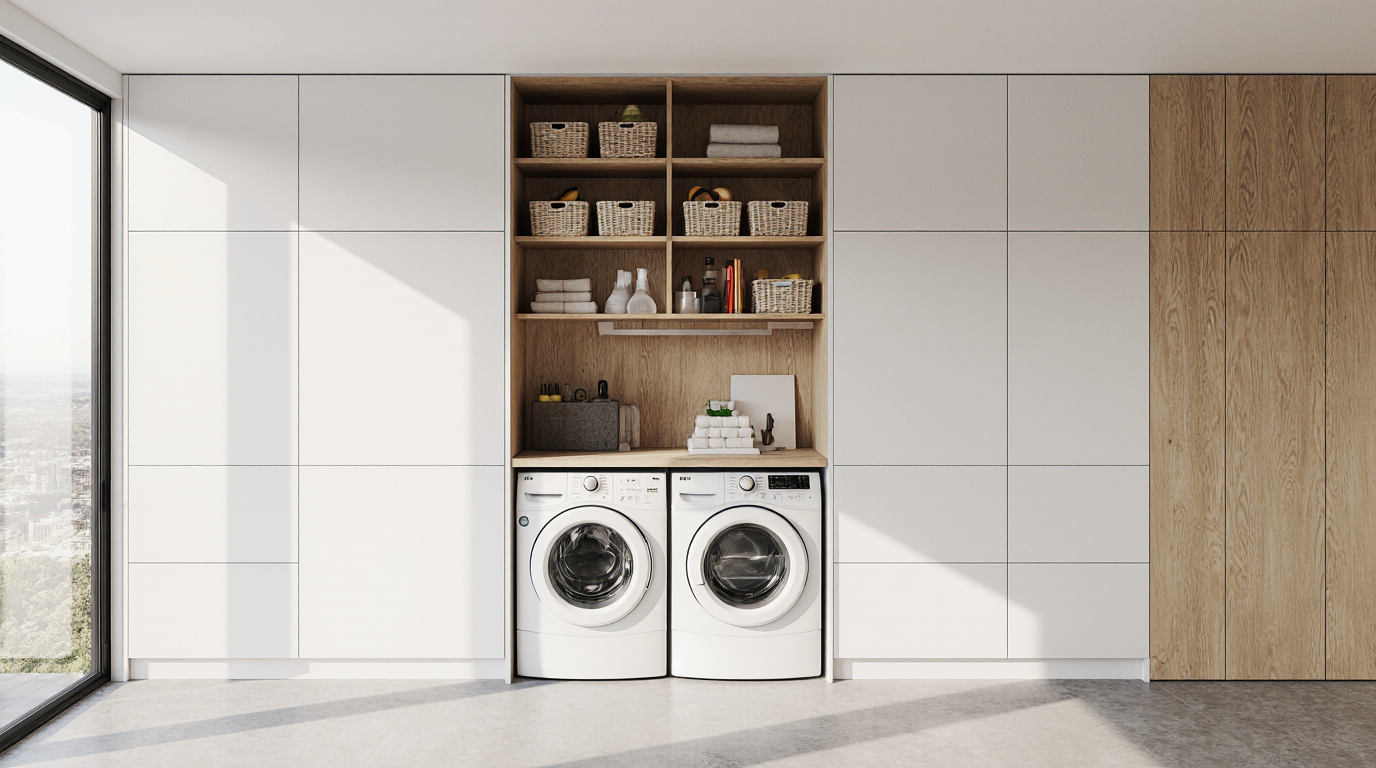
I also analyze the workflow. Where do baskets sit? Where does sorting happen? How does the homeowner interact with the machines? This ergonomic study allows me to design integrated solutions like pull-out sorting bins, concealed drying racks, and dedicated folding surfaces that are not just added on but are part of the cabinet's core structure. This preempts the common issue of retrofitting accessories that weaken the cabinet's integrity.
Core Materials: The Non-Negotiable Foundation
The choice of a multi-ply Baltic Birch or a true marine-grade panel isn’t just about water resistance; it’s about dimensional stability. In the fluctuating Florida temperatures, these materials exhibit minimal expansion and contraction, which prevents hairline cracks in paint finishes and ensures door alignments remain perfect year after year. Standard furniture board, by contrast, can expand by as much as 1/8th of an inch, causing cascading alignment failures.
- Conversion Varnish: For painted finishes, I use a two-part post-catalyzed conversion varnish. This creates a hard, non-porous chemical barrier that is far superior to common lacquer, which can yellow and become brittle with UV exposure from large windows common in Lakewood Ranch homes.
- Edge Banding Integrity: I insist on using a waterproof PUR (polyurethane reactive) adhesive for all edge banding. A common failure point I see is edge banding peeling due to steam from an iron or washer. PUR glue creates a permanent, waterproof bond that eliminates this vulnerability entirely.
Hardware Engineering: The Mechanics of Durability
Selecting the right hinge is critical. I specify fully sealed, soft-close concealed hinges with stainless steel internal mechanisms. In our salty air, an unsealed hinge mechanism will seize up over time, even if the exterior plate looks fine. For drawers, I use undermount glides with a high load rating, typically 100-150 lbs, ensuring they can handle heavy detergent bottles without sagging or failing—a detail often overlooked in semi-custom solutions.
From Digital Design to Physical Form: My Fabrication Process
Every cabinet component is cut on a CNC router for tolerances within 1/64th of an inch. This precision is key to a seamless installation. All joinery is dado and rabbet construction, reinforced with concealed screws and the same waterproof adhesive used for edge banding. This creates a monolithic box that is incredibly strong and resistant to racking or twisting during transport and installation. I avoid simple butt joints held by staples, which is a common manufacturing shortcut I often discover during demolition of failed cabinetry.
- First, I create a perfectly level and plumb installation ledger. The wall, not the cabinet, is made perfect first.
- Each cabinet box is mechanically fastened to wall studs and to each other, creating a single, unified structure.
- Finally, doors and drawer fronts are installed and undergo a multi-point alignment check, ensuring consistent gaps and flawless operation.
The Final Calibration: Adapting to Your Home's Environment
Before the project is considered complete, I allow the cabinetry to acclimate to the home's specific temperature and humidity for 48 hours. After this period, I perform a final adjustment of all doors and drawers. This step is crucial because even the best materials will shift slightly when introduced to a new environment. This final “tuning” ensures perfect alignment for the long term and is a quality control step that is almost universally skipped in mass-produced installations. The goal is to achieve a consistent 3/16-inch gap on all reveals, a hallmark of true custom work.
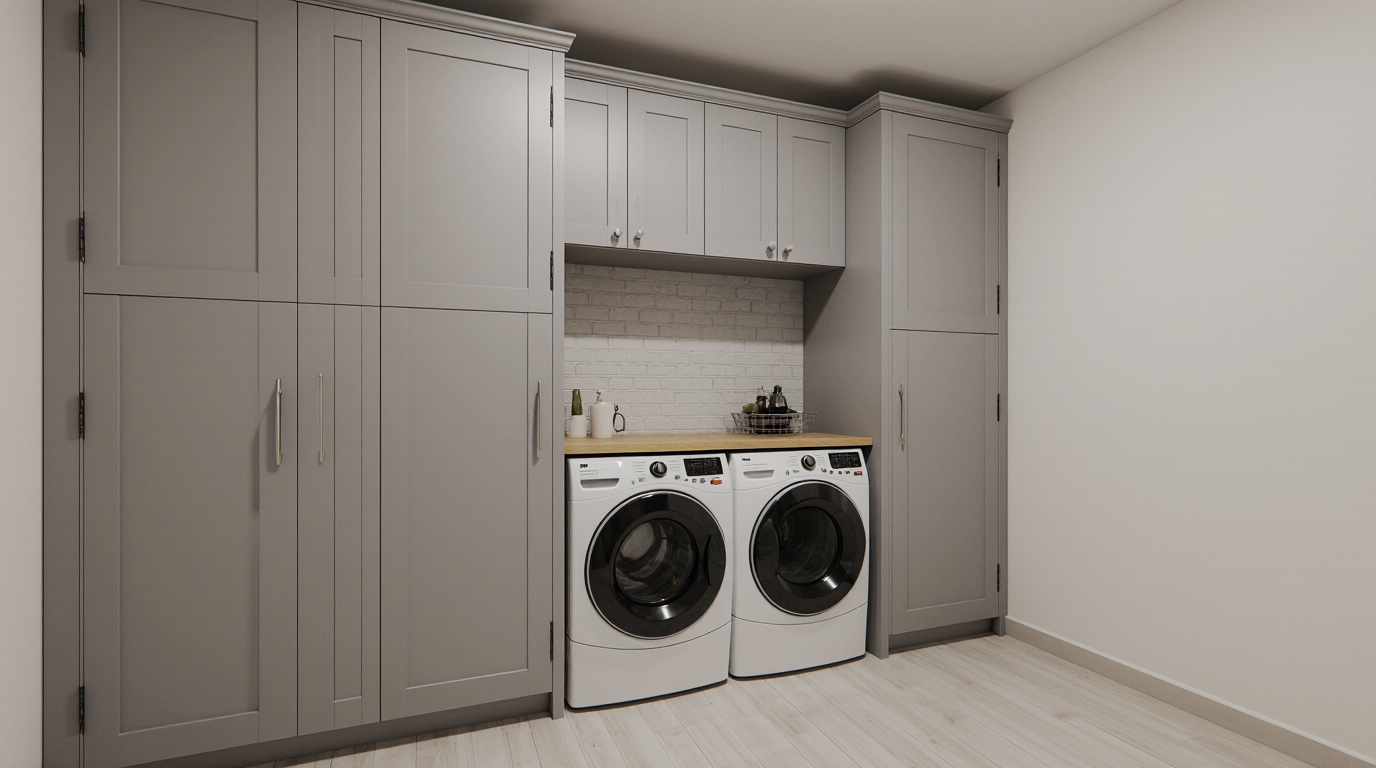
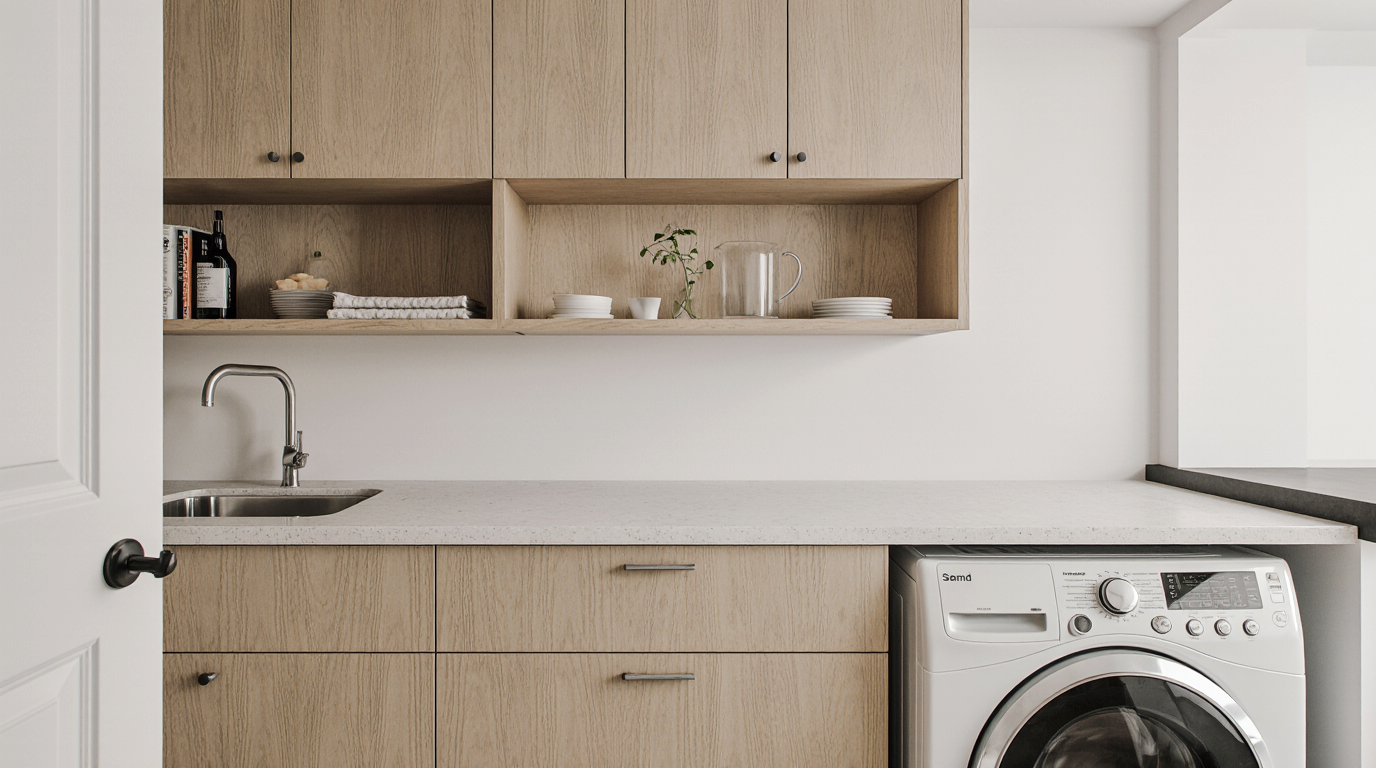
Now, look at your current laundry room cabinets. Are the gaps between the doors and drawers perfectly even, or have they started to drift and pinch? That single detail often reveals the underlying quality of the engineering and its suitability for our demanding Sarasota climate.