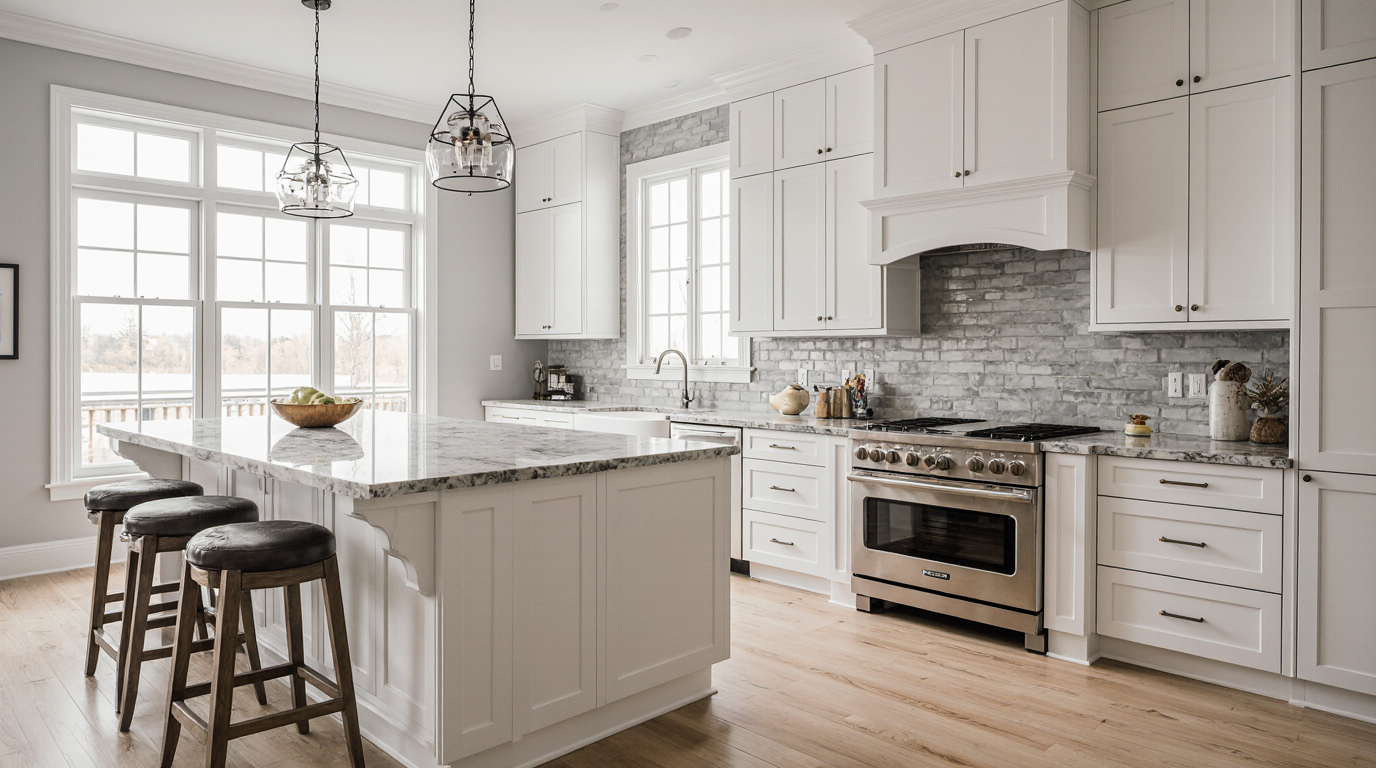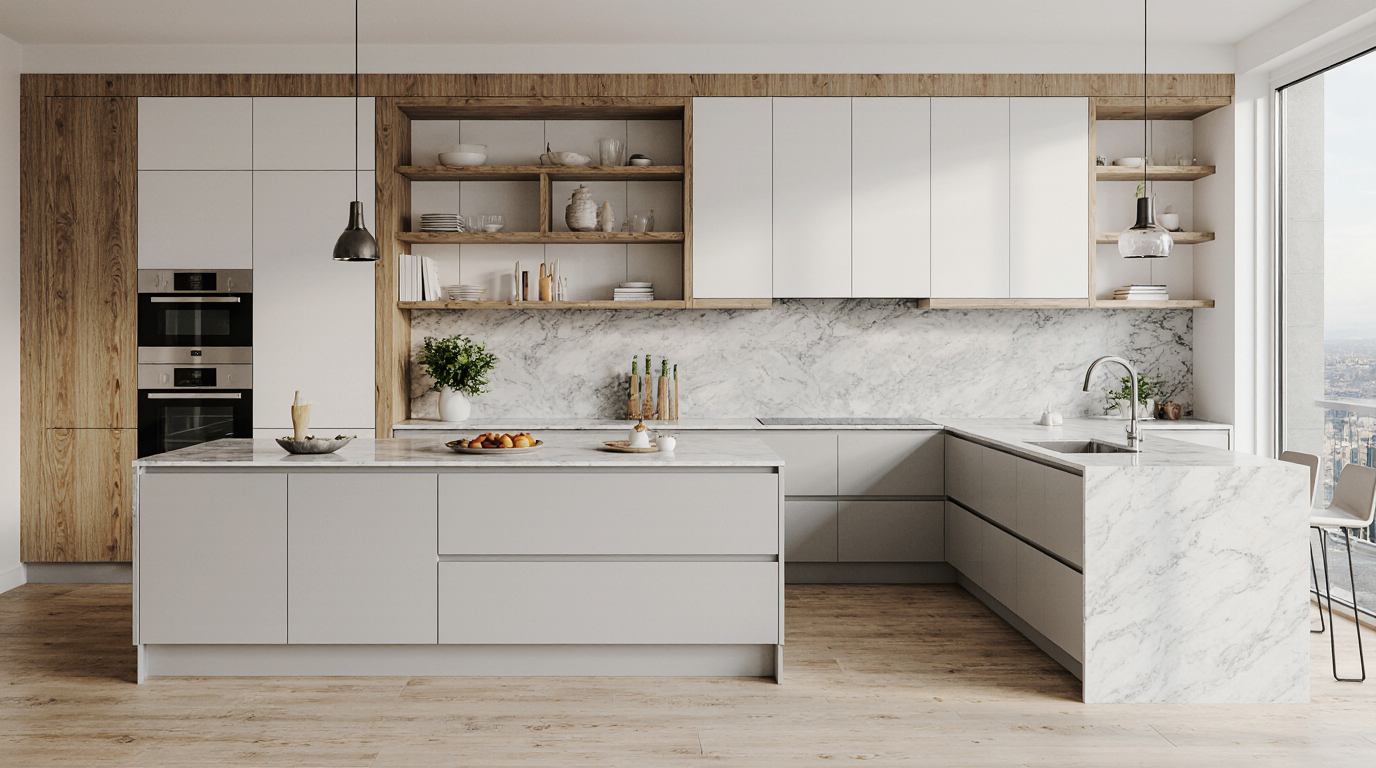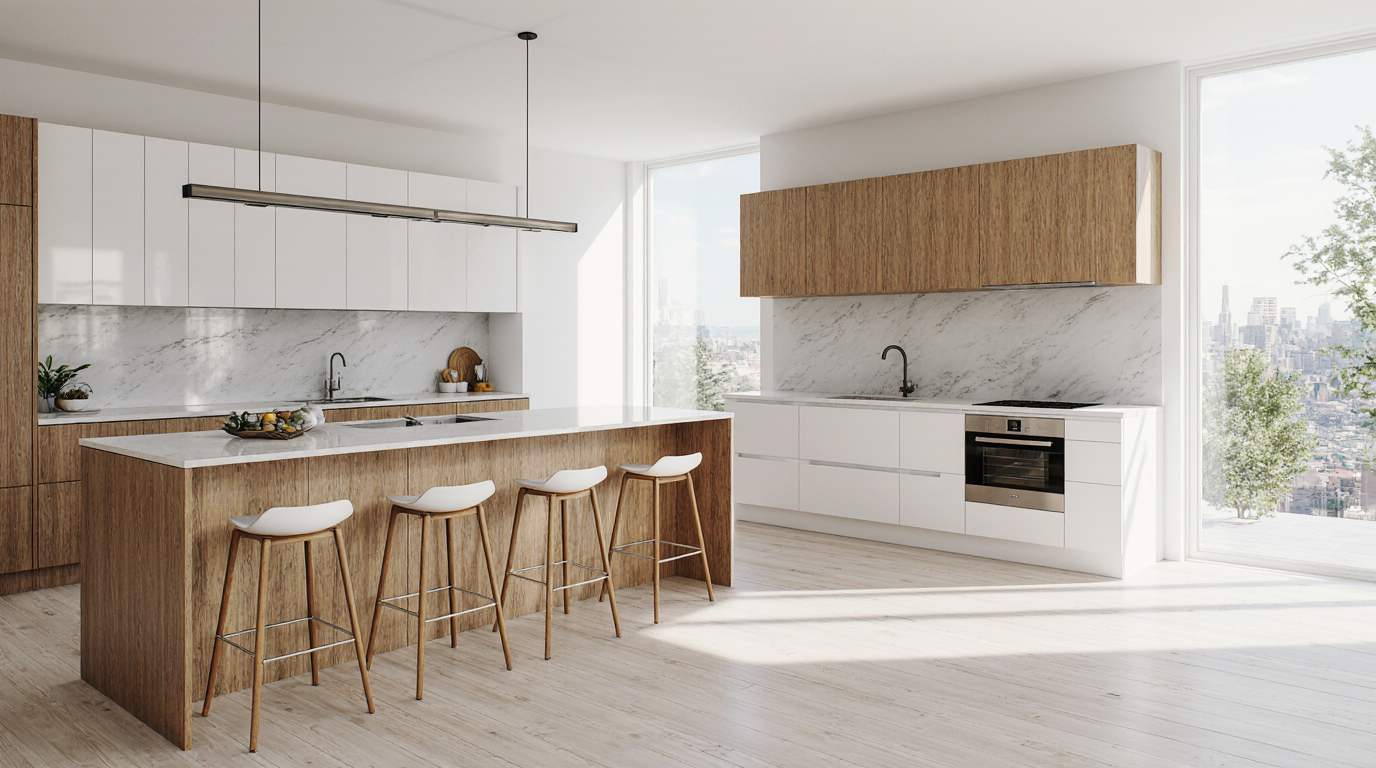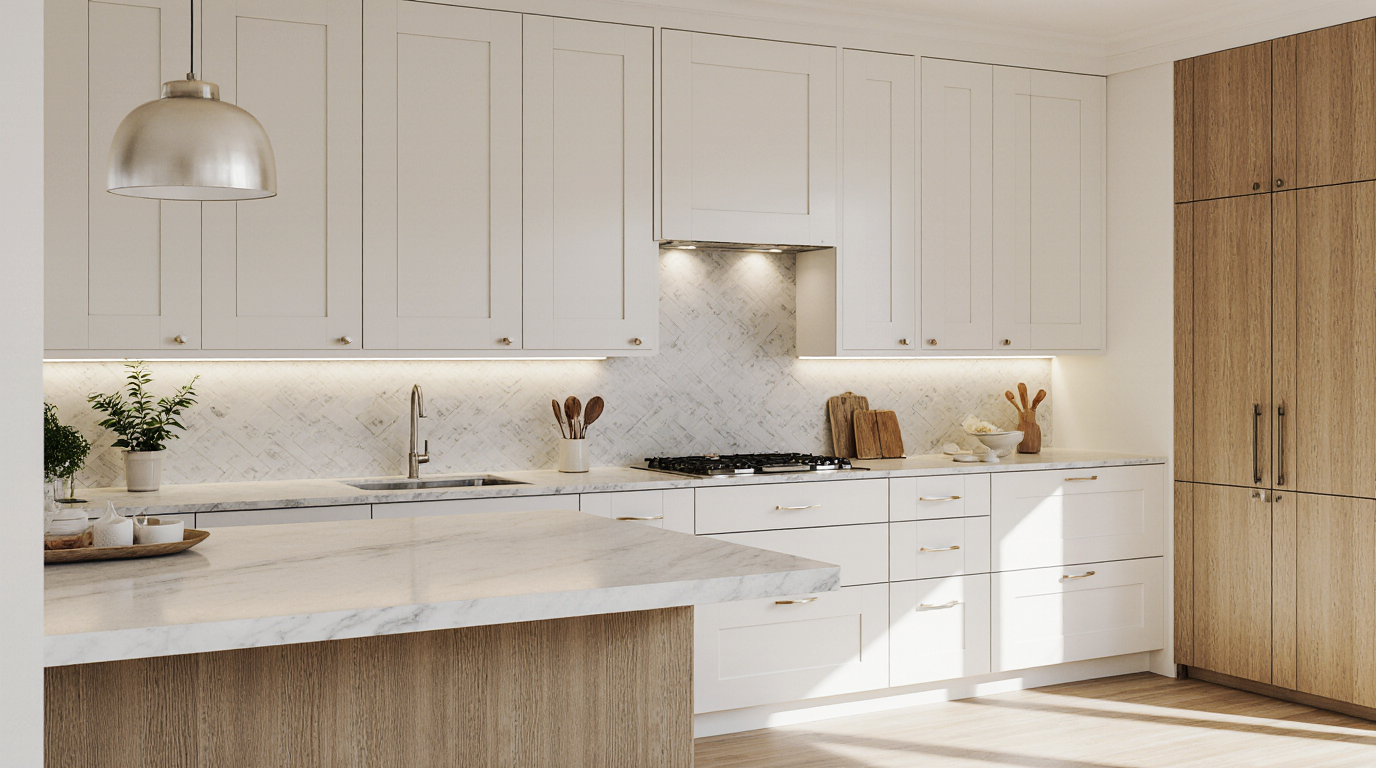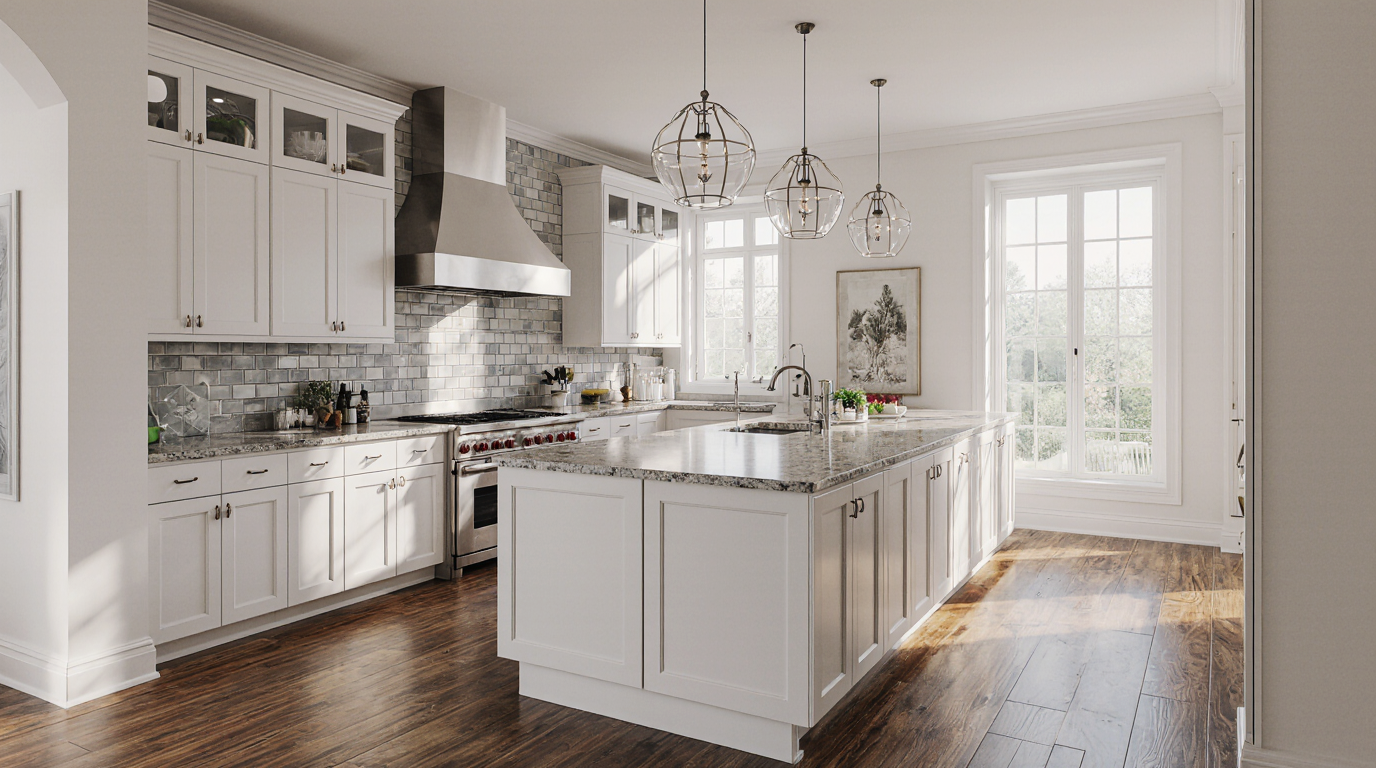
Executive Summary: White Shaker Cabinets in Sarasota
From my direct experience executing kitchen projects from Palmer Ranch to Longboat Key, the success of a white shaker
From my direct experience executing kitchen projects from Palmer Ranch to Longboat Key, the success of a white shaker cabinet installation in Sarasota hinges almost entirely on material specification, not just aesthetics. The pervasive humidity and salt-laden air will aggressively attack improper materials, leading to delamination, warping, and finish failure within a few years. Homeowners often focus on the door style and color, but the core material and finishing process are what guarantee longevity in this specific climate.
- Core Material is Non-Negotiable: Standard Medium-Density Fiberboard (MDF) is unsuitable for Sarasota homes, especially those near the water. Marine-grade plywood for cabinet boxes and solid wood frames with a high-density composite center panel for doors are the baseline for durability.
- Finish System Matters Most: A factory-applied, catalyzed conversion varnish or a two-part polyurethane finish is essential. This creates a non-porous, hardened shell that resists moisture penetration and yellowing from the intense UV exposure common here.
- Hardware Must Be Marine-Grade: Stainless steel (316 grade) or specially coated hardware for hinges and pulls is critical to prevent the rapid rust and corrosion caused by salt air.
- HOA Compliance is a Timeline Factor: In communities like Lakewood Ranch or downtown condos, design review boards have specific requirements. Submitting finish and material samples can add 30 to 60 days to your project timeline before any work begins.
The Planning Failures That Compromise a White Shaker Kitchen
The most common misstep I see is treating white shaker cabinets as a commodity. A client in a high-rise on Gulf Stream Avenue will see a beautiful kitchen online, request a quote for “white shaker,” and compare prices. The failure occurs when they select a bid based on a low price without scrutinizing the technical specifications, assuming all shaker doors are the same. This approach inevitably leads to costly repairs or a full replacement in under five years.
Another frequent error is underestimating the impact of Sarasota’s intense sunlight. Clients fall in love with a particular shade of “off-white” without verifying the UV resistance of the paint or finish. Without a UV inhibitor in the topcoat, a cabinet facing a west-facing window can show noticeable yellowing in as little as 18 months, creating a mismatched look that ruins the entire aesthetic.
The Most Expensive Failure: Ignoring the Cabinet Box Construction
The most costly mistake is approving cabinet boxes made from standard particleboard with a melamine or vinyl wrap. In Sarasota's humidity, this material acts like a sponge. I was called to a project in a beautiful home west of the Trail where the homeowner had a kitchen installed less than three years prior. The shaker doors looked fine from a distance, but the cabinet boxes under the sink and near the dishwasher had swelled and crumbled from ambient moisture, causing the countertop to sag and the doors to misalign permanently. The “savings” of a few thousand dollars on the initial install resulted in a full tear-out and replacement, costing them nearly double the original project price.
How a Resilient Shaker Kitchen Project Unfolds in Sarasota
A project designed for longevity in our climate follows a strict sequence. It begins not with design, but with a thorough site assessment to understand the home’s specific environmental exposure—is it directly on the water in Bird Key, or further inland in a newer development? This dictates the material baseline. From there, the process involves detailed shop drawings specifying core materials, joinery, and the exact multi-step finishing schedule.
Once materials and designs are approved, fabrication begins. A key difference in high-quality local work is that all parts are finished before assembly. This ensures every edge is sealed against moisture, a step often skipped in mass-produced cabinetry. Installation requires specialized techniques, including proper sealing of all penetrations and using stainless steel fasteners to anchor cabinets, especially in homes that must comply with wind-load requirements from the Florida Building Code.
Selection Criteria for Sarasota Homeowners
- Verify the Plywood Grade: Insist on seeing a sample of the cabinet box material. It should be, at a minimum, a moisture-resistant plywood. For any home on a barrier island or directly on the bay, marine-grade plywood is the only responsible choice.
- Demand a Catalyzed Finish: Ask the cabinet maker to specify the exact finish they use. Look for terms like “catalyzed conversion varnish” or “2K polyurethane.” If they just say “paint” or “lacquer,” it is not sufficient for this environment.
- Scrutinize the Warranty for Coastal Exclusions: Many national cabinet brands have warranties that are voided by installation in high-humidity or salt-air environments. A local custom shop that builds for this climate will typically offer a more meaningful warranty.
- Confirm HOA/Condo Association Approval Process: Before signing a contract, confirm who is responsible for submitting the design and material package to your association and factor that approval time into your schedule. For some downtown buildings, this can be a lengthy process.
Comparing Shaker Cabinets with Local Alternatives
While white shaker cabinets are exceptionally popular, they are not the only option. In Sarasota, high-gloss European-style slab doors and custom-milled wood doors are also prevalent, each with distinct advantages and disadvantages in our coastal setting.
| Feature | White Shaker (Properly Built) | High-Gloss Acrylic/Laminate | Natural Wood (e.g., Quarter-Sawn Oak) |
|---|---|---|---|
| Humidity Resistance | Excellent (with marine-grade core & catalyzed finish) | Excellent (seamless, non-porous surface) | Good to Fair (requires stable wood species & expert finishing) |
| Maintenance | Easy to clean, but corners can collect dust | Very easy to clean, but shows fingerprints | Requires specific cleaners; can expand/contract with humidity |
| Aesthetic Versatility | High (Transitional, Coastal, Farmhouse) | Moderate (Modern, Contemporary) | High (Traditional, Craftsman, Modern) |
| Cost | Mid to High | High | High to Very High |
When a White Shaker Cabinet Is Not the Right Choice
A white shaker style might be the wrong decision if your primary goal is the absolute lowest maintenance possible in a high-use rental property. The five-piece door construction, with its rails and stiles, creates small crevices where grime and dust can accumulate. For a luxury short-term rental on Siesta Key that sees heavy, constant use and requires rapid turnovers, a high-quality, edge-banded slab door in a durable laminate or acrylic can be a more practical, albeit less traditional, choice.
Safe Hiring and Verification Checklist
Ensuring your project is built to last in Sarasota requires due diligence beyond looking at a portfolio. The proof is in the technical details and the builder’s understanding of our local conditions.
- Ask for the address of a recently completed project and an older one (3-5 years) to see how their work holds up over time.
- Request a detailed materials list specifying the exact type of plywood for boxes, wood/composite for doors, and the brand/type of finish.
- Verify their license with the Florida Department of Business and Professional Regulation (DBPR) and check for any past complaints.
- Confirm they carry both General Liability and Workers' Compensation insurance specific to Florida. Many out-of-state contractors do not have the proper coverage.
- If your home is in a high-velocity hurricane zone (HVHZ), ask how their installation methods comply with the anchoring requirements of the Florida Building Code.
- Request a sample door that is finished with the exact multi-step process proposed for your project.
- Discuss their process for handling service calls post-installation for adjustments, which are common as a home settles.
Decisions That Determine the Final Outcome
The single most important decision is allocating a realistic budget for materials designed for a coastal environment. The temptation to choose a cheaper cabinet line to save 15-20% is strong, but it's a shortsighted choice here. I’ve seen this play out repeatedly: the initial savings are erased by the cost of replacing swollen components or refinishing failed surfaces within a few years. A properly constructed and finished cabinet is an investment in avoiding future disruption and expense.
The second critical decision is committing to a fabricator who specializes in the Sarasota market. A craftsman from a drier, inland state may build beautiful cabinets, but they often lack the firsthand knowledge of how materials react to our year-round humidity, salt spray, and intense sun. Local experience is not a bonus; it's a prerequisite for success.
The Exact Moment the Majority Gets It Wrong
The critical error happens during the bid comparison stage. Most clients lay three quotes side-by-side and compare the bottom-line number. They get it wrong by failing to ask the one question that matters more than price: “Show me the cross-section of your cabinet box and door, and explain why each layer is specified for this climate.” This question shifts the conversation from price to engineering. The answer will immediately reveal who understands the assignment of building for Sarasota and who is simply selling a generic product that is destined to fail here.
Practical Answers About Cabinet Projects in Sarasota
Navigating Permitting for Kitchen Remodels
For a simple cabinet replacement where plumbing and electrical locations are not changing, Sarasota County generally does not require a building permit. However, the moment you move a sink, add an outlet for an island, or alter a wall, you trigger the need for a permit. The permit process through Sarasota County Planning and Development Services can take anywhere from 4 to 8 weeks for a straightforward interior renovation. This timeline must be factored into your project schedule, especially if you are a seasonal resident aiming to complete work before you arrive.
HOA Design Review in Master-Planned Communities
In communities like Lakewood Ranch or The Founders Club, the Homeowners Association (HOA) design review committee has significant authority. While they are primarily concerned with exterior modifications, major interior renovations visible from the outside (like a kitchen) often require a formal submission. This package typically includes floor plans, cabinet elevations, and samples of your proposed materials and finishes, including your shaker white kitchen cabinet doors. Approval is not guaranteed and can sometimes come with requested modifications, adding weeks to your pre-construction phase.
Material Uplifts for Waterfront Properties
If your home is on Longboat, Siesta, or Casey Key, expect a material cost uplift. Specifying marine-grade plywood (often made with waterproof adhesives and having fewer voids) instead of standard hardwood plywood can add 15-25% to the cost of the cabinet boxes. Furthermore, specifying 316-grade stainless steel for all hardware (hinges, pulls, and drawer slides) is non-negotiable to prevent corrosion and can add several hundred to a few thousand dollars to the project cost depending on the kitchen's size. This is not an upgrade; it's a necessity.