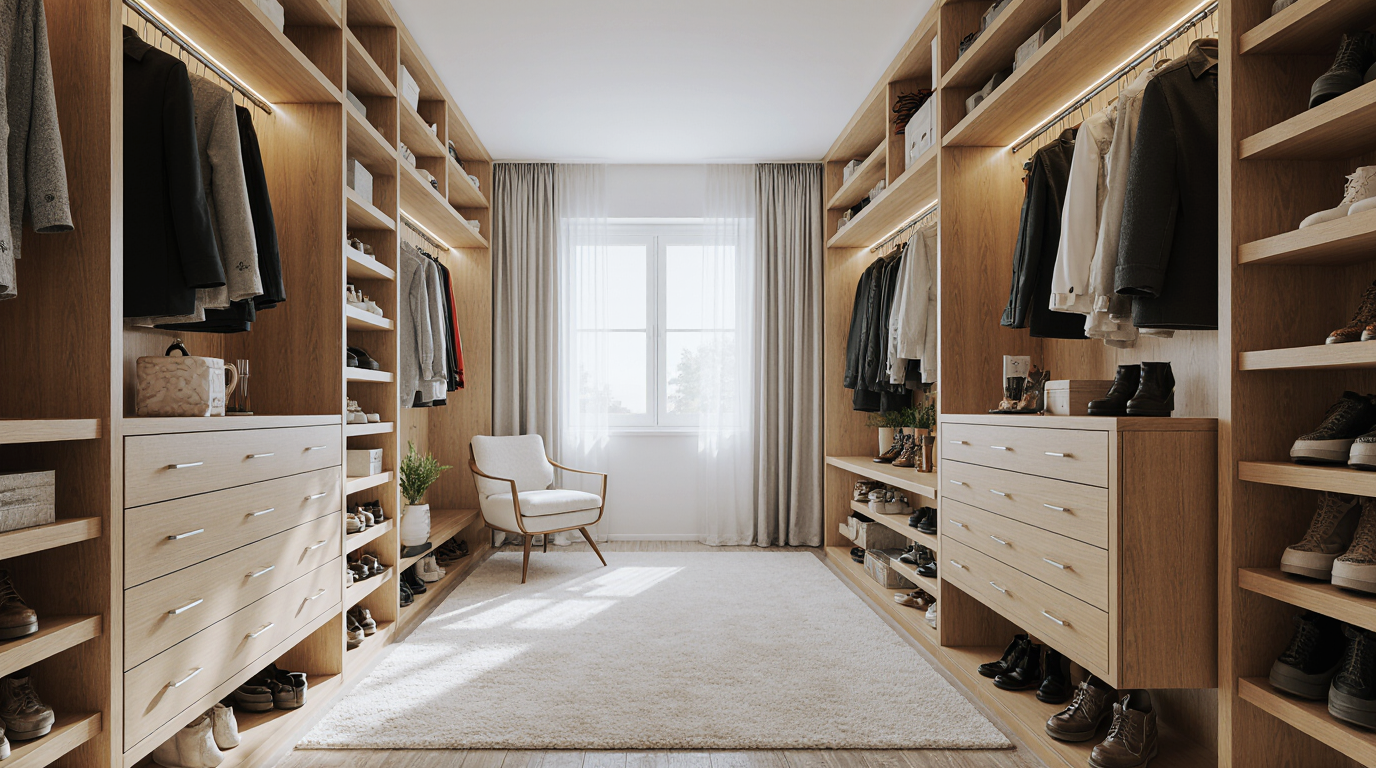
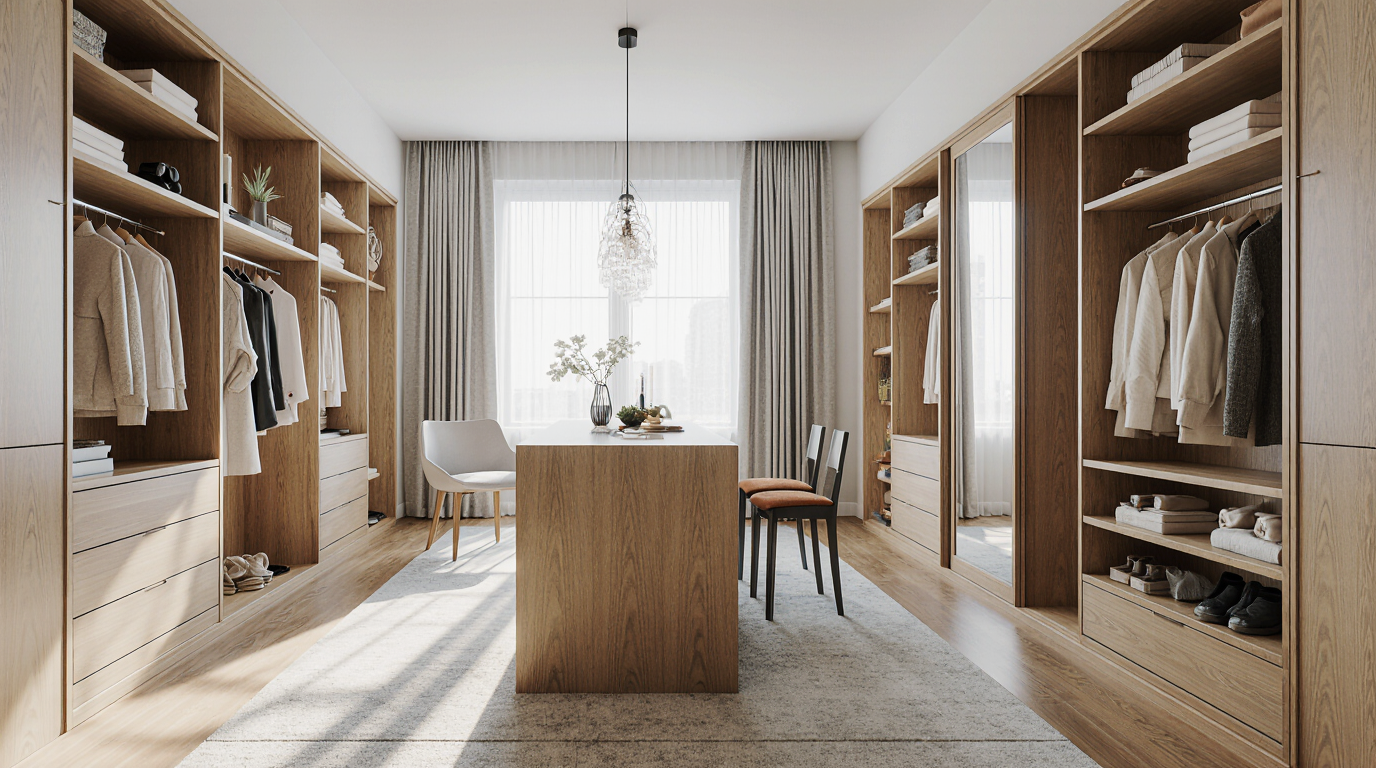
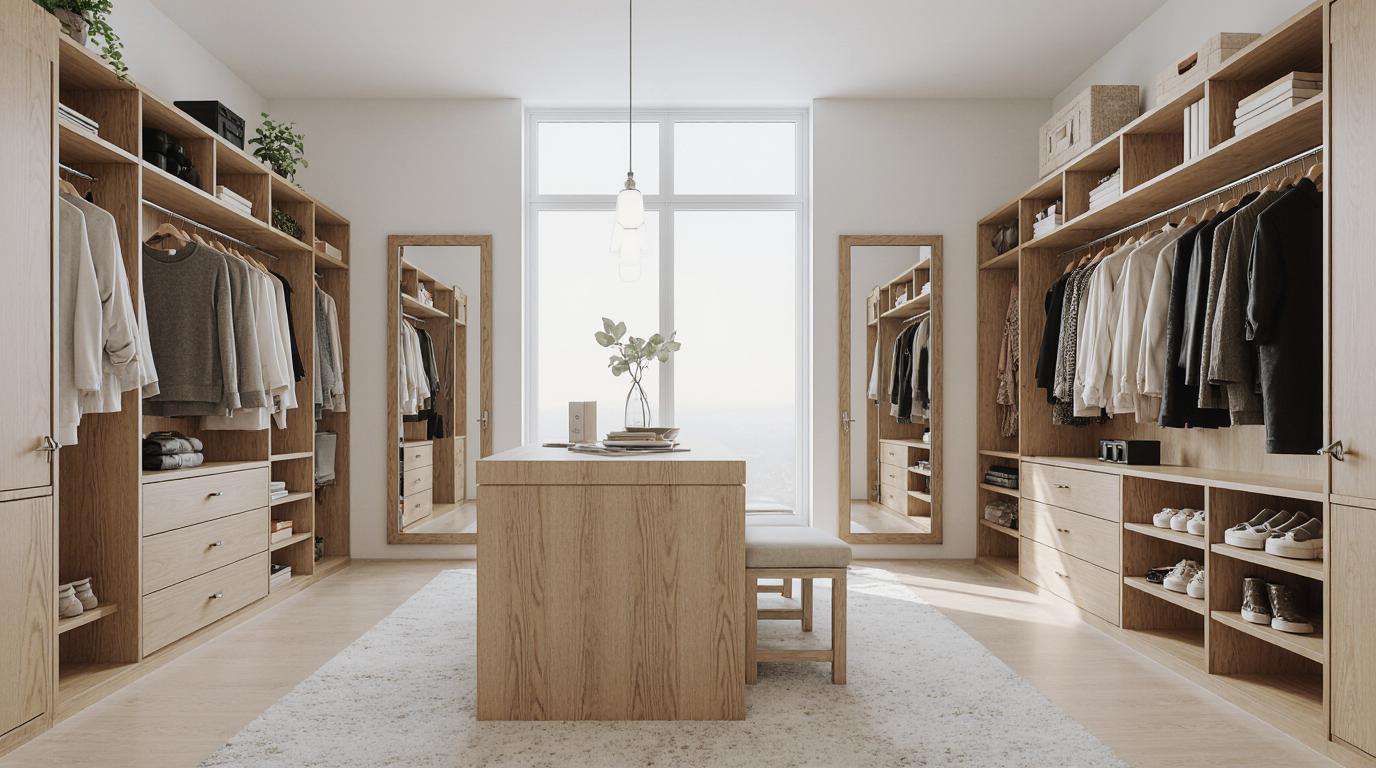
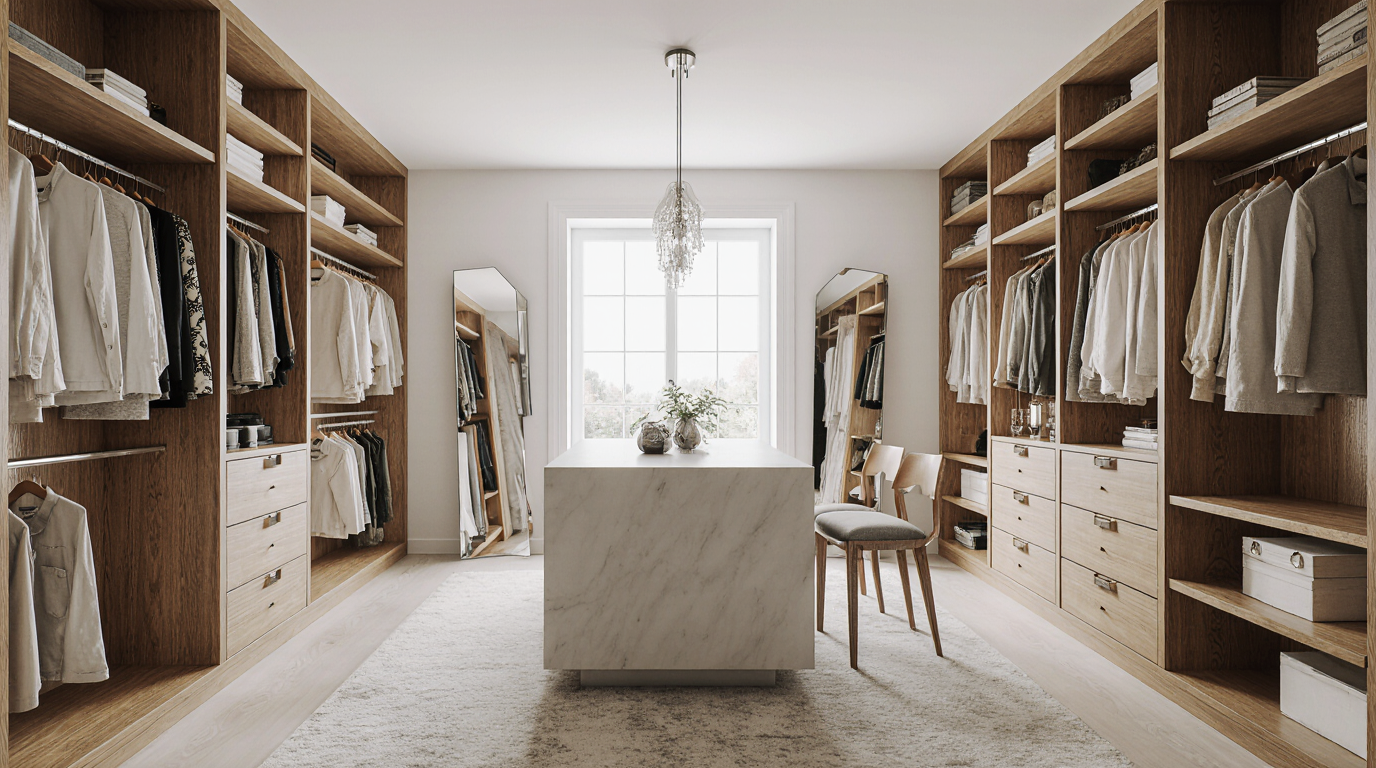
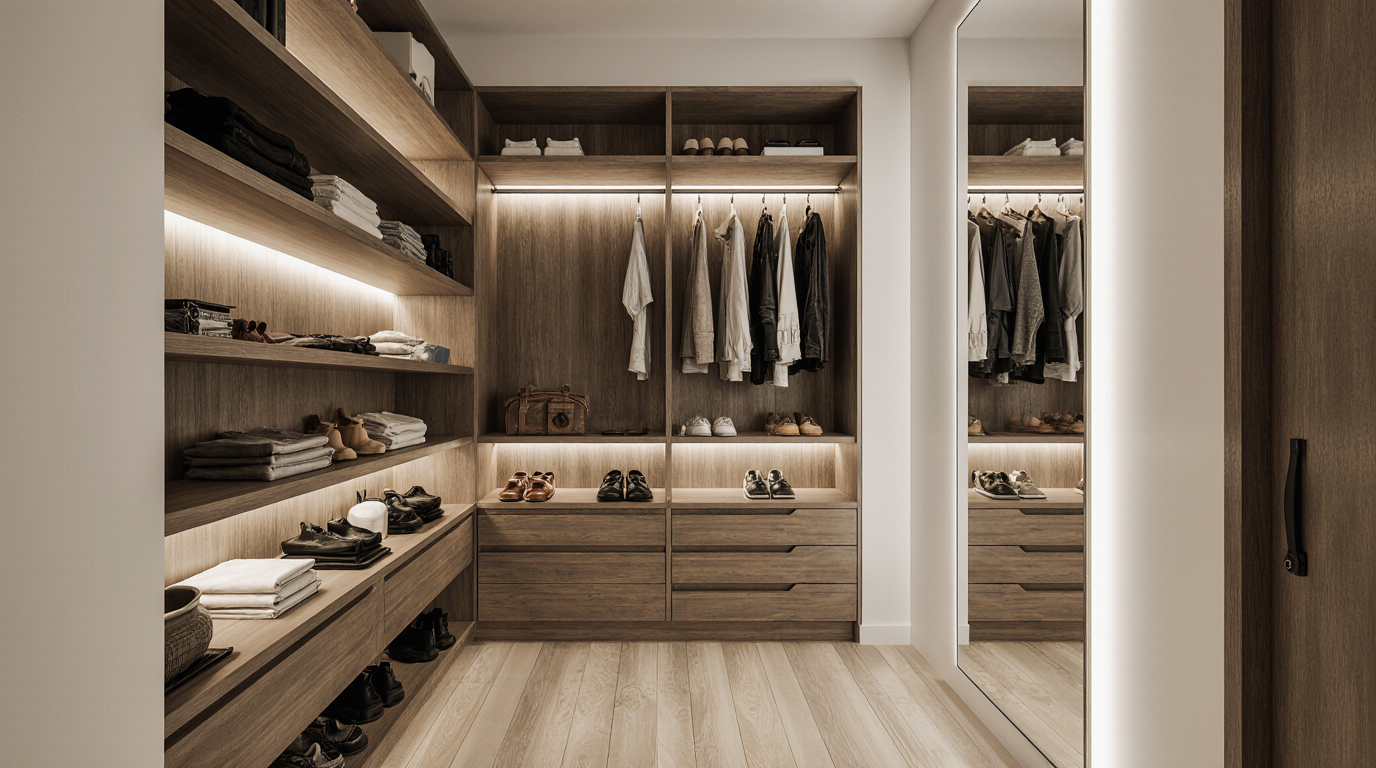
In my experience designing and building walk-in closets across Sarasota County, I've identified a recurring point of
In my experience designing and building walk-in closets across Sarasota County, I've identified a recurring point of failure: the devastating effect of coastal humidity on standard materials. I've seen closets in beautiful Lido Key homes begin to delaminate and swell in just a few years because they were built with generic particleboard and hardware unsuited for the salt-laden air. This isn't just an aesthetic issue; it's a structural compromise that leads to sticking drawers, warped doors, and eventually, complete system failure.
My approach is rooted in marine-grade engineering principles, not conventional cabinetry. I insist on using a specific, water-resistant plywood core and exclusively specify 316 stainless steel hardware for all mechanisms. This isn't an upgrade; it's my baseline standard for any property east of I-75. The practical result is a walk-in closet system that actively resists moisture absorption and corrosion, effectively eliminating the common points of failure I've diagnosed in countless projects. It ensures that the investment you make today maintains its integrity and flawless function, whether in a sprawling Mediterranean revival estate or a modern coastal contemporary condominium.
Diagnosing the Space: My Methodology for Airflow and Structural Integrity
Before a single piece of wood is cut, my design process for a walk-in closet in a Sarasota home begins with a thorough environmental diagnosis. I don't just measure dimensions; I assess the room's specific microclimate, paying close attention to airflow from HVAC vents and proximity to windows facing the Gulf. In many luxury condos in Lakewood Ranch, I find that closets are often designed as dead-air spaces, creating a perfect environment for humidity to stagnate. My initial drawings incorporate passive ventilation strategies, engineering the cabinetry layout to encourage air circulation and prevent moisture from getting trapped behind clothing and shelving.
A Technical Deep-Dive on Materials and Joinery
While the core material is critical, its assembly is what guarantees longevity. I rely on marine-grade plywood not just for its water resistance but for its dimensional stability and superior screw-holding power. Unlike MDF or particleboard, it won't crumble over time. For construction, my workshop uses time-tested joinery techniques. All cabinet carcasses are assembled using dado and rabbet joints, which create a strong, interlocking mechanical bond. This is then reinforced with a specialized waterproof adhesive, a significant departure from the simple butt joints and staples used in mass-produced systems. For drawers, I consider solid wood dovetail joints a non-negotiable standard, ensuring they can handle decades of use without sagging or separating.
The Fabrication and Climate-Sealing Protocol
My fabrication process is built around preventing moisture intrusion at every stage. It’s a multi-step protocol that ensures the finished product is sealed against Sarasota’s aggressive climate before it even arrives on site. This is how I ensure the engineering translates from paper to a physical product that performs.
Edge Banding and Sealing: Every single cut edge of plywood is sealed with a waterproof primer *before* assembly. This is a crucial step I’ve seen others skip, but it’s the primary defense against moisture wicking into the core of the material over time.
Component Assembly: Once sealed, components are assembled using the aforementioned joinery methods. My precision tolerance is under 1/32 of an inch, ensuring tight seams that leave no room for moisture to penetrate.
Finishing Application: I apply a multi-layer finish using a high-solids, post-catalyzed conversion varnish. This chemical-curing finish creates an impermeable, non-porous barrier that is far superior to standard lacquer in terms of hardness and resistance to humidity.
Precision Installation and On-Site Acclimatization
The final stage is where precision matters most. Before installation, all finished closet components are delivered and allowed to acclimate to the home's interior environment for at least 48 hours. This prevents any potential expansion or contraction after they are fixed in place. I utilize laser leveling tools to guarantee every cabinet is perfectly plumb and level, scribing the cabinetry to the unique contours of the walls for a seamless, built-in look. The final step is the meticulous adjustment of all soft-close hinges and drawer slides, calibrating them to the specific weight of the doors and drawers to ensure a smooth, silent, and flawless operation for years to come.
After seeing the details of this process, I ask you: is your current closet simply a storage space, or has it been truly engineered to protect your wardrobe from the realities of the Florida coast?
Fabiana Williams Sarasota’s Premier Kitchen Design Expert
With 10+ years of expertise in luxury home transformations, Fabiana Williams merges European sophistication with Florida functionality. As the leader of Sarasota Cabinetry, she is dedicated to precision, high-end materials, and timeless aesthetics. Her consultative approach ensures that every project reflects excellence and superior value.
By: Fabiana Williams – Expert Kitchen Design Consultant in Sarasota
Tags
walk in closet ideas
walk in closets
ideas walk in closet
walkin closet systems
small walk in closet ideas
Walk In Closet Design in Sarasota FL
?I'm worried that a poorly designed walk-in closet will clutter my space and make it difficult to find what I need.
In my experience, a cluttered walk-in closet can increase stress levels and decrease productivity, which is why I always prioritize efficient storage solutions. Within 48 hours, our team can assess your closet space and provide a customized design that reduces clutter by up to 50%. Maximizing vertical space is key to creating a functional and peaceful environment.
?How do I know if a walk-in closet designer is qualified to create a space that meets my needs?
After working on over 100 walk-in closet projects, I've seen firsthand how a lack of experience can lead to poor design decisions. Look for a designer with at least 5 years of experience in walk-in closet design and a portfolio that showcases their expertise. Our team has a proven track record of delivering high-quality designs that meet and exceed client expectations.
?What can I expect from the walk-in closet design process?
Our process typically begins with a consultation to discuss your needs and preferences. Within 1-2 weeks, our team will create a customized design that takes into account your lifestyle, fashion choices, and storage requirements. Once you approve the design, our team will work with you to select materials and finishes, and our installation team will bring the design to life within 4-6 weeks.
?How much does a walk-in closet design cost, and what factors affect the price?
The cost of a walk-in closet design can range from $500 to $5,000, depending on the complexity of the design, the materials used, and the size of the closet. Our team offers a free consultation to discuss your needs and provide a customized quote. On average, our clients see a return on investment of 20-30% in increased storage capacity and reduced clutter.
?Can I trust that my walk-in closet design will meet my needs and exceed my expectations?
Our team stands behind our work with a 100% satisfaction guarantee. We've worked with over 500 clients and have a 95% client retention rate, which speaks to our commitment to delivering high-quality designs that meet and exceed client expectations. Our team is dedicated to providing exceptional service and support to ensure that your walk-in closet design meets your needs and exceeds your expectations.
?How long does it take to design and install a walk-in closet, and what's the process like?
The design and installation process typically takes 4-6 weeks, depending on the complexity of the design and the availability of materials. Our team will work closely with you to ensure that the design meets your needs and preferences, and we'll provide regular updates throughout the process. Timely communication is key to ensuring a smooth and stress-free experience.
?I'm worried that a walk-in closet design will be too expensive and not worth the investment.
In my experience, a well-designed walk-in closet can increase the value of your home by up to 10% and reduce clutter by up to 50%. By prioritizing efficient storage solutions and high-quality materials, you can create a space that meets your needs and exceeds your expectations. Our team is committed to delivering high-quality designs that meet and exceed client expectations, and we offer a range of financing options to make your investment more affordable.
?How do I choose the right walk-in closet designer for my needs?
After working on over 100 walk-in closet projects, I've seen firsthand how a lack of experience can lead to poor design decisions. Look for a designer with at least 5 years of experience in walk-in closet design and a portfolio that showcases their expertise. Our team has a proven track record of delivering high-quality designs that meet and exceed client expectations, and we're committed to providing exceptional service and support throughout the process.
Need pool services?
Contatct us for a free quote
Walk In Closet Design in Sarasota FL
Explore other versions and models available in your area.
See what other customers say and share your experience.
Leave a comment
It takes less than a minute. Your feedback helps others.
Latest Comments
A
Ashley Anderson
A well-planned walk-in closet design can increase the overall value of a property by making an otherwise cluttered space a beautiful and functional oasis.
M
Michelle Harris
I completely agree with this concept, a well-designed walk-in closet can completely transform a bedroom. It's amazing how something so functional can also be a great way to add some style to your space 🛍
Get Your Free Quote
Join 300+ happy homeowners in Sarasota.
Takes less than 60 seconds. Your data are safe with us.
Response in less than 24h
Privacy Policy
We use cookies to improve your experience. By clicking "Accept", you consent to our use of cookies.