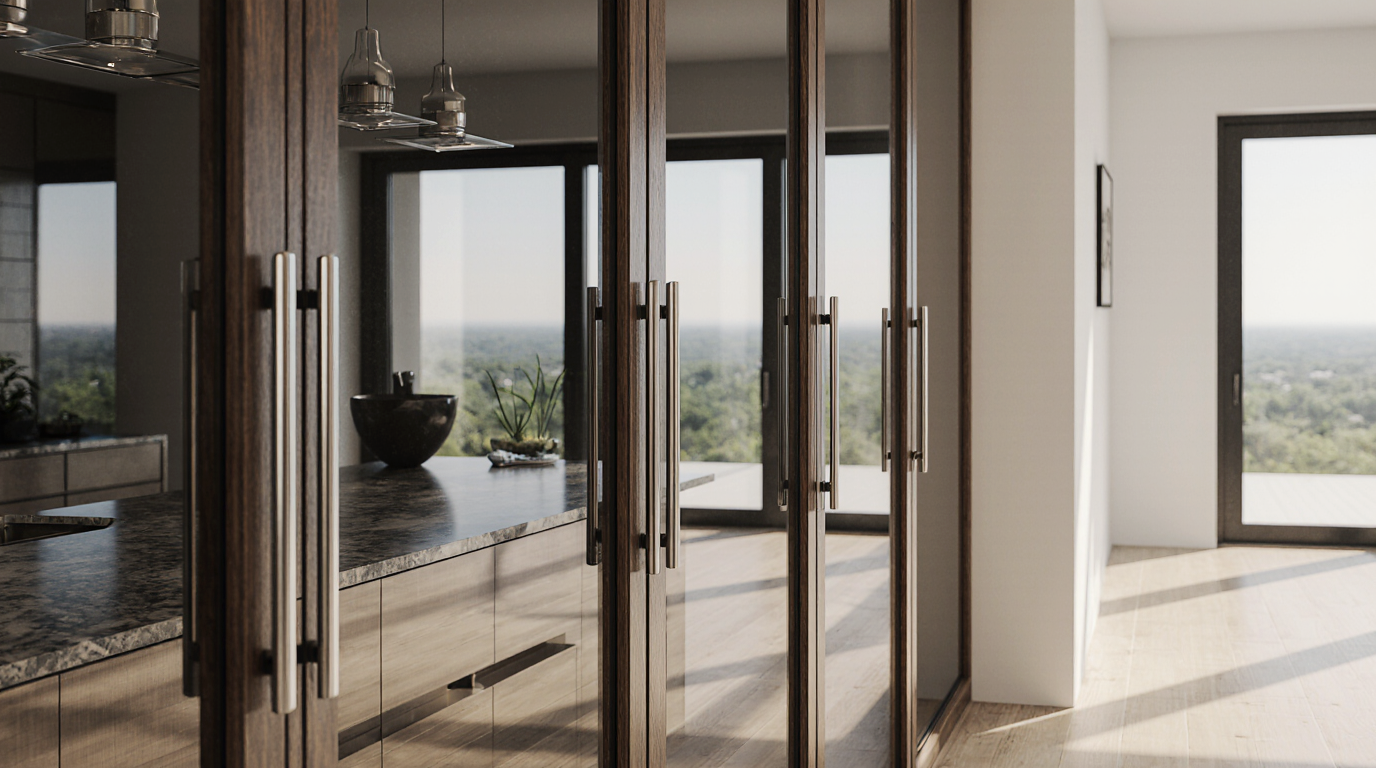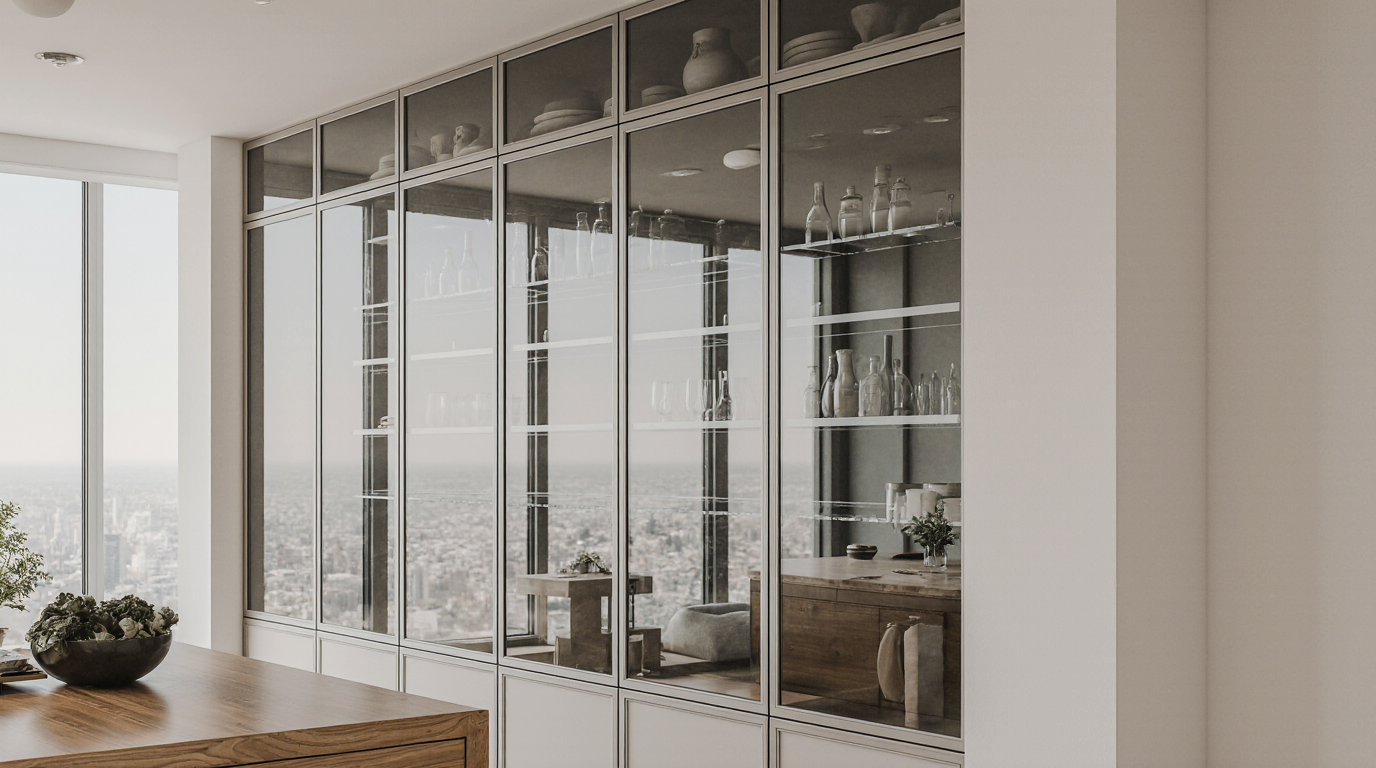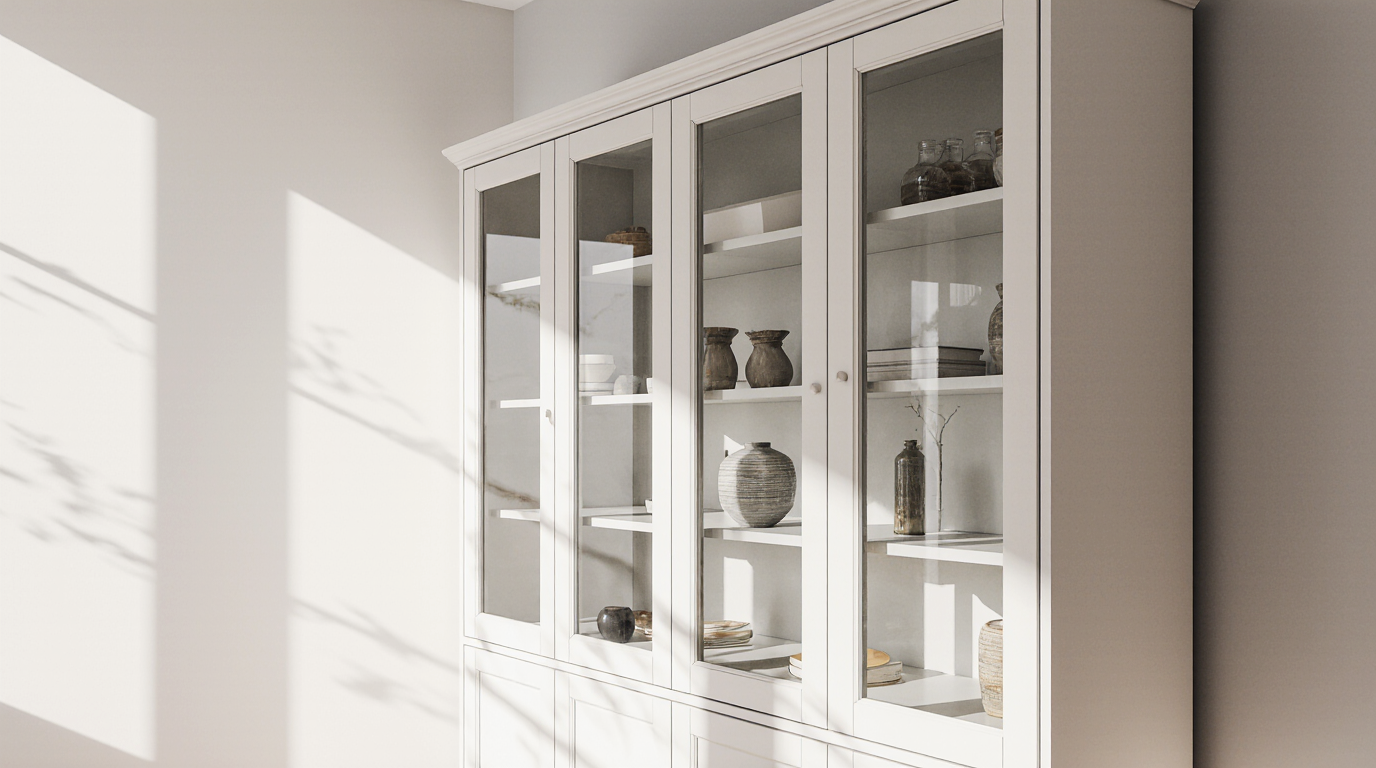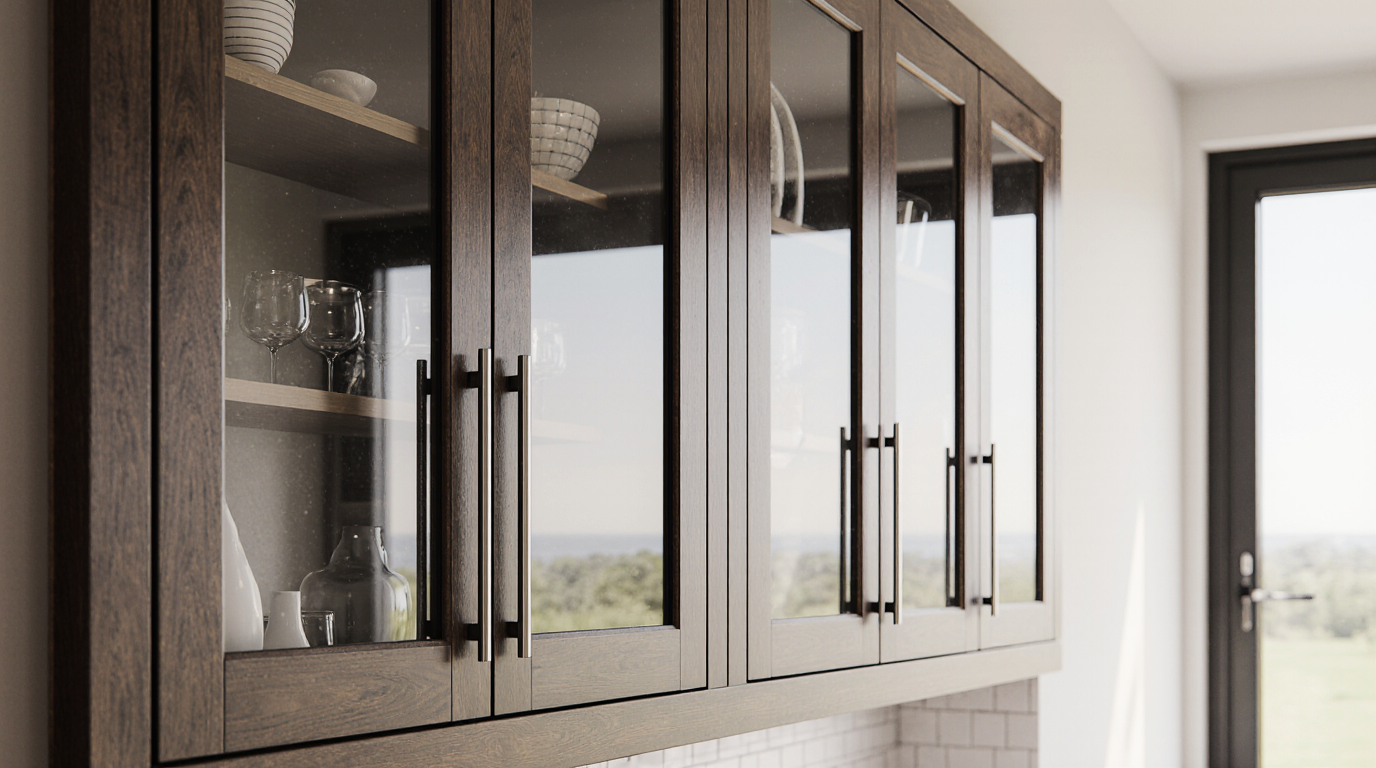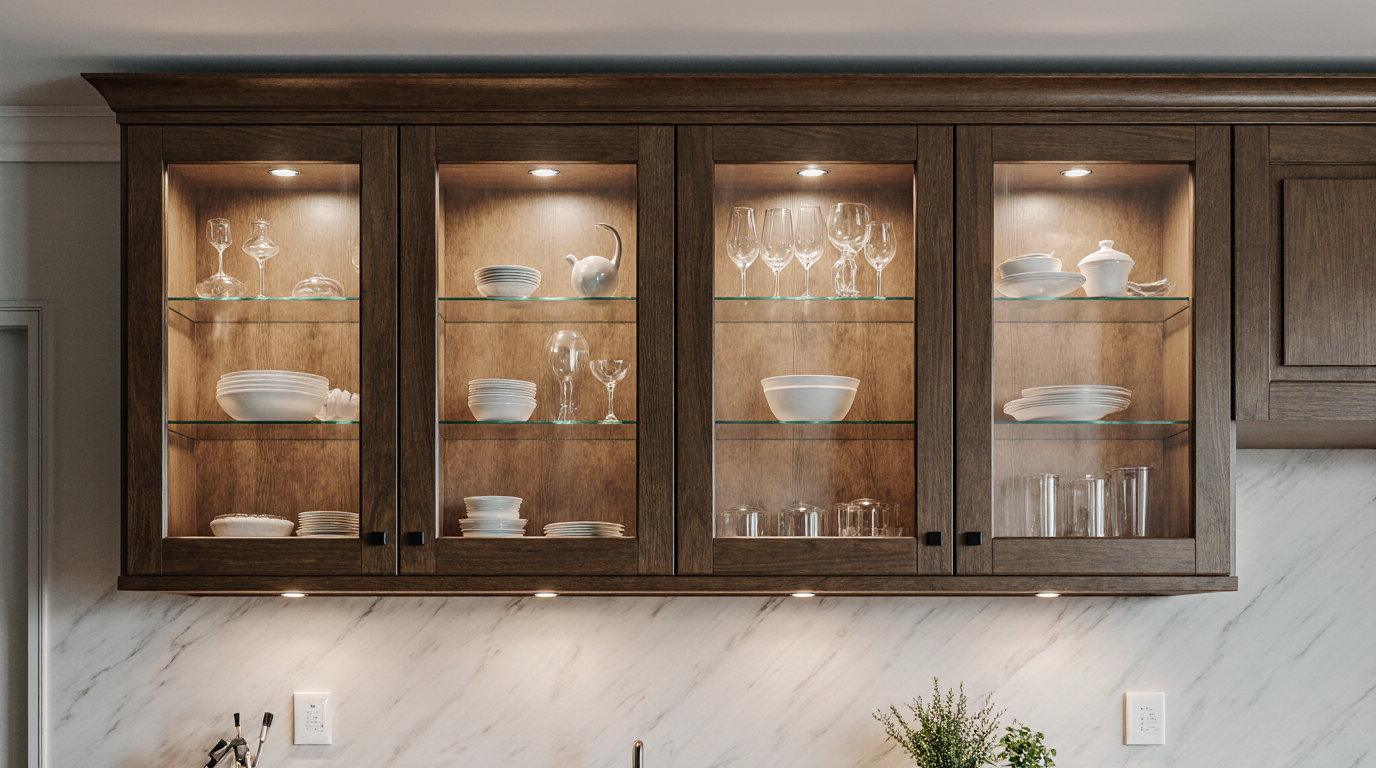
The single most important factor for successful glass-front upper cabinets in Sarasota isn't the style of the glass or the color of the frame. It’s the engineering of the cabinet box and the seal of the door. Homeowners fall in love with the look, but the humidity here is relentless, and an improperly constructed cabinet will trap moisture, leading to fogging, mold, and warping—a beautiful feature turned into a constant headache.
Executive Summary: Glass Cabinet Doors in a Coastal Climate
From my direct experience installing high-end cabinetry in Sarasota, I can state that glass doors are a fantastic
From my direct experience installing high-end cabinetry in Sarasota, I can state that glass doors are a fantastic choice for our light-filled coastal homes, provided the project is approached with climate-specific technical diligence. The goal is to achieve an airy, open aesthetic without creating a maintenance nightmare. Success hinges on preventing moisture intrusion and accounting for the structural weight of glass, which is significantly heavier than a standard wood panel. This isn't just a design choice; it's an engineering one.
- Material Stability is Non-Negotiable: Standard MDF or particle board cores for cabinet boxes are a failure point in Sarasota's humidity. Marine-grade plywood or solid wood construction is essential for longevity.
- Glass Specification Matters: Low-iron glass provides the best clarity, while tempered or laminated glass offers safety and durability, especially important for larger panes or frameless designs.
- Hardware Carries the Load: The increased weight of glass doors demands upgraded, corrosion-resistant hinges (like stainless steel 316) to prevent sagging and ensure proper alignment over time.
- HOA Architectural Review is a Factor: In communities like Lakewood Ranch or The Founders Club, any exterior-facing kitchen window view might subject your cabinet design to architectural review board approval, which can add 30-60 days to your project timeline.
The Planning Failures That Compromise Glass Cabinet Projects
The biggest mistakes with glass-front cabinets happen long before installation. They stem from underestimating the unique environmental pressures of our Sarasota climate. Treating a project here the same as one in a dry, northern city is a recipe for premature failure, and I've been called in to fix the consequences more than once.
The Most Expensive Failure: Ignoring Humidity's Effect on Wood and Seals
The costliest error I consistently see is selecting wood species and door construction methods that are fundamentally unstable in high humidity. A client with a beautiful home on Siesta Key insisted on a specific type of solid oak for their shaker-style glass doors. Despite warnings, the cabinet maker used a standard construction. Within two years, the door stiles and rails had swollen enough to crack the paint at the joints and prevent the doors from closing properly. The entire set of custom doors had to be remade with a more stable wood and an engineered core, nearly doubling the cost of the upper cabinets.
How It Works in Practice: From Concept to Installation in Sarasota
Implementing upper cabinets with glass doors in Sarasota involves a precise process that balances design vision with robust engineering. It begins with a deep analysis of the kitchen's environment, including proximity to the water, sun exposure through windows, and the home's HVAC system performance. This informs every subsequent decision.
Key Selection Criteria for Sarasota Homeowners
When evaluating options, clients in our area must prioritize factors that residents elsewhere might not even consider. The aesthetic is important, but durability in this specific coastal environment is paramount.
- Core Material: Insist on seeing a cross-section of the cabinet box material. Verify it is marine-grade plywood or a high-quality solid wood, not particle board with a veneer.
- Glass Sealant and Glazing: Ask how the glass is set into the door frame. A high-quality silicone glazing provides a superior moisture barrier compared to simple rubber gaskets that can dry out and shrink.
- Hardware Finish: Don't just look at the style of hinges and pulls. Confirm they are specified for coastal use, typically stainless steel or a PVD (Physical Vapor Deposition) finish that resists corrosion from salt air.
- Anchoring Method: Especially in homes within the wind-borne debris region as defined by the Florida Building Code, confirm the installer is using appropriate fasteners and anchoring the upper cabinets securely into studs to handle both the cabinet weight and potential structural stresses.
Comparison with Alternative Upper Cabinet Styles
Glass-front cabinets offer a unique aesthetic, but they are not the only option. Understanding the trade-offs against solid wood doors or open shelving is critical for making an informed decision that aligns with your lifestyle and budget in Sarasota.
| Feature | Glass-Front Cabinets | Solid Wood Cabinets | Open Shelving |
|---|---|---|---|
| Maintenance & Cleaning | Higher (requires cleaning both sides of glass and contents must be tidy) | Lower (hides clutter, surfaces are simple to wipe down) | Highest (shelves and all items require frequent dusting) |
| Humidity & Salt Air Resistance | Good to Excellent (if properly constructed with marine-grade materials) | Excellent (solid barrier protects contents from the environment) | Poor (contents are fully exposed to humidity and salt) |
| Cost & Installation Complexity | High (specialized materials, heavier doors, skilled installation) | Moderate to High | Low to Moderate |
When Glass Doors Are Not the Right Choice
I advise against glass-front cabinets for clients who prioritize low maintenance above all else or have a busy family life where keeping cabinet interiors perfectly organized is unrealistic. If the primary goal is pure utility and hiding clutter, the transparency of glass becomes a source of stress, not a design enhancement. In these cases, solid doors provide a much more practical solution.
Safe Hiring Checklist for Your Sarasota Project
Hiring the right team in Sarasota for a project involving glass cabinets requires verifying their specific experience with our coastal conditions. A beautiful portfolio of projects from other states is not enough. You need proof of local, climate-aware expertise.
- Verify their license with the Florida Department of Business and Professional Regulation (DBPR) and check for any complaints.
- Ask for references from at least two recent projects on one of the barrier islands (e.g., Longboat Key, Anna Maria) to confirm their experience with salt-air environments.
- Request detailed material specifications in the contract, including the grade of plywood, the type of glass (tempered, low-iron), and the manufacturer/material of the hardware.
- Confirm they carry adequate liability and workers' compensation insurance. A certificate of insurance should be provided directly from their insurer.
- Discuss their process for protecting your home during installation, especially managing dust and debris in a finished living space.
- If your home is in a designated flood zone (e.g., V-Zone), ask how they comply with Florida Building Code requirements for cabinet installations, which can include specific anchoring and material stipulations.
Decisions That Determine the Final Outcome
The success of a high-end kitchen renovation, especially one featuring delicate elements like glass doors, is determined by a few crucial decisions made early in the process. I've seen that the clients who get the best results are those who focus on the structural and material integrity first, and the aesthetic details second.
The Exact Moment When Most Homeowners Get It Wrong
The critical mistake often happens during the material selection phase. Most people focus entirely on the door style, paint color, and glass type (clear, frosted, seeded). They defer to the cabinetmaker on the “boring” technical details. The correct approach is the reverse: you must finalize the cabinet box construction (marine-grade plywood), door frame material (stable hardwood or engineered core), and hardware specification *before* you even look at paint chips. Locking in the engineering foundation first prevents you from falling in love with a design that is structurally or materially unsuitable for our coastal environment.
Practical Answers About Cabinet Projects in Sarasota
Navigating a custom cabinet project here involves more than just design. It means dealing with local regulations, building codes, and community-specific rules that can impact timelines and costs. Here are the answers to the operational questions I field most often.
Navigating HOA and Condo Association Design Reviews
Many Sarasota communities, particularly master-planned ones or high-rise condos, have strict architectural review boards. If your kitchen is visible from the exterior, even through a window, your cabinet design—including the reflectivity of glass doors—may require approval. This process typically takes 30-45 days and requires submitting detailed drawings and material samples. Failing to get pre-approval can result in a stop-work order and fines.
Understanding Florida Building Code and Cabinet Anchoring
The Florida Building Code, especially in our coastal high-velocity hurricane zone (HVHZ), has stringent requirements for how permanent fixtures are attached to the structure. While it primarily focuses on the building envelope, inspectors in Sarasota County are increasingly scrutinizing the anchoring of heavy upper cabinets. A properly installed cabinet must be secured to wall studs with fasteners of adequate length and shear strength to support a full load, a critical safety factor that a qualified installer will automatically address.
The Impact of Integrated Lighting on Glass Cabinets
Integrated LED lighting is a popular feature for glass cabinets, but it requires careful planning. All electrical work must be performed by a licensed electrician and may require a separate permit from the Sarasota Building Department. The heat generated by some lighting systems can also affect wood and seals over time. I always specify low-voltage, low-heat LED systems and ensure there is proper ventilation designed into the cabinet construction to prevent any long-term issues.