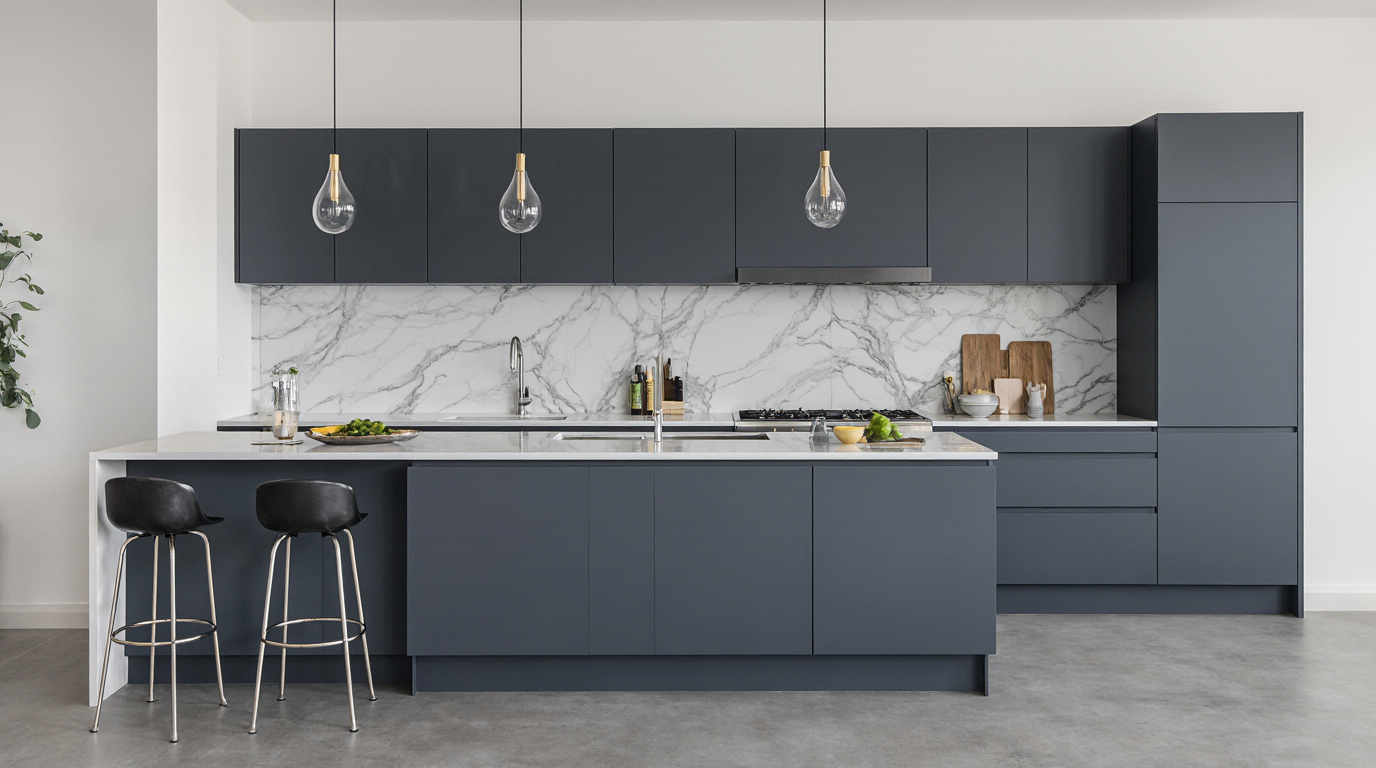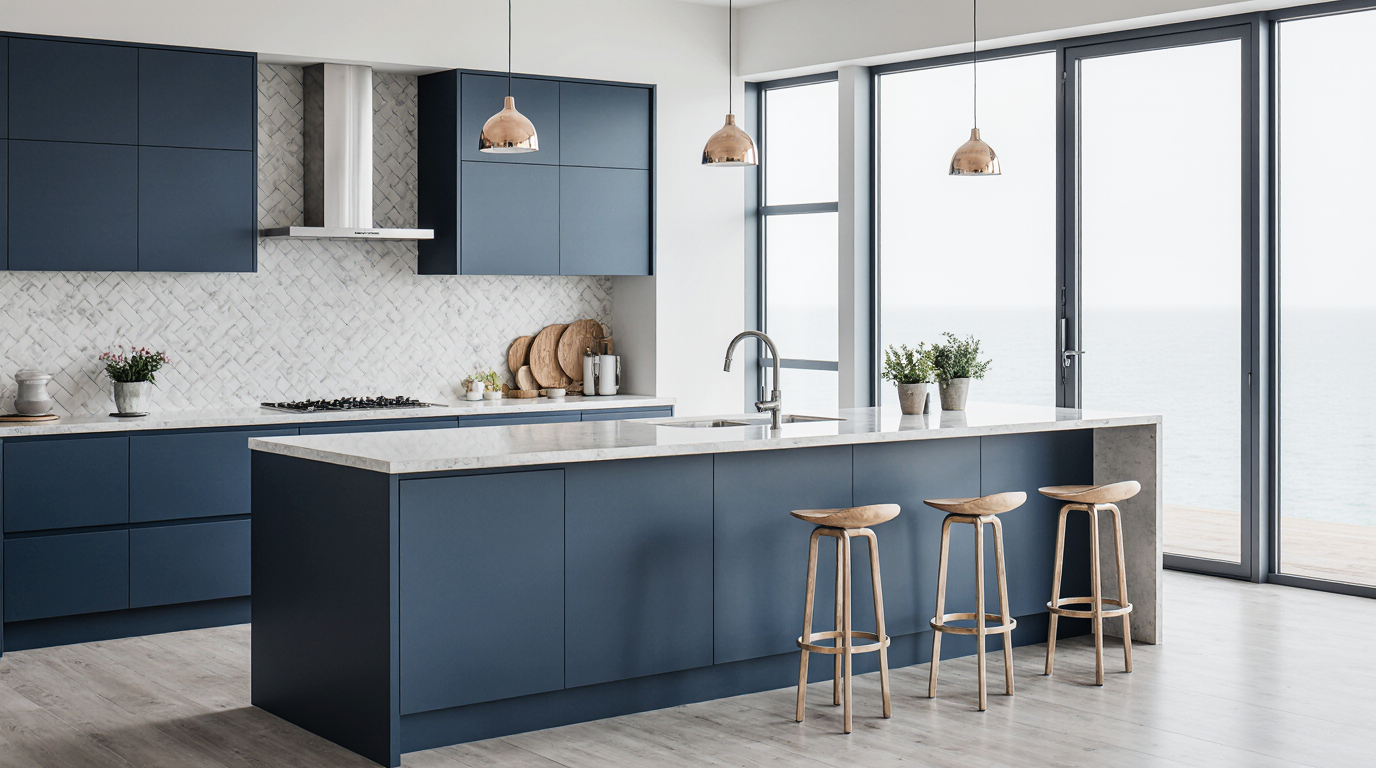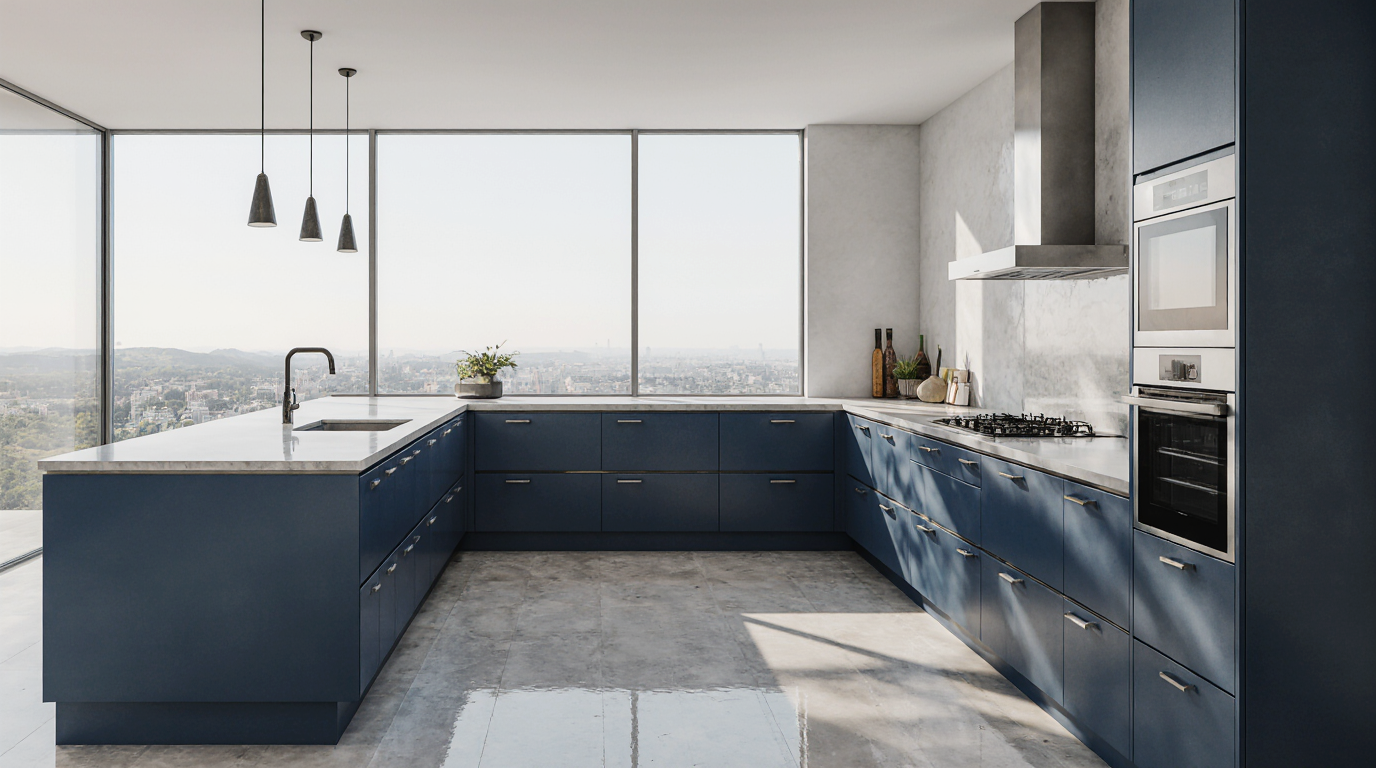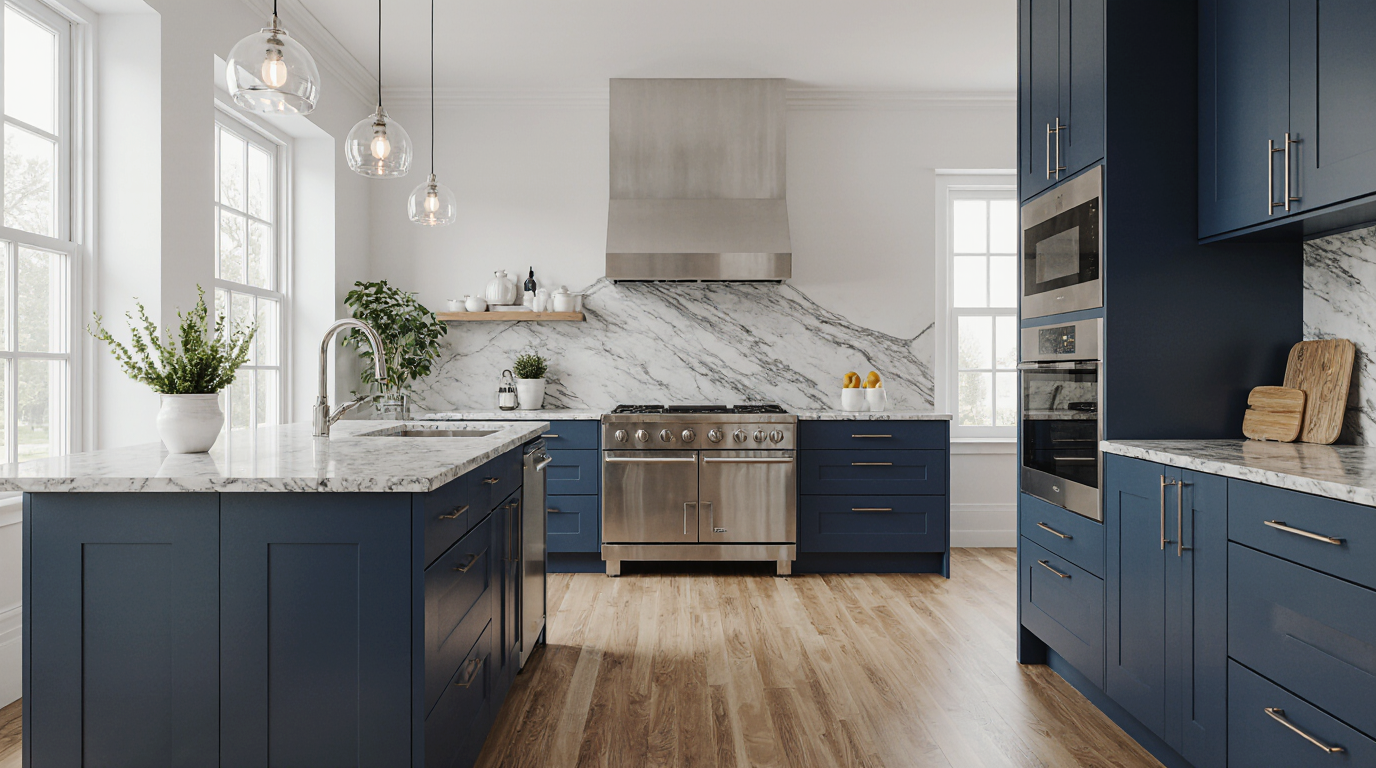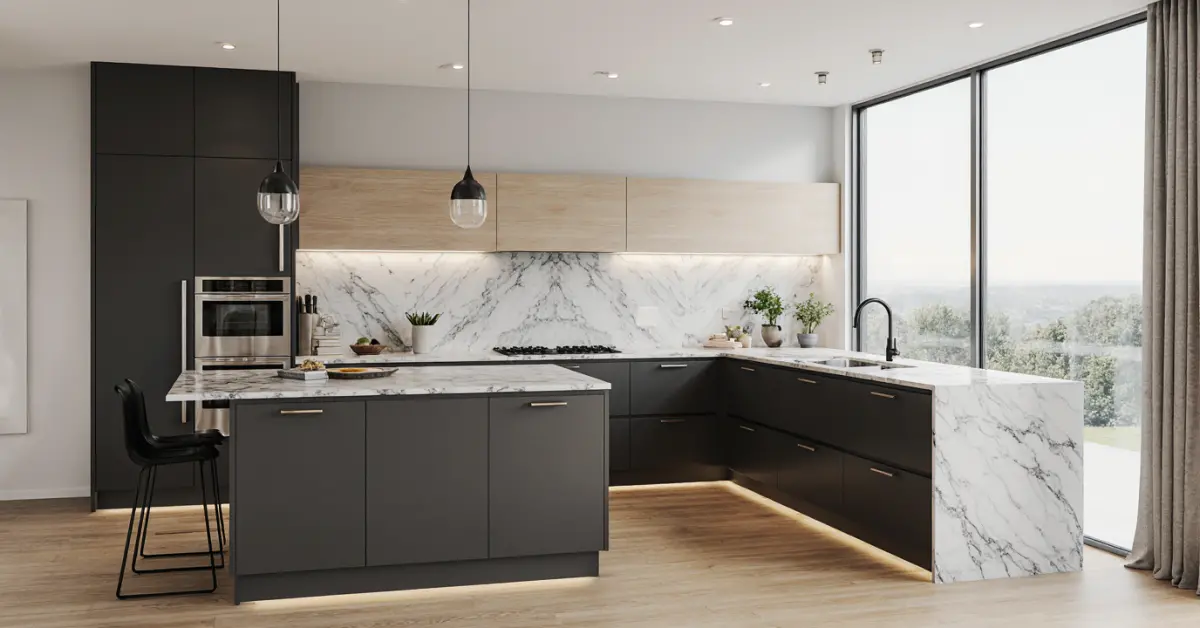
In many Sarasota communities, particularly in new developments like Lakewood Ranch or Waterside, a Homeowners Association design review can add an average of 30 to 45 days to a kitchen renovation timeline. For a two-tone cabinet project, this isn't just a bureaucratic delay; it's a critical planning window. Submitting a material sample of only one color can lead to a rejection, forcing a resubmission that jeopardizes the entire project schedule and material availability.
Executive Summary: Achieving a Lasting Two-Tone Look in Sarasota
From my direct experience executing high-end kitchen projects from Bird Key to The Lake Club, a successful two-tone
From my direct experience executing high-end kitchen projects from Bird Key to The Lake Club, a successful two-tone modern kitchen in Sarasota hinges less on the color combination and more on the technical compatibility of the materials chosen. The primary challenge is not aesthetic, but environmental. Our coastal humidity and intense UV exposure will ruthlessly expose any inconsistencies in how two different materials expand, contract, and age. The most critical decision is ensuring both tones are applied to substrates and with finishes that have identical performance characteristics to prevent warping, delamination, or color shifting over time, which I've seen happen in as little as two years with improper specifications.
- Material Parity: The upper and lower cabinets, even if different colors, should be constructed from the same core material (e.g., all marine-grade plywood or all high-end HDF) to ensure uniform response to humidity.
- Finish Chemistry: Both finishes, whether a paint and a stain or two different paints, must be from the same chemical family (e.g., both 2K polyurethane) to guarantee consistent UV resistance and cleaning compatibility.
- Light and Sheen: The intense natural light in Sarasota homes amplifies differences in sheen. A matte finish on a dark lower cabinet and a satin finish on a light upper can create an unintended and jarring visual effect depending on the time of day.
- HOA Pre-Approval: Design review boards in communities like The Founders Club or Esplanade often require physical samples of all exterior-facing finishes, including kitchen cabinets visible through windows. This must be factored into the project timeline from day one.
Common Planning Failures with Two-Tone Designs
The most frequent missteps I see with two-tone kitchens in this area originate from treating the design as a simple color choice. Clients fall in love with a palette online, but the execution fails because the physical properties of the chosen materials are mismatched for our specific climate. Forgetting that a dark color absorbs more heat and UV radiation than a light one can lead to faster degradation of the finish on the darker cabinets, especially if they are near a south-facing window.
Another common oversight is neglecting the interior. Using a standard-grade melamine interior for a high-end, moisture-resistant exterior is a recipe for failure. Humidity doesn't just affect the outside of the box; it seeps in, causing the less-durable interior to swell, which can compromise the integrity of the entire cabinet and cause doors to misalign. For a small upcharge, typically 15-20%, upgrading to a plywood-core interior is the best insurance policy against the Sarasota climate.
The Most Expensive Failure: The 'Perfect' Wood Grain Mismatch
I worked on a project in a waterfront home on Longboat Key where the client wanted stained rift-cut white oak for the lower cabinets and a solid painted color for the uppers. The failure occurred because the cabinet maker sourced the oak veneer from one supplier and the solid maple for the painted doors from another. Within 18 months, the subtle expansion and contraction differences, exacerbated by the salt air and humidity, caused hairline cracks in the paint at the joints of the upper cabinets, while the veneered lowers remained stable. The client had to pay for all upper doors and panels to be remade with a more stable engineered substrate, a cost that far exceeded the initial savings of using solid wood for a painted finish in a coastal application.
The Two-Tone Process in Practice for a Sarasota Home
Executing a two-tone kitchen here follows a strict, multi-stage process that prioritizes material science over pure aesthetics initially. The first step is never color; it's defining the performance requirements based on the home's location—is it directly on the water, or further inland? This dictates the substrate, whether we need marine-grade plywood or if a high-quality furniture-grade plywood will suffice. Only after the core materials are locked in do we move to finish selection.
We produce large (18"x24") sample doors for each color and finish, and I insist the client observes them in their own kitchen at different times of day—morning, noon, and evening. The way the light from Sarasota Bay reflects off a high-gloss finish is completely different from the soft light in an east-facing kitchen in a golf course community. This step prevents the common regret of a color looking perfect in a showroom but completely wrong at home. Once approved, these samples become the signed control standard for the entire project.
Selection Criteria for a Sarasota-Proof Two-Tone Kitchen
- Substrate Stability: Is the core material rated for high humidity? For coastal homes, insist on seeing spec sheets for marine-grade plywood (BS 1088 standard) or exterior-grade MDF.
- UV-Inhibiting Finishes: Does the proposed finish, especially for lighter colors, contain UV inhibitors? Ask for confirmation that the conversion varnish or polyurethane used is a non-yellowing formula. This is non-negotiable for kitchens with large windows or skylights.
- HOA Compliance: Has the fabricator provided separate, clearly labeled samples of each color, material, and finish for the specific submission requirements of your Sarasota County HOA or condo association?
- Hardware Material: Are all pulls, hinges, and drawer slides specified as 304 or 316 stainless steel? Standard steel or zinc hardware will corrode from salt air, even several miles from the coast, leaving rust stains on your new cabinets.
Comparison with Alternative Kitchen Cabinet Styles
While a two-tone modern design is highly sought after, it's not the only option. It's a style that requires precision and a higher budget for materials to be done correctly in our climate. Homeowners should weigh it against more monolithic or traditional approaches based on their tolerance for maintenance and budget.
| Feature | Two-Tone Modern | Single-Color Modern | Glazed Traditional Cabinets |
|---|---|---|---|
| Upfront Cost | Higher (due to multiple finish processes and potential for premium veneers) | Moderate (simpler finishing process) | High (multi-step, labor-intensive finish) |
| Long-Term Durability | High, if materials are matched correctly. Can be problematic if not. | Very High (uniform material aging) | Moderate (glaze can wear in high-use areas and show dirt in crevices) |
| Design Flexibility | High (endless color/texture combinations, good for small spaces) | Moderate (relies on form and material, can feel stark) | Low (tied to a specific traditional aesthetic) |
When a Two-Tone Design Is Not the Right Choice
A two-tone cabinet strategy is a poor choice if your budget forces you to compromise on the quality of one of the finishes or substrates. I've seen situations where to afford a premium wood veneer for the lower cabinets, a client agrees to a cheaper, lower-quality paint for the uppers. This is a false economy that guarantees an uneven lifespan. If the budget is tight, you are far better off choosing a high-quality, single-color design using a durable, simple kitchen cabinet style that will perform flawlessly for 20 years than a compromised two-tone look that fails in five.
Safe Hiring Checklist for Your Cabinet Project
Vetting a cabinet maker in Sarasota for a complex two-tone project goes beyond looking at a portfolio. You are hiring a materials specialist who understands our local environment. A beautiful portfolio of projects from a different climate is not a guarantee of success here.
- Verify their general liability and worker's compensation insurance is active and sufficient for the value of your home, especially in high-rise condos with strict contractor requirements.
- Ask for addresses of at least three local projects they completed over five years ago. Go see them. This is the only way to assess how their finishes hold up to the Florida sun and humidity over time.
- Confirm they will handle the entire permitting process with the City of Sarasota or Sarasota County, including drawings and specifications required for review. Kitchen renovations often require electrical and plumbing permits.
- Ask specifically how they mitigate wood movement and humidity. An expert will talk about engineered cores, multi-step finishing, and climate-controlled assembly. A less experienced maker will just talk about the wood species.
- Request a detailed warranty that explicitly covers finish failure due to yellowing, peeling, or delamination, not just manufacturing defects.
- For any cabinet style, discuss how they plan for things like above cabinet storage. Will the tops be finished to the same standard to prevent dust collection on a raw surface?
- Ensure their contract specifies the exact brand and product line for all finishes and hardware, not just generic terms like "conversion varnish" or "stainless steel pulls."
Decisions That Determine the Final Outcome
The success of a two-tone kitchen is sealed long before the first piece of wood is cut. The most impactful decision is committing to a material-first, color-second approach. I guide my clients to first select a high-performance, climate-appropriate material system, and only then explore the color and texture combinations available within that system. This prevents the heartbreak of falling for a look that is technically unsuitable for their home's environment.
Another critical choice is how to handle the transition between the two tones. Will it be a clean line at the countertop? Will a tall pantry cabinet be one color or the other? These decisions have a massive impact on the visual balance of the room and should be rendered in 3D, showing the specific lighting of your space, before any final approval is given. Proper planning here makes the difference between a kitchen that looks intentional and one that looks disjointed.
The Exact Moment When the Majority Gets It Wrong
The most common mistake happens right at the start: homeowners gather inspiration photos and present them to a cabinet maker, asking, "Can you build this?" The right question is entirely different. The correct first step is to ask: "Given the light, humidity, and architecture of my specific Sarasota home, what are the most stable and durable material platforms we should be considering?" Starting with performance constraints, not aesthetic desires, flips the entire process. It ensures that any design you subsequently develop will last, preventing the most common and costly failures I've been called in to fix.
Practical Answers About Cabinet Operations in Sarasota
Navigating the local requirements is key to a smooth project. The process here is influenced by building codes, coastal regulations, and powerful community associations that you cannot ignore.
Meeting Florida Building Code for Cabinet Installation
The Florida Building Code, particularly the High-Velocity Hurricane Zone (HVHZ) provisions that can influence standards even outside of Miami-Dade, puts an emphasis on secure anchoring. For tall cabinets, like pantries or appliance garages, we must ensure they are properly secured to structural wall members. This isn't just about using enough screws; it's about using the correct type of fastener and ensuring the wall itself has adequate blocking, which we often have to add during the renovation. This is a non-negotiable safety and compliance step.
Navigating Condo Association Reviews on Barrier Islands
In condos on Lido Key, Longboat Key, or Siesta Key, the review process is intense. The association will require not just your cabinet plans but also a full logistics plan from your contractor detailing debris removal, work hours (often restricted to 9 AM - 4 PM), and proof of high-level insurance. For a cabinet installation, they may require floor and wall protection specifications to prevent damage to common areas. Approval can take weeks, and failure to comply results in fines and work stoppages. We always build this review period into the project timeline.
The Impact of Sarasota's FEMA Flood Zones on Kitchen Design
If your home is in a designated FEMA flood zone (common in waterfront areas like Bird Key), there are code implications for any substantial renovation. The National Flood Insurance Program (NFIP) has rules, and local building departments enforce them. For ground-level homes, all new cabinetry and permanent fixtures may need to be made of flood-damage-resistant materials, like non-absorbent plastic or stainless steel, up to the Base Flood Elevation (BFE). While this is more common for ground-floor enclosures, it's a critical check to make with the Sarasota Building Department before finalizing your material selection for any major kitchen overhaul.