Compact Laundry Room Design: Enhancing Efficiency, Style, and Usability
Planning a small laundry space involves harmonizing practicality, strategic organization, and elegant design. Given the constraints of contemporary living spaces, maximizing a small laundry room’s layout turns routine washing into a streamlined, pleasant experience. Maximizing even minimal space through strategic planning allows storage, workflow, and style to harmoniously converge. A well-executed layout addresses not only the placement of appliances but also enhances usability, accessibility, and the overall ambiance of the space.
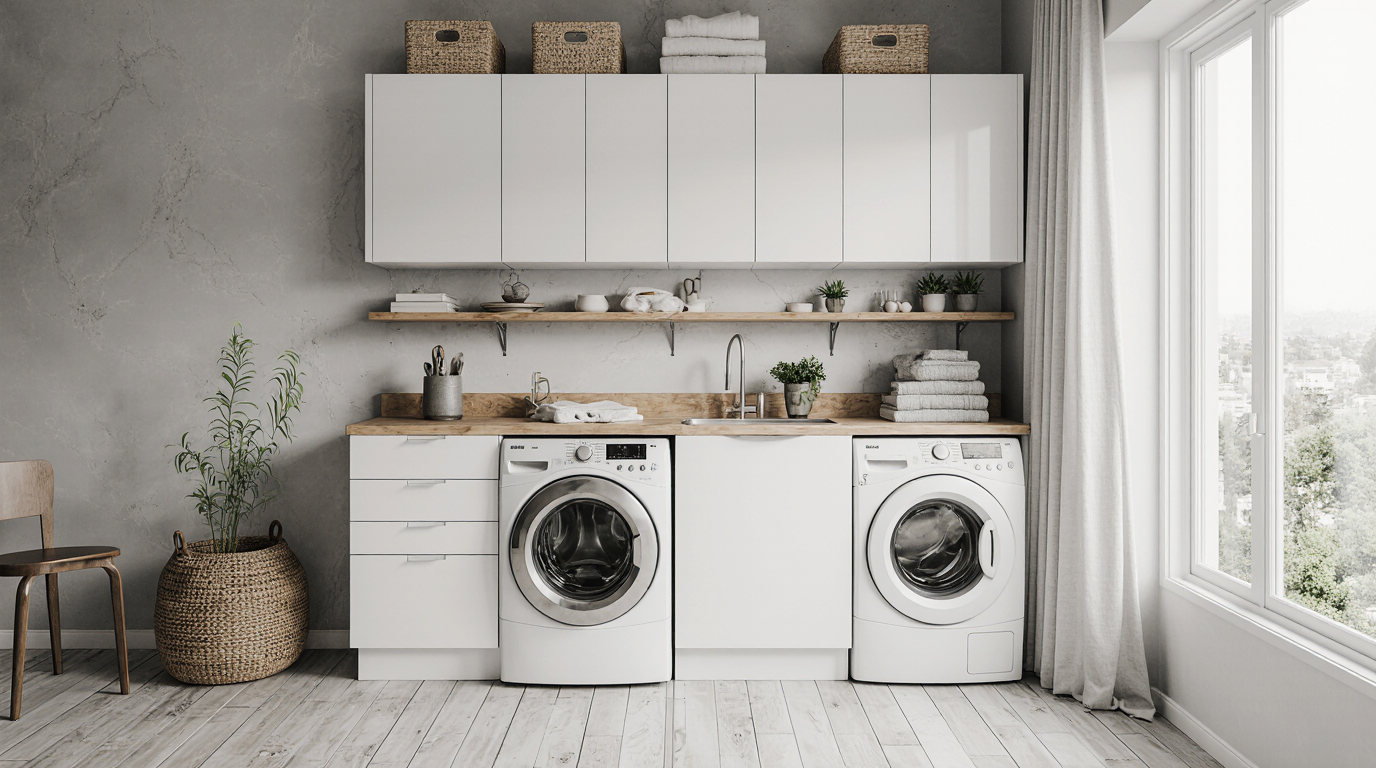
Efficiency begins with appliance selection and placement. Front-loading washers and dryers are particularly advantageous in small laundry rooms due to their ability to be stacked vertically, conserving valuable floor space. Side-by-side placement with overhead counters supports ergonomic use and creates convenient folding stations. Energy-efficient models are another critical consideration, as they minimize utility costs while promoting environmentally conscious living. Organized appliance positioning establishes a logical workflow that minimizes effort and maximizes output.
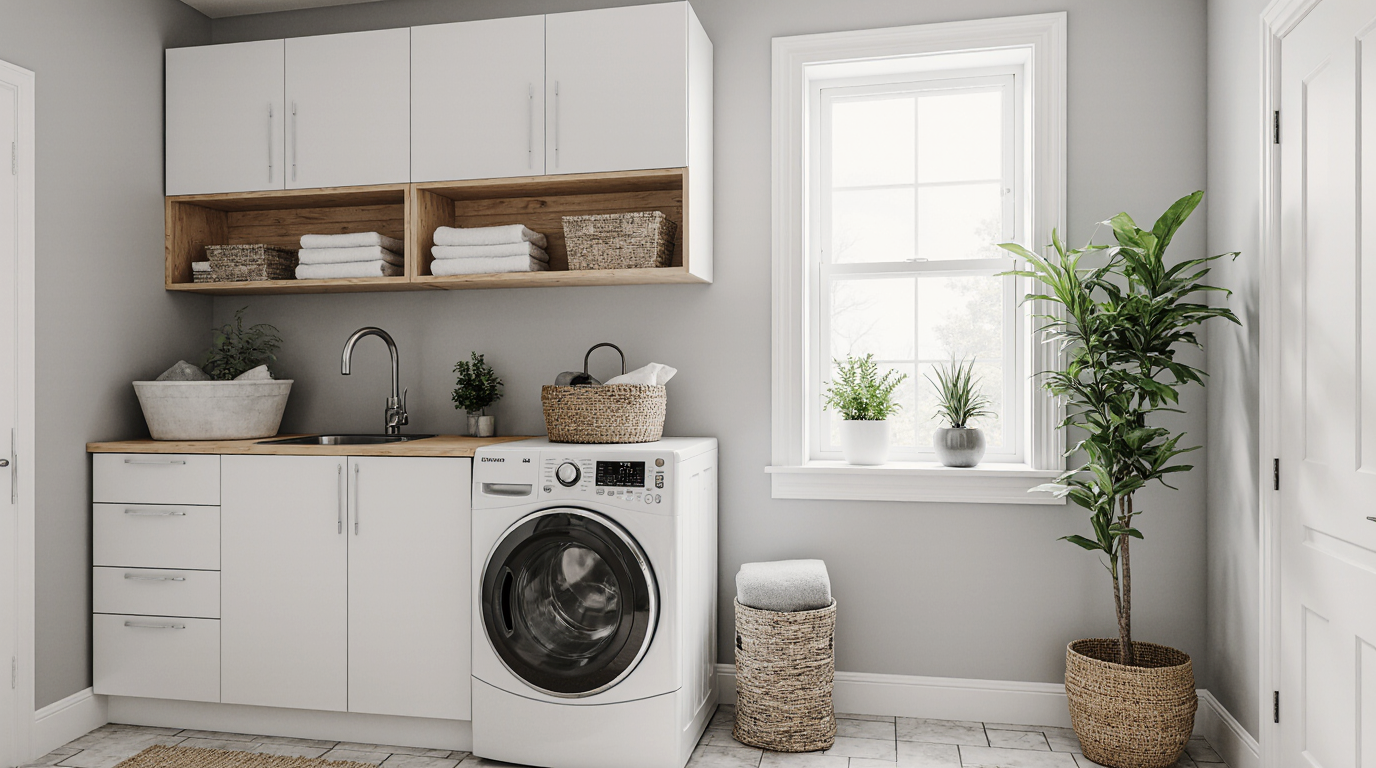
Maximizing storage potential defines the success of compact laundry spaces. Cabinets, shelves, and cubbies should be tailored to fit the room’s dimensions while maximizing vertical space. Wall-mounted cabinets allow for ample storage of detergents, cleaning supplies, and laundry accessories without occupying the floor area, which is crucial in compact spaces. Open shelving with organized bins allows functional convenience without compromising style. Tailored storage solutions adapt to awkward corners or tight walls, leaving no space wasted.
Lighting is another often-overlooked aspect of a small laundry room design. Proper lighting not only improves visibility but also enhances the room’s ambiance. Bright, layered lighting, including ceiling lights and under-cabinet illumination, can prevent shadows in critical work areas and make the space feel larger than it is. Integrating windows or skylights brightens the room and minimizes electrical consumption. Reflective finishes, pale colors, and mirrors in enclosed rooms create an illusion of spaciousness and light.
Flooring and durable surfaces are essential components that blend both practicality and style. Since laundry rooms endure high traffic and occasional spills, selecting water-resistant, easy-to-clean materials is paramount. Waterproof flooring options integrate seamlessly into the room’s aesthetic while offering maximum durability. Countertops should also be resilient, resistant to moisture, and easy to maintain. Smart countertop solutions include retractable boards and drying racks to maximize efficiency in small areas.
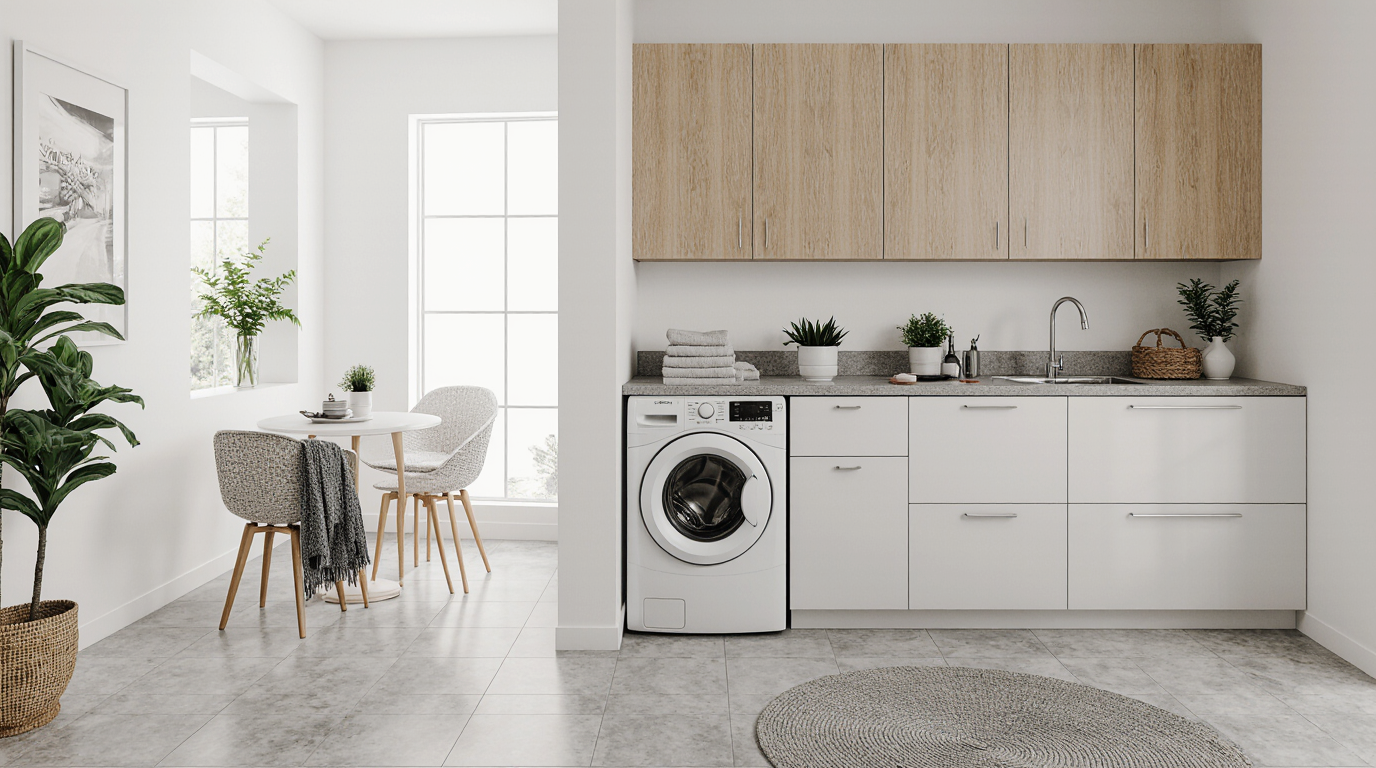
Light, thoughtful finishes create an impression of space and sophistication. Soft neutrals broaden the sense of space, complemented by bolder elements for character. Incorporating sleek cabinetry, modern hardware, and cohesive textures creates a cohesive aesthetic that elevates the room from a purely utilitarian area to a visually appealing environment. Subtle contrasts between cabinets, walls, and accent textures enhance both usability and visual interest.
A thoughtfully designed small laundry room layout also considers workflow efficiency. Creating designated zones for washing, drying, folding, and ironing minimizes movement and streamlines chores. Space-saving hanging and drying systems preserve compact floor layouts. Even a compact sink expands the room’s functionality for stain treatment and hand washing. Even the placement of hooks, magnetic strips, or pegboards for organizing tools and supplies contributes to a smoother, more intuitive laundry process.
Human-centric layouts enhance both convenience and sustainability in tight spaces. Ensuring that appliances, counters, and shelves are positioned at accessible heights can prevent strain during laundry tasks. Drawer and shelf systems enhance usability while maintaining order. Incorporating adjustable folding and sorting stations improves ergonomics and operational flow. These small design decisions collectively enhance both the functionality and overall satisfaction of the laundry experience.
Proper ventilation preserves both room quality and appliance longevity. Proper airflow prevents excess moisture, mildew, and odors from accumulating, which is particularly important in confined spaces. Targeted exhaust and air circulation mechanisms maintain healthy, odor-free laundry environments. Sustainable design incorporates energy-saving vents and moisture-proof finishes.
Decorative elements, though secondary to function, enrich the user experience in a compact laundry room. Adding artwork, potted plants, or even a stylish rug can create a more inviting atmosphere. Decorative yet functional containers improve organization while enhancing visual appeal. These touches help transform the laundry room from a purely utilitarian space into an enjoyable environment where daily tasks feel less like chores and more like routine self-care. Balancing functional and aesthetic priorities results in a harmonious, user-friendly laundry room.
Effective compact laundry designs demand strategic thought, innovative storage, and design precision. Through thoughtful appliance selection, spatial planning, and style integration, small laundry rooms can reach maximum functionality and appeal. Such layouts streamline household chores while enriching the home’s design coherence. Thoughtful consideration of workflow, lighting, ventilation, and design choices ensures that even a compact laundry room becomes a space that is organized, efficient, and enjoyable to use.