Compact Laundry Room Design Concepts for Optimal Functionality and Elegance
Reimagining a tiny laundry room as both highly functional and stylish necessitates more than mere appliance selection. The key to an exceptional laundry room design lies in creating a balance between practicality and aesthetics. Small laundry spaces can reach peak performance when innovative strategies merge with careful organization. Integrating clever storage solutions, bright illumination, and resilient materials guarantees optimal functionality and lasting convenience. A meticulously planned compact laundry room enhances daily chores while contributing to home aesthetics.
Choosing the right washing and drying units is foundational when designing an efficient compact laundry area. Compact washers and dryers are now available in stackable formats, allowing vertical installation to save precious floor space. High-performance, quiet washers and dryers are crucial in compact layouts near living areas. Selecting energy-saving appliances balances utility efficiency with top-tier performance. Choosing stylish, contemporary washers and dryers elevates both aesthetics and spatial harmony.
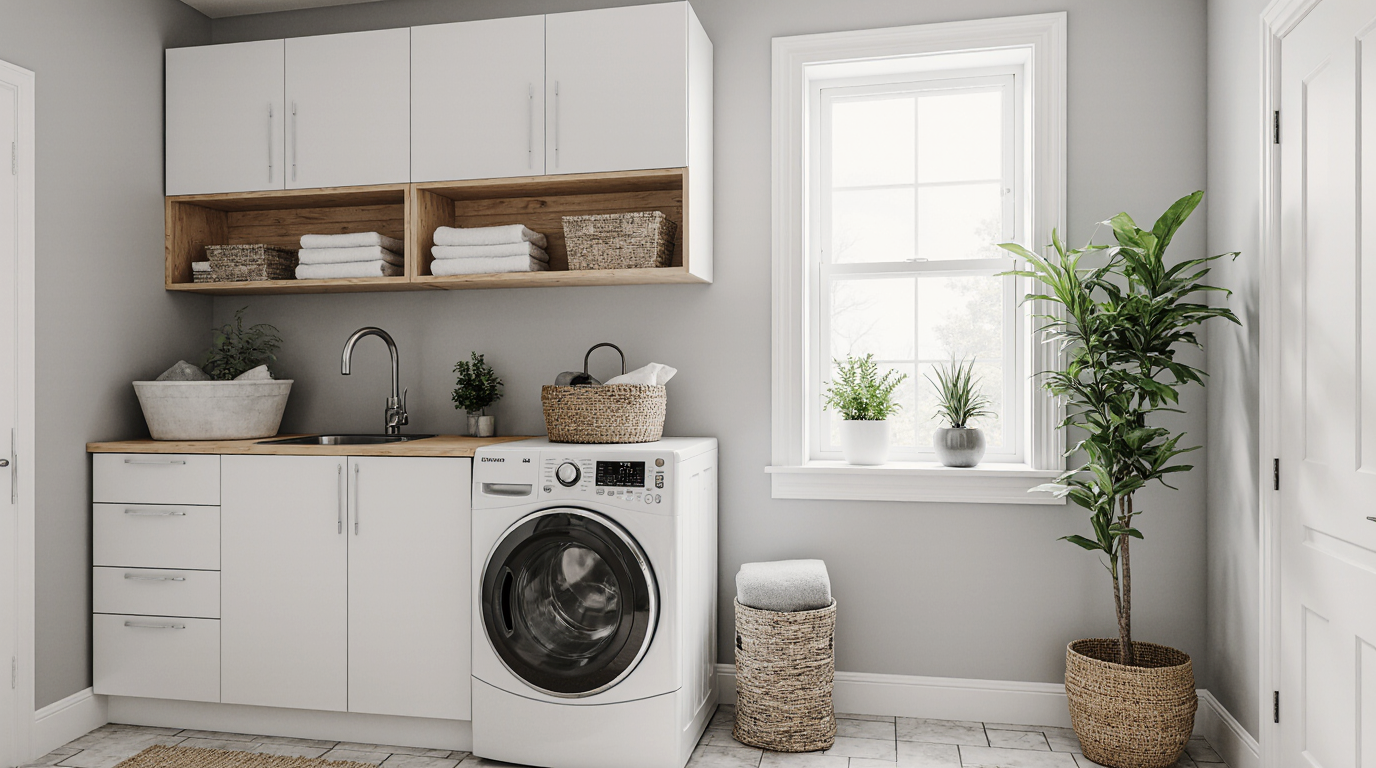
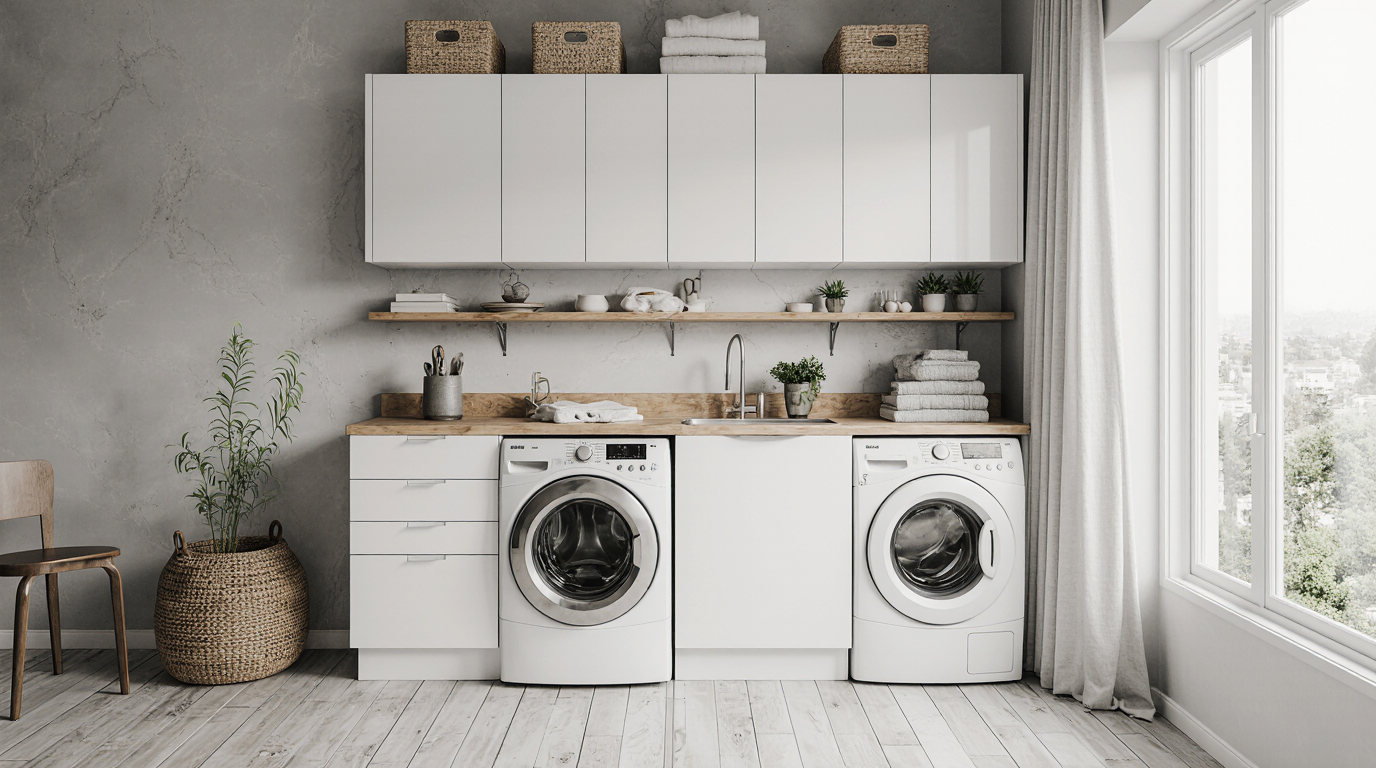
Efficient storage is a cornerstone of small laundry room planning. Custom cabinetry maximizes otherwise wasted space for optimal organization. Upper cabinets above the laundry machines optimize vertical space and supply storage efficiency. Open shelving in constrained areas maintains usability while avoiding visual clutter. Incorporating baskets or clearly labeled bins streamlines sorting and storage. Custom-fitted storage units exploit all available space while maintaining an upscale design feel.
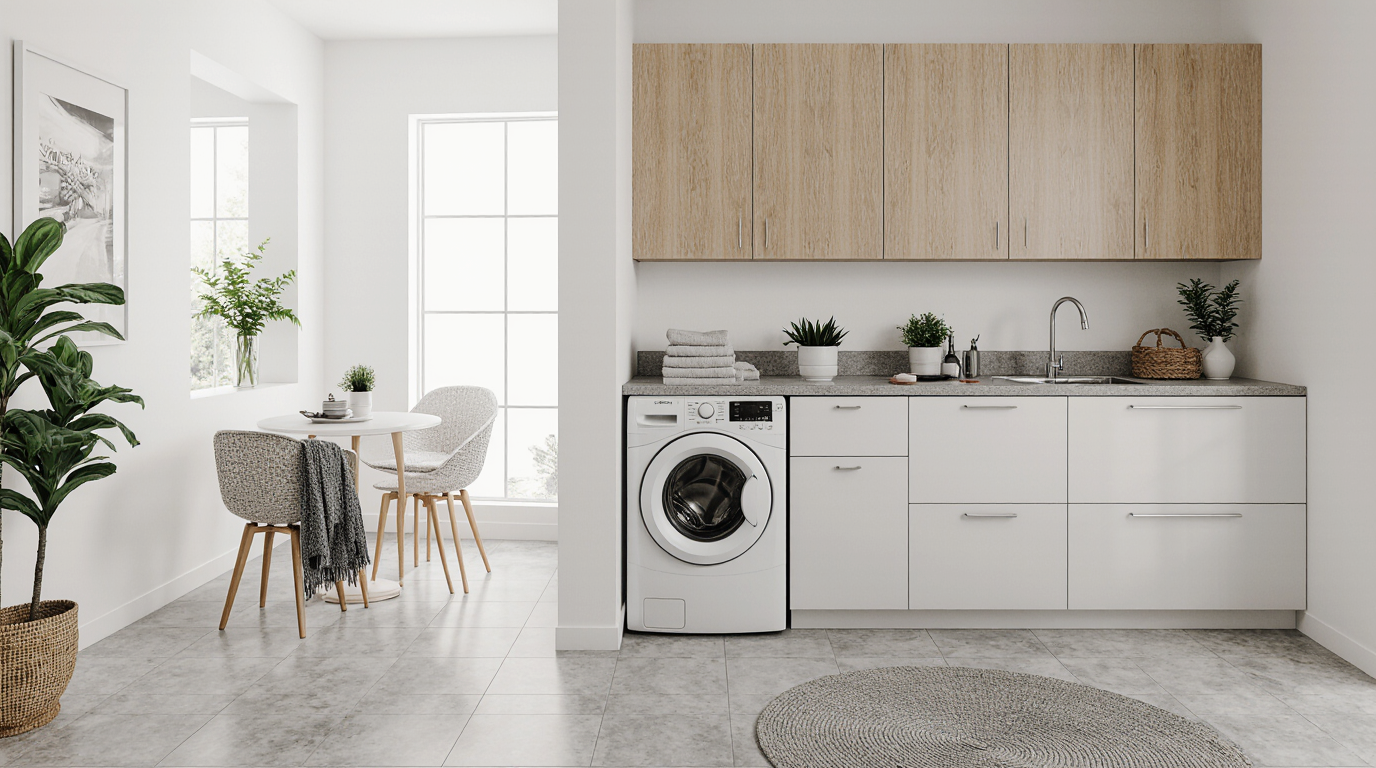
Ample countertops greatly enhance the usability of small laundry rooms. Countertops or fold-out surfaces above washers and dryers simplify folding and organization. Countertops made of durable materials like quartz, laminate, or butcher block are ideal because they withstand moisture, heavy use, and occasional heat from irons or steamers. For extremely narrow spaces, pull-out countertops or collapsible surfaces provide temporary work areas without permanently occupying valuable floor space. A well-planned countertop area streamlines tasks and maintains a polished, organized look.
Proper lighting is essential in tiny laundry areas for both efficiency and aesthetics. Installing bright, energy-efficient LED lights ensures that the entire room is well-lit, eliminating shadows that make folding or sorting difficult. Task lighting beneath cabinets targets work zones for optimal visibility. Even a tiny window can bring spaciousness and airiness if utilized efficiently. Strategic lighting elevates usability and aesthetics, transforming small laundry spaces into bright, comfortable areas.
Flooring and wall materials play a major role in practicality and visual appeal. Durable, moisture-proof floors safeguard small laundry rooms from spills and dampness. Low-maintenance, easy-to-clean surfaces simplify upkeep in busy laundry areas. Light wall colors visually expand the area, and accent walls add charm without clutter. Superior materials create a polished look and maintain practicality over time.
Compact laundry spaces often need to serve multiple functions. Integrating features such as a built-in ironing station, pull-out hampers, or even a small sink can increase efficiency and convenience. A utility sink is particularly valuable for hand-washing delicate items, pre-treating stains, or cleaning household tools. Thoughtful spatial design permits multitasking additions while preserving room flow. Multifunctional design ensures compact rooms remain efficient, organized, and stylish.
Decorative elements should not be overlooked, even in utilitarian spaces. Decorative accessories like plants, chic storage, and stylish hooks enhance both function and style. Reflective surfaces amplify light and visually enlarge small rooms. Every detail, from hardware to wall art, elevates the space from ordinary to refined. Every detail counts, from cabinet hardware to wall art, making the space feel intentional and refined.
Functionality depends not only on storage and machines but also on strategic workflow. Designating specific zones for washing, drying, folding, and ironing creates a logical flow that reduces time and effort. Utilizing vertical space for hanging rods or retractable clotheslines ensures laundry tasks can be completed without disrupting other areas of the home. Thoughtful layout and workflow strategy transform compact laundry areas into efficient, calm environments.
Strategic use of color and texture shapes the ambiance of compact laundry spaces. Soft colors expand space visually, while accent tones inject personality. Mixing textures, such as smooth countertops, matte cabinets, and soft-textured baskets, adds depth and sophistication to the design. Choosing finishes that complement the home’s overall style enhances continuity, creating a sense of cohesion that makes the laundry area appear as an intentional part of the interior design rather than an afterthought.
Finally, integrating technology and modern conveniences can elevate a small laundry room to a high-functioning, smart space. Connected machines provide remote oversight, and intelligent lighting adapts to activity. Incorporating motion-sensor lights or touchless faucets enhances both convenience and hygiene. Embracing modern technology in small laundry room design ensures efficiency, reduces manual effort, and contributes to a contemporary, luxurious feel that aligns with modern living standards.
Effective small laundry design merges efficiency, elegance, and clever use of space. Every element, from appliances and storage to lighting, materials, and decorative touches, contributes to a cohesive, functional, and beautiful environment. By leveraging smart design principles, homeowners can transform a cramped utility space into an organized, stylish, and enjoyable part of the home, proving that even the smallest laundry room has the potential to be both functional and visually striking.