Small Laundry Room Design: Transforming Compact Spaces into Functional Luxury
Creating an efficient small laundry space requires blending ingenuity, functionality, and visual charm. Every inch of space must be utilized strategically, transforming a simple utilitarian area into a functional and stylish part of the home. Beyond mere functionality, a thoughtfully designed laundry area increases home value and offers a pleasant, orderly workspace. The key to a successful small laundry room design lies in maximizing storage, incorporating smart appliances, and using visual tricks to create a sense of openness and luxury.
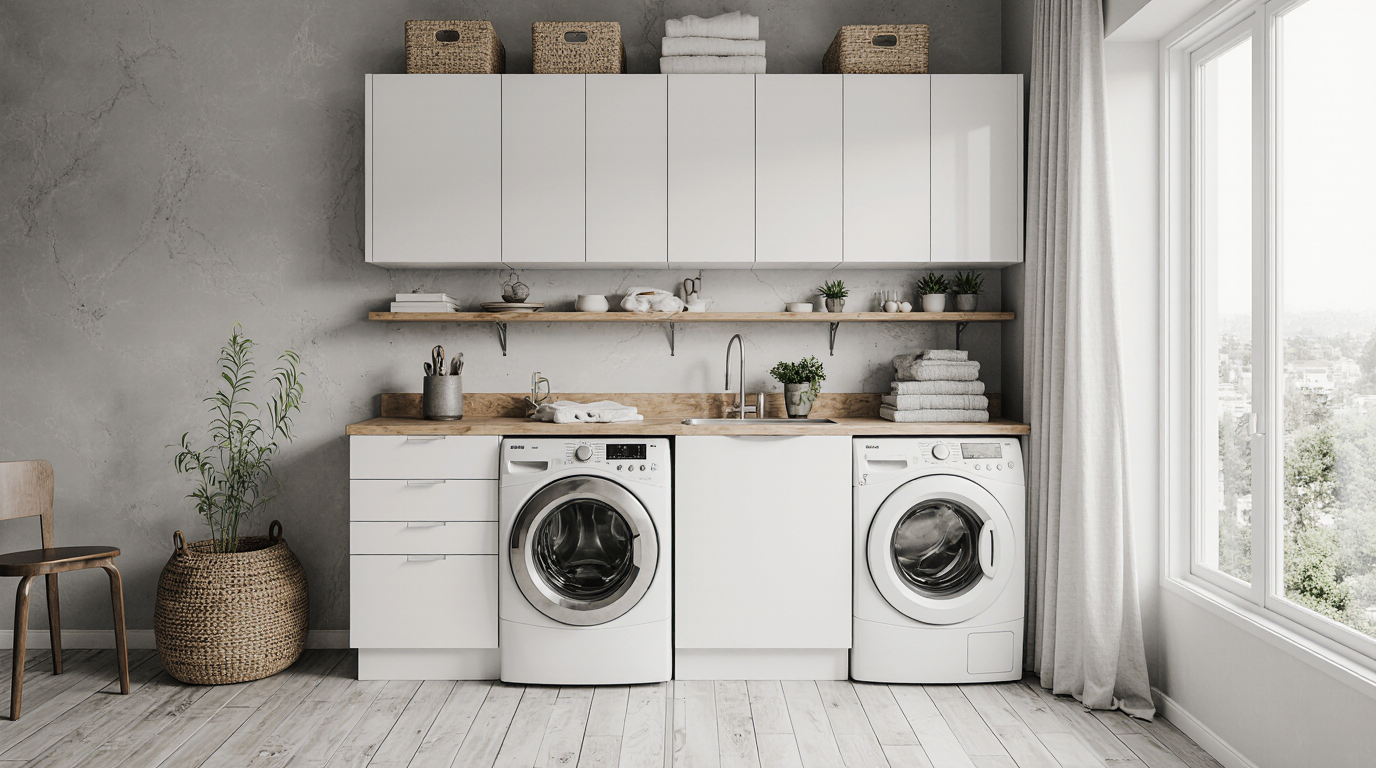
In compact spaces, the placement of appliances is critical. Stackable washers and dryers are a game-changer for small laundry rooms, allowing vertical use of space and freeing up floor area for additional storage or folding stations. Choosing energy-saving, high-performance washers and dryers enhances both efficiency and convenience. Custom cabinetry integration ensures appliances blend smoothly with the room’s aesthetic, creating a clean, unified appearance. Custom cabinets around stacked washers and dryers optimize storage, hide supplies, and keep the laundry room visually tidy.
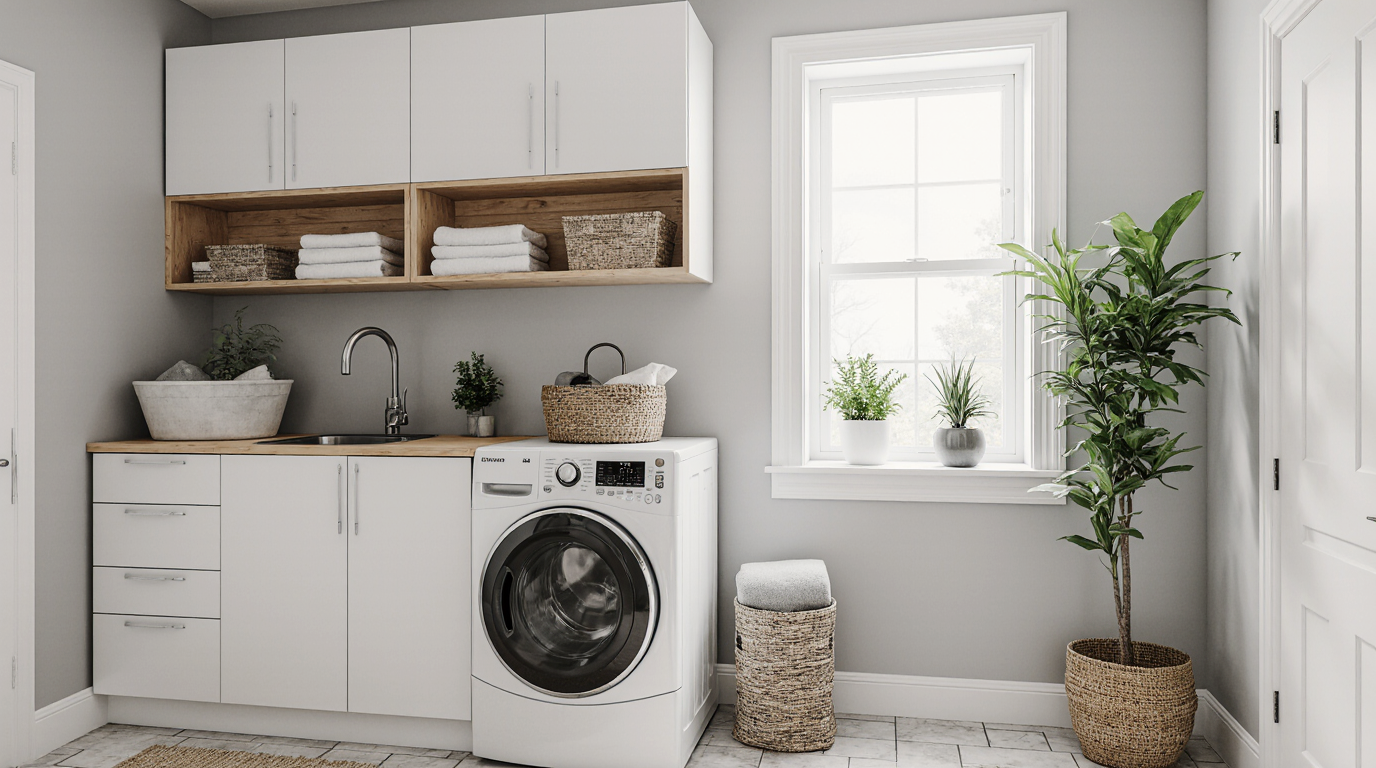
Practical yet attractive storage is essential for compact laundry spaces. Open shelves, pull-out baskets, and built-in cabinets can optimize vertical space while keeping items within easy reach. Creative wall-mounted solutions like retractable boards and racks expand usability without crowding the room. Smart use of height allows additional storage without sacrificing openness. Hidden hamper drawers and discreet storage units keep laundry out of sight, maintaining a polished look.
Lighting plays a surprisingly transformative role in compact laundry areas. Bright lighting enhances the sense of space, cleanliness, and comfort. Natural light is ideal whenever possible, but artificial lighting can be optimized with recessed ceiling lights, under-cabinet LED strips, or even decorative pendant lights above a folding counter. Even illumination simplifies sorting, folding, and other tasks, enhancing the user experience. Mirrors strategically placed on walls or cabinet fronts can further amplify the sense of space, reflecting light and making the room feel more open than it truly is.
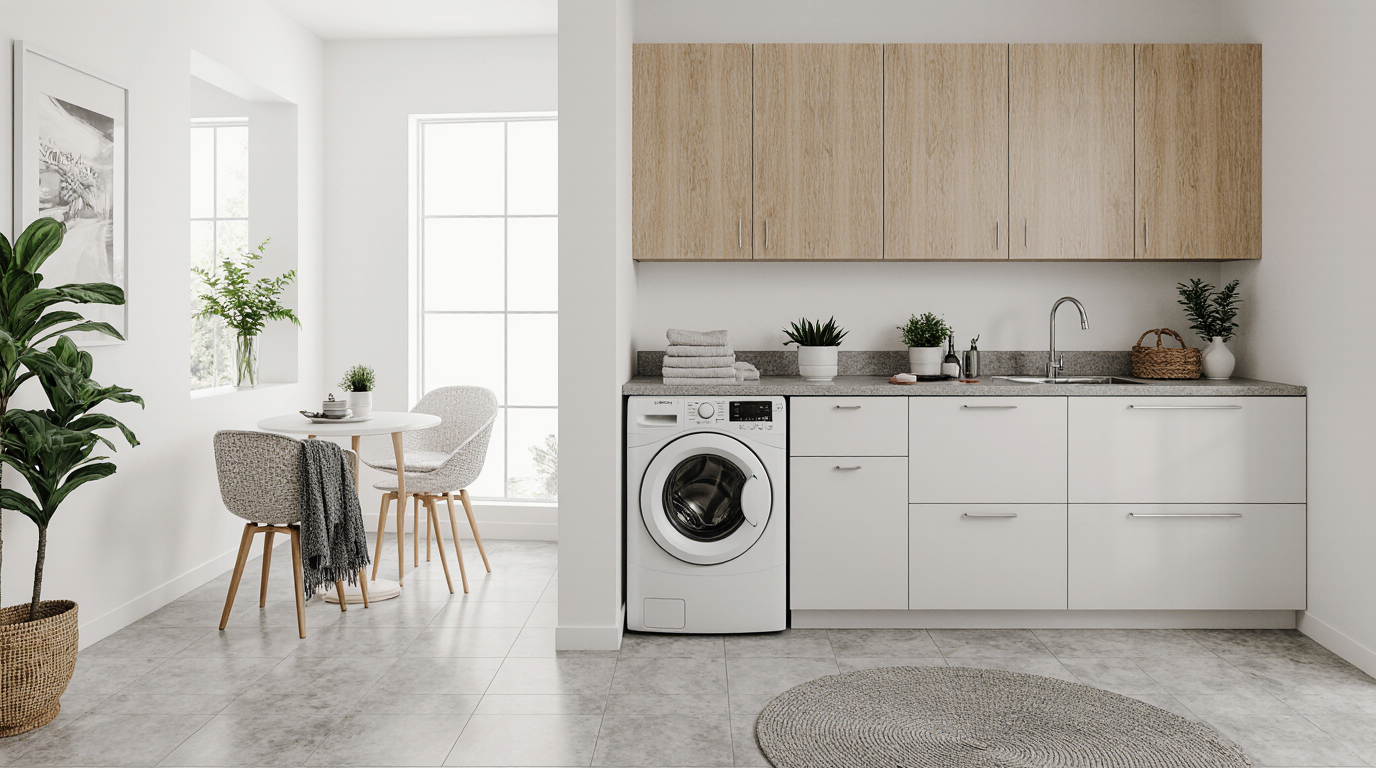
Choosing the right color palette significantly impacts the perceived size and mood of a compact laundry space. Lighter tones, such as soft whites, pale grays, or pastel blues, can make the room feel airy and open. Strategic pops of color or contrasting edges inject personality while maintaining balance. Neutral palettes combined with organic textures lend a sophisticated, cozy atmosphere. Thoughtful color coordination elevates the room’s mood and makes routine tasks more enjoyable.
Smooth workflow and ergonomic planning make small laundry spaces highly functional. The room should be laid out to support the natural sequence of laundry tasks, from sorting and washing to drying and folding. Front-loading machines with overhead counters create versatile work surfaces, and adjacent sinks enhance functionality. Designers often highlight the importance of ergonomic layout in small laundry rooms, ensuring that every element, from shelves to machines, is easily accessible without unnecessary bending, stretching, or lifting. Logical organization and task sequencing enhance usability and reduce stress.
The addition of aesthetic details elevates a small laundry room from purely utilitarian to luxurious. Tiles, hardware, and organized storage elements unify design while expressing individual taste. Incorporating mini décor elements enhances character and ambiance. Minimalist layouts maximize space and conceal clutter, whereas vintage-inspired elements add playful charm. Prioritizing comfort and pleasure in design ensures the laundry room is both practical and inviting.
Adaptable furniture and modular units allow small laundry rooms to perform multiple functions efficiently. Multi-functional elements maximize usability without expanding the physical space. Adaptable, modular designs ensure every inch serves multiple purposes. For example, a countertop can double as a workspace for laundry and a decorative area for displaying small plants or household items, blending form and function seamlessly.
Sustainability is another important consideration in modern small laundry room design. Incorporating eco-friendly machines, faucets, and materials lowers environmental footprint and operational costs. Contemporary laundry rooms emphasize both green practices and sleek design. Opting for high-efficiency equipment and eco-friendly materials blends performance with environmental stewardship.
Maintaining order and minimizing clutter enhances both functionality and aesthetics in tight laundry spaces. Strategic storage solutions facilitate organization and reduce visual chaos. Smart placement of items by frequency optimizes workflow. An orderly, intentional layout transforms a compact laundry space into a sustainable, attractive environment.
Attention to elements big and small elevates compact laundry rooms to elegant, functional spaces. Blending organization, technology, lighting, and style transforms small laundry rooms into practical yet beautiful spaces. Strategic planning turns compact laundry rooms into functional, elegant extensions of the household layout. A perfect mix of practicality, design, and comfort converts tiny laundry spaces into luxurious, well-organized zones.