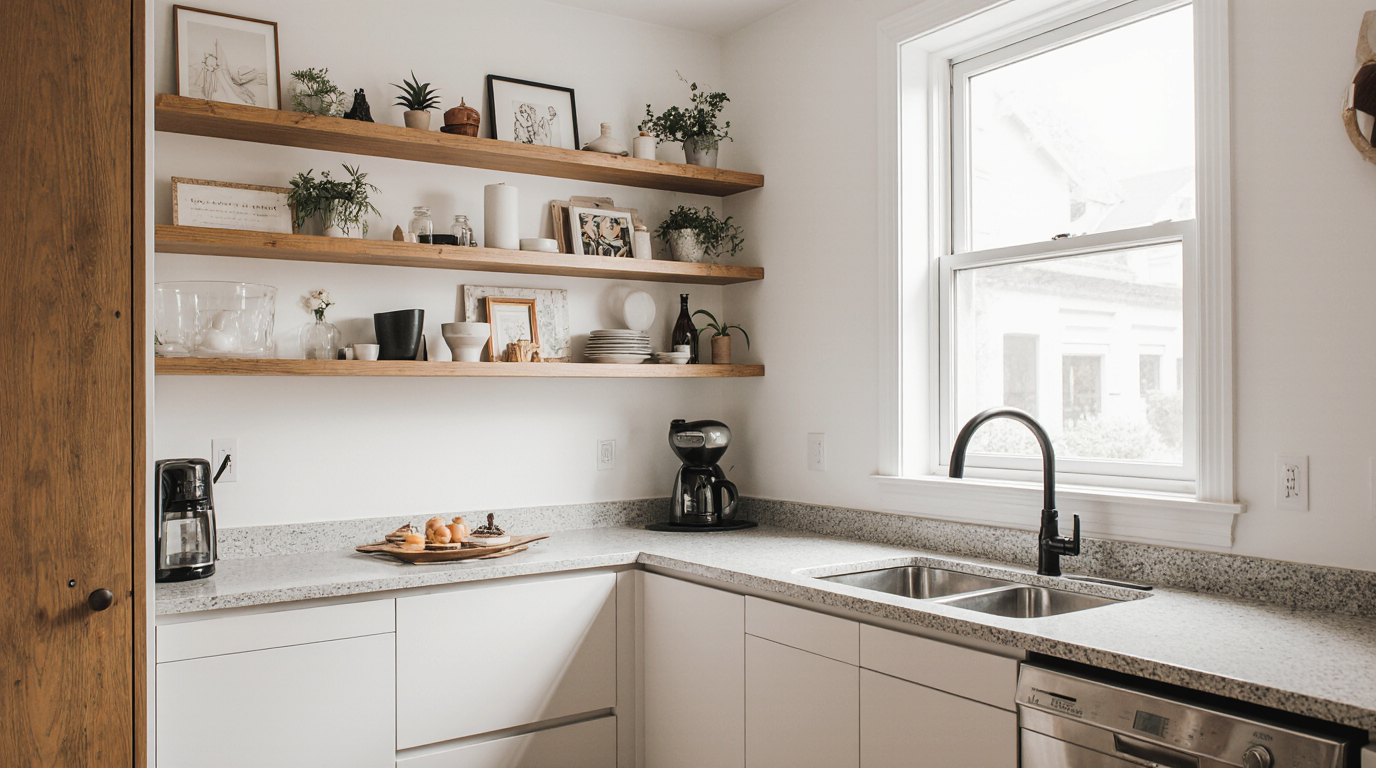
The biggest mistake in a small kitchen redo in Sarasota isn't choosing the wrong color or appliance brand. It's underestimating the destructive power of our year-round humidity on standard-grade cabinetry and then being forced into a second, more expensive kitchen rebuild just a few years later. The most durable kitchen isn't always the one that looks best on day one; it's the one engineered to resist the unseen environmental stress of coastal Florida.
Executive Summary: A Resilient Approach for Sarasota's Small Kitchens
From my hands-on work in Sarasota, a successful small kitchen project hinges less on maximizing space visually and more
From my hands-on work in Sarasota, a successful small kitchen project hinges less on maximizing space visually and more on building for longevity against our specific coastal challenges. It involves prioritizing materials that are dimensionally stable in high humidity and navigating the complex approval layers of condo associations, which often govern the most desirable, space-constrained properties downtown and on the barrier islands. A beautiful white kitchen remodel that peels or warps in three years is a failure, no matter the initial remodeling costs.
- Material Priority: Marine-grade plywood for cabinet boxes is a baseline, not an upgrade.
- HOA/Condo Board Engagement: Start this process before finalizing any design or material orders.
- Ventilation Strategy: A high-CFM, properly vented range hood is a functional necessity, not a design choice.
- Permitting Timelines: Factor a minimum of 4-6 weeks for permit review by the City of Sarasota, post-HOA approval.
Planning Failures That Inflate Costs Mid-Project
The most common planning failures I see in Sarasota are rooted in a disconnect between a client's design vision and the physical realities of their property. Many homeowners, particularly those new to Florida, focus on aesthetics drawn from national design magazines without accounting for our climate or the structural limitations of older condo buildings. This leads to change orders and budget overruns once demolition reveals the true state of affairs.
The Most Expensive Oversight: Ignoring Hidden Moisture and Ventilation
A client with a condo in a 1980s building on Lido Key wanted a sleek, minimalist white kitchen. The plan involved removing a non-structural soffit to gain vertical space for taller cabinets. The critical mistake was not budgeting for what we might find inside that soffit. Once opened, we discovered decades of poor ventilation had led to latent mold on the drywall and compromised framing. The project timeline was delayed by three weeks for remediation, and the budget increased by nearly 15% to address an issue that a pre-demolition moisture inspection could have anticipated. This is a pattern I've seen repeatedly in waterfront properties from Siesta Key to Longboat Key.
The Renovation Process in Practice for a Sarasota Condo
Redoing a small kitchen here is a multi-layered process where the contractor's primary job is often navigating bureaucracy before a single hammer swings. The physical kitchen rebuild is often the most straightforward part. The real work is in coordinating architectural plans, engineering approvals (if walls are moved), condo board reviews, and city permitting, each with its own timeline and requirements.
Key Selection Criteria for a Sarasota Project
When you're evaluating a team for your project, a pretty portfolio is secondary. Your primary concern should be their documented experience with the unique logistical and regulatory hurdles of Sarasota, especially in multi-family buildings. Look for specifics:
- Proven Condo Board Experience: Ask for references from past projects in specific downtown or barrier island buildings. They should understand the submission process for the building's architectural review committee.
- Humidity-Resistant Material Knowledge: They must be able to explain the performance differences between MDF, standard plywood, and marine-grade plywood in our climate, not just the cost difference.
- Licensed and Insured for High-Rise Work: Many condo associations require specific, high-limit insurance policies for contractors working on their premises. A standard residential license may not be sufficient.
- Familiarity with Sarasota's Permit Office: A contractor who regularly works in the city knows the plan examiners and the specific details they look for, which can shorten the review cycle.
Comparing a Full Redo with Lighter Alternatives
For a small kitchen, a complete gut renovation isn't the only option. Homeowners often weigh this against less invasive (and less expensive) alternatives. However, the decision in Sarasota must be based on the structural integrity of the existing components, not just the budget. A cosmetic fix on water-damaged cabinet boxes is wasted money.
| Indicator | Full Kitchen Redo | Cabinet Refacing | Appliance & Countertop Swap |
|---|---|---|---|
| Humidity Resistance | High (with proper materials like marine-grade plywood) | Low to Medium (Veneer can delaminate; underlying box issues remain) | Low (Does not address core cabinetry, the main victim of moisture) |
| Condo Board Scrutiny | High (Requires full design review, plumbing/electrical permits) | Medium (Often still requires design approval for finish changes) | Low (Typically requires only notification and scheduling) |
| Typical Project Duration | 8-16 weeks (including approvals) | 2-4 weeks | 1-2 weeks |
| Return on Investment | Highest potential, especially if layout is improved | Moderate, but short-lived if core issues exist | Lowest, primarily an aesthetic upgrade |
When a Full Redo is the Wrong Choice
A complete kitchen rebuild is not the right path if your primary goal is a quick, low-cost update for an imminent sale and the underlying cabinetry is confirmed to be structurally sound and dry. In this scenario, the time and expense of permitting and HOA approvals would likely outweigh the potential increase in sale price. A strategic, high-quality refacing and new quartz countertops could provide a better return for that specific, time-sensitive goal.
Safe Hiring and Vetting Checklist for Sarasota
Hiring the right team is the single most important decision you'll make. A low bid from an inexperienced contractor can quickly become the most expensive option through change orders, failed inspections, and material failures. Your vetting process must be rigorous and locally focused.
- Verify their Florida Certified General Contractor (CGC) or Certified Residential Contractor (CRC) license is active and without complaints on the DBPR portal.
- Request and contact at least two recent Sarasota-based clients who had a small kitchen redesign in a condo building.
- Ask for a copy of their current liability and workers' compensation insurance certificates, specifically checking the coverage amounts.
- Confirm they have an established process for submitting plans to and communicating with condo association management.
- Inquire about their material suppliers and their standard specification for cabinet box construction (e.g., plywood thickness, joinery).
- Review their standard contract for clauses on change orders, payment schedules, and project timelines.
- Ask how they handle debris removal in a high-rise or limited-access building, a major logistical challenge.
Decisions That Determine the Final Outcome
The success of your small kitchen redo will be determined long before the first cabinet is installed. It's the early-stage decisions about structure, layout, and materials that have the most significant impact on both the final cost and your long-term satisfaction. I've seen clients agonize over backsplash tile while glossing over the cabinet box material, a classic case of misplaced priorities.
The Exact Moment Most Homeowners Get It Wrong
The critical error happens right after setting a budget. Most people immediately start shopping for finishes and appliances—the exciting parts. The correct first step is to allocate a portion of that budget for a thorough, pre-design inspection. This means hiring a contractor or designer to assess the existing plumbing, electrical, and wall conditions *before* any layout is finalized. In Sarasota, this must include a moisture reading of the drywall behind the existing cabinets. This diagnostic step informs the design, rather than the design ignoring reality. It turns remodeling costs from a hopeful guess into a data-driven estimate.
Practical Answers About Operations in Sarasota
Navigating the local system is key. These are not generic steps; they are specific operational realities of getting a small kitchen project built in Sarasota County, particularly within the city limits or a master-planned community.
The Condo Association Review Bottleneck
Most condo associations in places like Downtown Sarasota or Longboat Key have an Architectural Review Committee (ARC) that meets monthly, or sometimes even quarterly during the off-season. You must submit a full package—drawings, material specs, contractor license/insurance—weeks in advance. Missing a deadline can delay your project start by months. We factor a 60-day buffer for ARC approval into every condo project schedule as a baseline.
Permitting with the City of Sarasota
Once you have ARC approval, you can submit for a permit from the City of Sarasota Building Department. A kitchen remodel typically requires a building permit, and if you're moving fixtures, separate plumbing and electrical permits. As of my recent projects, a straightforward kitchen plan review is taking approximately 4 to 6 weeks. Any structural change, like removing a non-load-bearing wall to open up the space, will require signed and sealed drawings from a Florida-licensed engineer, adding to the review time.
Florida Building Code and Coastal Construction
Even if your unit isn't directly on the Gulf, Sarasota is in a wind-borne debris region. While this most directly impacts windows and doors, it can have knock-on effects. For instance, if your kitchen redo includes replacing a window, it must meet current impact-resistance standards. Furthermore, the code has specific requirements for anchoring fixtures and ensuring that any new plumbing or electrical work meets the latest safety standards, which are often more stringent than when an older building was constructed.