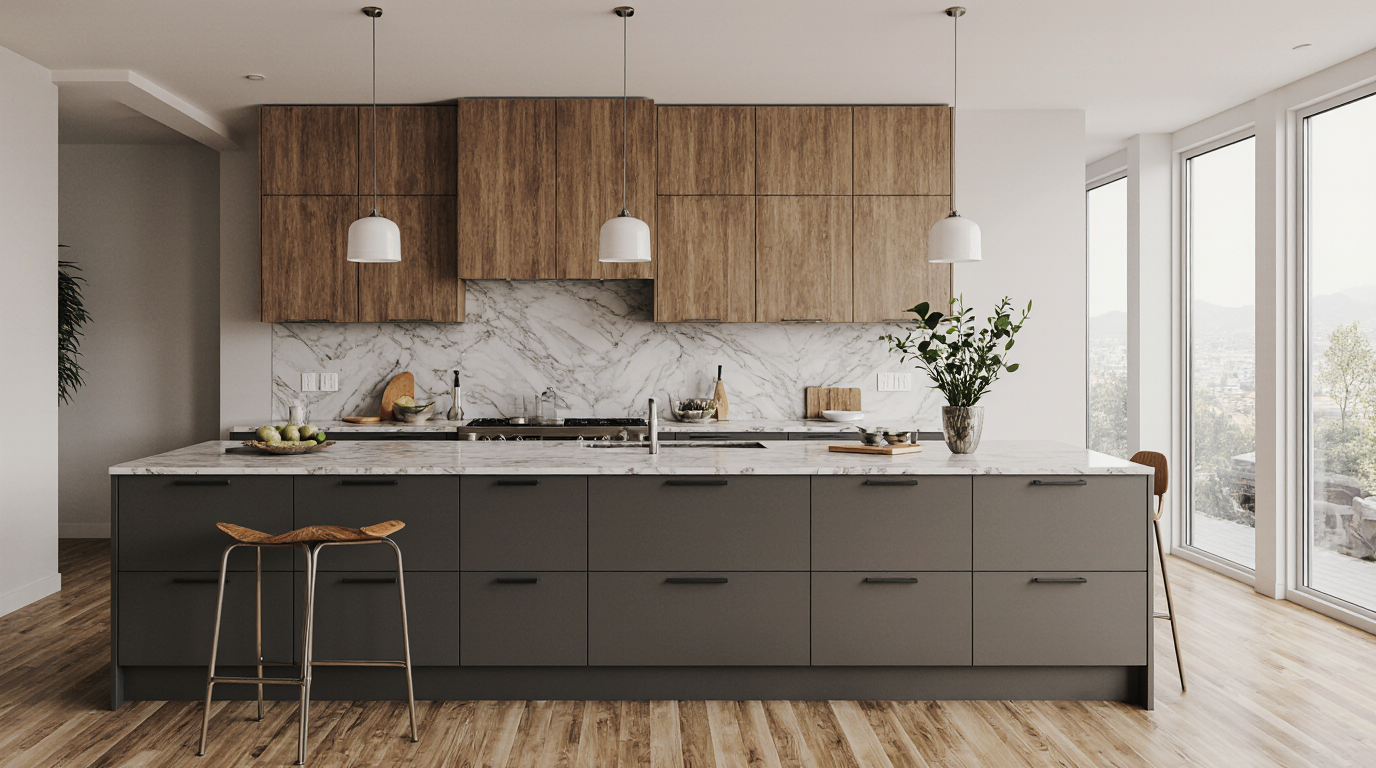
In Sarasota, the average indoor humidity can hover near 60% even with air conditioning running constantly. For a kitchen cabinet reface, this isn't just a weather statistic; it's the primary factor that causes thermofoil and standard laminate veneers to peel away from their MDF core. I've been called to far too many projects where a two-year-old refacing job looks a decade old, not due to poor workmanship, but because the materials were fundamentally wrong for our coastal climate.
Executive Summary: Refacing Cabinets for Sarasota's Climate
From my direct experience managing renovations in Sarasota, a successful cabinet refacing project hinges on material
From my direct experience managing renovations in Sarasota, a successful cabinet refacing project hinges on material science, not just aesthetics. The goal is to create a finish that withstands constant humidity and UV exposure. Homeowners often focus on the initial refacing kitchen cabinets cost, but the real expense lies in redoing a failed project in under five years. The key is selecting materials engineered for a subtropical, coastal environment from day one.
- Material Priority: Opt for solid wood doors and drawer fronts combined with high-quality, water-resistant wood veneers for the cabinet boxes.
- Climate-Specific Adhesive: The glue used to apply veneers must be rated for high-humidity applications to prevent delamination.
- Hardware Selection: Choose stainless steel or PVD-coated hardware to resist corrosion from salt air, especially in homes west of I-75.
- HOA Pre-Approval: In communities like Lakewood Ranch or Palmer Ranch, secure design approval before ordering materials, as their review process can take 30-60 days.
The Planning Failures That Compromise a Refacing Project
The most common mistakes in Sarasota happen long before a hammer is swung. They are failures of material specification driven by a misunderstanding of our local environment. A low-cost quote is often a red flag, signaling the use of materials that are guaranteed to fail here.
Clients are shown beautiful samples in a showroom, but they aren't told that the thermofoil or vinyl wrap they've chosen will start to peel around the high-heat, high-steam zones of the dishwasher and stove. They also aren't warned that standard MDF swells irreversibly when exposed to the moisture that is simply a part of life in Florida.
The Most Expensive Failure: Underestimating Humidity's Impact
The costliest error I consistently see is choosing style over substance, specifically selecting thermofoil doors or paper-thin veneers to save money upfront. I was involved in a project in a Gulf Gate home where the owner had refaced their kitchen two years prior. The thermofoil was peeling off a dozen door and drawer fronts, and the MDF underneath had swollen. The initial "savings" of a few thousand dollars resulted in a complete tear-out. We had to replace everything, turning a budget-friendly reface into a full, and more expensive, cabinet replacement.
How Cabinet Refacing Works in Practice in Sarasota
A professional refacing project is a systematic, multi-day process that transforms your kitchen without the disruption of a full demolition. The core structure of your existing cabinet boxes must be sound, without water damage or structural weakness, for refacing to be a viable option.
The process begins with a thorough inspection of your existing cabinets. We then remove all doors, drawer fronts, and hardware. The exterior surfaces of the cabinet boxes are de-greased, sanded, and prepared. A new veneer—either real wood or a high-pressure laminate—is professionally cut and applied to all visible box surfaces. Finally, brand new, custom-made doors and drawer fronts are installed with new, often soft-close, hardware.
Material Selection Criteria for a Sarasota Home
- Doors and Drawer Fronts: Insist on solid wood. Maple is a stable and popular choice that takes paint or stain well. For coastal properties on Longboat Key or Siesta Key, consider materials with inherent moisture resistance.
- Cabinet Box Veneer: Use real wood veneer or a high-pressure laminate (HPL). Avoid paper-backed or vinyl veneers, which are susceptible to bubbling and peeling in our humidity.
- Core Material Check: If your current cabinet boxes are particleboard, they must be meticulously inspected for any signs of swelling or water damage, especially under the sink. Refacing damaged boxes is not a solution.
- Finish and Sealant: The factory finish on new doors should include a UV inhibitor to prevent fading and discoloration from the intense Florida sun, a common issue for kitchens with large windows.
Comparing Refacing to Other Kitchen Renovation Options
Refacing is a powerful tool, but it's not the only one. For Sarasota homeowners, the decision often comes down to cost, disruption, and the condition of the existing kitchen layout and cabinet boxes. Understanding the trade-offs is key.
| Feature | Cabinet Refacing | Cabinet Painting | Full Cabinet Replacement |
|---|---|---|---|
| Typical Cost | 40-60% of replacement cost | 20-30% of replacement cost | Highest initial investment |
| Project Duration | 3-5 days | 5-7 days (with proper curing) | 2-6 weeks (including design/fabrication) |
| Durability in FL Climate | High (with proper materials) | Moderate (prone to chipping/peeling) | Highest (new, quality construction) |
| Layout Changes | No | No | Yes, full flexibility |
When Refacing Is Not the Right Choice
Refacing is the wrong path if you are fundamentally unhappy with your kitchen's layout. It cannot fix inefficient workflows or add an island where one doesn't exist. Furthermore, if your existing cabinet boxes are made of low-grade particleboard and show signs of water damage or sagging shelves, you are simply putting a new face on a failing structure. In these cases, a full replacement is the only logical long-term investment.
Safe Hiring and Verification Checklist for Sarasota
Hiring the right contractor in Florida involves more than just checking reviews. It requires verifying licenses, insurance, and a deep understanding of local conditions. A low refacing kitchen cabinets cost can be a warning sign of cut corners.
- License and Insurance: Verify their license with the Florida Department of Business and Professional Regulation (DBPR). Insist on seeing a current Certificate of Insurance for both general liability and worker's compensation.
- Material Specification: Get the exact brand, material, and thickness for veneers and the species/grade of wood for doors in writing. Vague terms like "wood product" are unacceptable.
- Sarasota County Permit Check: While many refacing jobs don't require a permit, if any electrical or plumbing work is involved (like adding under-cabinet lighting), a permit is necessary. Ensure your contractor handles this properly.
- Portfolio with Local Projects: Ask to see examples of their work specifically in Sarasota or Manatee counties. A portfolio of projects from a different climate is not a reliable indicator of their expertise here.
- Adhesive and Hardware Details: Ask what specific type of adhesive they use for veneers and confirm that hinges and pulls are stainless steel or carry a warranty against corrosion.
- Timeline and Seasonal Considerations: For seasonal residents, confirm the contractor can complete the job within your desired window and has a plan for securing the property if you are not present.
Decisions That Determine the Outcome of Your Project
The success of a cabinet reface in Sarasota is determined by a few key decisions made at the very beginning. The most crucial one is prioritizing climate-resilience over short-term savings. I've seen homeowners deliberate for weeks over a door style but spend only minutes discussing the veneer adhesive or the core material of the doors.
Another critical decision is how you approach your hardware. Reusing old, tarnished hinges and pulls on beautiful new doors is a common mistake that instantly cheapens the final look. Investing a few hundred dollars in new, corrosion-resistant hardware completes the transformation and protects your investment from the salt air.
The Exact Moment When the Majority Gets It Wrong
The critical error happens during the material selection phase, when a homeowner is presented with a "good, better, best" scenario. Most people gravitate toward the middle option, assuming it's a safe balance. The problem is that in Sarasota's climate, the "good" option is often unsuitable and the "better" option is the absolute minimum standard. You should always ask the contractor: "Which of these options would you install in your own home on Siesta Key?" The answer will be revealing and should guide your final choice.
Practical Answers About Operations in Sarasota
Navigating a renovation project involves understanding local rules and logistics. Here are some common operational hurdles for cabinet refacing in our area.
Do I Need HOA Approval in a Planned Community?
Yes, almost certainly if you live in a master-planned community like The Founders Club or Lakewood Ranch. While the work is internal, many HOAs have design review committees that must approve material and color choices to maintain community standards. Submitting your plans, including door style and color samples, is often a required first step. This process can add 30-45 days to your timeline before any work can begin.
How Are Cabinet Boxes Prepped for Our Humid Climate?
Proper surface preparation is non-negotiable here. After cleaning and sanding, some professionals (myself included) advocate for applying a moisture-resistant primer or sealant to the cabinet boxes before the veneer is applied. This creates an additional barrier against ambient humidity, preventing the underlying wood or particleboard from absorbing moisture over time, which is a primary cause of veneer failure.
What Are the Logistics for a Condo Refacing on a Barrier Island?
Working in a high-rise condo on Lido Key or Longboat Key involves specific logistical challenges. You must coordinate with building management for access to service elevators, designated work hours (often restricted to 9 AM to 5 PM on weekdays), and debris removal. All tools and materials must be brought up and down the elevator, which can add labor time to the project. Your contractor must have experience working within these constraints to avoid issues with the condo association.