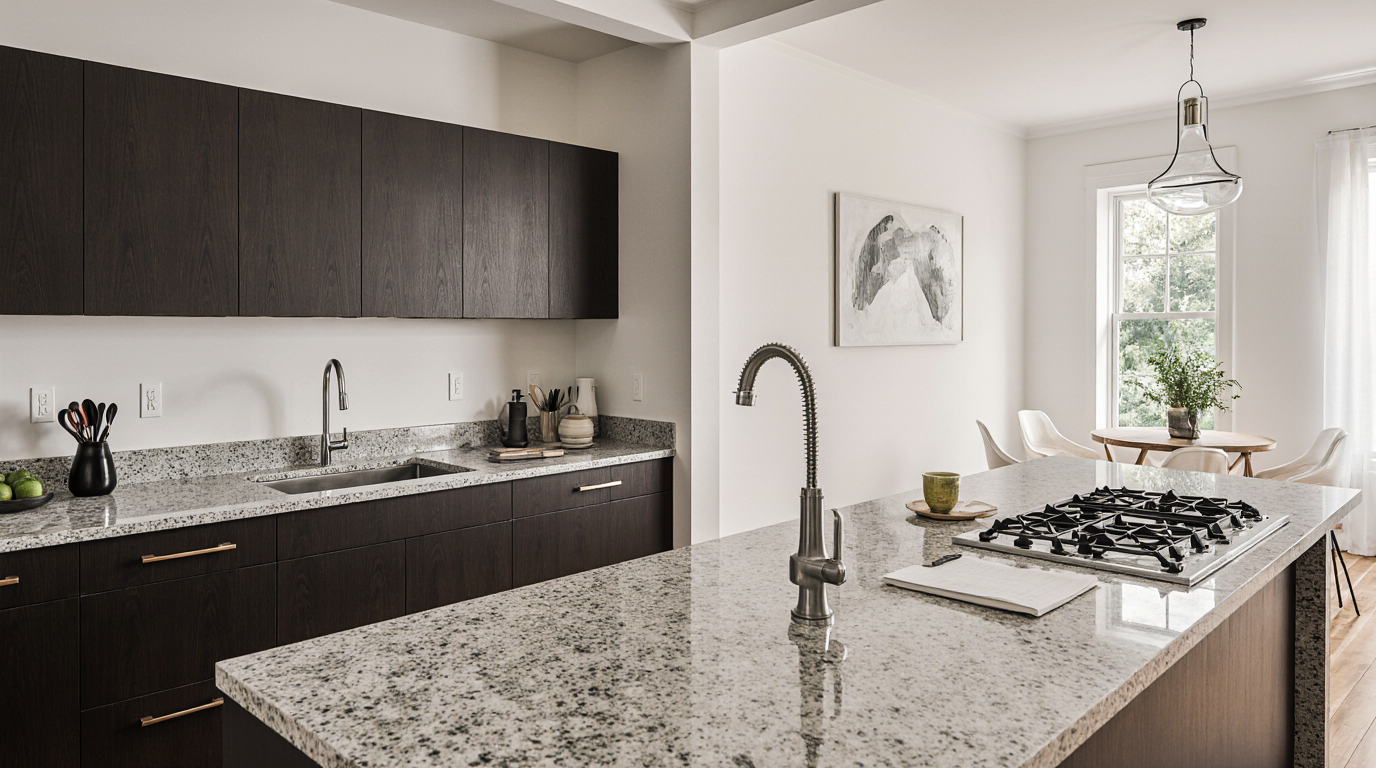
The client hesitated for three weeks over the quartz slab. They were trying to match a specific vein pattern they saw online for their Siesta Key condo. By the time they decided, the fabricator’s schedule was booked solid for the next six weeks, pushing their project completion past the start of the rental season. The problem wasn’t their indecision—it was that they focused on aesthetics before confirming the material's UV stability for a kitchen bathed in coastal sunlight.
Executive Summary for Sarasota Countertop Projects
From my direct experience managing countertop replacements across Sarasota County, the success of a project hinges less
From my direct experience managing countertop replacements across Sarasota County, the success of a project hinges less on the brand name and more on matching the material's technical specifications to the home's specific location—be it a mainland golf community or a waterfront property. A countertop that performs flawlessly in an inland home can degrade rapidly when exposed to the salt and UV conditions on Longboat Key. It's a nuance that generic advice misses entirely.
- Material Performance vs. Climate: The central challenge is selecting a surface that resists UV yellowing, humidity-driven staining, and salt air corrosion.
- HOA & Condo Board Approvals: In communities like Palmer Ranch or downtown condos, the logistics of slab delivery, cutting noise, and work hours require pre-approval that can add 2-4 weeks to your timeline.
- Fabricator Expertise: A fabricator's skill in sealing, seam placement, and edge finishing is more critical than the raw material's cost. Poor fabrication can ruin even the most expensive slab.
- Cost Transparency: The final cost to redo kitchen countertops often inflates due to overlooked needs like plumbing disconnects/reconnects, old countertop disposal, and structural support for heavier stones.
The Planning Failures That Inflate Countertop Costs
The most common financial pain points I see in Sarasota countertop projects stem from underestimating our environment's impact. Homeowners fall in love with a material in a showroom, not realizing its vulnerability to our specific climate. This initial oversight leads to premature wear, staining, or discoloration, forcing a costly replacement sooner than expected.
The Most Expensive Oversight: Ignoring UV and Humidity
I worked with a client in a beautiful Lido Key home with floor-to-ceiling windows. They chose a bright white quartz from a well-known brand for its clean, modern look. The problem was that the specific resin binder in that particular line was not rated for high UV exposure. Within two years, the sections of the counter that received direct afternoon sun had a noticeable yellow tinge compared to the shaded areas. The warranty was voided because the issue was environmental, not a manufacturing defect, forcing them to absorb the full cost of a second replacement.
The Countertop Replacement Process in Practice
A countertop redo in Sarasota is a multi-stage process that goes far beyond just picking a slab. It involves precise measurement, fabrication, demolition of the old surface, and careful installation, all while navigating local logistics. The timeline from final selection to finished installation typically runs from three to six weeks, contingent on material availability and the fabricator's schedule.
Selection Criteria for Sarasota Homeowners
When you're evaluating options, your checklist needs to be localized. Here are the filters I advise my clients in this area to use:
- UV Stability Rating: Ask for the manufacturer's data sheet on UV resistance, especially for quartz. This is non-negotiable for kitchens with significant natural light, common in our waterfront and modern architecture.
- Porosity and Sealing Requirements: For natural stones like marble or certain granites, confirm the recommended sealing frequency. Our high humidity can accelerate moisture absorption in poorly sealed porous stones, leading to staining.
- HOA/Condo Logistical Approval: Before paying for a slab, confirm your building or HOA's rules on delivery truck access, elevator usage for high-rises, and permissible hours for noisy work like on-site cutouts.
- Salt Air Resistance: For homes on the barrier islands, consider materials like high-grade quartz, porcelain, or specific granites that won't pit or degrade from constant exposure to salt-laden air.
Comparing Countertop Materials for the Sarasota Climate
Making a choice involves balancing aesthetics, budget, and long-term performance in our unique coastal environment. A cheap way to redo kitchen countertops might involve laminate, but the savings can be short-lived if the material isn't suited for our humidity. The average cost to redo kitchen countertops varies wildly based on these trade-offs.
| Material | Upfront Cost (per sq. ft.) | UV & Salt Air Resistance | Maintenance Level |
|---|---|---|---|
| Quartz (Engineered Stone) | $65 - $150+ | Varies by brand/resin; some yellow | Low |
| Granite | $50 - $130+ | Excellent | Medium (requires sealing) |
| Laminate | $25 - $60 | Poor (fades; can delaminate) | Low |
| Porcelain Slab | $70 - $160+ | Excellent (impervious to UV) | Very Low |
When a Full Slab Replacement Isn't the Right Choice
A full redo is not always the best path. If your existing countertops are structurally sound but simply dated (e.g., a 1990s laminate), and your budget is tight, countertop resurfacing or refinishing can be a viable interim solution. While not as durable as a new slab, it can provide a significant aesthetic upgrade for a fraction of the cost and is a practical choice for a property you plan to sell in the near future.
Safe Hiring and Installation Checklist
Vetting your installer and fabricator is as crucial as choosing the right stone. A beautiful, expensive slab can be ruined by improper templating, bad seams, or incorrect installation. The quality of the labor determines the final outcome.
- Verify the contractor holds both General Liability and Workers' Compensation insurance valid in Florida.
- Ask to see examples of their seam work, not just glossy photos of entire kitchens. A good seam is felt, not seen.
- Confirm they handle the entire process: template, fabrication, tear-out, installation, and plumbing reconnection coordination.
- For homes in Wind-Borne Debris Regions (common along the coast), ensure their installation methods for islands and peninsulas meet Florida Building Code anchoring requirements.
- Request a written quote that itemizes all costs: the slab, fabrication, edge profile, cutouts (sink, cooktop), tear-out, disposal, and plumbing. The average cost to upgrade kitchen countertops can jump 20% from these “extras.”
- Check their experience with your specific material; installing a porcelain slab requires different tools and techniques than installing granite.
Decisions That Determine the Final Outcome
The trajectory of your countertop project is set by a few key decisions made at the very beginning. I've seen homeowners save thousands and avoid months of frustration by getting these early steps right, while others get locked into a problematic project by rushing the planning phase.
The Moment Most People Get It Wrong
The critical mistake is choosing your exact slab before you have a confirmed, vetted installer. Homeowners often find a slab they love at a stone yard, purchase it, and then shop for a fabricator, assuming all installers are the same. They then discover their chosen fabricator is booked for months, or worse, isn't skilled with that specific type of stone. The correct sequence is to select your fabricator first, get on their schedule, and then have them guide you to their trusted suppliers to select and tag your actual slab.
Practical Answers About Countertop Projects in Sarasota
Navigating the local specifics of a countertop replacement can be frustrating. Here are answers to common operational hurdles I encounter with clients in the Sarasota area.
What Are Typical HOA Requirements for a Redo?
Most master-planned communities (e.g., Lakewood Ranch, The Founders Club) and condo associations require a formal submission for any interior renovation. This often includes providing your contractor's license and insurance, a description of the work, and a schedule. The key bottleneck is approval time, which can range from one week to over 30 days. You must factor this administrative delay into your project timeline before any work begins.
How Does the Florida Building Code Affect My Island?
For homes in high-velocity hurricane zones (HVHZ), which includes much of coastal Sarasota, the Florida Building Code has specific requirements for anchoring. A large, heavy kitchen island could potentially become a projectile in a major storm if not properly secured. Your installer must anchor the island cabinetry securely to the subfloor, and the countertop must be adhered to the cabinets with high-grade construction adhesive, not just silicone.
Is On-Site Cutting Allowed in My Condo?
This is a major point of contention in high-rise and multi-family buildings. Cutting stone, especially for sink or cooktop openings, creates significant dust and noise. Many downtown Sarasota condo associations explicitly forbid on-site cutting inside the unit. This means all fabrication must be done off-site at the fabricator's shop, which requires extremely precise digital templating to ensure a perfect fit upon delivery. Always confirm your building’s policy before signing a contract.