In Sarasota County, a standard building permit for a kitchen remodel can take anywhere from 2 to 4 weeks for review, and that’s before any potential revisions. For a homeowner aiming to complete a renovation between tourist seasons, this administrative timeline isn't just a number; it's a critical factor that dictates material orders and labor scheduling. Misjudge it, and your 'competitively priced' quartz countertop project can be derailed by costly delays and storage fees before a single cut is made.
Executive Summary: Decoding Quartz Countertop Costs in Sarasota
From my direct experience managing countertop projects across Sarasota, the advertised per-square-foot price for quartz
From my direct experience managing countertop projects across Sarasota, the advertised per-square-foot price for quartz is merely a starting point. The final invoice is heavily influenced by factors unique to our coastal, high-end market. The true cost is a function of material grade, fabrication complexity, and site-specific logistics, particularly for waterfront or deed-restricted communities. Homeowners often underestimate how much these local variables can add to the base price.
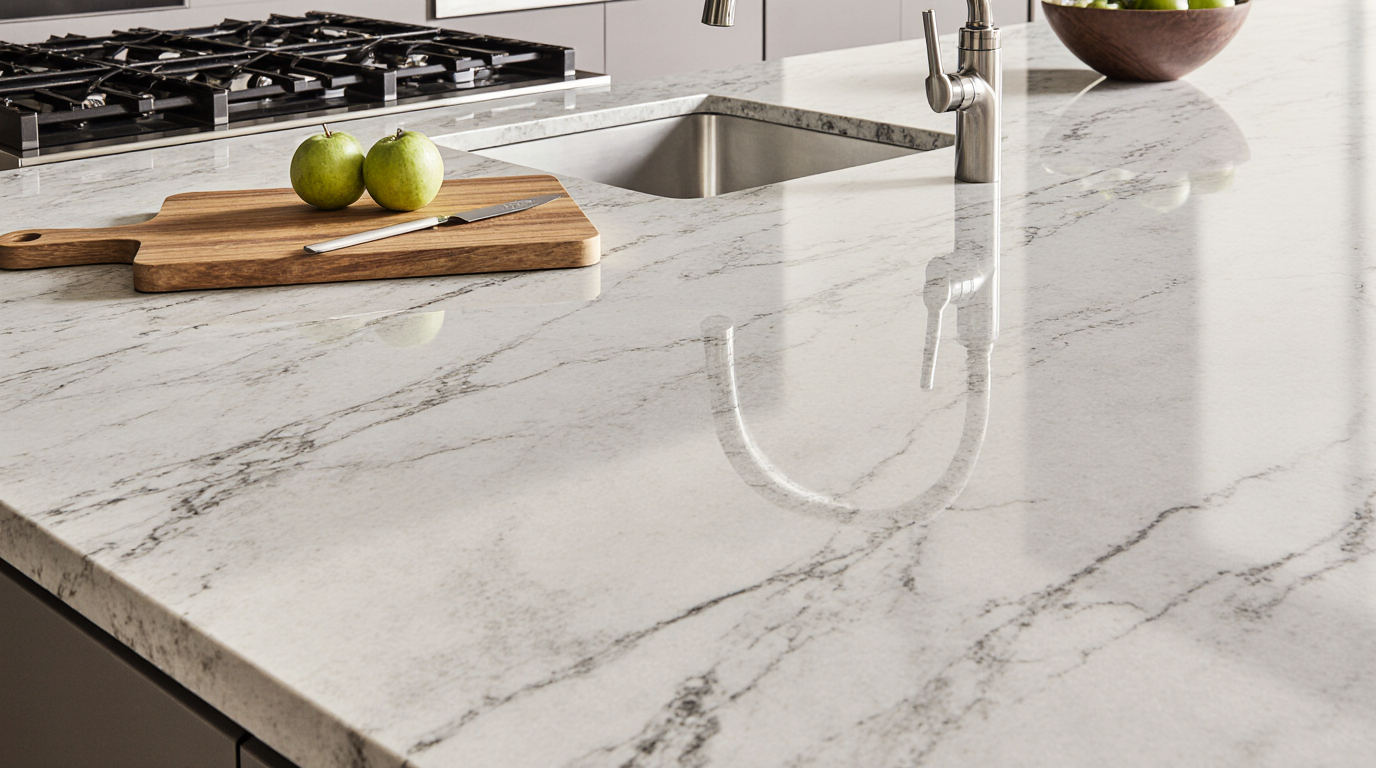
- Material Grade vs. Brand: Not all quartz is the same. The price difference between a basic builder-grade slab and a premium brand like Cambria or Silestone reflects higher quality resins, more complex veining, and superior UV resistance—a non-negotiable for sun-drenched Sarasota kitchens.
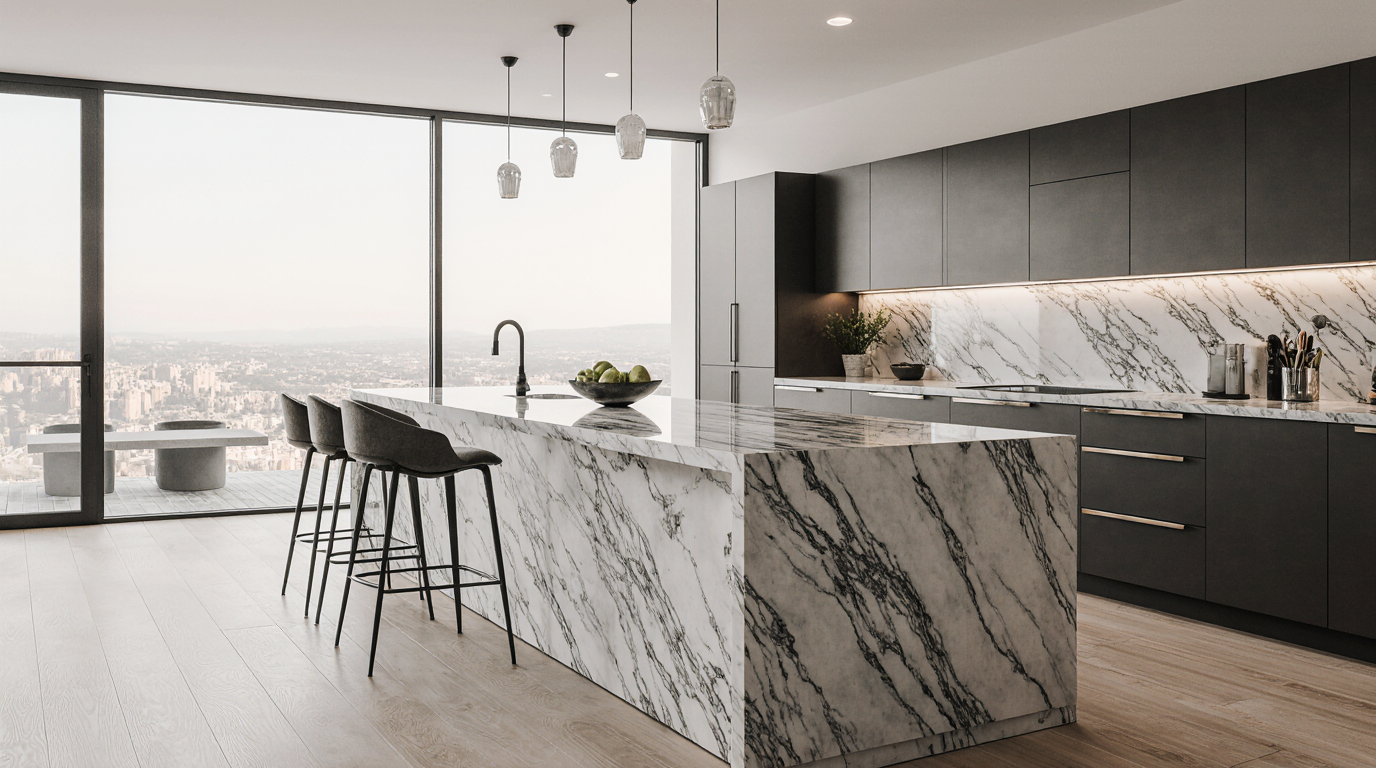
- Fabrication Complexity: The cost escalates with every cut, seam, and edge profile. A simple galley kitchen with a standard eased edge will be significantly cheaper than a kitchen with a waterfall island, mitered edges, and multiple sink cutouts.
- Logistical Premiums: Installing on Longboat Key or in a downtown high-rise involves navigating HOAs, booking service elevators, and adhering to strict work hours. These logistical hurdles translate directly into higher labor costs compared to a straightforward single-family home installation in an area like North Port.
- Installer's Insurance & Licensing: Reputable Sarasota installers carry robust liability and workers' compensation insurance, especially when working in multi-million dollar properties. This overhead is a necessary cost built into their pricing and protects you from liability.
The Planning Failures That Inflate Your Final Bill
The most significant cost overruns I see in Sarasota projects stem from decisions made—or not made—long before the quartz slab is even selected. These are not fabrication errors; they are planning failures that trap homeowners into unexpected expenses. A common mistake is finalizing cabinet layouts without consulting the countertop fabricator about slab sizes and seam placement.
The Most Expensive Oversight: Ignoring Slab Dimensions
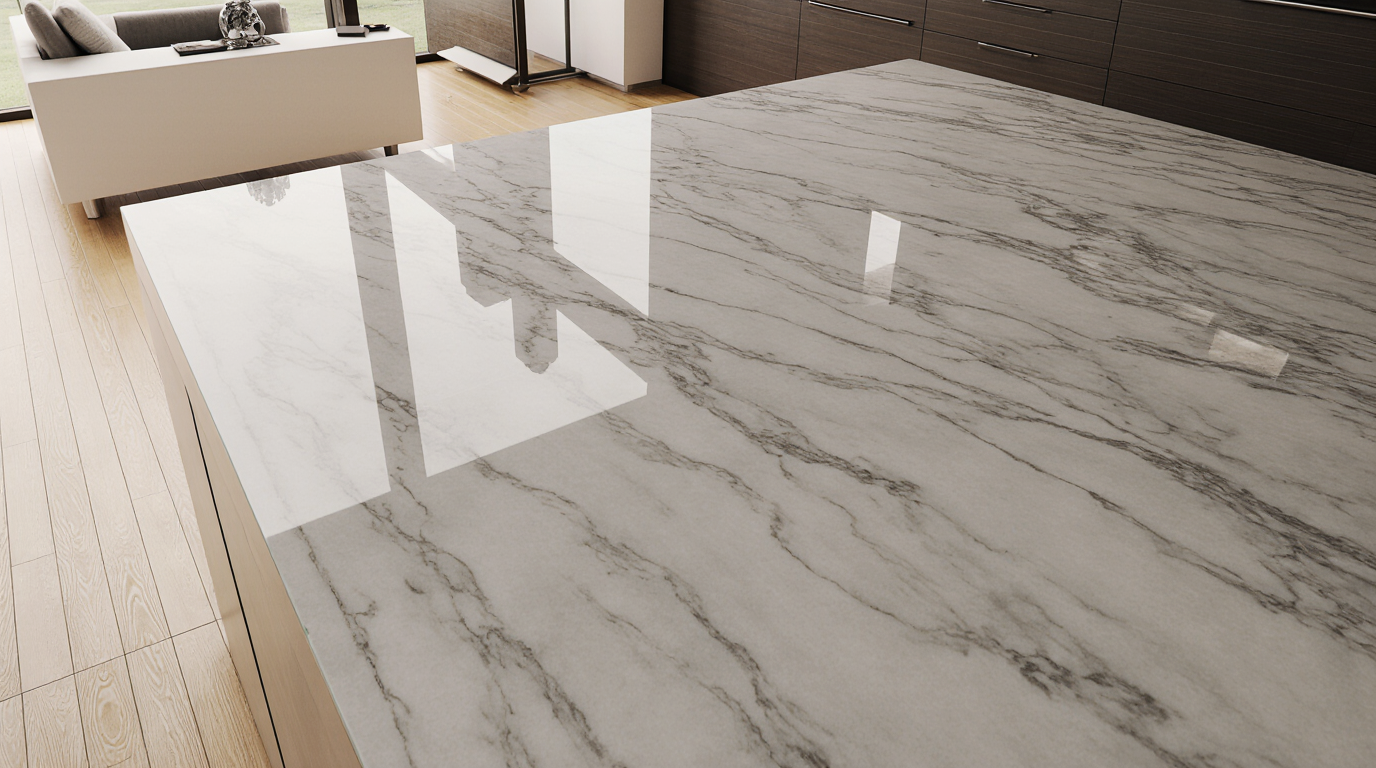
A client in a beautiful Palmer Ranch home had their heart set on a massive 12-foot island with no seams. Their cabinet maker built the island to their exact specification. The problem? Most standard quartz slabs are around 120 inches (10 feet) long; jumbo slabs are available but come at a premium and in fewer designs. By designing the island before verifying slab availability, they were forced to either pay a 30-40% premium for a jumbo slab in a color that was their second choice or accept a seam they had explicitly tried to avoid. The mistake wasn't the design; it was the sequence of decisions.
How a Quartz Project Unfolds in Sarasota
Getting quartz countertops installed is a multi-stage process that begins with your design and ends with a final walkthrough. First, you'll select a color and material grade from a fabricator's showroom or a slab yard. Once you commit, the fabricator schedules a templating appointment where they create a precise digital or physical model of your countertops. This template is then used to program the CNC machinery that cuts your slab. Fabrication, including cutting sink holes and polishing edges, takes place off-site. The final step is the on-site installation, which typically takes a few hours to a full day, followed by a 24-hour curing period for adhesives.
Selection Criteria for Sarasota Homeowners
- UV Resistance Rating: For kitchens with large windows or lanai pass-throughs, common in waterfront homes in Bird Key, ask for quartz with high-grade, UV-stable resins to prevent yellowing over time. Not all brands offer this, and it's a critical question to ask.
- HOA Compliance Documentation: Before signing a contract, confirm the fabricator can provide all necessary insurance certificates and licensing documents required by your HOA, especially in master-planned communities like Lakewood Ranch. A delay because of paperwork can be costly.
- Seam Placement Philosophy: Ask the fabricator to show you their seam plan on the template *before* they cut the stone. A good fabricator will try to place seams in less conspicuous areas and match the veining as closely as possible, a skill that separates craftsmen from basic installers.
- Salt Air Considerations: If you live on a barrier island like Siesta Key, discuss the adhesives and sealants used. While quartz itself is non-porous, the installation materials must be resistant to the corrosive effects of salt air to ensure a lasting bond.
Comparing Quartz with Other Countertop Materials in a Coastal Climate
Quartz is a fantastic choice for Sarasota, but it's not the only one. Understanding how it stacks up against other popular materials like granite and quartzite in our specific environment is key to making an informed investment. The primary trade-offs involve maintenance, durability against UV light, and heat resistance.
| Feature | Engineered Quartz | Granite | Quartzite |
|---|---|---|---|
| Maintenance (Stain & Salt Air) | Excellent. Non-porous, requires no sealing. Highly resistant to stains and moisture. | Good. Requires periodic sealing (typically annually) to prevent staining from spills and moisture penetration. | Very Good. Less porous than granite but still requires sealing to be fully stain-proof. |
| UV Resistance & Fading | Varies. High-quality quartz has UV inhibitors, but lower-quality or dark-colored quartz can yellow or fade with direct, prolonged sun exposure. | Excellent. As a natural stone, its color is stable and will not fade from UV exposure. | Excellent. Color is stable and highly resistant to fading from sunlight. |
| Cost per Square Foot (Installed) | $65 - $150+. Designer brands and complex patterns are on the higher end. | $50 - $130+. Price varies widely based on the rarity of the stone. | $75 - $200+. Generally more expensive than granite and many quartz options due to its durability and hardness. |
When Quartz Isn't the Right Choice
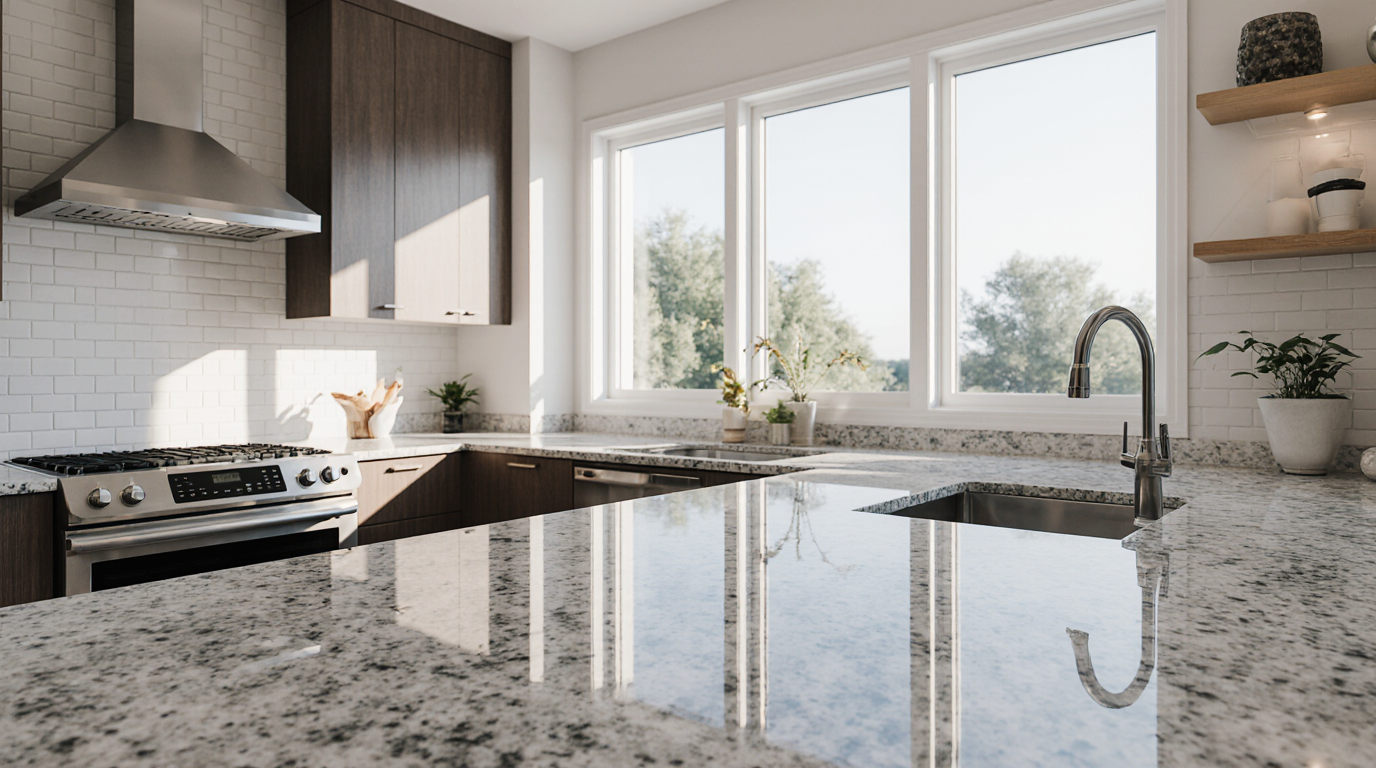
Despite its popularity, quartz has a key vulnerability: heat. The resins used to bind the quartz crystals can be damaged by thermal shock from a hot pan placed directly on the surface, potentially causing discoloration or cracking. If you are a serious home chef who frequently moves hot pots and pans off the stove, or if the countertop will be in an outdoor kitchen exposed to intense, direct heat, a natural stone like granite might be a more forgiving and practical choice.
A Safe Hiring Checklist for Your Sarasota Project
Choosing the right fabricator is as important as choosing the right stone. A great price on a premium slab means nothing if the installation is flawed. I've seen beautiful, expensive material ruined by poor templating and sloppy seams. This checklist helps you vet potential installers specifically for the Sarasota market.
- Verify they are licensed and insured in Sarasota County. Ask for their certificate of insurance; don't just take their word for it.
- Ask to see examples of their seam work, not just glossy photos of entire kitchens. A close-up of a well-matched seam speaks volumes.
- Confirm they do their own fabrication and installation. Some companies subcontract labor, which can lead to accountability issues if something goes wrong.
- Inquire about their process for handling installations in condos or communities with strict HOAs. An experienced local installer will have a clear, established protocol.
- Check if their quote includes all costs: material, fabrication, tear-out of old tops, installation, plumbing reconnection (many do not include this), and sales tax.
- Discuss their warranty. Does it cover the material, the installation, or both? Understand the limitations.
- Ask for a reference from a recent project in a building or neighborhood similar to yours (e.g., a high-rise, a waterfront home).
The Decisions That Truly Determine Your Outcome
A successful countertop project hinges on a few critical decisions that homeowners often rush. The focus tends to be on color, but the structural and logistical choices have a much greater impact on the final cost and long-term satisfaction. The most important decision is choosing a fabricator based on their craftsmanship and local reputation, not just the lowest bid.
The Exact Moment Most People Get It Wrong
The critical mistake happens right after receiving multiple quotes. Most people lay the bids side-by-side and immediately gravitate toward the lowest number. They fail to question *why* it's lower. Is the fabricator using a lower-grade slab? Are they planning an unsightly seam to save material? Are they cutting corners on insurance? Instead of asking "Who is cheapest?", the right question is "What is included—and excluded—in this price?" A detailed, line-item quote from a slightly more expensive, reputable fabricator is almost always the safer and ultimately better-value investment.
Practical Answers About Countertop Operations in Sarasota
Navigating the local specifics of a countertop installation can be frustrating. Beyond choosing a color, you'll encounter logistical and regulatory hurdles unique to our area. Understanding these up front can save you time and money.
What are the HOA Requirements in Communities like Lakewood Ranch?
In master-planned communities, the HOA's Design Review Committee often needs to approve major renovations. While changing an interior countertop color might not require approval, the project itself (involving workers, trucks, and potential noise) does. Your installer must provide proof of liability insurance ($1 million is a common minimum), name the HOA as an additional insured, and agree to abide by rules regarding work hours (e.g., no work after 5 PM or on weekends) and parking. Failing to vet your installer's ability to comply can halt your project.
How Does the Florida Building Code Impact My Installation?
For homes in wind-borne debris regions, which includes all of Sarasota, the Florida Building Code has implications for how fixtures are secured. While the code is more focused on cabinetry anchorage, a reputable installer will ensure that heavy stone countertops on islands are properly supported and secured to the cabinet base to prevent shifting or becoming a hazard during a major storm event. This is less about a specific permit for the countertop itself and more about the installer following best practices for structural integrity in a hurricane-prone region.
Are There Hidden Costs for Installations on Barrier Islands?
Yes. Installing on Siesta Key, Longboat Key, or Lido Key almost always carries a surcharge. This "island fee" covers the crew's extra travel time due to traffic, particularly during tourist season, and the logistics of maneuvering large trucks and delicate slabs across bridges and into tight-access properties. It's not a junk fee; it's a real operational cost for the fabricator. Expect this to add a few hundred dollars to the final bill, a detail that should be transparently listed on your quote.