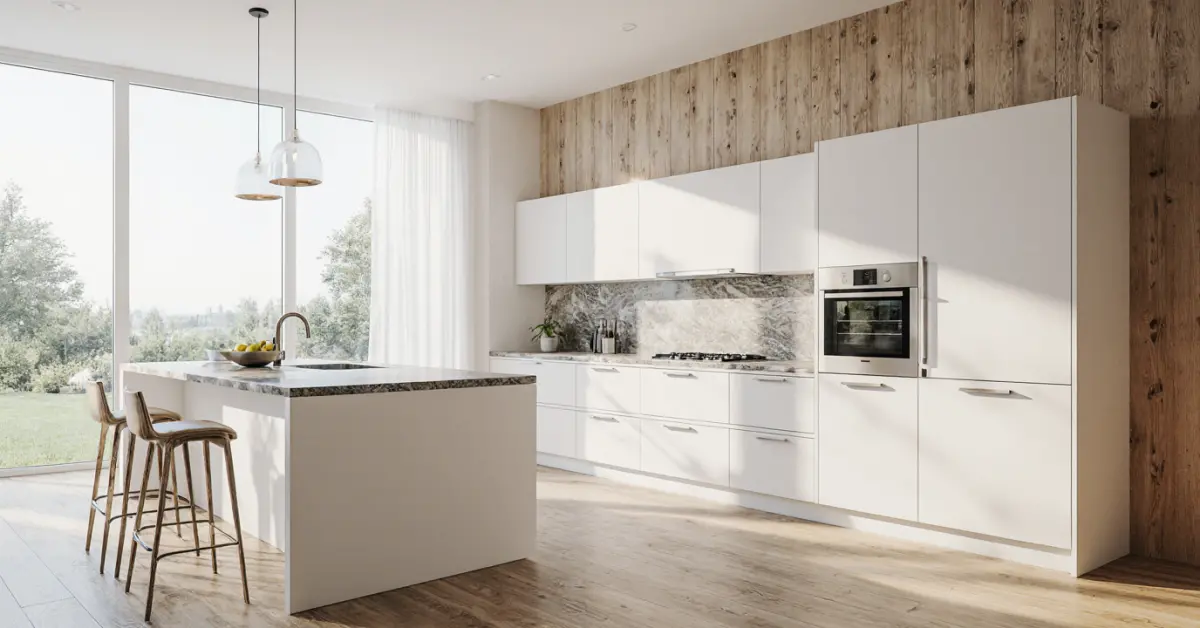
Executive Summary: Navigating Sarasota's Prefab Cabinet Market
From my direct experience managing kitchen remodels from Palmer Ranch to Siesta Key, the biggest mistake with prefab
From my direct experience managing kitchen remodels from Palmer Ranch to Siesta Key, the biggest mistake with prefab cabinets isn't about style, but material science. The Sarasota climate is unforgiving, and a low-cost cabinet made with standard-grade particleboard is a short-term solution that leads to long-term regret. The key is to find prefab lines that use marine-grade or exterior-grade plywood boxes, even if it means a slightly higher upfront cost. This single decision is the most important factor in preventing the warping, delamination, and mold growth I consistently see in projects that prioritized price over climate-appropriate construction.
- Material Core is Non-Negotiable: Verify the cabinet box (carcass) construction is plywood, not MDF or particleboard. Ask for the spec sheet.
- Finish Durability: Look for catalyzed conversion varnish or 2K polyurethane finishes, which offer superior moisture resistance compared to standard lacquer.
- Hardware Grade: Insist on stainless steel or zinc-alloy hardware with a corrosion-resistant coating to combat salt air, especially west of the Trail.
- Code-Compliant Installation: Ensure your installer anchors upper cabinets to meet Florida Building Code requirements for wind load, a step often overlooked with discount installations.
The Critical Planning Failures I See Weekly
The allure of "discount kitchen cabinets" is powerful, but the savings are often an illusion created by overlooking critical planning steps. The most common failure is assuming all prefab cabinets are created equal and that a lower price tag is the primary metric for a smart decision. This mindset completely ignores the environmental stressors unique to our coastal location.
The Most Expensive Failure: Ignoring the Humidity-Material Mismatch
The costliest mistake I repeatedly encounter is a client choosing a cabinet based on a door style, like the popular shaker style, without ever questioning the core material. They see a beautiful finish in a showroom but don't realize the substrate is low-density particleboard. Within two to three years in a non-climate-controlled seasonal condo or a home near the bay, I see doors that no longer close properly, drawer bottoms that have swelled and sagged, and the unmistakable beginnings of mold along the toe-kicks. The cost to tear out and replace these failed cabinets, often including new countertops, far exceeds the initial savings.
How Prefab Cabinet Projects Actually Work in Sarasota
A successful prefab cabinet project is less about simple purchasing and more about coordinated logistics and verification. The process begins with precise measurements of your space, which is far more critical with fixed-size prefab units than with custom work. Once a layout is confirmed, the focus shifts to sourcing a product line that meets the specific durability requirements for our climate.
Selection Criteria for Sarasota Homeowners
When evaluating prefab options, your checklist must be localized. Generic advice from national blogs won't protect your investment here. Base your decision on these Sarasota-specific factors:
- Plywood Box Construction: This is the first and most important filter. If the supplier cannot confirm the boxes are made from plywood (ideally exterior-grade), walk away.
- HOA Compliance Pre-Check: If you live in a community like Lakewood Ranch or The Landings, get a copy of the design guidelines *before* you shop. Many have specific requirements for finish quality and style that can disqualify many discount cabinet lines.
- Stock and Lead Time Verification: For seasonal residents, a two-week shipping delay can derail an entire project. Get a written confirmation of in-stock status and local warehouse availability before placing a deposit.
- Installer's License and Insurance: Verify your installer carries a license recognized by Sarasota County and has liability insurance that covers work in multi-unit condo buildings, which often have stricter requirements.
A Practical Comparison: Prefab vs. Alternatives in Sarasota
Choosing prefab cabinets is a trade-off. It offers speed and cost advantages but sacrifices customization and, if chosen poorly, durability. Understanding how it stacks up against other common options like refinishing or custom work is essential for making an informed decision that aligns with your property's value and your long-term goals.
| Factor | Quality Prefab Cabinets | Refinish Kitchen Cabinets | Full Custom Cabinets |
|---|---|---|---|
| Upfront Cost | Moderate | Low | High |
| Project Timeline | 2-6 weeks | 1-2 weeks | 12-20+ weeks |
| Humidity/Salt Air Resistance | Good to Excellent (if plywood) | Poor to Fair (depends on original material) | Excellent (materials specified for climate) |
| Layout Flexibility | Limited to standard sizes | None (existing layout) | Unlimited |
When Prefab Is the Wrong Choice
Prefab cabinets are not the right solution if your kitchen has an unusual layout with non-standard angles or dimensions. The reliance on standard box sizes (multiples of 3 inches) means you'll be forced to use wide filler strips, which wastes space and compromises the high-end look many Sarasota homeowners expect. In these cases, the functional and aesthetic compromises outweigh the cost savings, and custom or semi-custom cabinets are a much better investment.
Safe Hiring and Purchasing Checklist for Sarasota
To avoid the pitfalls of the local market, you need a checklist that goes beyond aesthetics. This is about verifying the structural integrity and logistical viability of your project before you commit financially.
- Request a detailed specification sheet for the cabinet line, and look for terms like "all-plywood construction," "CARB 2 compliant," and "catalyzed varnish finish."
- Ask for local references, specifically from clients in waterfront or barrier island properties like those on Longboat Key.
- Confirm that the quote includes all costs: delivery, assembly, installation, hardware, trim pieces, and sales tax. Hidden fees are common with discount suppliers.
- If you're in a designated High-Velocity Hurricane Zone (HVHZ), which includes much of coastal Sarasota, ensure the installation method for upper cabinets is specified to meet wind-load requirements.
- Get the HOA approval timeline in writing from your association manager; a typical design review in some Sarasota communities can take 30 to 45 days, which must be factored into your project schedule.
- Verify the installer's credentials through the Sarasota County licensing portal, not just by their word.
- Obtain a sample door and leave it in your garage or lanai for a week to see how it reacts to the ambient humidity before placing your full order.
Decisions That Determine the Outcome of Your Project
A successful remodel hinges on a few key decisions made at the very beginning. With prefab cabinets, the most crucial choice is prioritizing material quality over superficial features. I've seen clients agonize over a specific shade of white for weeks, only to spend five minutes glancing at the spec sheet that determines if the cabinets will last.
The Exact Moment the Majority Gets It Wrong
The critical error happens in the showroom. A customer is presented with two shaker style doors that look identical. One is part of a cabinet line that is 25% cheaper. The salesperson highlights the savings, the soft-close drawers, and the quick availability. The mistake is accepting this surface-level comparison without asking the one question that matters in Florida: "What is the box and drawer material?" If the answer for the cheaper option is MDF or particleboard, the comparison is invalid. You are not comparing two similar products; you are comparing a 5-year cabinet with a potential 20-year cabinet.
Practical Answers for Operations in Sarasota
Navigating a kitchen remodel here involves more than just choosing cabinets. It requires an understanding of local regulations, building codes, and community-specific rules that can impact your project's timeline and cost.
How Condo Board Approvals Impact Timelines
In high-rise condos along Gulf Stream Avenue or on Siesta Key, the condo association's approval process is often more arduous than the city's. They typically require vetting of the installer's insurance, limit work hours (e.g., 9 AM to 4 PM, no weekends), and may need to approve the material specifications to ensure they meet building standards. This process can add 3-4 weeks to your project *before* any work can begin.
Florida Building Code and Cabinet Installation
The Florida Building Code has specific requirements for anchoring fixtures in coastal areas. While a handyman might just screw cabinets into the drywall, a professional installer following code will ensure upper cabinets are anchored directly to structural studs with appropriately rated fasteners. This is not just a suggestion; it's a safety requirement to prevent them from becoming projectiles in a high-wind event. Proper installation may add a few hundred dollars to the labor cost but is essential for safety and compliance.
Waste Disposal and Remodeling Debris in Sarasota County
Disposing of old kitchen cabinets and construction debris isn't as simple as leaving it on the curb. Sarasota County requires construction debris to be handled separately from household trash. Your installation quote must include the cost of a dumpster or hauling services to a proper construction and demolition (C&D) landfill. A surprisingly common issue I see is homeowners being left with a pile of old cabinets because this was not explicitly included in their agreement with a low-bid installer.