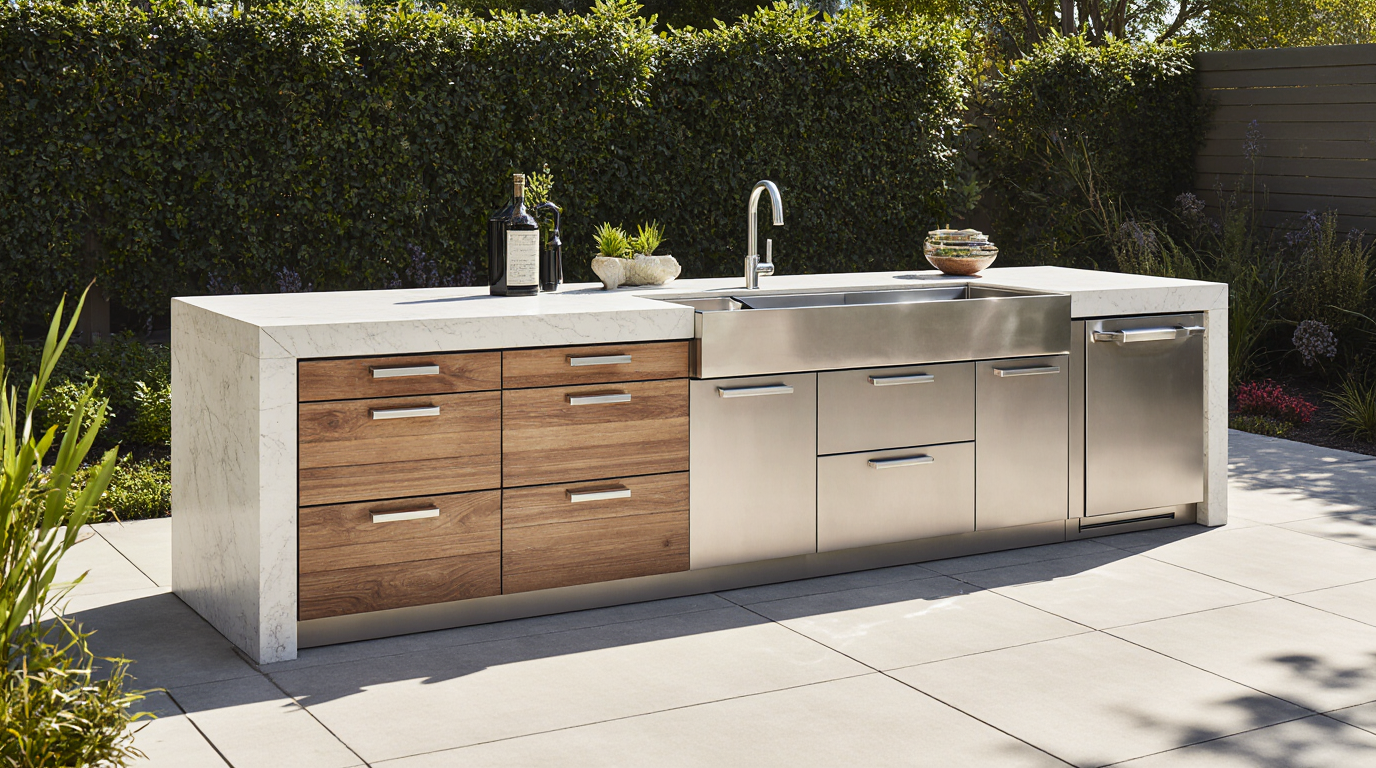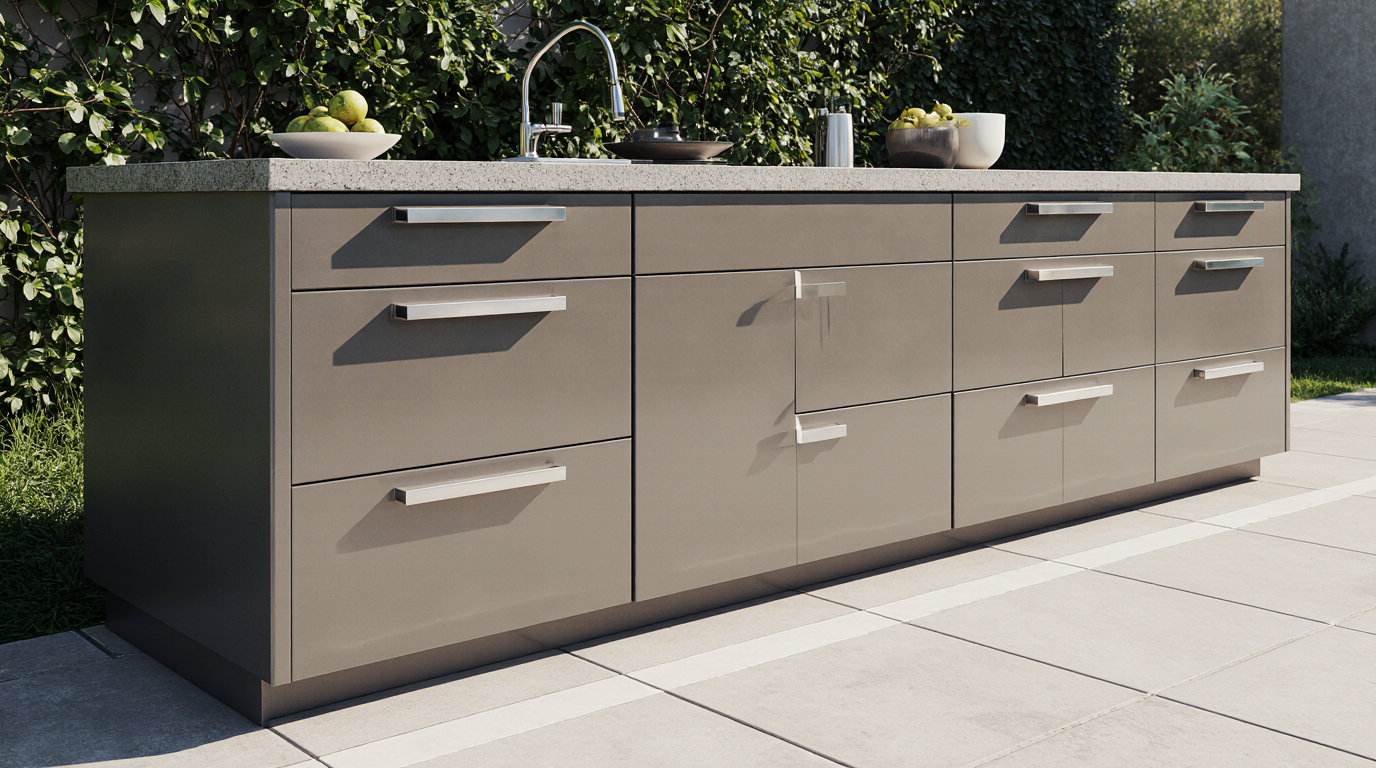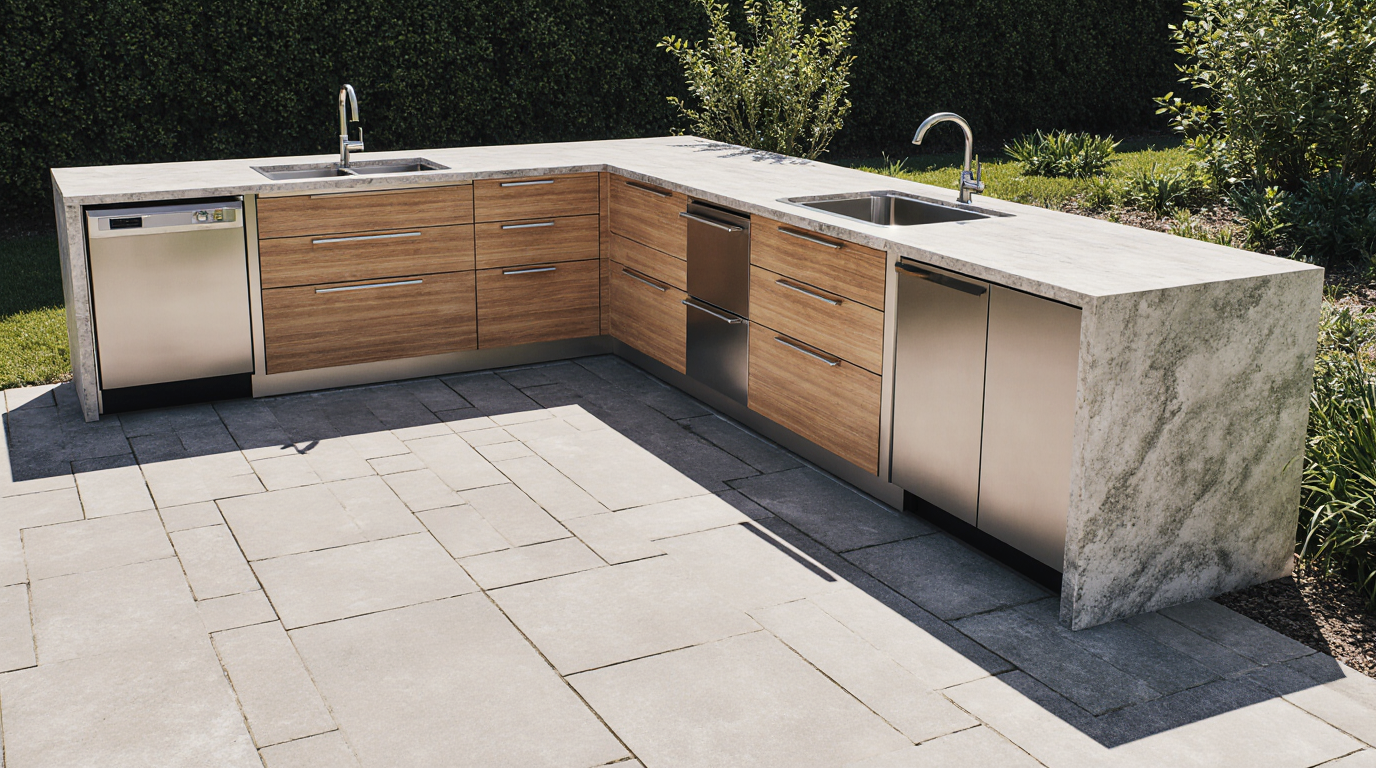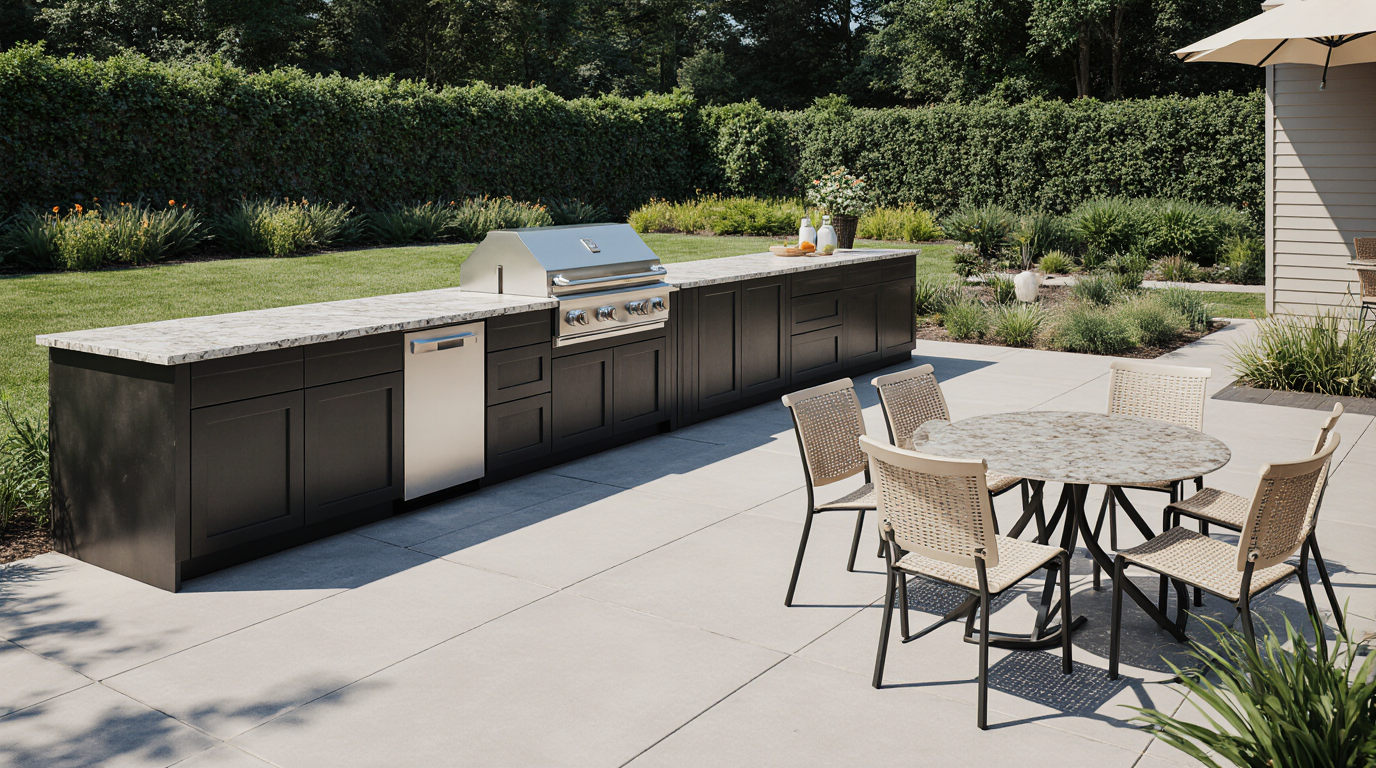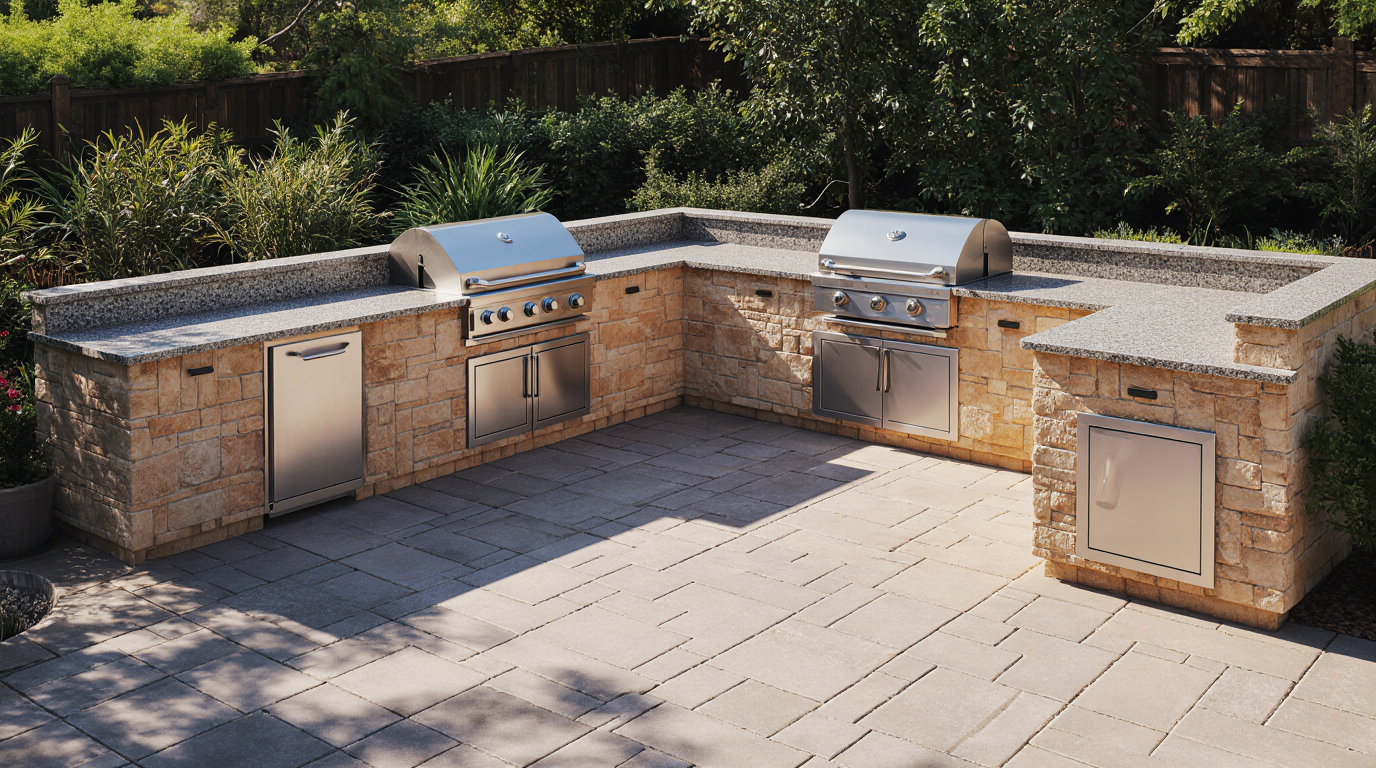
In Sarasota County, any outdoor kitchen project involving new plumbing or electrical lines requires a permit, a process that can add 4 to 6 weeks to your timeline before a single cabinet is installed. For a seasonal resident hoping to enjoy their new space, that delay isn't just an inconvenience; it's the difference between hosting barbecues under the Florida sun and looking at a construction zone for half the winter. This bureaucratic friction is precisely why the most critical decisions about your outdoor kitchen are not about aesthetics, but about material science and structural planning that account for our unique coastal environment from day one.
Executive Summary: Building for Sarasota's Coastal Climate
From my direct experience engineering and building outdoor living spaces from Casey Key to The Concession, the central
From my direct experience engineering and building outdoor living spaces from Casey Key to The Concession, the central challenge is not design but durability. An outdoor kitchen in Sarasota is a constant battle against salt, sun, and moisture. Success hinges on specifying materials and construction methods that anticipate this assault, not just react to it. It’s about creating a functional, beautiful space that doesn’t become a maintenance nightmare in three years.
- Material Selection is Paramount: The choice between marine-grade polymers (like HDPE), powder-coated stainless steel, and teak is not stylistic; it's a technical decision based on exposure to salt air and direct sun.
- Ventilation is a Non-Negotiable Safety Feature: Improperly vented outdoor grill cabinets can trap gas, creating a serious explosion risk. This is a primary focus of Sarasota building inspections.
- HOA Approvals Dictate Timelines: In communities like Lakewood Ranch or Palmer Ranch, the Design Review Committee (DRC) approval process for structures and finishes can be more time-consuming than the build itself.
- Structural Integrity for Wind Loads: The Florida Building Code's requirements for wind-borne debris regions impact how cabinets, countertops, and especially overhead structures are anchored.
The Planning Failures That Compromise Outdoor Kitchens
The most common missteps I see in Sarasota projects happen long before construction begins. They stem from underestimating our environment. Clients see a beautiful design in a magazine or online and want to replicate it, not realizing the materials shown would fail spectacularly within a few seasons on Longboat Key.
A classic error is prioritizing the appliance package over the cabinet system. A client will invest in a top-of-the-line grill but house it in a modular outdoor kitchen cabinet system made of inferior-grade stainless steel (like 430 grade instead of 304 or, ideally, 316 for coastal use). Within a year, rust blooms appear, especially at the welds and fastener points, a direct result of our salt-laden humidity.
The Most Expensive Failure: Ignoring Water Management
The costliest mistake I’ve had to remedy is a design that lacks proper water management. This isn't just about rain. It's about humidity, condensation from refrigerators and ice makers, and water from washing surfaces. A beautiful custom outdoor kitchen with a flat, unsloped countertop and no dedicated drainage becomes a breeding ground for mold and mildew, and it slowly destroys the cabinet interiors and undermines the appliance electronics. I was called to a project on Siesta Key where a stunning granite countertop was installed perfectly level on a wood-framed base. After two years, the plywood substrate had delaminated and rotted from trapped moisture, requiring a complete tear-out of the cabinets and the expensive stone.
The Reality of the Building Process in Sarasota
Building an outdoor kitchen here is a multi-stage process involving design, material specification, permitting, and installation. It's not just about assembling boxes. The process starts with a site evaluation to understand sun exposure, prevailing winds, and proximity to saltwater, which dictates material choices and structural requirements.
Once a design is finalized, shop drawings are produced for custom outdoor cabinets, and a permit package is submitted to Sarasota County if any gas, electrical, or plumbing work is involved. This is a critical checkpoint. The county inspectors are rigorous about gas line installation and proper ventilation for built-in grills, and they will fail an inspection for improper clearances or lack of insulated jackets where required.
Selection Criteria for a Sarasota-Proof Kitchen
- Material Grade Certification: Ask for proof of material specifications. For stainless steel, demand 304 grade as a minimum and 316 (marine grade) for any home on or near the water. For polymer cabinets, ensure it's high-density polyethylene (HDPE) that is UV-stabilized.
- Hurricane-Rated Anchoring: The system for securing the cabinets and countertops must comply with local wind load requirements. This is especially vital for homes in designated flood zones or on the barrier islands.
- Experience with Local HOAs: The builder must have a track record of successful submissions to major Sarasota-area HOAs. They will know the specific aesthetic guidelines for places like The Founders Club or Prestancia.
- Integrated Pest Management: The design should minimize voids and crevices where pests can nest. This includes sealed toe-kicks and proper flashing where the structure meets the house.
Comparing Cabinet Systems for the Florida West Coast
The choice of cabinet material is the single most important factor determining the lifespan and maintenance requirements of your outdoor kitchen. While many options exist, only a few are truly viable for the Sarasota climate. The trade-offs are significant and involve more than just initial cost.
| Material System | Upfront Cost | Durability in Salt Air | Maintenance Requirement |
|---|---|---|---|
| Marine-Grade Polymer (HDPE) | High | Excellent (Impervious) | Low (Cleaning only) |
| Powder-Coated Stainless Steel | High | Good (Relies on coating integrity) | Low to Medium (Inspect for chips) |
| Teak or Ipe Wood | Very High | Good (Requires sealing) | High (Annual oiling/sealing) |
When a Custom Outdoor Kitchen Isn't the Right Choice
A fully custom, built-in outdoor kitchen is a significant investment. It is not the right choice for homeowners who anticipate moving within the next 3-5 years. Unlike an indoor kitchen renovation, an outdoor kitchen's ROI is less predictable and highly dependent on the buyer's lifestyle. In these cases, high-quality modular outdoor kitchen cabinets or a premium freestanding outdoor grill cabinet and cart offer flexibility and can be taken with you, preserving the investment without tying it to the property.
A Safe Hiring Checklist for Your Project
Hiring the right team in Sarasota goes beyond looking at a portfolio of pretty pictures. You need a contractor who understands the specific technical challenges of building durable structures in our corrosive coastal environment.
- Verify they hold a Florida state license (a Certified Building Contractor or a specialty license) and carry both general liability and worker's compensation insurance.
- Ask for at least three local references for outdoor projects completed more than two years ago. This allows you to see how their work holds up over time.
- Confirm their familiarity with the Florida Building Code, particularly Chapter 16 on structural design for wind loads. Ask how they anchor their structures.
- Request a detailed material specification sheet in the contract. Vague terms like “stainless steel” are not enough; it must specify the grade (e.g., 304 or 316).
- Discuss their process for HOA submittals. An experienced local contractor will have a streamlined process for dealing with the architectural review boards common in Sarasota.
- Ensure the contract includes a clear statement on who is responsible for pulling permits and scheduling inspections with Sarasota County.
- Clarify the warranty, not just on the cabinets themselves but on the installation and labor. Look for a warranty that covers issues related to our specific climate, like corrosion or warping.
Decisions That Determine the Final Outcome
The success of an outdoor kitchen project in this region is defined by a few key decisions made early in the process. The first is accepting that materials suitable for inland Florida are often unsuitable for coastal Sarasota. The upcharge for marine-grade materials, which can be 20-30% higher, is not an upgrade; it's a baseline requirement for longevity.
The second critical decision is designing for function and environment, not just for looks. This means planning for adequate ventilation, proper drainage, and easy access for cleaning and maintenance. A common pattern I've seen is clients falling in love with a design that has tight seams and complex trim, which looks great initially but becomes impossible to clean and creates pockets for moisture and salt to accumulate.
The Exact Moment the Majority Gets It Wrong
Most homeowners make their critical mistake the moment they receive quotes. They compare bids based on the bottom-line price without scrutinizing the material specifications and fastening systems. The correct approach is to disqualify any bid that does not explicitly detail the grade of stainless steel (316 for waterfront), the type of polymer (UV-stabilized HDPE), and the fastener material (316 stainless steel screws and bolts). A cheaper quote often hides inferior materials that will cost far more in repairs and replacement down the road. I worked with a client in Harbor Acres who chose a lower bid that saved them about $4,000 upfront. Within 18 months, every hinge and drawer slide had seized with rust, and the cabinet faces were showing signs of corrosion. The cost to replace the hardware alone negated the initial savings.
Practical Answers for Building in Sarasota
Navigating the local regulations and practicalities is as important as the design itself. These are not generic considerations; they are specific to building projects in Sarasota County and its municipalities.
How Do HOA Rules in Lakewood Ranch Impact Design?
In master-planned communities like Lakewood Ranch, the Homeowners' Association (HOA) Design Review Committee has significant authority. They regulate everything from the color of your cabinet finish to the type of stone used for countertops and the visibility of the structure from the street or golf course. The approval process typically requires detailed drawings and material samples and can take 30 to 60 days. Failing to get pre-approval can result in a stop-work order and fines.
What Are the Permit Requirements for a Basic Outdoor BBQ Cabinet Setup?
If you are installing a simple, self-contained outdoor BBQ cabinet with a propane tank and no permanent utility connections, a permit is generally not required in Sarasota County. However, the moment you connect a natural gas line, run a dedicated electrical circuit for a refrigerator, or install a sink with plumbing, you must obtain building, electrical, and/or plumbing permits. The permit fee for a project of this nature can range from $250 to $500, not including the cost of plan preparation.
Why is Wind Load a Factor for Outdoor Cabinets?
Sarasota is in a hurricane-prone region governed by the Florida Building Code's strict wind load requirements. While the cabinets themselves may not fly away, poorly anchored countertops, pergolas, and even heavy appliances can become dangerous projectiles in a major storm. Inspectors will check that the entire assembly is securely anchored to the concrete slab or structure, especially in high-velocity hurricane zones (HVHZ) near the coast. This often requires more robust fastening systems than a standard installation.