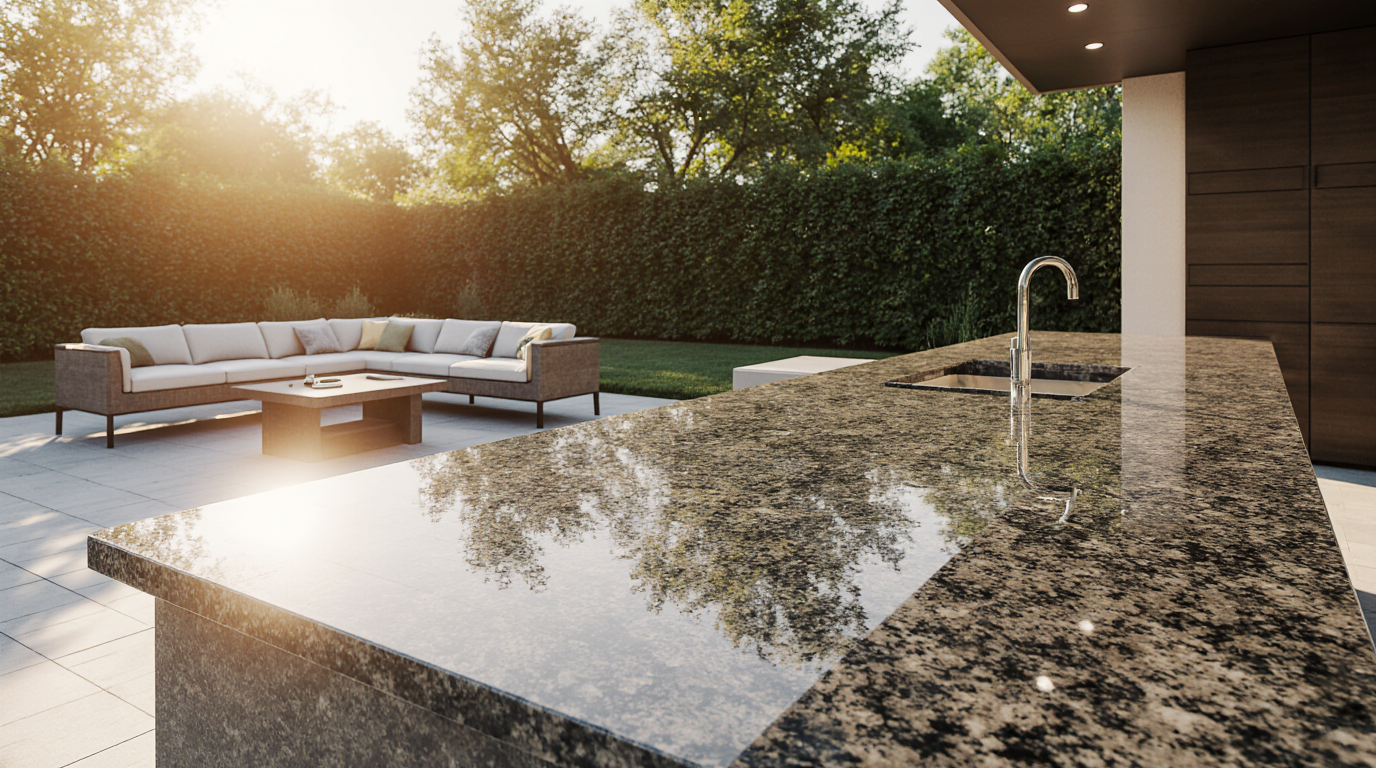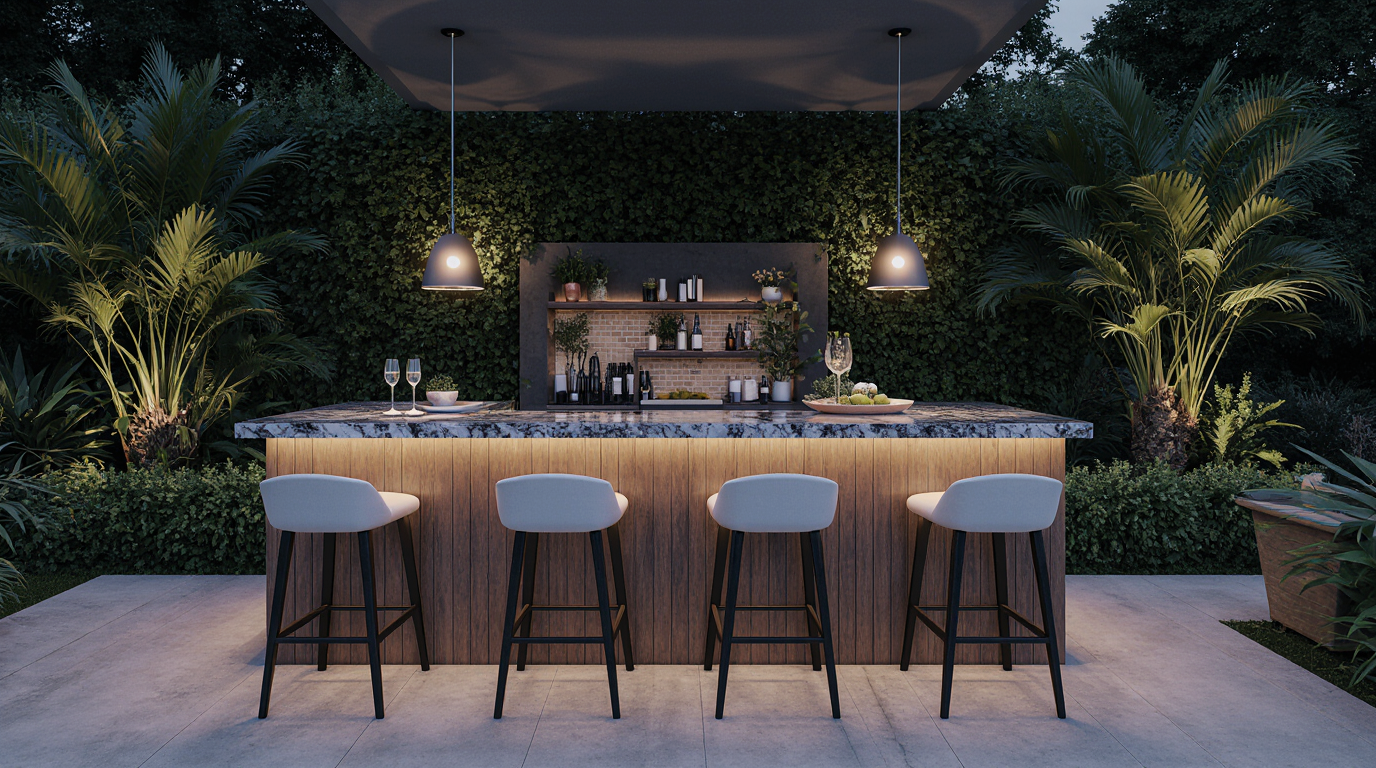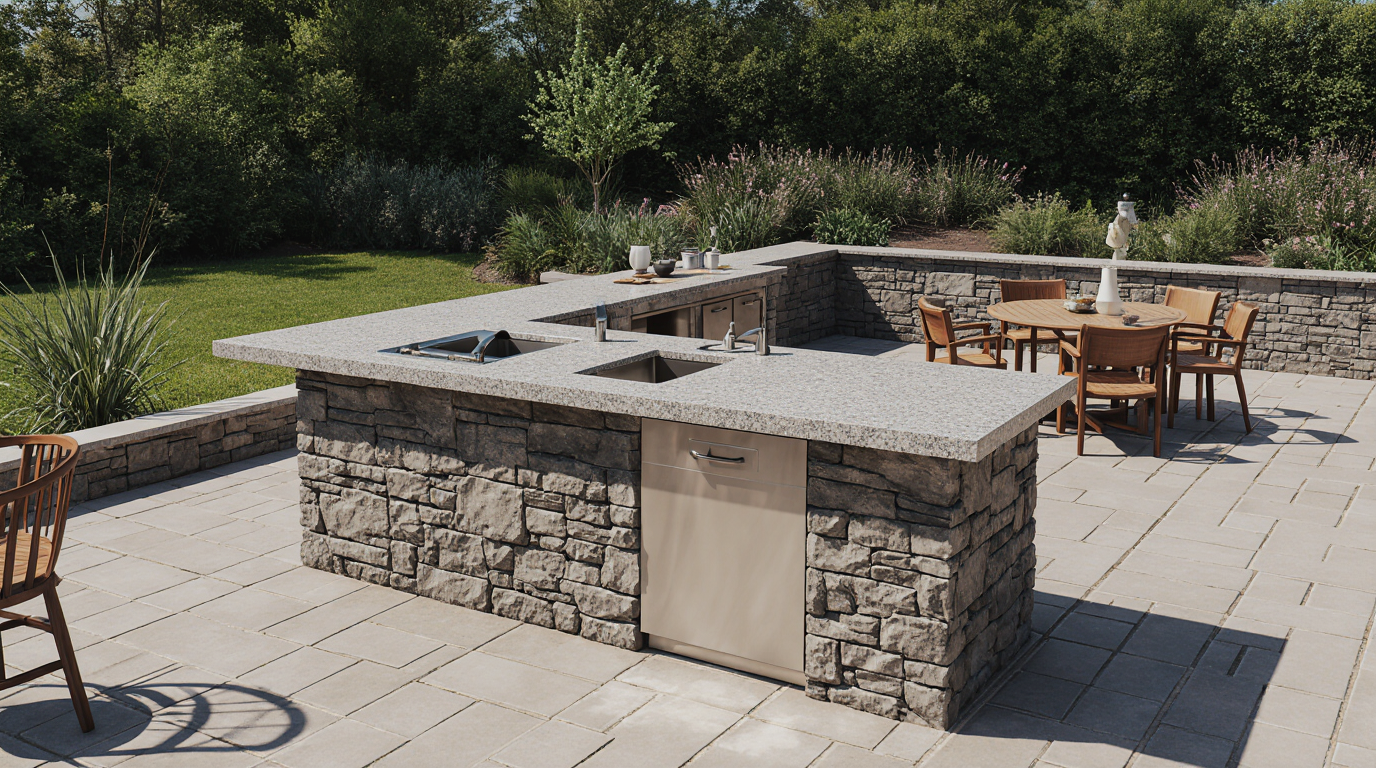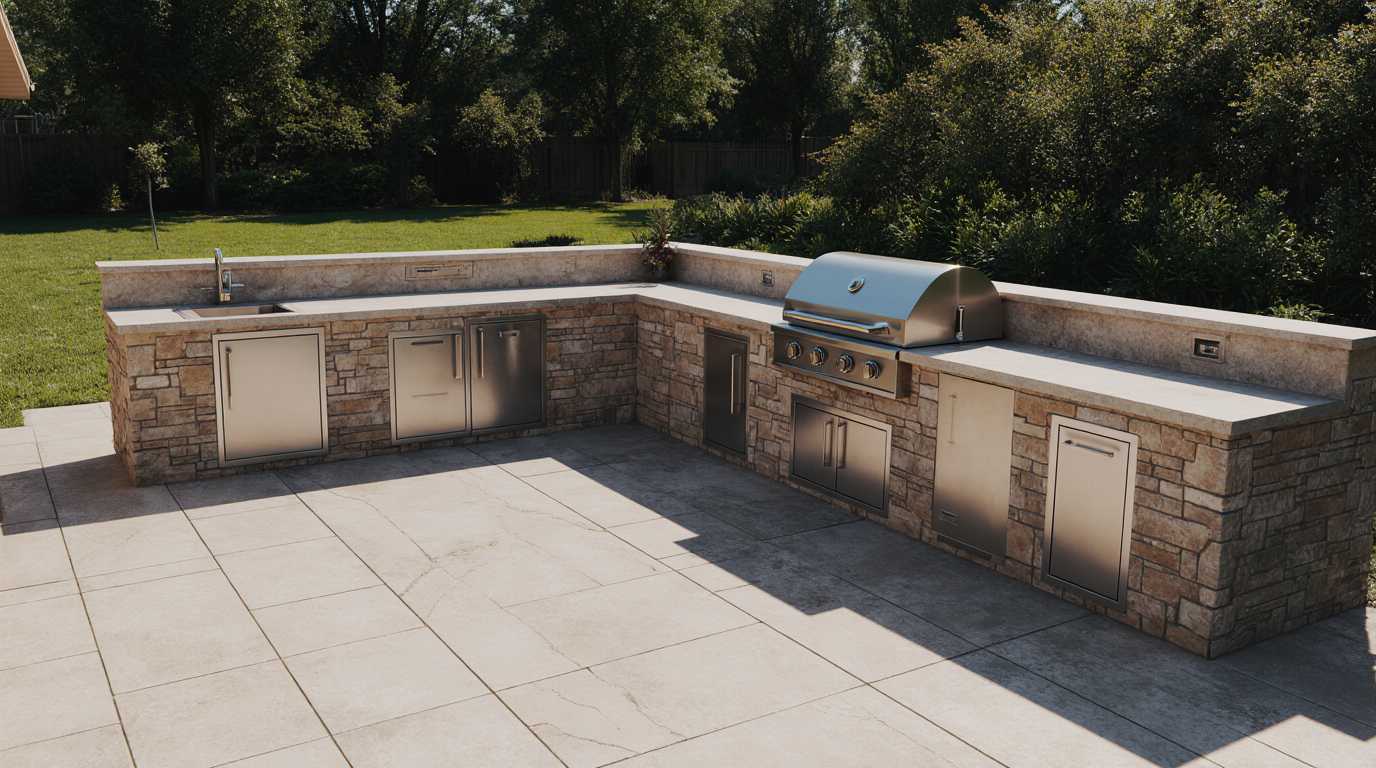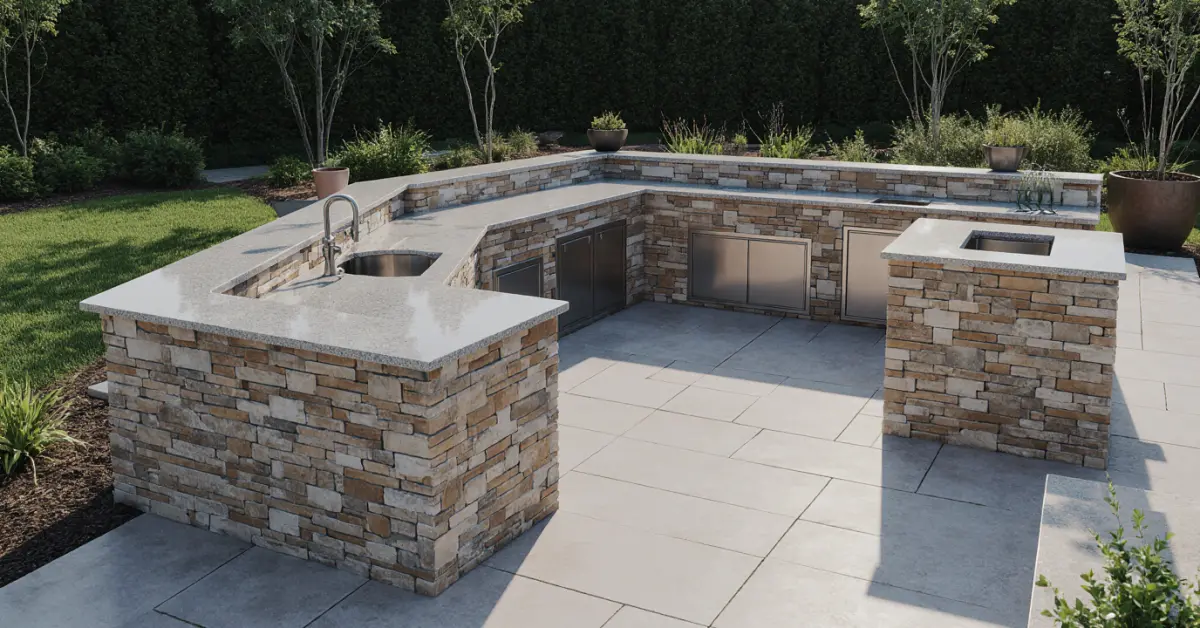
Picture a beautiful lanai on Siesta Key, the centerpiece an outdoor kitchen with a gleaming, dark countertop. The homeowner chose it for its dramatic look. Six months later, that same countertop is faded in patches from the relentless sun, covered in fine hairline cracks from thermal stress, and has developed stubborn stains from poolside cocktails and sunscreen. This isn't a rare occurrence; it's a predictable outcome when material selection for outdoor countertops in Sarasota ignores our unique coastal climate.
Executive Summary: Navigating Outdoor Countertop Selection in Sarasota
From my years designing and building outdoor living spaces from Lakewood Ranch to Casey Key, I've seen firsthand that
From my years designing and building outdoor living spaces from Lakewood Ranch to Casey Key, I've seen firsthand that the success of an outdoor countertop hinges on its ability to withstand three specific local aggressors: intense UV radiation, high salinity in the air, and rapid temperature shifts during summer storms. The most common failure isn't the material itself, but a mismatch between the material's properties and the specific micro-environment of a Sarasota property. Your choice must be a technical one first, and an aesthetic one second.
- UV Stability is Non-Negotiable: Materials with high resin content, like many quartz products, will yellow and degrade. True performance comes from materials with zero or near-zero porosity and inherent UV resistance.
- Salt Air Corrosion is Real: For properties west of I-75, especially on the barrier islands, salt spray will corrode sealants and can etch porous stones. The material's density and sealant type are critical.
- Thermal Shock Resistance Prevents Cracking: A cool countertop hit by a sudden, intense downpour after hours in the sun can develop micro-fractures. Sintered stone and certain granites excel here.
- Code Compliance is Structural: The Florida Building Code dictates how these heavy surfaces must be anchored to the substrate, especially in high-velocity hurricane zones (HVHZ). It's not just about placing a slab on a cabinet.
The Critical Planning Failures I See in Sarasota
The biggest mistakes happen long before the first slab is cut. They are rooted in treating an outdoor kitchen countertop selection like an indoor one. The environmental stresses are orders of magnitude higher here, and what works beautifully inside will almost certainly fail outside.
The Most Expensive Failure: Prioritizing Aesthetics Over Technical Specs
The single most costly mistake I've witnessed is a client falling in love with a beautiful, veined quartz or a dark, dramatic marble for their outdoor bar. Indoors, these are fine; outdoors in Florida, they are a ticking clock. The resins in quartz will yellow and become chalky under our UV index. Porous stones like marble will etch from acidic rain and salt air, and absorb stains from everything from red wine to leaf tannins. Within two years, that "investment" piece looks worn and damaged, forcing a complete, and very expensive, replacement. The failure isn't just financial; it's the frustration of having a premium space look shabby so quickly.
How an Outdoor Countertop Installation Actually Works Here
A professional outdoor countertop installation in Sarasota County is a multi-stage process involving more than just a fabricator. It requires coordination between designers, contractors, and sometimes even structural engineers, all while navigating local permitting and HOA approvals.
The process begins with a site assessment to understand sun exposure, salt air concentration, and the structural base. Material selection follows, guided by these technical requirements. Once a material is chosen, we create precise templates. The fabrication happens off-site, but the critical step is the installation, which must account for proper substrate support, ventilation for outdoor appliances, and anchoring that complies with the Florida Building Code's wind load requirements. A typical project, from final design to completion, can take 6-10 weeks, often with 2-4 weeks of that timeline dedicated to HOA architectural review board (ARB) approvals in communities like The Founders Club or Prestancia.
Selection Criteria for Sarasota Homeowners
- Test for Heat Absorption: Before committing, get a sample of your chosen material and leave it in the direct Sarasota sun for a few hours. Dark, dense materials can become too hot to touch, making them impractical for poolside bars or dining surfaces.
- Verify Zero Porosity: Insist on materials like sintered stone (e.g., Dekton, Neolith) or non-porous, light-colored granite. Ask the supplier for the material's absorption rate; it should be less than 0.5% to resist staining and freeze-thaw issues.
- Check HOA Covenants: Many Sarasota HOAs, particularly in master-planned communities, have specific restrictions on outdoor materials, finishes, and colors. Get written approval before ordering any material.
- Demand Marine-Grade Substrates: The countertop is only as good as what's holding it up. Ensure your contractor is using marine-grade plywood or concrete block construction, not standard exterior-grade materials that will swell and rot in our humidity.
Comparison of Viable Outdoor Countertop Materials
Choosing the right material involves balancing cost, maintenance, and long-term durability against Sarasota's climate. While many options exist, only a few perform reliably over the long term here.
When a Premium Material is Not the Right Choice
There are situations where investing in a top-tier material like sintered stone is overkill. If the outdoor kitchen is in a fully covered, well-protected lanai with minimal direct sun exposure and is located far from the coast (e.g., east of I-75), a well-sealed, high-quality granite can perform admirably for a lower initial cost. The key is an honest assessment of the environment. Spending a premium for UV resistance you don't need is a misallocation of budget that could be better used on higher-grade appliances or structural elements.
I worked with a client on Longboat Key who was adamant about using a specific exotic granite with deep, dark tones for their fully exposed outdoor kitchen. Despite my warnings about heat absorption and potential fading, the aesthetic was paramount. We proceeded, using the best sealers available. A year later, they called me. The countertop was so hot during the summer afternoons that it was unusable for entertaining, and light-colored rings had begun to appear where cold drinks had left condensation, a sign of the sealer being stressed by thermal shock. They ultimately spent nearly 70% of the original cost to replace it with a light-colored sintered stone the following year. It was a classic case of aesthetic desire overriding the practical physics of our environment.
| Material | UV Resistance | Stain Resistance | Typical Installed Cost (per sq. ft.) |
|---|---|---|---|
| Sintered Stone (e.g., Dekton) | Excellent | Excellent | $120 - $200+ |
| Granite (Light Colors) | Good to Excellent | Good (with proper sealing) | $90 - $160 |
| Concrete (Sealed) | Good (with UV-stable sealer) | Fair (prone to etching/stains) | $100 - $180 |
Safe Hiring and Installation Checklist
Hiring the right team is as important as choosing the right material. A beautiful slab can be ruined by improper fabrication or installation. Verifying a contractor's specific experience with outdoor applications in our climate is essential.
- Confirm the installer has a current license and liability insurance valid in Sarasota County.
- Ask to see at least three examples of outdoor kitchens they have installed locally that are more than two years old. Photos are not enough; ask for addresses you can see from the street if possible.
- Verify they understand and build to the Florida Building Code's requirements for anchoring countertops, especially in coastal zones.
- Ensure the contract specifies the exact grade and type of sealer to be used, and includes details on the warranty against installation defects.
- Discuss how they will manage seams. For outdoor applications, tight, well-filled seams are crucial to prevent water intrusion and mildew growth.
- Clarify who is responsible for pulling any necessary permits from the Sarasota County Permitting office.
- Ask how they fabricate for outdoor appliances, ensuring proper ventilation cutouts to prevent heat buildup and damage to the cabinet structure.
Decisions That Determine the Ultimate Outcome
Two clients can start with the same budget and vision yet end up with vastly different results. The divergence happens at key decision points, where one prioritizes long-term performance and the other focuses on short-term aesthetics or cost savings.
The Exact Moment the Majority Gets It Wrong
The critical mistake often happens right at the start, in the slab yard. Homeowners are presented with a vast selection of beautiful stones and are naturally drawn to the most visually striking options. The error is making a final selection under indoor, artificial lighting without testing a sample in the actual outdoor environment. The color, heat absorption, and glare of a countertop in a warehouse are completely different from how it will perform next to a pool in the full Florida sun. The single most important action is to take a physical sample, at least 12x12 inches, to your home and observe it for a full day at the installation site before signing a purchase order.
Practical Answers About Operations in Sarasota
Navigating the local requirements is key to a smooth project. These are not generic guidelines; they are specific operational hurdles in our area.
Handling HOA Architectural Review in Communities like Lakewood Ranch
In master-planned communities, the Architectural Review Board (ARB) or Design Review Committee (DRC) has the final say. They are concerned with the visual harmony of the community. Submitting a request requires more than just a picture of the slab; you need to provide a site plan showing the location, dimensions, and material specifications. The approval process can take anywhere from 30 to 60 days. Attempting to install without approval can result in fines and a mandate to remove the work.
Permitting for Structural Outdoor Kitchens
If your outdoor kitchen involves new gas lines, significant electrical work, or is part of a new covered structure, a permit from the Sarasota County Building Department is required. The plans must demonstrate compliance with the Florida Building Code, including structural support for the countertop's weight and proper anchoring. A simple countertop replacement on an existing base typically does not require a permit, but any alteration to the structure itself does. Inspectors will verify the work before you can use the space.
Addressing Coastal Construction and Wind Load Requirements
For homes in designated coastal zones or high-velocity hurricane zones (common on the barrier islands), there are stricter requirements. The countertop and its supporting structure must be engineered and anchored to withstand specified wind uplift pressures. This might involve reinforced concrete block construction and specific mechanical fasteners connecting the base cabinets to the foundation slab. This is not a suggestion; it is a building code requirement enforced by inspectors to ensure parts of your kitchen don't become projectiles in a storm.