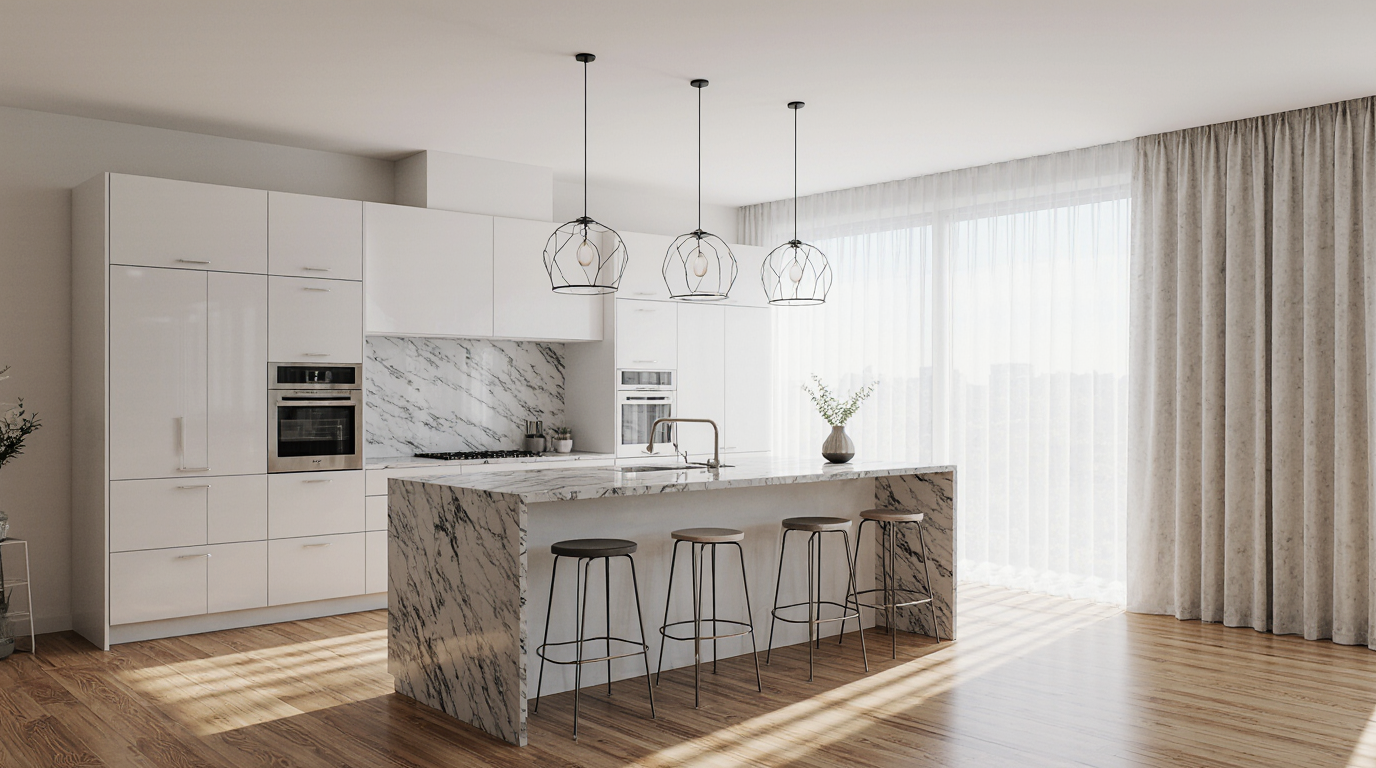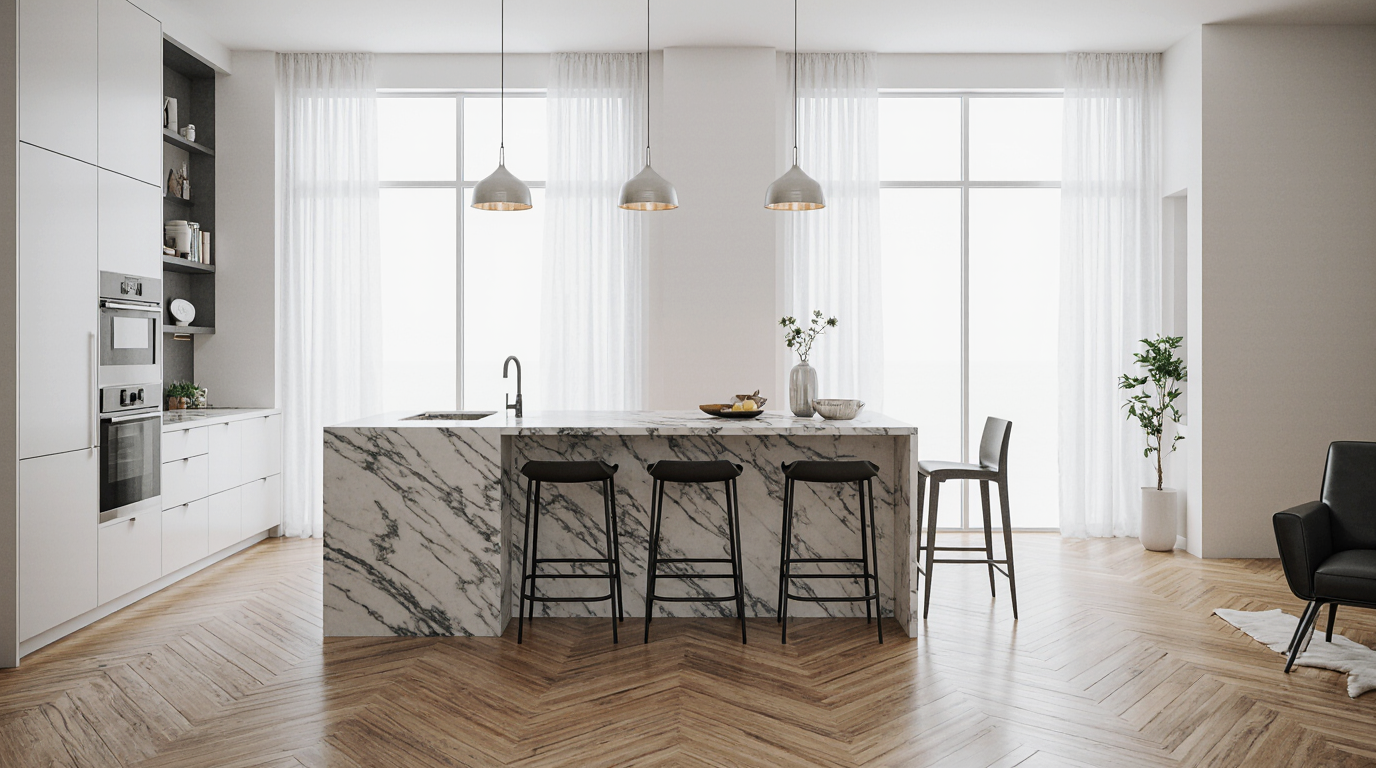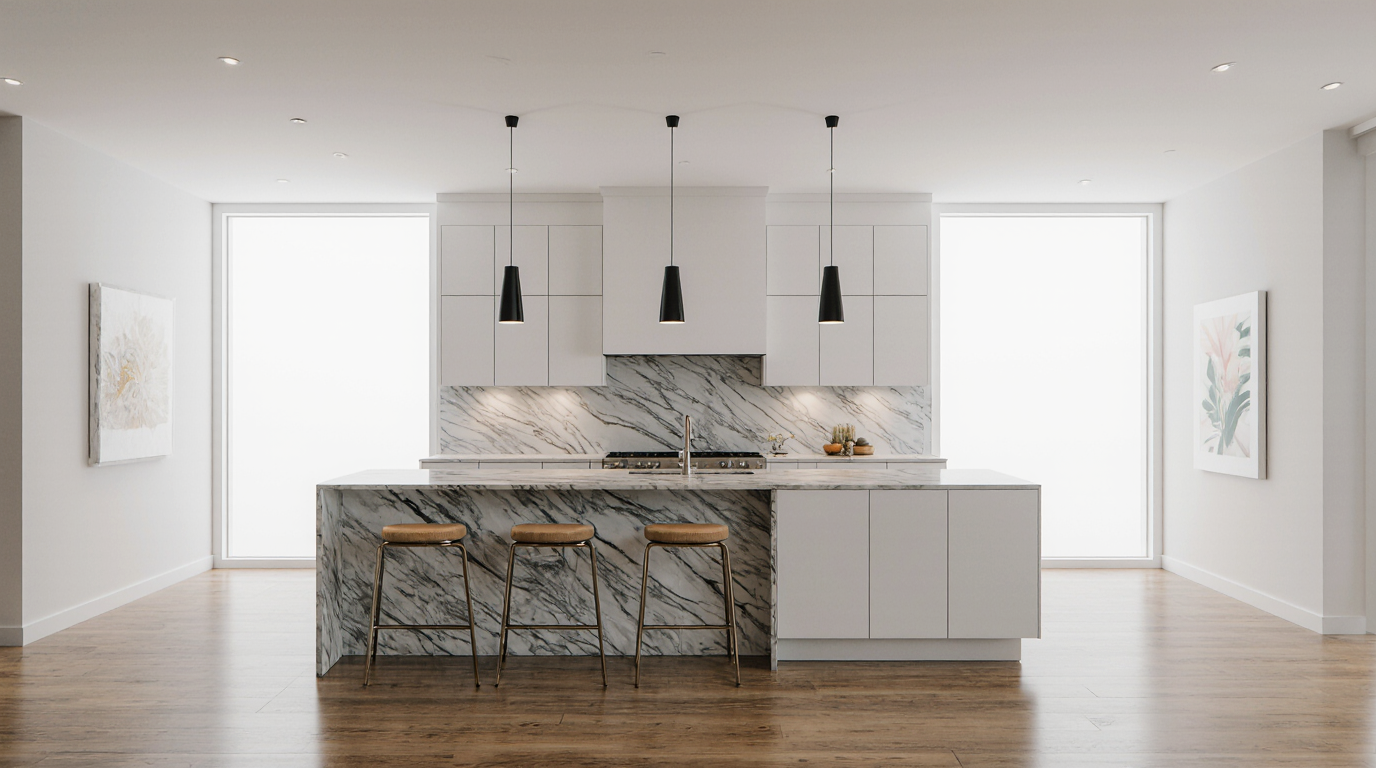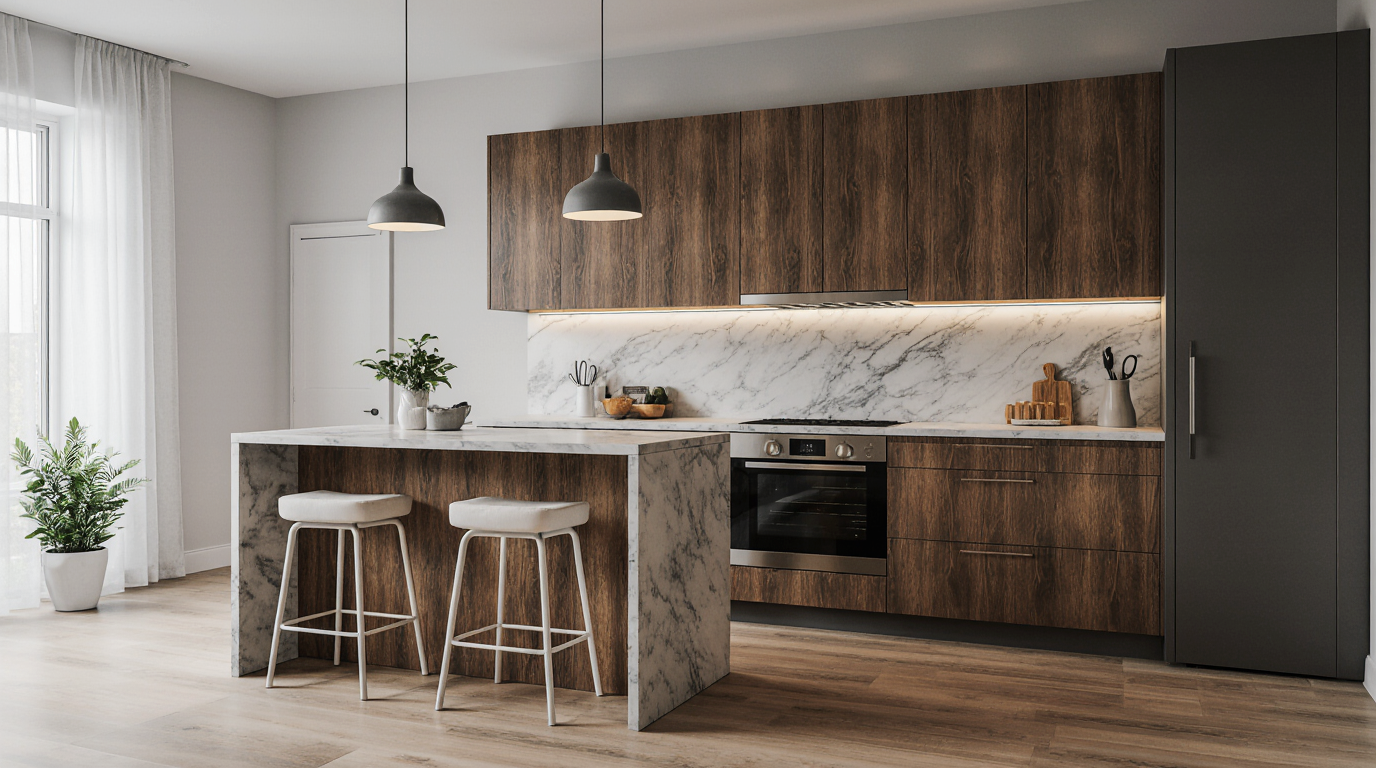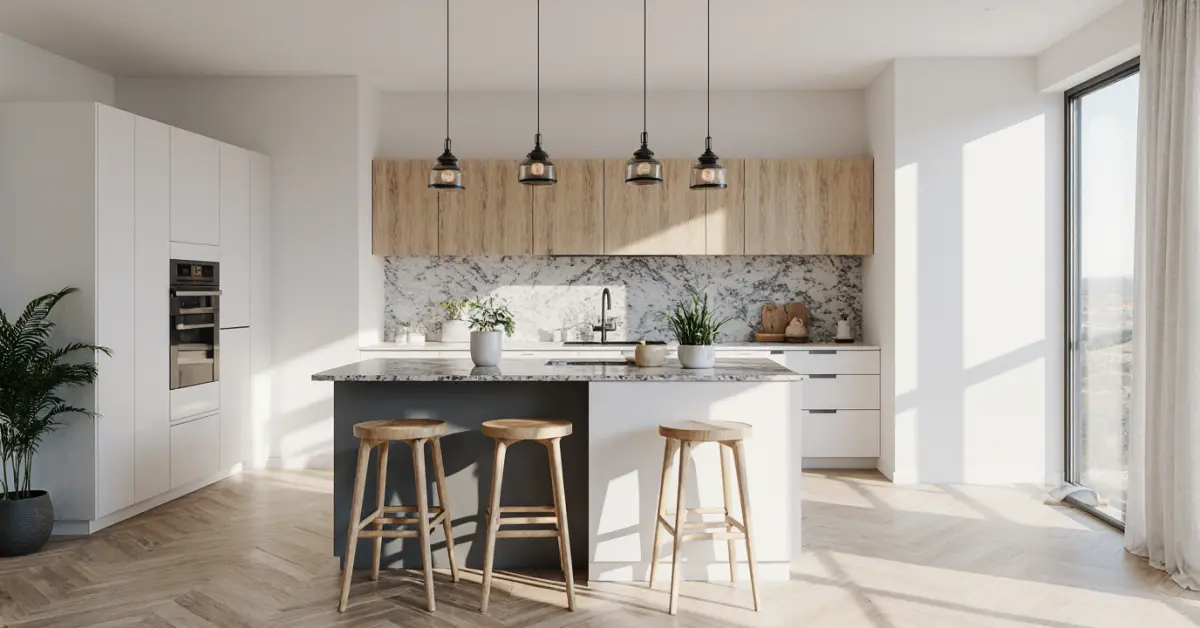
Why do so many sleek, modern white kitchens installed in beautiful Sarasota homes begin to show their age prematurely? The culprit isn't poor craftsmanship; it's a design strategy that ignores the relentless impact of our coastal environment. Homeowners are often sold on a look without being educated on the specific material science needed to combat the combination of intense UV radiation and high humidity that defines life on the Gulf Coast.
Executive Summary: Achieving a Lasting Modern White Kitchen in Sarasota
From my direct experience engineering and installing high-end kitchens from Longboat Key to Lakewood Ranch, the central
From my direct experience engineering and installing high-end kitchens from Longboat Key to Lakewood Ranch, the central challenge isn't achieving the modern white aesthetic—it's making it last. The intense sunlight and humidity will expose any shortcut in material selection or finishing within 24 months. A successful project hinges on specifying materials that actively combat UV yellowing and dimensional instability caused by moisture, something standard off-the-shelf solutions are not designed to do.
- Material Specification is Non-Negotiable: Standard MDF or low-grade plywood will fail. Marine-grade plywood or high-density, moisture-resistant substrates are essential for core stability.
- Finish Technology Matters More Than Color: The type of lacquer or conversion varnish used is more critical than the specific shade of white. It must contain high-solids UV inhibitors.
- Hardware Must Be Marine-Grade: Salt air corrodes standard steel. All hardware, from hinges to drawer slides, must be stainless steel (304 or 316 grade) or have a specialized corrosion-resistant coating.
- Ventilation is a Design Element: Proper kitchen ventilation isn't just for cooking fumes; it's a crucial component of managing ambient moisture that can compromise cabinetry over time.
The Planning Failures That Compromise White Kitchens in Florida
The most common failures I see originate long before the first cabinet is built. They happen during the initial design and material selection phase when aesthetics are prioritized over performance in our specific coastal environment. A design that looks perfect in a national design magazine is often fundamentally flawed for a home on Bird Key or Siesta Key.
The Most Expensive Mistake: Underestimating UV and Humidity
The single most costly error is choosing a finish based on its color and sheen alone, without verifying its UV-resistance and substrate compatibility. A client on Lido Key insisted on a specific European lacquer for its unique matte finish. Despite my warnings, they prioritized the look. Within three years, the cabinets facing the large western-facing windows had yellowed to a noticeably different shade than the rest of the kitchen, creating a jarring, two-toned effect. The cost to refinish them properly was nearly 40% of the original cabinet budget because it required removing, stripping, and respraying all doors and panels off-site to ensure a perfect match.
The Process for a Climate-Resilient Modern Kitchen
Executing a modern white kitchen in Sarasota requires a process that front-loads technical decisions. It's not simply about design, but about engineering a system that will perform in a challenging environment. The process must account for material science, local building codes, and the realities of coastal construction from day one.
Selection Criteria for a Sarasota Homeowner
When evaluating a company for your modern white kitchen, your questions should be less about their portfolio and more about their technical approach to our climate. Here is what you need to verify:
- Substrate Specification: Do they proactively recommend and specify marine-grade plywood or moisture-resistant composite panels for cabinet boxes, especially under sinks and near appliances? Ask to see the spec sheet.
- Finishing Process and UV Protection: Can they detail their finishing process? Ask specifically about the type of conversion varnish or catalyzed polyurethane used and the brand of UV inhibitor included in the formulation.
- Hardware Sourcing: Do they default to stainless steel or marine-grade hardware? Ask for the hardware manufacturer and model numbers to verify the material specifications (e.g., Blum Tandem slides in stainless steel).
- Understanding of Florida Building Code: How do they address cabinet anchoring and blocking requirements, especially in homes located in wind-borne debris regions, which includes all of Sarasota County? Secure installation is a code requirement, not an upgrade.
Comparing Cabinetry Approaches for a Sarasota Modern Design
Choosing the right cabinetry involves balancing aesthetics, budget, and long-term durability. For a modern white kitchen in Sarasota, the performance difference between options is magnified by the climate.
| Feature | Custom Climate-Specific Cabinetry | Semi-Custom Cabinets | Stock Cabinets (Big Box Store) |
|---|---|---|---|
| Humidity/Warp Resistance | Excellent (uses marine-grade or moisture-resistant substrates) | Fair to Poor (typically uses standard furniture-grade plywood or MDF) | Poor (often uses particleboard with laminate or thermofoil) |
| UV/Yellowing Resistance | Excellent (uses catalyzed varnish with specified UV inhibitors) | Fair (standard factory finish may have some UV protection, but not specified for coastal sun) | Poor (thermofoil and basic paints yellow quickly and can peel) |
| Hardware Durability | Excellent (specifies stainless steel or marine-grade hardware) | Fair (standard steel hardware is prone to rust in salt air) | Poor (low-grade steel hardware will corrode) |
| Design Flexibility | Unlimited (fully custom sizes, styles, and integrations) | Limited (standard sizes with some modification options) | Very Limited (fixed sizes and styles) |
When a Custom Approach Isn't the Right Choice
A fully custom, climate-engineered kitchen is a significant investment. If you are renovating a property for a quick flip or a short-term rental where long-term durability is not the primary financial driver, the premium cost may not provide a sufficient return. In these scenarios, higher-end semi-custom lines that offer upgraded plywood boxes can be a pragmatic compromise, but you must accept the likelihood of visible aging within 5-7 years.
A Safe Hiring Checklist for Your Sarasota Project
To ensure your investment is protected, your vetting process must be rigorous and specific to our local conditions. A pretty portfolio is not enough.
- Verify their Florida contractor's license is active and in good standing with the Department of Business and Professional Regulation (DBPR).
- Request certificates of liability and workers' compensation insurance. A serious firm will provide these without hesitation.
- Ask for at least two local references for modern white kitchens they completed more than three years ago. This is the only way to verify how their work holds up to the climate over time.
- Review their contract to ensure it specifies the exact materials: substrate type (e.g., "3/4-inch marine-grade birch plywood"), finish type (e.g., "post-catalyzed conversion varnish"), and hardware manufacturer.
- Confirm their familiarity with the HOA design review process in your specific community, whether it's Lakewood Ranch, The Founders Club, or a downtown condo association. These boards often have strict timelines and submission requirements.
- Discuss their warranty specifically as it relates to finish failure like yellowing or peeling. A standard one-year warranty is insufficient for these types of climate-related issues.
Decisions That Determine the Final Outcome
The success of a high-end kitchen project is defined by a few key decisions made early in the process. Getting these right is critical; correcting them later is expensive or impossible. The focus must always be on building a system that performs, not just a collection of pretty components.
The Exact Moment the Majority Gets It Wrong
The critical error happens when the homeowner and designer finalize the layout, appliance selections, and door style before they have a frank discussion about the budget for climate-resilient materials. They fall in love with a design that, if built with standard materials, is destined to fail here. The right approach is to establish the material performance standard first. This informs the entire budget and design process, ensuring that the beautiful modern kitchen you approve on paper is the one that will actually last in your Sarasota home.
Practical Answers for Operations in Sarasota
Navigating the practical side of a kitchen renovation in Sarasota involves dealing with specific local regulations and entities. Understanding these can prevent significant delays and frustrations.
HOA and Condo Association Design Reviews
In communities like Lakewood Ranch or on Longboat Key, the Homeowners or Condo Association design review is a formal, non-negotiable step. Submissions often require detailed drawings, material samples, and finish specifications. The review process itself can take anywhere from 30 to 60 days. Failing to provide the required level of detail can reset this clock, significantly delaying your project start date—a major issue for seasonal residents on a tight schedule.
Permitting with Sarasota County
A full kitchen remodel requires a building permit from Sarasota County Planning and Development Services. This isn't just for major structural changes. Moving electrical outlets for a new modern kitchen island or changing plumbing locations for a new sink triggers this requirement. The plan review process typically takes several weeks, and licensed electrical and plumbing contractors must be used for their respective portions of the work. Attempting to bypass this can result in work-stop orders and trouble when you sell the property.
Impact of Florida's Hurricane Codes on Kitchen Design
While hurricane codes primarily focus on the building envelope (windows, doors, roof), they have an indirect but important impact on kitchen design. The requirement for impact-rated windows and doors can influence window sizes and placements, which in turn affects natural light and the layout of your cabinetry. Furthermore, the Florida Building Code has stringent requirements for how cabinets are anchored to the wall structure to prevent them from becoming projectiles in a high-wind event, a detail a qualified installer will handle as standard practice.