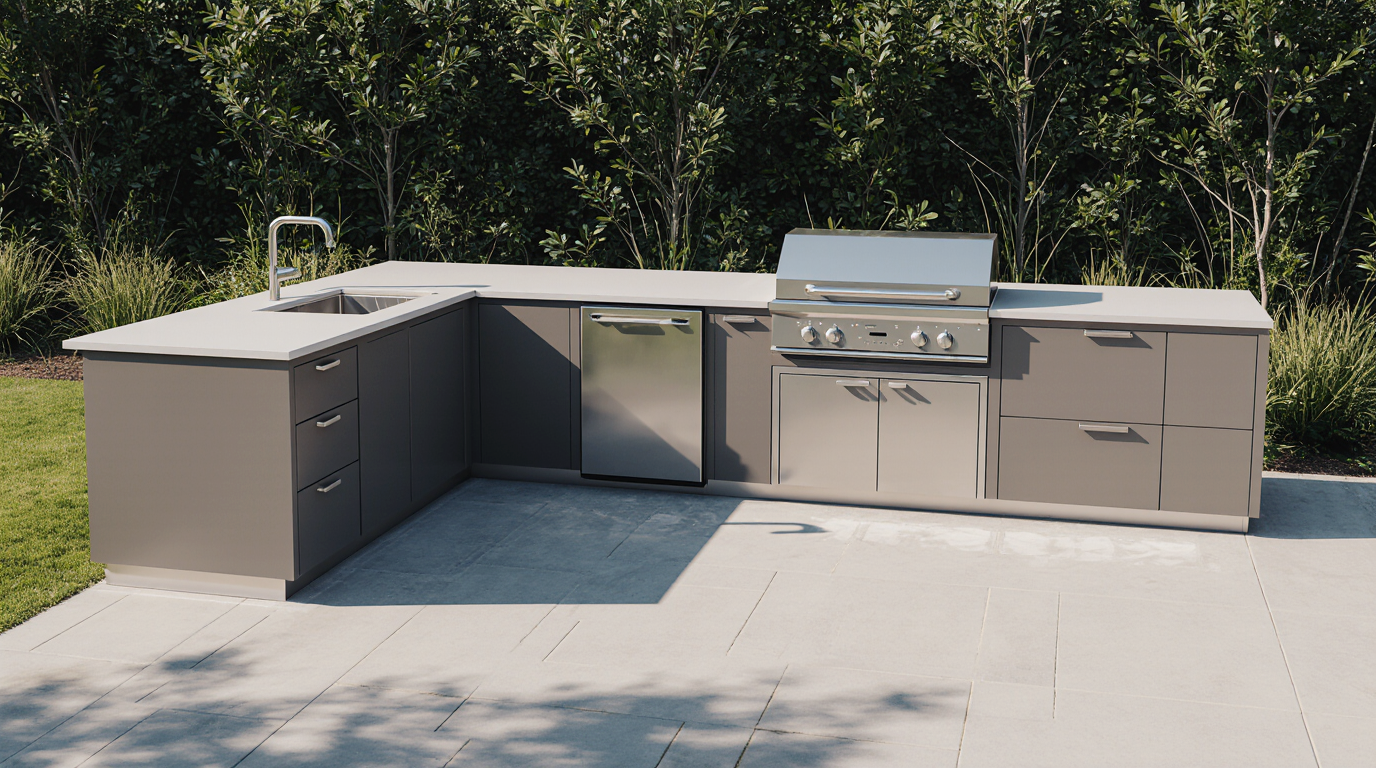
Executive Summary: Modern Outdoor Kitchen Cabinets in Sarasota
From my direct experience engineering and installing outdoor kitchens from Siesta Key to Lakewood Ranch, the central
From my direct experience engineering and installing outdoor kitchens from Siesta Key to Lakewood Ranch, the central challenge is not design, but material science. A modern aesthetic—clean lines, minimal hardware, seamless integration—is deceptively difficult to maintain against Sarasota's corrosive salt air and intense UV exposure. The most common failure I see is specifying materials based on interior design trends, leading to catastrophic failure within 24-36 months. True success depends on a marine-first engineering approach, treating the project less like a kitchen and more like outfitting a yacht.
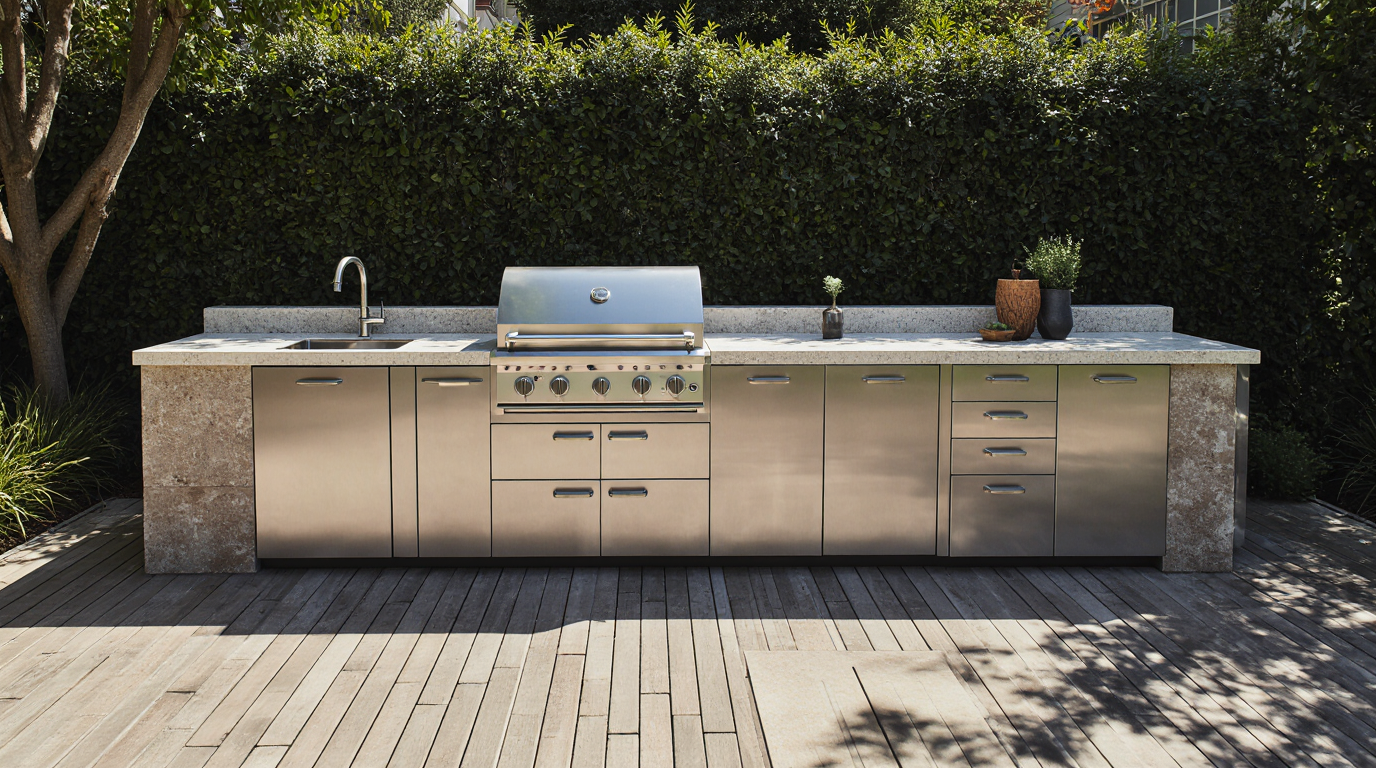
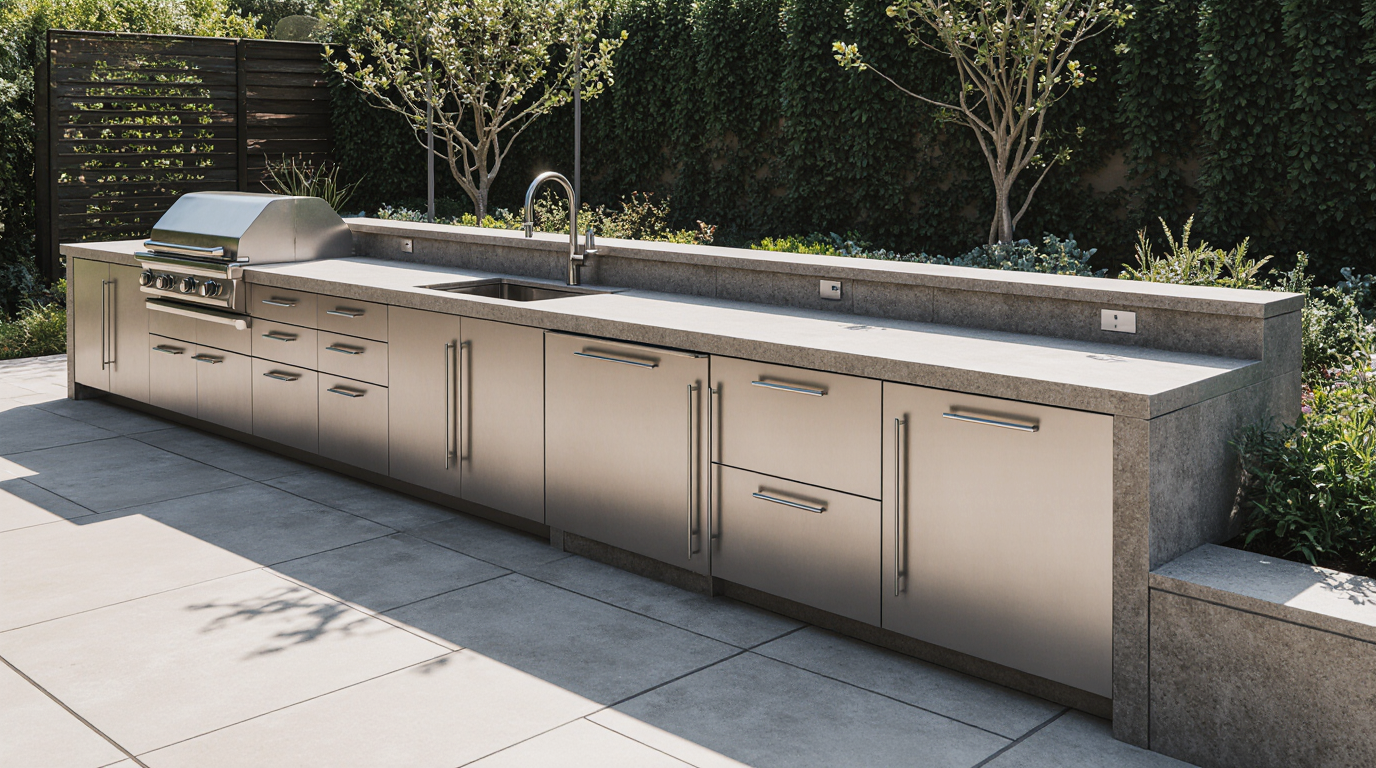
- Material Imperative: Standard 304 stainless steel will show surface rust (tea staining) in less than a year on the barrier islands. Only 316L marine-grade stainless steel or powder-coated aluminum frames offer reliable corrosion resistance.
- Polymer Performance: High-density polyethylene (HDPE) polymer cabinets are the dominant choice for durability. They are color-stable, waterproof, and impervious to the humidity that delaminates and warps wood composites.
- Structural Integrity: The Florida Building Code, particularly sections concerning wind load, requires robust anchoring. Cabinets are not just furniture; they are permanent structures that must withstand hurricane-force winds, a detail that adds cost and complexity to the installation.
- HOA Compliance: Design review boards in communities like The Founders Club or Lakewood Ranch often have specific palettes and material restrictions. Approval can add 4-6 weeks to your project timeline and must be secured before fabrication begins.
The Planning Failures That Compromise Longevity
The most significant mistakes in designing a modern outdoor kitchen in Sarasota happen long before the first cabinet is ordered. They are born from underestimating the relentless coastal environment. A design that looks perfect in a catalog or on a non-coastal property can become a maintenance nightmare here. The focus shifts from just looks to performance under extreme stress.
One common error is improper ventilation planning for high-heat appliances within sleek, enclosed cabinet runs. Without adequate airflow, integrated grills can generate enough heat to warp adjacent polymer doors or discolor powder-coated finishes. This isn't just an aesthetic issue; it's a safety hazard and voids most manufacturer warranties. We have to engineer ventilation channels that are both effective and hidden to maintain the modern look.
The Most Expensive Failure: Ignoring Water Management
The costliest oversight is assuming “outdoor-rated” means “waterproof.” I was called to a project on Lido Key where a beautiful, modern outdoor kitchen with modular stainless steel cabinets had failed. The issue wasn't the cabinets themselves but the concrete base they were installed on. It lacked a proper slope and drainage, creating standing water after every rainstorm. The constant moisture corroded the cabinet levelers and seeped into the toe-kicks, creating a perfect environment for mold and pests. The entire multi-thousand-dollar installation had to be removed, the slab re-poured, and the cabinets re-installed, doubling the labor cost and delaying the project by a month.
How Outdoor Cabinet Installation Works in Practice in Sarasota
A successful project follows a strict, technically-driven process. It begins with a site analysis focused on environmental exposure—sun direction, prevailing winds, and proximity to saltwater. This analysis dictates material specification. For example, a south-facing kitchen with no shade cover requires a UV-stabilized polymer with a higher rating than one in a covered lanai.
Once materials are selected, we move to structural planning. This involves confirming the load-bearing capacity of the existing patio or deck and planning for utility runs (gas, electric, water). In Sarasota County, any new gas or electrical lines require a licensed contractor and a permit. The permitting process itself can take several weeks, so it's a critical timeline factor. Fabrication of the cabinets begins only after all site prep, HOA approvals, and permits are in place.
Selection Criteria for Sarasota Homeowners
- Warranty Against Coastal Conditions: Ask for the manufacturer's warranty and read the fine print. Does it explicitly cover corrosion, fading, or warping in a coastal salt-air environment? Many standard warranties have exclusions for this.
- Case Material and Construction: Insist on frameless, welded-seam construction for stainless steel or solid, 3/4-inch thick color-through HDPE for polymer cabinets. Avoid any product using particle board or MDF cores, regardless of the exterior finish. They will swell and disintegrate.
- Hardware Specification: All hardware—hinges, drawer slides, pulls—must be 316 stainless steel. Standard stainless steel hardware will seize and rust. Soft-close features are great, but they must be marine-grade to function for more than a single season.
- Local Installation Experience: The installer must demonstrate knowledge of Sarasota-specific requirements, including anchoring methods for high-wind zones and experience navigating the design review process in communities like Longboat Key or Casey Key.
Comparing Modern Cabinet Materials for the Sarasota Climate
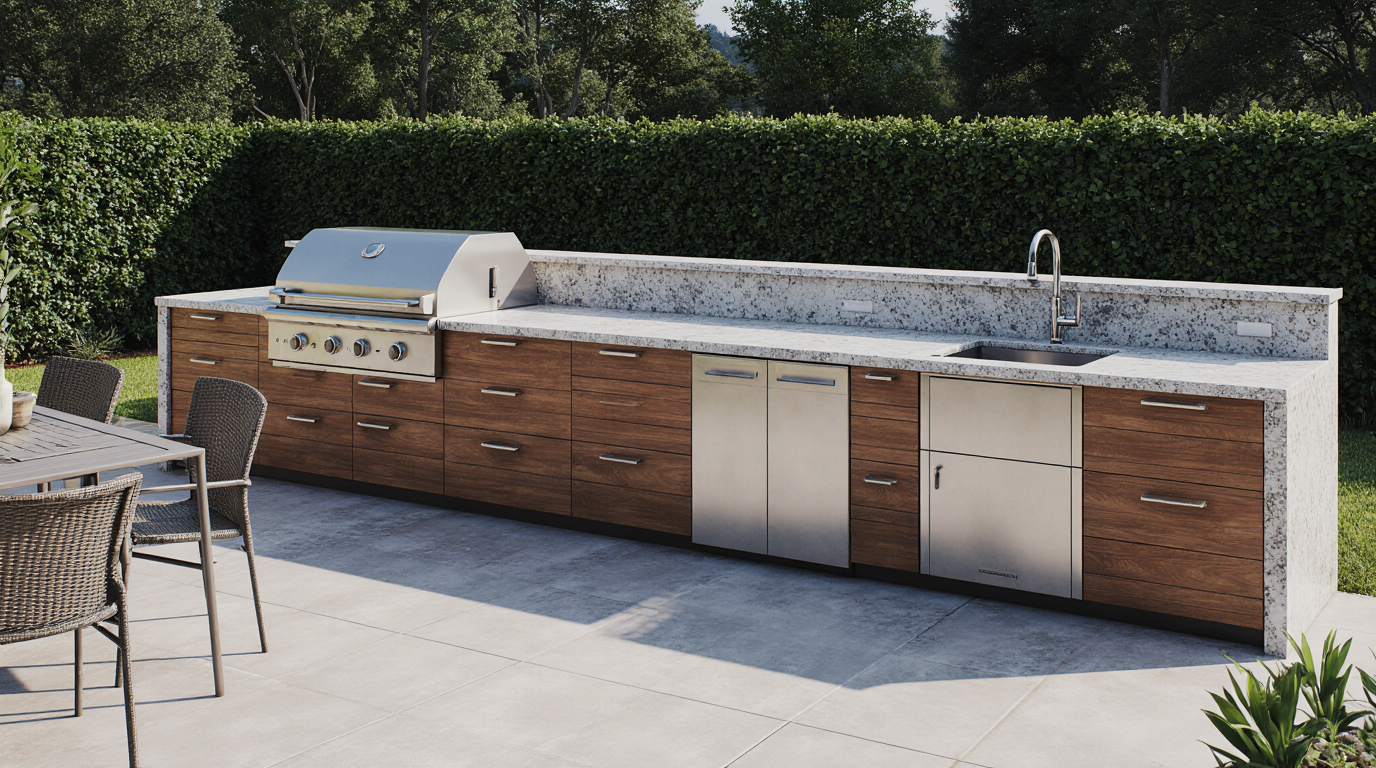
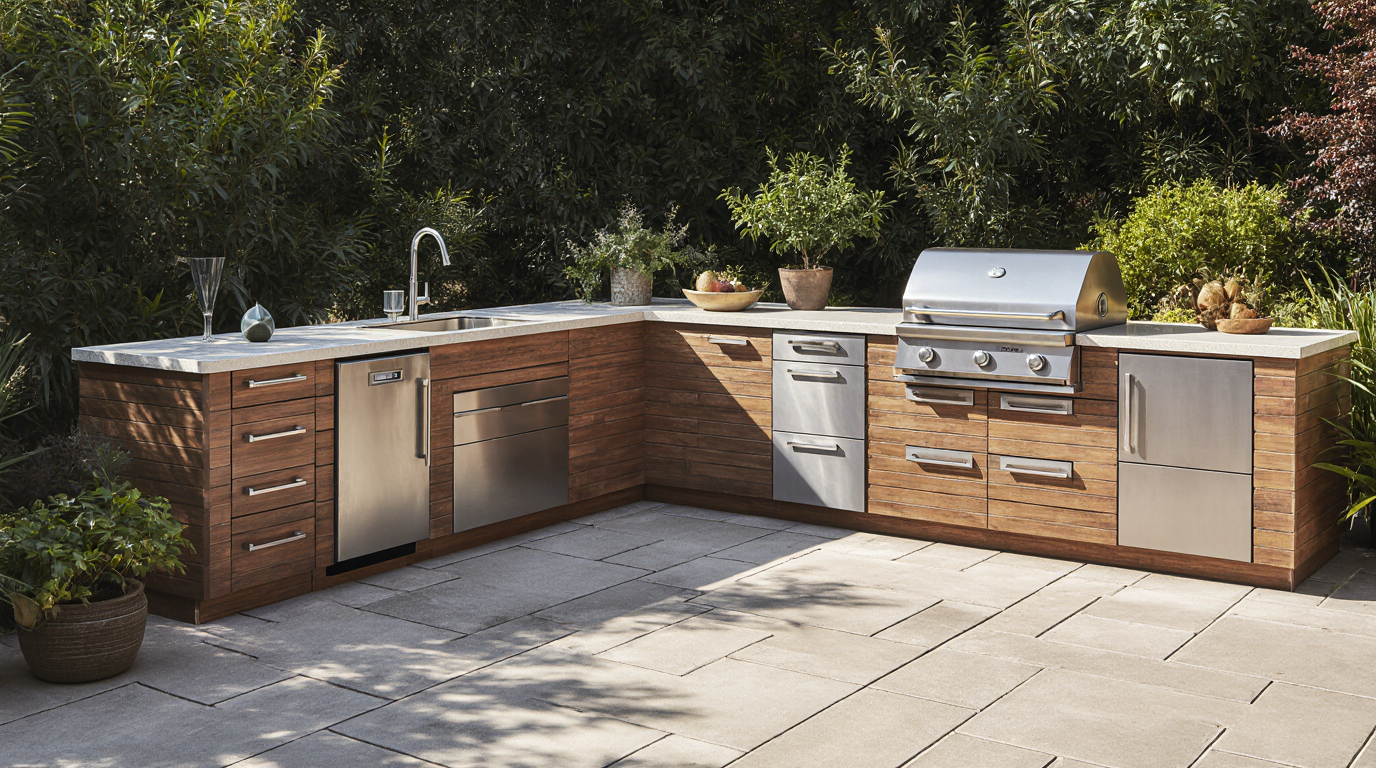
Choosing the right material is a trade-off between aesthetics, durability, and cost. While wood offers a classic look, it's a high-maintenance choice in our climate that I rarely recommend for fully exposed modern designs. The primary contenders are marine-grade polymers and stainless steel, each with distinct advantages.
| Feature | Marine-Grade Polymer (HDPE) | Powder-Coated Stainless Steel | Teak or Ipe Wood |
|---|---|---|---|
| Corrosion/Rot Resistance | Impervious | High (if coating is intact) | High (requires regular oiling) |
| UV Stability / Color Fade | Excellent (with UV inhibitors) | Good to Excellent (depends on powder quality) | Poor (will weather to a silver-gray patina) |
| Maintenance Level | Very Low (soap and water) | Low (inspect for chips/scratches) | High (annual sealing/oiling required) |
| Cost Index (Material Only) | $$ | $$$ | $$$$ |
When This Approach Is Not the Right Choice
A fully custom, modern outdoor kitchen built with marine-grade materials is a significant investment. This approach is not the right fit for homeowners with a short-term ownership horizon or those on a tight budget. If you plan to sell the property within 2-3 years, the return on investment for a premium system might not be fully realized. In such cases, a more cost-effective solution using modular, freestanding units might be a more practical choice, even if it means sacrificing some longevity and the seamless, built-in aesthetic.
A Safe Hiring Checklist for Your Sarasota Project
Hiring the right team is as critical as selecting the right materials. A beautiful product installed incorrectly will fail. Use this checklist to vet potential partners and protect your investment.
- Verify the contractor holds a current Florida state license (e.g., Certified Building Contractor or Residential Contractor) and carries both liability and workers' compensation insurance.
- Request a portfolio of at least three completed outdoor kitchen projects in Sarasota or a similar coastal city, specifically asking about projects over three years old to assess material performance over time.
- Confirm they will handle the entire permitting process with Sarasota County, including drawings and inspections for any electrical, plumbing, or gas work.
- Ask for a sample of the cabinet material and hardware they propose. Physically inspect the weight, finish, and quality of the hinges and drawer slides.
- Ensure the contract explicitly states that all materials and hardware will be marine-grade (e.g., 316L stainless steel) and specifies the brand and warranty details for the cabinets.
- Discuss their process for coordinating with your community's Architectural Review Board or HOA, and ask for examples of approved plan submissions.
- Clarify the anchoring method to be used to secure the cabinets to the structure, ensuring it complies with Florida Building Code wind-load requirements.
Decisions That Determine the Final Outcome
The success of a modern outdoor kitchen in this environment hinges on prioritizing engineering over aesthetics at the outset. I've seen clients fall in love with a particular shade of black outdoor kitchen cabinets or a specific door style, only to find it's not available in a material that can withstand the waterfront exposure of their Bird Key home. The most successful projects are those where the client is willing to let the harsh environmental reality guide the design choices from day one.
A critical decision is the layout's relationship to the home. Integrating the outdoor kitchen seamlessly with indoor spaces is a hallmark of modern design, but it creates challenges. For example, a large pass-through window from the indoor kitchen to the outdoor bar requires careful weather-stripping and a sill designed to prevent wind-driven rain from entering the home—a detail that must be engineered into the plan, not added as an afterthought.
The Exact Moment When the Majority Gets It Wrong
The most common misstep occurs during appliance selection. Clients typically choose their grill, refrigerator, and other components based on brand reputation or features first, and then try to design the cabinetry around them. This is backward and often leads to costly compromises. The correct approach is to finalize the cabinet material and system first, and then select appliances that are specifically designed and dimensioned for that system. For instance, some polymer cabinet lines have specific cutout requirements and ventilation kits for certain grill brands to maintain the warranty and ensure safety. Choosing the grill before the cabinets can lock you into a layout that is inefficient, unsafe, or aesthetically compromised.
Practical Answers About Operations in Sarasota
Navigating the local requirements is key to a smooth project. These are not generic guidelines; they are specific operational hurdles we deal with on every Sarasota project.
How does the Sarasota County permitting process impact timelines?
Any outdoor kitchen involving new electrical outlets, plumbing for a sink, or a natural gas line for a grill requires a permit from Sarasota County. A simple plan review can take 2-4 weeks, and complex projects can take longer. Inspections are then required at various stages. Factoring in this bureaucratic timeline is essential. A typical project from design sign-off to completion can easily take 12-16 weeks, with permitting being a significant portion of that.
What are the HOA requirements in a community like Lakewood Ranch?
In master-planned communities like Lakewood Ranch, the HOA's design review board must approve your entire plan before any work begins. This includes the cabinet materials, colors (especially for black outdoor kitchen cabinets), countertop selection, and even the appliance models. Submissions require detailed drawings and material samples. The board may meet only once or twice a month, and approval can take 30-60 days. Starting work without this approval can result in fines and a stop-work order.
Do outdoor cabinets need to meet hurricane code?
Yes, indirectly. While the cabinets themselves don't have a specific hurricane rating, as permanently installed fixtures they become part of the building envelope. They must be anchored securely enough to resist detachment in high winds as per the Florida Building Code. This means they cannot just be placed on a patio; they must be mechanically fastened to the concrete slab or structural wall with appropriate hardware capable of withstanding significant wind loads, especially in exposed locations on the keys.