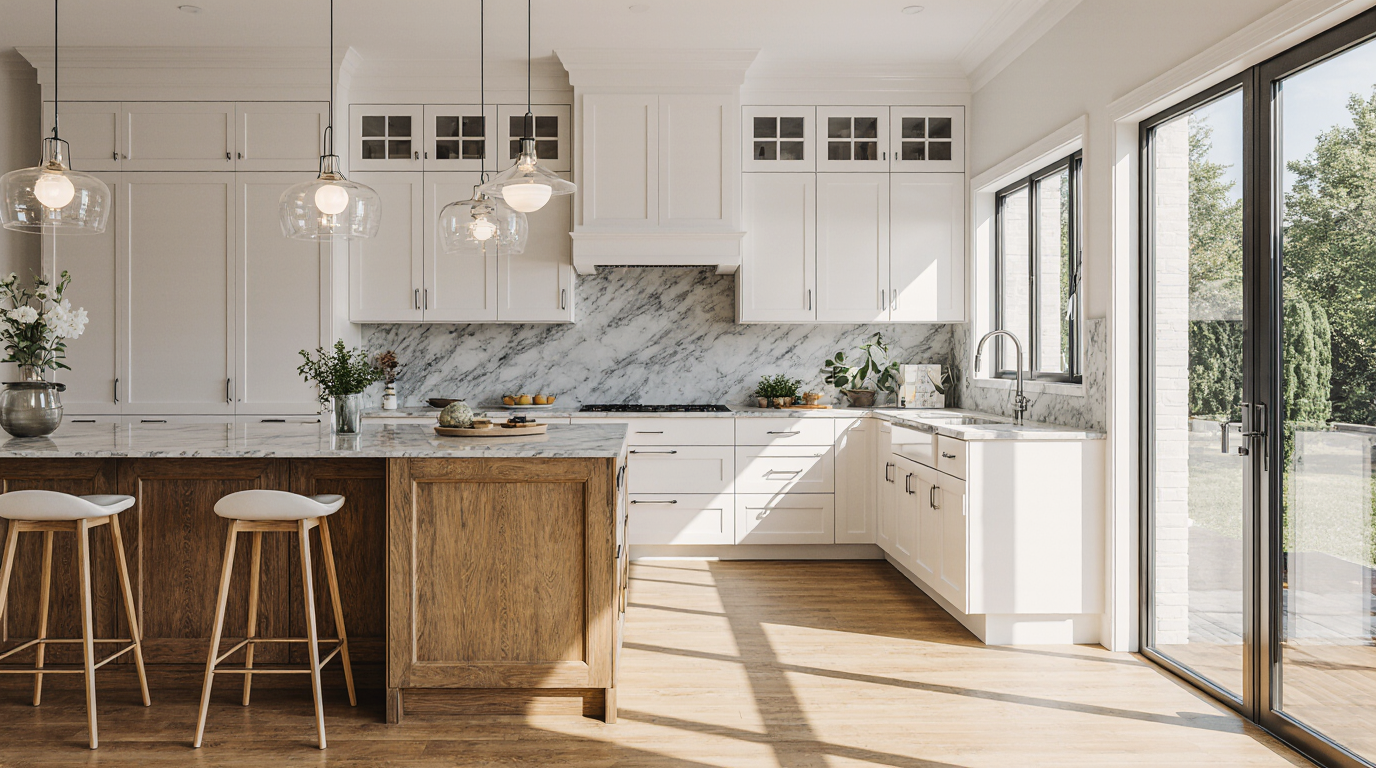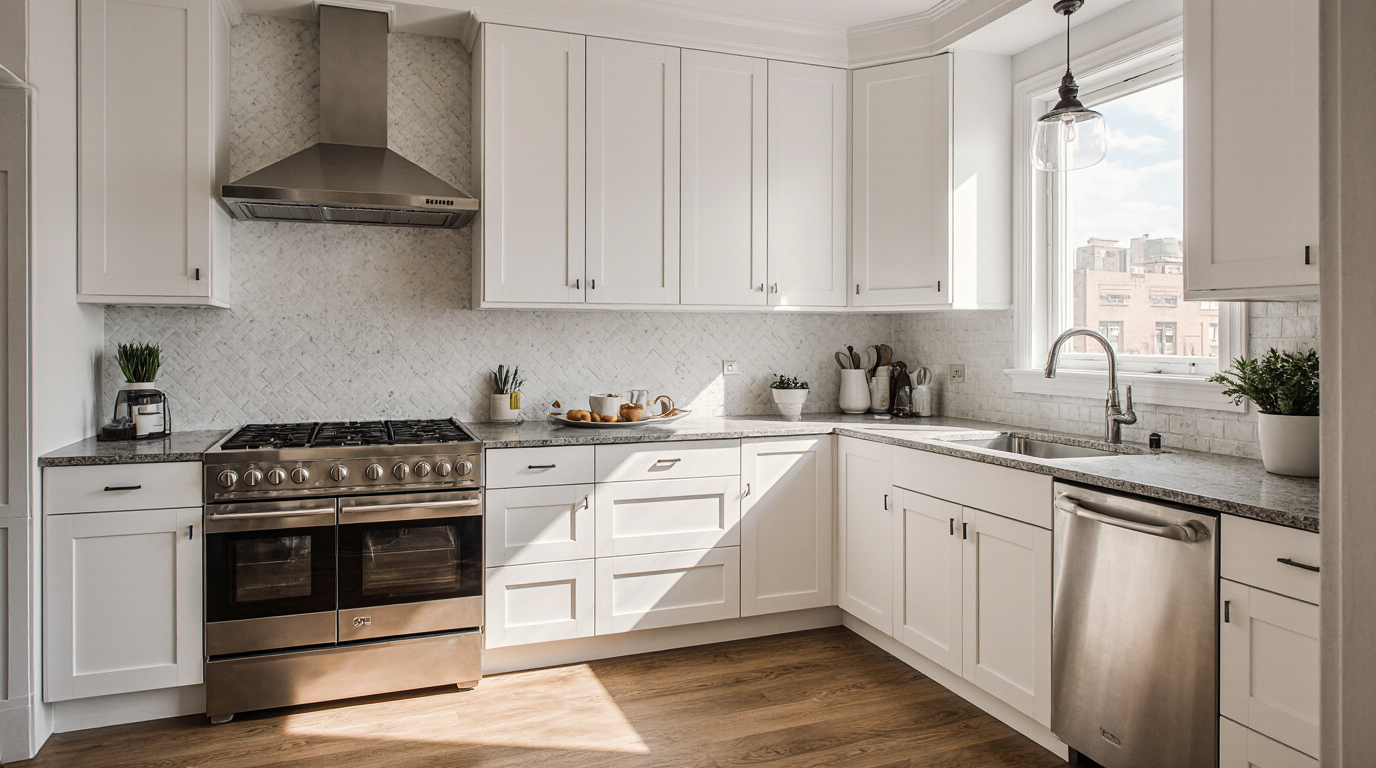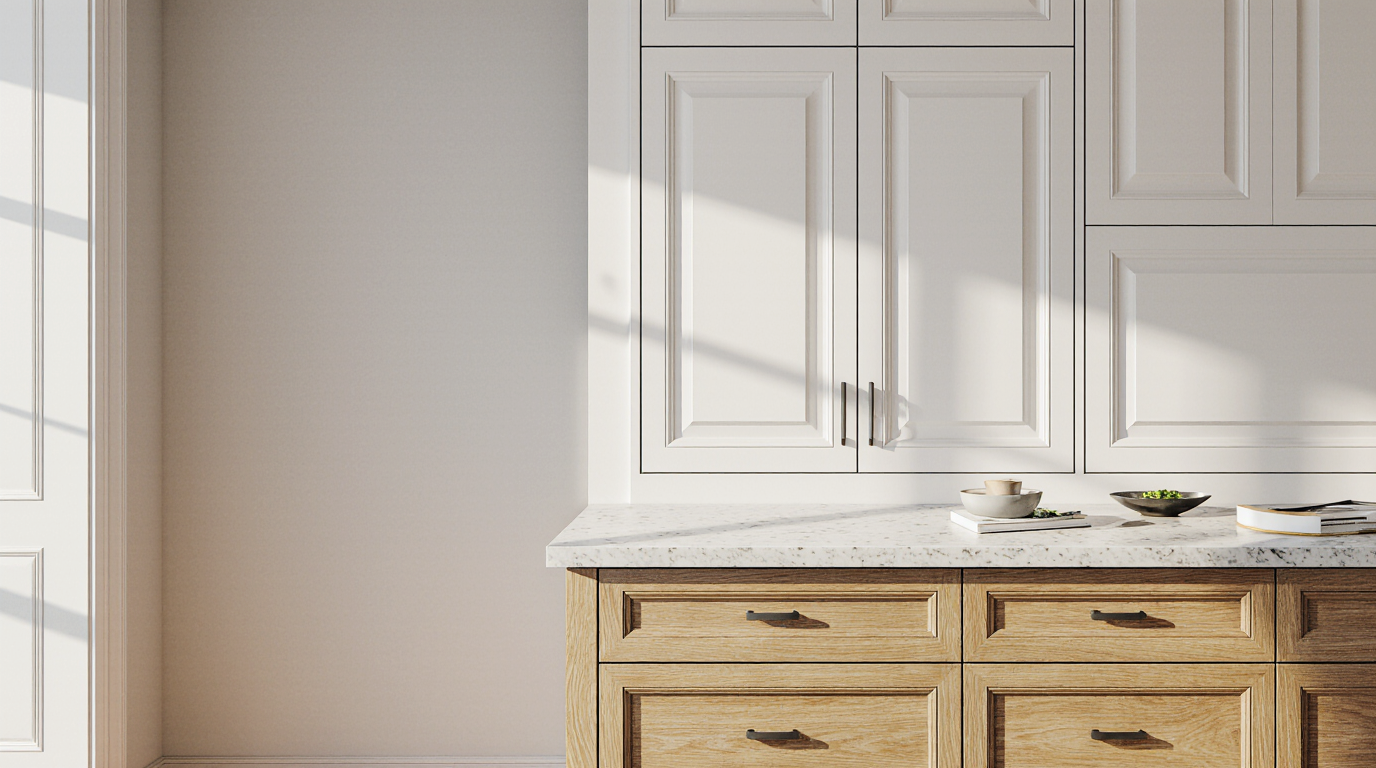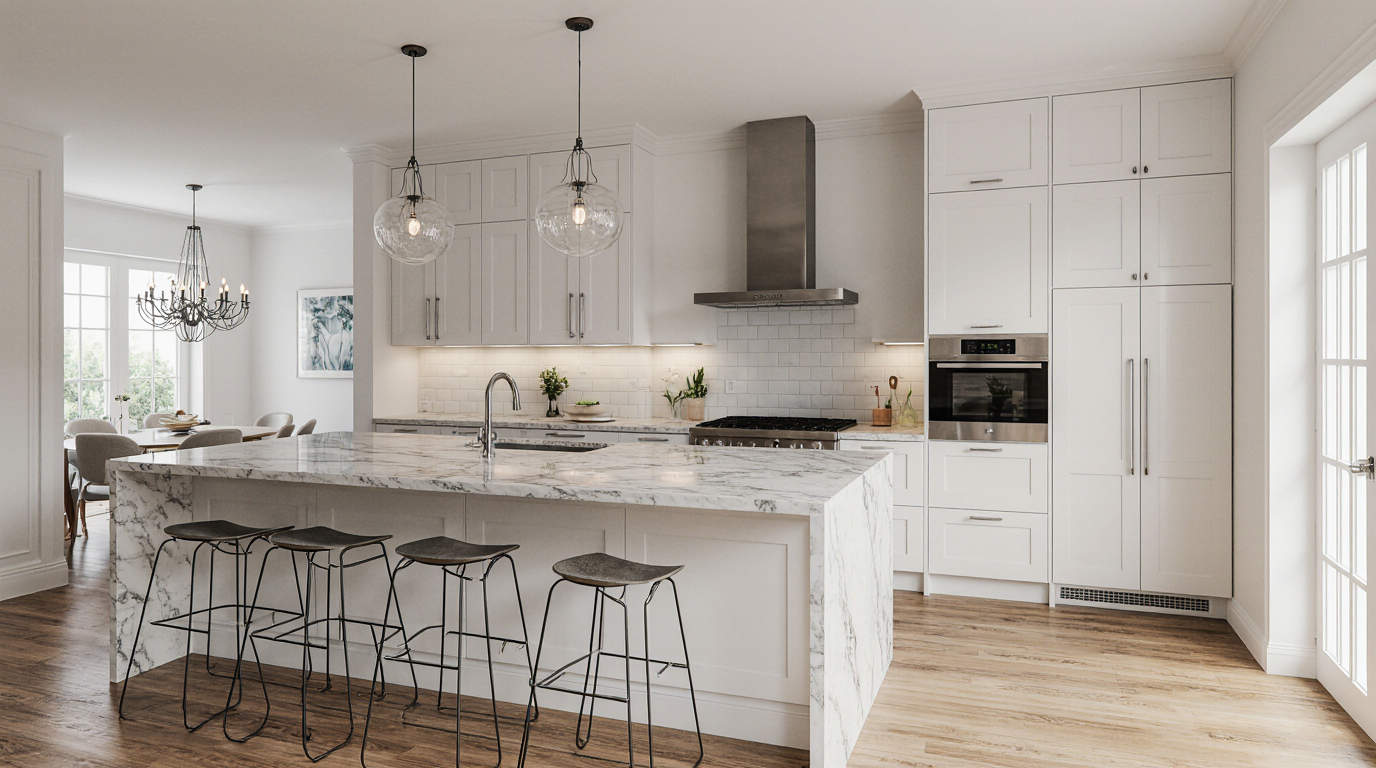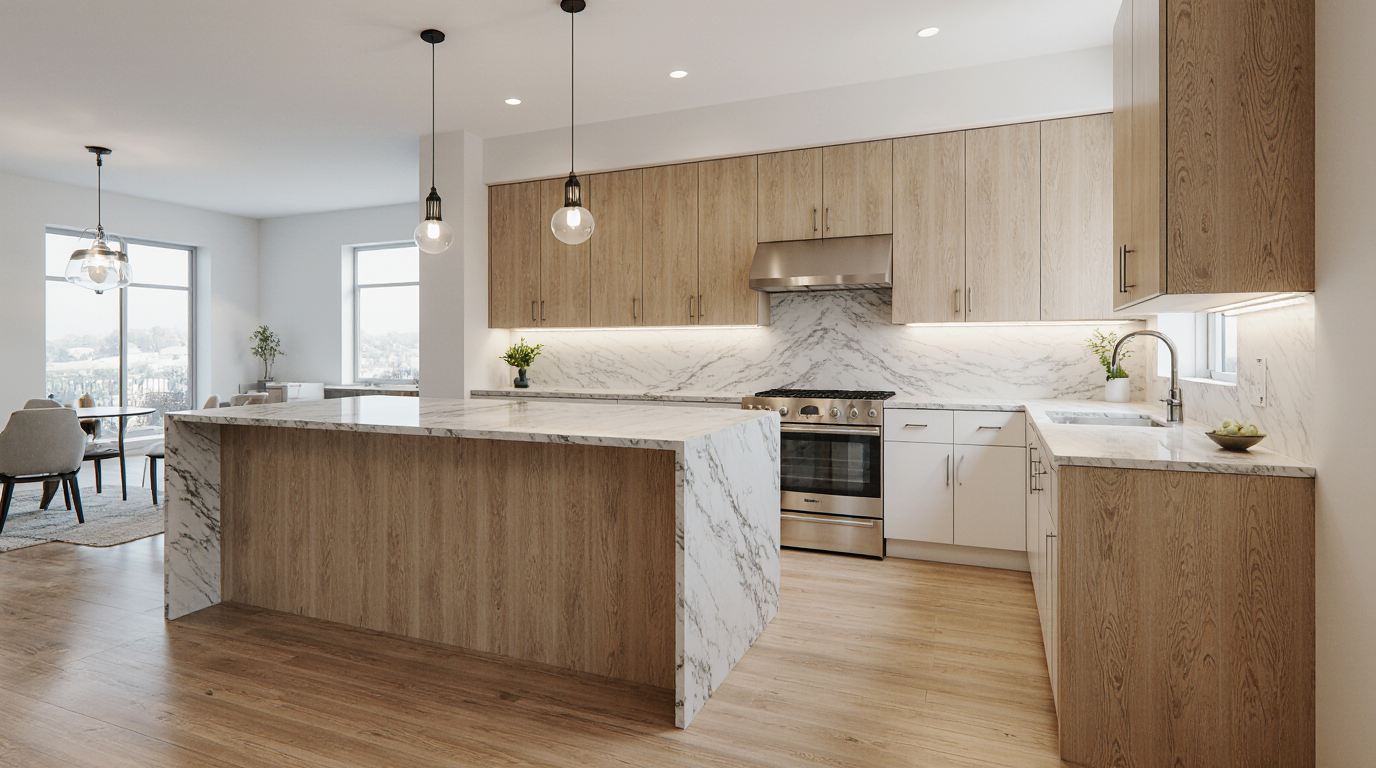
Why do so many “modern” Shaker cabinet installations in Sarasota start to show signs of failure—swollen doors, peeling paint at the joints—within just a few years? The issue is rarely the craftsmanship. The problem lies in a fundamental misunderstanding of how our coastal environment attacks the very construction of a traditional Shaker door, especially when modern finishes and materials are specified without accounting for Florida’s humidity and salt air.
Executive Summary: Navigating Modern Shaker Cabinets in Sarasota
From my direct experience managing kitchen renovations in Sarasota County, success with modern Shaker cabinets depends
From my direct experience managing kitchen renovations in Sarasota County, success with modern Shaker cabinets depends less on the brand and more on the material specification and construction method. The clean, minimalist aesthetic demanded by modern design clashes with the expansion and contraction caused by our climate, making material stability the single most important factor. The five-piece Shaker door, a classic design, becomes a liability here if not built with materials engineered for humidity.
- Material Core is Non-Negotiable: Standard MDF or furniture-grade plywood will fail. The baseline for quality should be marine-grade plywood or solid wood species with high dimensional stability.
- Finish System is a Seal, Not Just Color: A factory-applied, catalyzed conversion varnish is the minimum requirement to create an impermeable barrier against moisture intrusion, especially for white shaker cabinets.
- Hardware Must Resist Corrosion: Salt air corrodes standard steel hardware. Specifying 304 or 316-grade stainless steel for hinges and pulls is not an upgrade; it's a necessity for coastal homes.
- Construction Style Matters: A one-piece MDF shaker-style door often performs better against humidity than a poorly constructed five-piece wood door, as it has no joints to fail. This is a critical trade-off to consider.
The Planning Failures That Compromise Shaker Cabinet Longevity
The most common planning failures I see stem from prioritizing aesthetics over environmental performance. Clients fall in love with a specific shade of white or a sharp-edged Shaker profile they saw online, not realizing that the underlying materials and finishes used in a dry climate like Arizona will not survive a Sarasota summer. This oversight is where projects begin to go wrong long before the first cabinet is installed.
Another frequent misstep is underestimating the role of ventilation. A beautiful new kitchen with modern Shaker cabinets can be compromised by inadequate kitchen ventilation, which traps moisture and steam, accelerating material degradation. It's a system, and the cabinets are just one part of it.
The Most Expensive Failure: Ignoring Humidity's Effect on Wood Joints
The single most expensive failure I've had to remedy for new clients is the cracking of paint at the joints of five-piece Shaker doors. A homeowner spends tens of thousands on what they believe are high-quality white shaker kitchen cabinets, and within 18 months, hairline cracks appear at all four corners of the center panel on every door. This is not a defect; it's the natural movement of wood. The mistake was choosing a five-piece solid wood door for a painted finish in a non-climate-controlled vacation home on Longboat Key. The cost to properly fix this—by replacing all doors with a more stable material—is often 50-60% of the original cabinet cost, a painful and entirely avoidable expense.
The Process for a Durable Sarasota Shaker Kitchen
A successful project follows a strict sequence that front-loads material science. It begins not with design, but with a frank discussion about the home's environment and the client's lifestyle. Is the home occupied year-round? What is the average indoor humidity? Is it on a barrier island like Siesta Key or further inland in a community like Lakewood Ranch? The answers dictate the material palette.
From there, the process moves to detailed shop drawings that specify construction methods—such as using space balls in the panel grooves to manage expansion—and finish schedules. Only after the technical specifications are locked in does the final aesthetic design take place. This reverses the typical process but ensures the final product is built to last in our specific climate.
Selection Criteria for Sarasota Homeowners
When selecting a cabinet provider, you must look past the showroom gloss. The right questions are technical, not just stylistic.
- Does the cabinet box use marine-grade plywood (e.g., BS 1088 rated) or, at a minimum, exterior-grade plywood with waterproof glue? Ask to see a sample.
- What is the specific finishing process? Request the technical data sheet for the catalyzed varnish or polyurethane being used.
- For waterfront properties, do they offer an upgrade to stainless steel or zinc-alloy hardware with a corrosion-resistant coating?
- What is their specific strategy for constructing painted Shaker doors to minimize joint cracking in high humidity? Do they recommend a composite center panel or a one-piece routed door?
- Can they provide references for projects completed at least three years ago in coastal Sarasota locations, not just new installations?
Comparing Material Approaches for Modern Shaker Cabinets
The choice of material for a Shaker door is a series of trade-offs between authenticity, stability, and cost. There is no single “best” option; the right choice depends entirely on the application, location, and homeowner's tolerance for maintenance. The table below outlines the practical realities I've observed in Sarasota projects.
| Material Construction | Humidity Stability | Aesthetic Authenticity | Long-Term Cost |
|---|---|---|---|
| 5-Piece Solid Wood Door | Low to Moderate | High (classic look) | High (risk of joint cracks requires repainting) |
| 5-Piece Door (Wood Frame, MDF Panel) | Moderate to High | High (indistinguishable when painted) | Moderate (significantly reduces center panel movement) |
| 1-Piece Routed HDF/MDF Door | Very High | Moderate (softer inside corners) | Low (most stable option, no joints to fail) |
When a Traditional Shaker Door Is Not the Right Choice
A classic five-piece wood Shaker door is often the wrong choice for a second home or condo that sits closed up for months during the humid summer. Without constant air conditioning running, the indoor humidity levels can skyrocket, causing the wood to expand and stress the joints. In these specific situations, I strongly advise clients to opt for a one-piece routed HDF (High-Density Fiberboard) door. While it may lack the perfectly crisp inside corners of a true five-piece door, its superior stability provides peace of mind and avoids the inevitable disappointment of seeing cracked paint when they return for the season.
A Safe Hiring Checklist for Your Sarasota Project
Ensuring your cabinet investment lasts requires diligence before signing a contract. This checklist is based on the issues I've seen cause the biggest problems for homeowners in Sarasota and Manatee counties.
- Verify Local Licensing and Insurance: Confirm the contractor holds a current, valid license with Sarasota County or the relevant municipality and carries liability and worker's compensation insurance.
- Demand Material Specifications in Writing: The contract must explicitly state the materials for cabinet boxes (e.g., “3/4-inch marine-grade plywood”), door/drawer fronts, and the brand and type of finish. Vague terms like “all wood” are a red flag.
- Review the Hardware Specification: Ensure the quote specifies corrosion-resistant hardware, particularly for homes east of I-75. Blum or Grass hinges with stainless steel components are an industry standard.
- Inquire About Florida Building Code Compliance: For high-rise condos or homes in wind-borne debris zones, cabinets may need to be anchored to meet specific structural requirements. Ask how they address this.
- Check HOA/Condo Association Approval Process: For communities like Lakewood Ranch or downtown condos, get a clear statement on who is responsible for submitting plans to the design review board and factor their typical 30- to 60-day review period into your timeline.
- Ask for a Sample Door: Request a fully finished sample of the exact door style, material, and color you are ordering. Photos are not enough.
Decisions That Determine the Outcome
The ultimate success of a modern Shaker kitchen here is determined by decisions made long before the color is chosen. The most critical choice is allocating a sufficient portion of the budget to what you can't see: the cabinet box materials, the door core, and the multi-step finishing process. A common pattern I observe is homeowners overspending on exotic countertops or appliances, forcing them to compromise on the cabinet specifications. This trade-off almost always leads to regret.
The Exact Moment the Majority Gets It Wrong
The critical error happens during the design phase. A client, presented with two quotes for white Shaker cabinets, sees a 20% price difference and chooses the lower bid. The mistake is assuming they are comparing the same product. The lower price was achieved by substituting furniture-grade plywood for marine-grade, or using a simple lacquer instead of a catalyzed varnish. The right approach is to demand an itemized material and finish specification from each bidder. Only then can you make an apples-to-apples comparison and understand if you are buying a durable product or simply a short-term aesthetic.
Practical Answers About Cabinet Operations in Sarasota
Navigating a kitchen remodel involves more than design; it requires an understanding of local regulations and logistics that can impact your project's timeline and budget.
Permitting for Kitchen Remodels in Sarasota County
If your project involves moving plumbing, electrical, or walls, a building permit from Sarasota County is required. A simple cabinet replacement (“pull and replace”) typically does not. However, if you are in a condo, the association will almost certainly have its own review process. A permit application that includes mechanical, electrical, and plumbing (MEP) drawings can take 4-6 weeks for review and approval, a delay many out-of-state homeowners fail to anticipate.
HOA Design Review Boards in Planned Communities
In master-planned communities, the HOA's Architectural Review Committee (ARC) or Design Review Board (DRB) has final say over any exterior-facing changes, and often interior ones that are visible from the outside (like kitchen windows). They may have rules about work hours, debris placement, and even the types of finishes allowed. Submitting an incomplete package can reset the review clock, which is why a contractor familiar with your specific community's rules is invaluable.
Florida Building Code and Cabinet Anchoring
The Florida Building Code, particularly the sections relevant to our High-Velocity Hurricane Zone (HVHZ), dictates how building components must be secured. While cabinets themselves aren't typically rated for wind load, the walls they attach to are. In new construction or substantial remodels, inspectors will verify that wall blocking is sufficient to securely anchor heavy upper cabinets. A reputable installer will use structural screws fastened into studs or dedicated blocking, not just drywall anchors, to ensure the installation is safe and compliant.