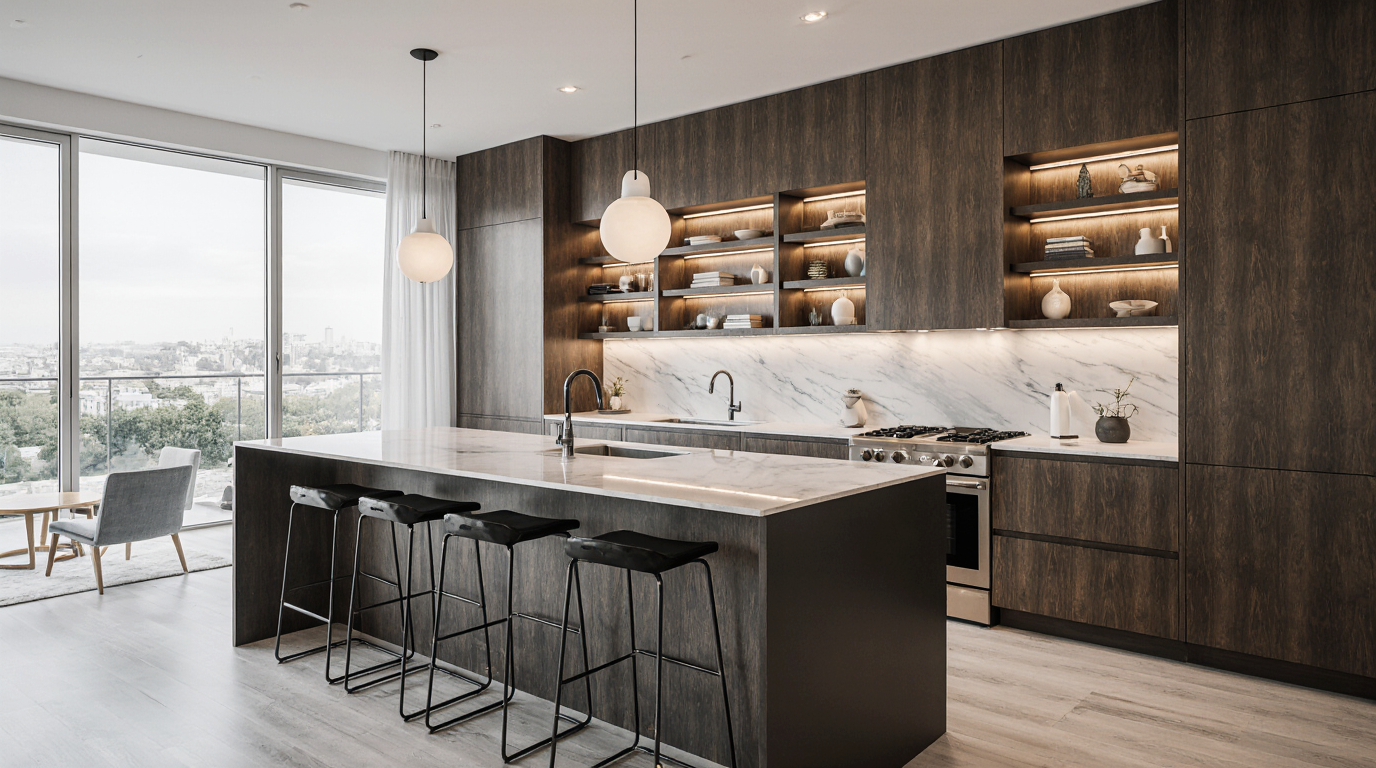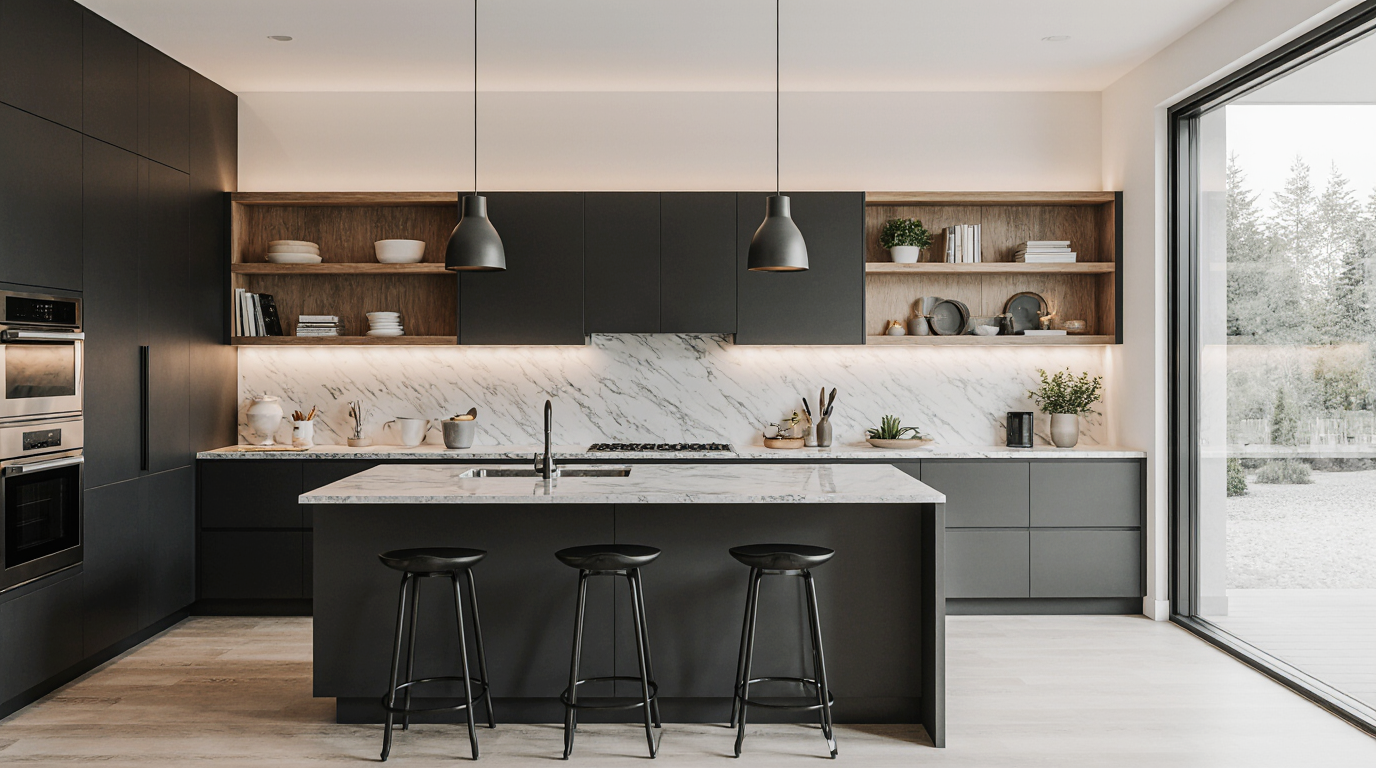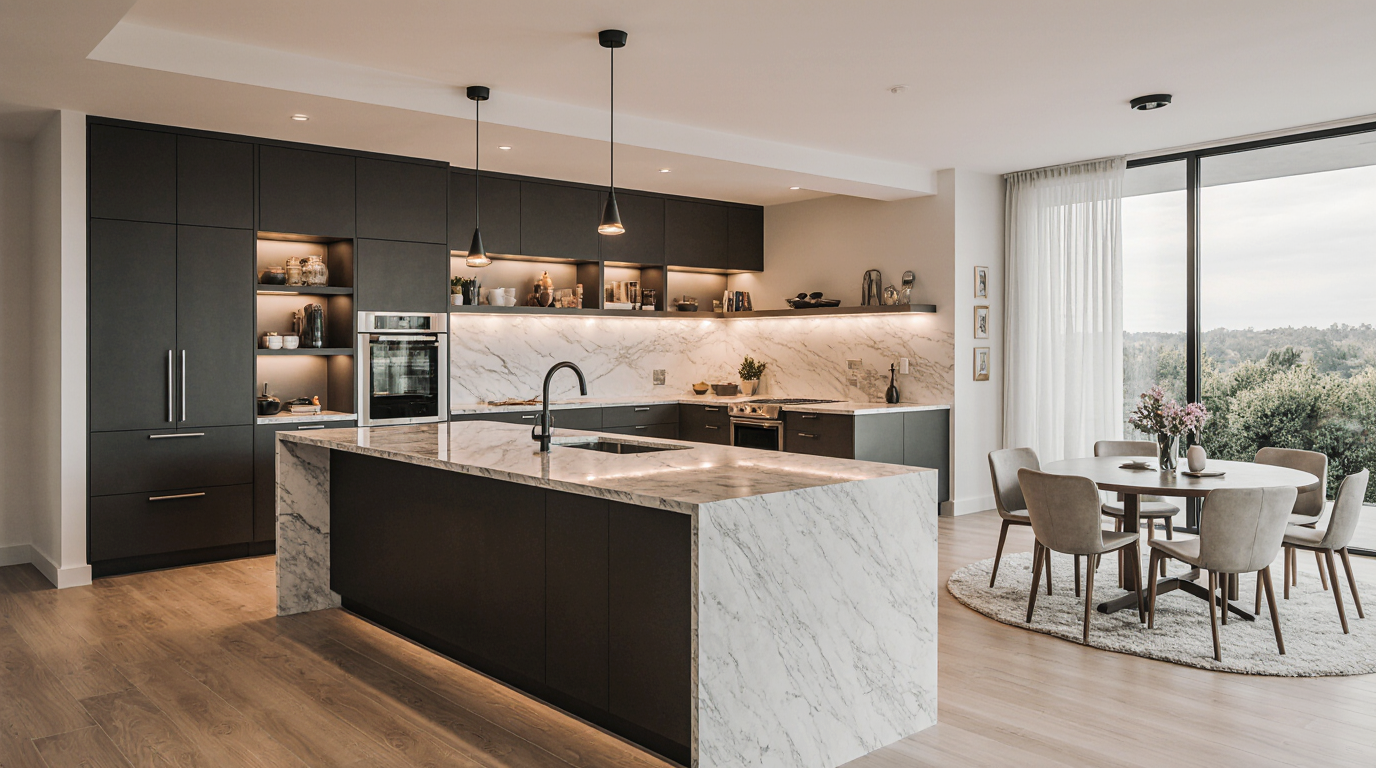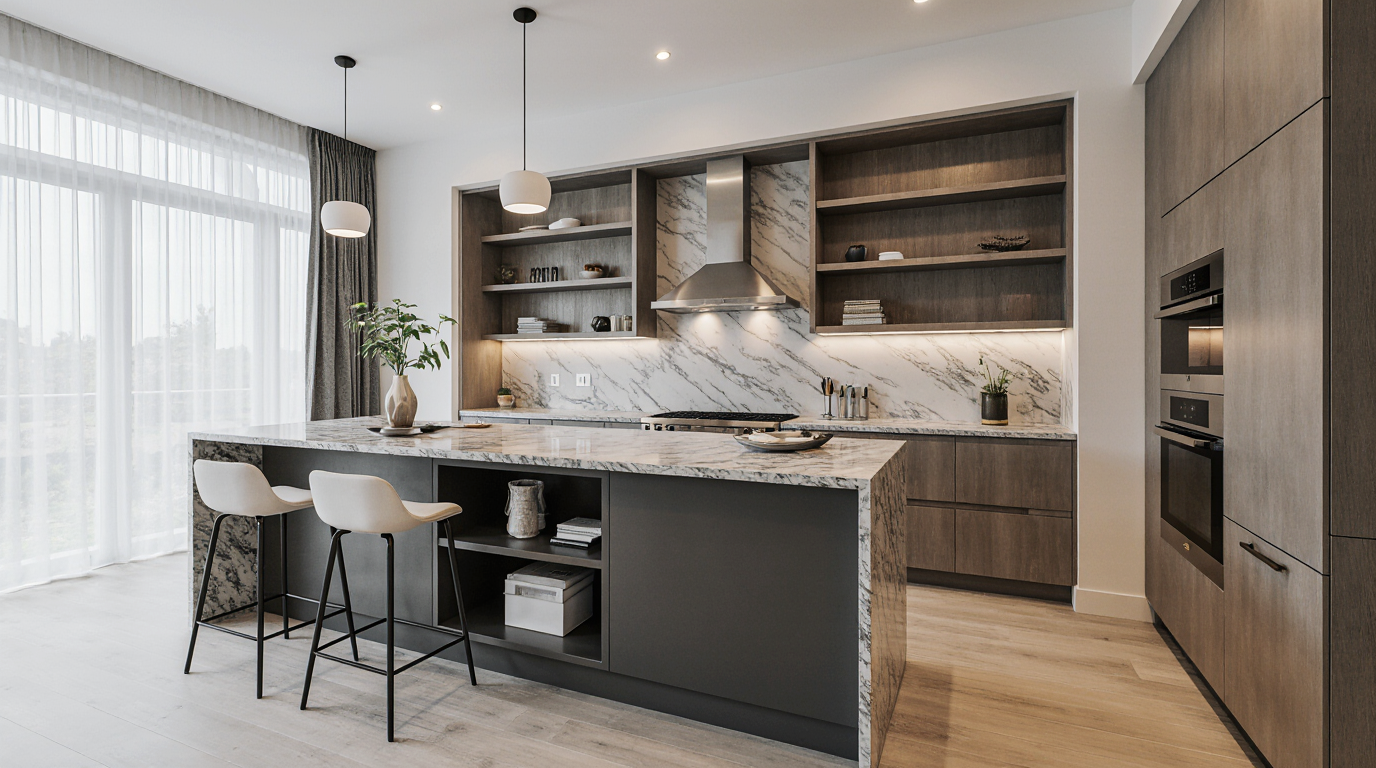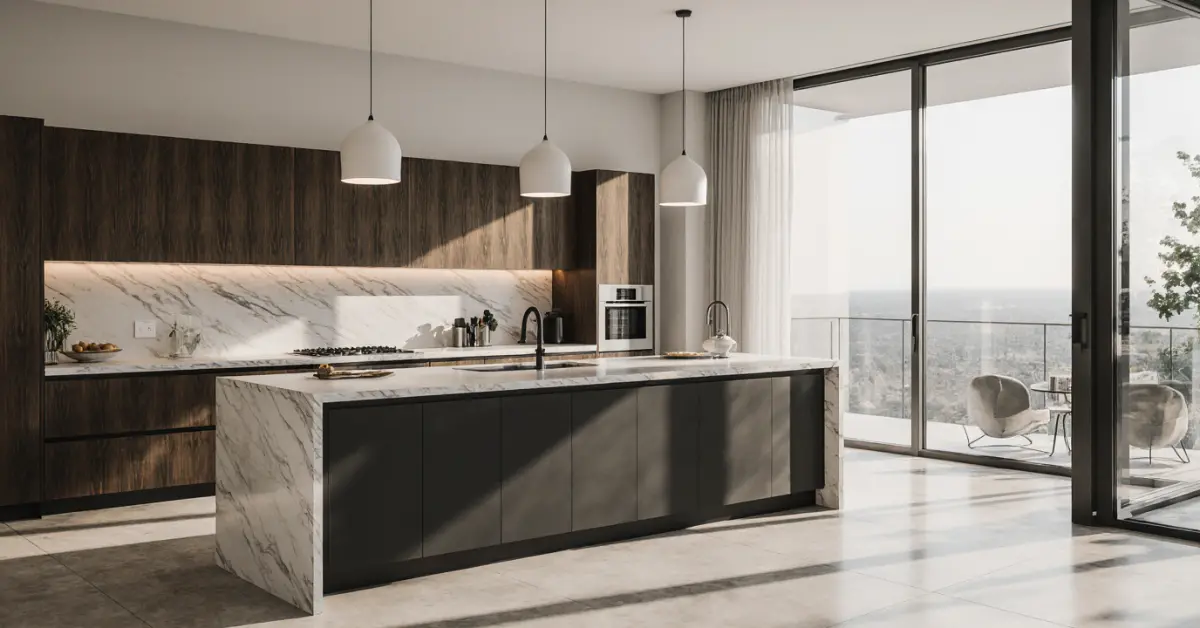
The most important decision when planning a modern kitchen in Sarasota has nothing to do with the countertop material or the appliance brand. It’s about specifying the right core material for your cabinet boxes and the correct finish for your hardware. Get this wrong, and the sleek, European-inspired look you invested in will show signs of failure—warping, delaminating, or rusting—before your first hurricane season is over.
Executive Summary: Modern Kitchens Engineered for the Suncoast
From my years designing and executing high-end kitchens from Bird Key to Lakewood Ranch, I can state that a successful
From my years designing and executing high-end kitchens from Bird Key to Lakewood Ranch, I can state that a successful modern design here is 90% engineering and 10% aesthetics. The minimalist, clean-faced look leaves no room for error; every material must perform flawlessly against intense humidity and salt exposure. The defining challenge is achieving a sophisticated, contemporary or even modern rustic style without compromising on durability in our coastal climate.
- Material Priority: The core of your cabinetry—not the door style—is the most critical choice. Marine-grade plywood or specialized polymer cores often outperform standard furniture-board MDF, which can swell with humidity.
- Hardware Specification: Standard steel or nickel hardware will corrode. Specify 316-grade stainless steel or PVD (Physical Vapor Deposition) coated hardware for waterfront or near-waterfront properties.
- Ventilation is Non-Negotiable: A high-CFM, properly vented range hood is not just for cooking odors; it's a primary tool for humidity management in the kitchen, protecting your investment.
- Code & HOA Compliance: Any project involving window or exterior door changes must comply with the Florida Building Code's High-Velocity Hurricane Zone (HVHZ) requirements, a detail that can delay projects for months if overlooked during the design phase.
The Planning Failures That Compromise Sarasota Kitchens
The most common mistakes I see are born from applying design trends from drier, inland climates to our coastal environment. A design that looks stunning in a magazine based out of California can become a maintenance nightmare here. The failures almost always trace back to underestimating the impact of humidity and salt on modern materials.
For example, large, seamless cabinet doors, a hallmark of modern design, are highly susceptible to warping. If the material isn't dimensionally stable or properly sealed on all six sides, the door will bow within a year. Another issue is the improper specification of integrated lighting, where heat buildup in a humid, enclosed space can lead to premature failure of expensive LED systems.
The Most Expensive Failure: Ignoring Substrate and Sealing
The costliest error is choosing a cabinet door based on its color or finish while ignoring its core substrate. I was called to a project in a Lido Key condo where a client had beautiful, high-gloss acrylic doors installed. Within two years, the edges began to delaminate. The problem wasn’t the acrylic finish; it was the standard-grade MDF core, which had absorbed ambient moisture and swelled, breaking the seal on the edge banding. The only fix was a complete replacement of every cabinet front, a devastating and entirely avoidable expense.
The Design and Build Process in Practice
A modern kitchen project in Sarasota follows a distinct path dictated by local conditions and regulations. It begins with a deep analysis of the home's specific location—is it directly on the bay, or further inland in a community like The Founders Club? This determines the baseline for material specifications. The process then moves from conceptual design and material selection to technical drawings, which are crucial for both permitting and HOA approvals.
Once plans are approved, fabrication begins, often taking 8-12 weeks for high-quality custom work. Installation is the final, critical phase, where proper sealing of all penetrations and precise anchoring of elements like a luxury kitchen island are paramount. The entire process, from initial consultation to completion, realistically takes 4 to 6 months, with HOA reviews often adding 30-60 days to the front end.
Selection Criteria for a Sarasota-Specific Designer
- They ask about your home's proximity to saltwater in the first meeting.
- Their portfolio includes projects on the barrier islands (Lido Key, Siesta Key, Longboat Key) that are at least 5 years old.
- They can explain the performance differences between marine-grade plywood and standard particleboard.
- They have established relationships with contractors who understand Sarasota's building codes and permit processes with the county.
Comparing Modern Custom Cabinetry with Alternatives
When planning a kitchen renovation, clients often weigh fully custom work against semi-custom or stock options. For a modern aesthetic in Sarasota's demanding climate, the differences go far beyond door styles and color choices. The primary distinction lies in material quality and construction methods, which directly impact longevity.
A sleek, contemporary kitchen island, for example, requires precise engineering to support a heavy stone waterfall edge and integrate appliances seamlessly. This level of precision is often difficult to achieve with modular, stock cabinetry. Here's how the options stack up for a high-performance modern kitchen.
When a Full Custom Approach Isn't the Right Choice
A full custom modern kitchen is a significant investment. If your renovation budget is under $75,000, or if you plan to sell the property within the next three to five years, the ROI may not justify the expense. In these cases, a high-quality semi-custom line that offers durable finishes and plywood box construction can provide a similar aesthetic at a more accessible price point, even if it means fewer customization options.
| Feature | Full Custom Modern | Semi-Custom | Stock / Big Box |
|---|---|---|---|
| Core Material Options | Marine-grade plywood, Medex, polymer cores | Plywood upgrade available, but limited | Primarily particleboard or MDF |
| Humidity/Salt Resistance | Engineered for coastal use; sealed on all sides | Varies; may have vulnerable seams | Poor; highly susceptible to swelling |
| Typical Lifespan (Coastal) | 20+ years | 8-12 years | 3-7 years |
A Safe Hiring Checklist for Your Project
Selecting the right team is the single most important factor for success. A designer or builder who lacks specific experience with coastal Florida construction can inadvertently specify materials or methods that are doomed to fail. Use this checklist to vet potential partners and protect your investment.
- Verify their Florida contractor's license is active and they carry proper liability and workers' compensation insurance.
- Request references from at least two projects completed over five years ago in a waterfront or coastal setting within Sarasota County.
- Ask for a detailed material specification sheet that lists the exact grade of plywood, hardware material (e.g., 316 stainless steel), and finishing process.
- Confirm their familiarity with the design review process for your specific HOA, especially in master-planned communities like Lakewood Ranch.
- Discuss their plan for humidity and dust control during the installation phase, which is critical in a finished home.
- Ensure the contract specifies compliance with the current edition of the Florida Building Code, particularly regarding anchoring and structural attachments.
- Ask how they handle service calls for warranty issues, specifically for door adjustments needed after the home goes through its first full summer humidity cycle.
The Decisions That Truly Determine the Outcome
After overseeing dozens of modern kitchen projects, I've learned that the final result hinges on a few key decisions made early in the process. The first is accepting that materials suitable for other regions are often unsuitable here. This means prioritizing performance over a specific, trendy look if the two are in conflict.
The second critical decision is allocating budget appropriately. In Sarasota, it makes more sense to invest in a higher-grade cabinet box and more durable hardware and compromise on a less exotic countertop than to do the reverse. A beautiful slab of quartzite on a swelling particleboard box is a failed kitchen.
The Exact Moment the Majority Gets It Wrong
The most common misstep occurs during the initial design consultation. Clients often arrive with a portfolio of images from national design websites, focused entirely on the final look. The right approach is to start with a technical audit of the home's environment. We should be discussing the HVAC system's dehumidifying capabilities, the proximity to the bay, and the existing ventilation before we even look at a single door sample. Shifting the conversation from aesthetics to performance at the very beginning is what separates a successful project from a future problem.
Practical Answers About Operations in Sarasota
Navigating the practical side of a kitchen renovation here involves more than just design. You have to contend with local building departments, powerful HOAs, and the logistical challenges of a seasonal population. Understanding these operational hurdles is key to a smooth project.
Understanding Sarasota County Permitting Timelines
Any kitchen renovation that involves moving walls, altering plumbing, or changing electrical layouts requires a permit from Sarasota County. As of late, plan reviews for a straightforward interior renovation can take anywhere from 4 to 8 weeks. This timeline must be factored into your project schedule, especially if you are a seasonal resident trying to complete work during the off-season.
Navigating HOA Design Review Boards
In communities from Palmer Ranch to Longboat Key, the HOA design review board is often more stringent than the county building department. They typically have specific rules about exterior modifications (like new vent locations), noise during construction hours, and even the types of materials visible from the outside. Submitting an incomplete package can result in a denial that pushes your project back by a month or more, awaiting the next board meeting.
Florida Building Code and Cabinet Anchoring
The Florida Building Code is especially concerned with how elements are secured to the structure. While it may seem minor, the anchoring of upper cabinets and tall pantry units is a point of inspection. Cabinets must be secured to structural studs with appropriately sized fasteners capable of handling significant loads. This is particularly important for heavy, built-in appliances and is a detail an out-of-state designer might overlook.