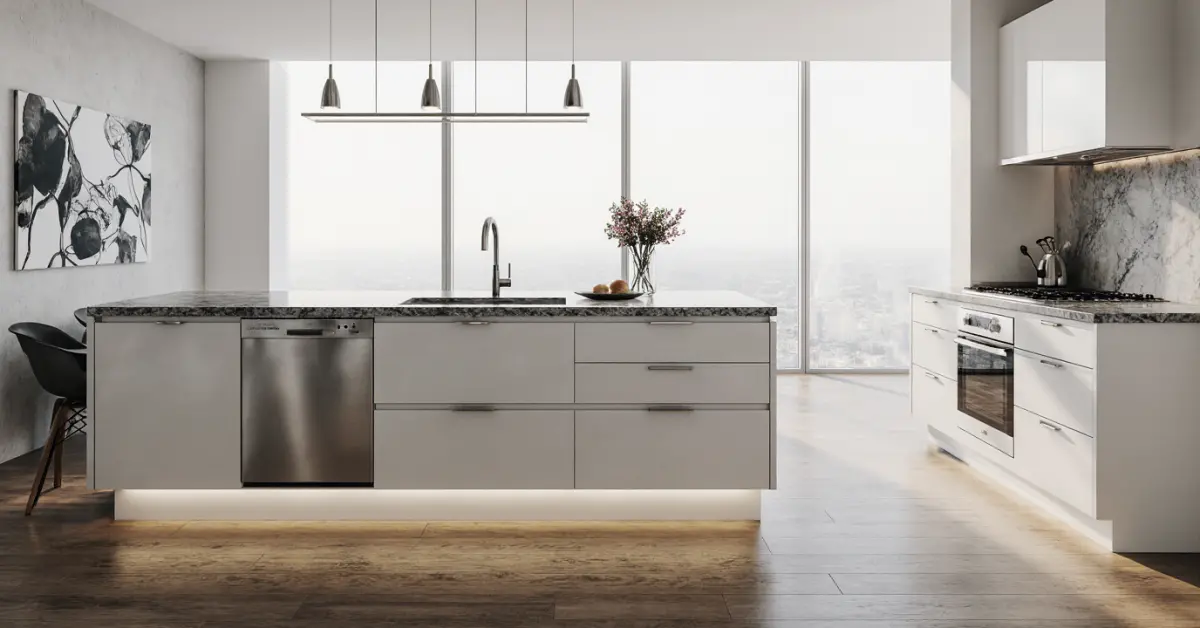
In many Sarasota communities, particularly those with stringent Architectural Review Boards like in Lakewood Ranch, the design approval process for a major kitchen remodel can take up to 60 days. For a seasonal resident, that two-month delay isn't just an inconvenience; it can consume a significant portion of their time in Florida, turning a planned renovation into a logistical nightmare. The most critical factor for success isn't the cabinet finish, but mastering the pre-construction timeline dictated by local oversight.
Executive Summary: Modern Cabinetry in a Coastal Environment
From my direct experience executing high-end kitchen projects in Sarasota, achieving a lasting modern aesthetic is less
From my direct experience executing high-end kitchen projects in Sarasota, achieving a lasting modern aesthetic is less about the color palette and more about battling humidity and salt. The sleek, flat-panel look is unforgiving; any material that warps or swells, even by a millimeter, ruins the entire visual. I've had to replace entire kitchens just two years post-install because the original specifier chose a standard MDF core that couldn't handle the moisture load in a home west of the Trail.
- Material Core is Paramount: The substrate—what's under the veneer or lacquer—is more important than the surface. Standard particle board or MDF will fail.
- Hardware is Not an Afterthought: Salt air corrodes standard steel hinges and drawer slides. Specify 304 or 316-grade stainless steel hardware from the start.
- Finish Integrity is Key: The seal on all six sides of every door and panel—including the back and edges—is what prevents moisture intrusion. Factory-applied, catalyzed finishes are non-negotiable.
- Ventilation Strategy Matters: A modern kitchen's performance in Sarasota is directly tied to the home's HVAC and dehumidification systems. Cabinetry cannot be expected to survive in a poorly conditioned space.
The Planning Failures That Compromise Modern Designs
The most common mistakes I see in Sarasota projects happen at the design stage, long before any materials are ordered. They stem from prioritizing aesthetics seen in a non-coastal context over the material science required for our environment. A beautiful modern grey or dark green kitchen can look dated in a few years if the underlying structure fails.
For instance, clients often fall in love with large, seamless cabinet doors. But a 48-inch-tall door made from the wrong substrate will inevitably bow in our humidity. The result is uneven gaps and doors that no longer close properly, destroying the clean lines that define the modern look. This isn't a defect in craftsmanship; it's a failure of material specification.
The Single Most Expensive Mistake: Ignoring the Substrate
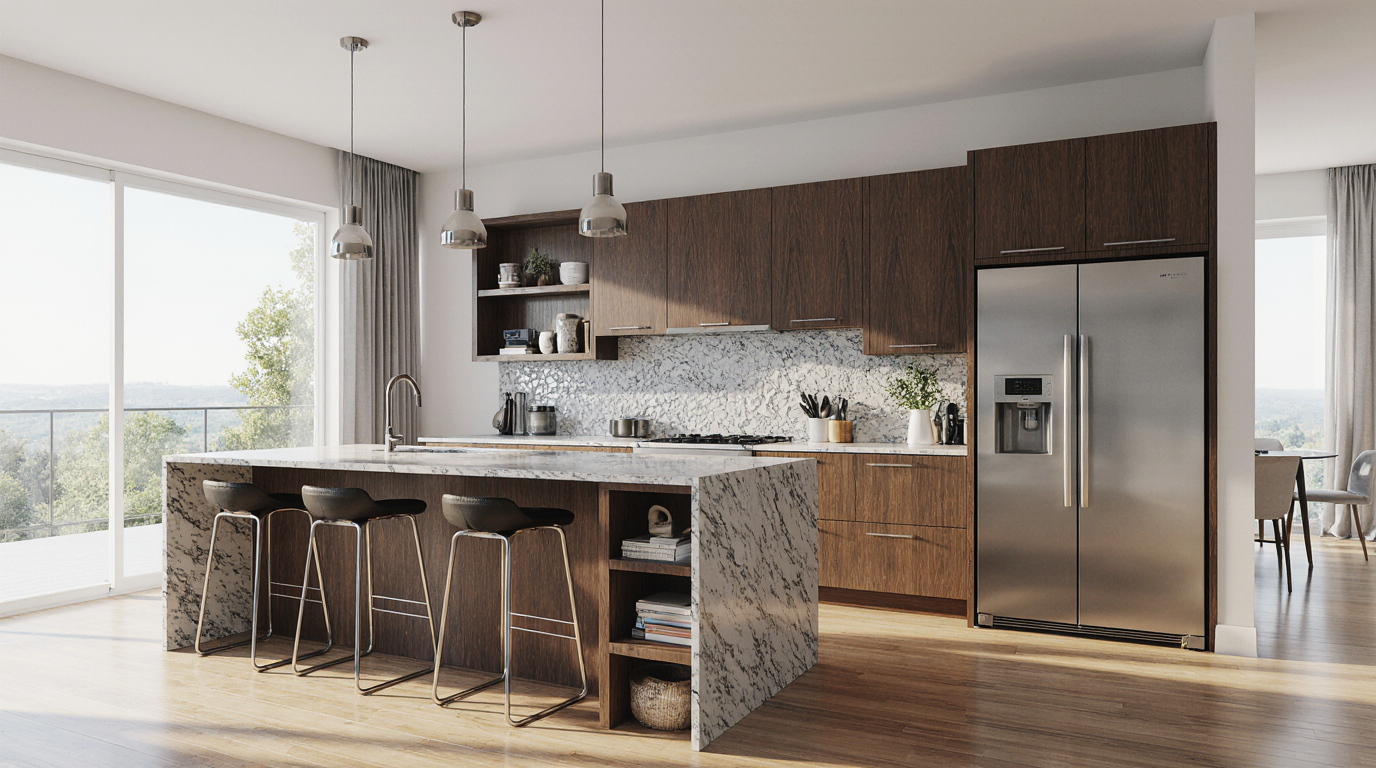
The costliest error I consistently witness is choosing a cabinet line based on its beautiful wood veneer or lacquer color while ignoring the core material. A client on Longboat Key insisted on a specific European line for its unique brown modern kitchen finish. The cabinets were stunning, but they were built on a standard-grade particleboard core. Within three years, the panels closest to the dishwasher and sink had swelled from ambient moisture and steam, causing the veneer to bubble and peel. The repair wasn't possible; the only solution was a full replacement of the affected units, a multi-thousand dollar fix that could have been avoided by specifying a marine-grade plywood or high-density composite core from the outset.
How Modern Cabinet Projects Unfold in Sarasota
A successful project follows a strict sequence that accounts for local realities. It begins with a deep analysis of the home's specific location—a condo on Lido Key has a different set of challenges than a home in an inland golf community. The process must integrate material selection, HOA approvals, and subcontractor scheduling in parallel, not sequentially.
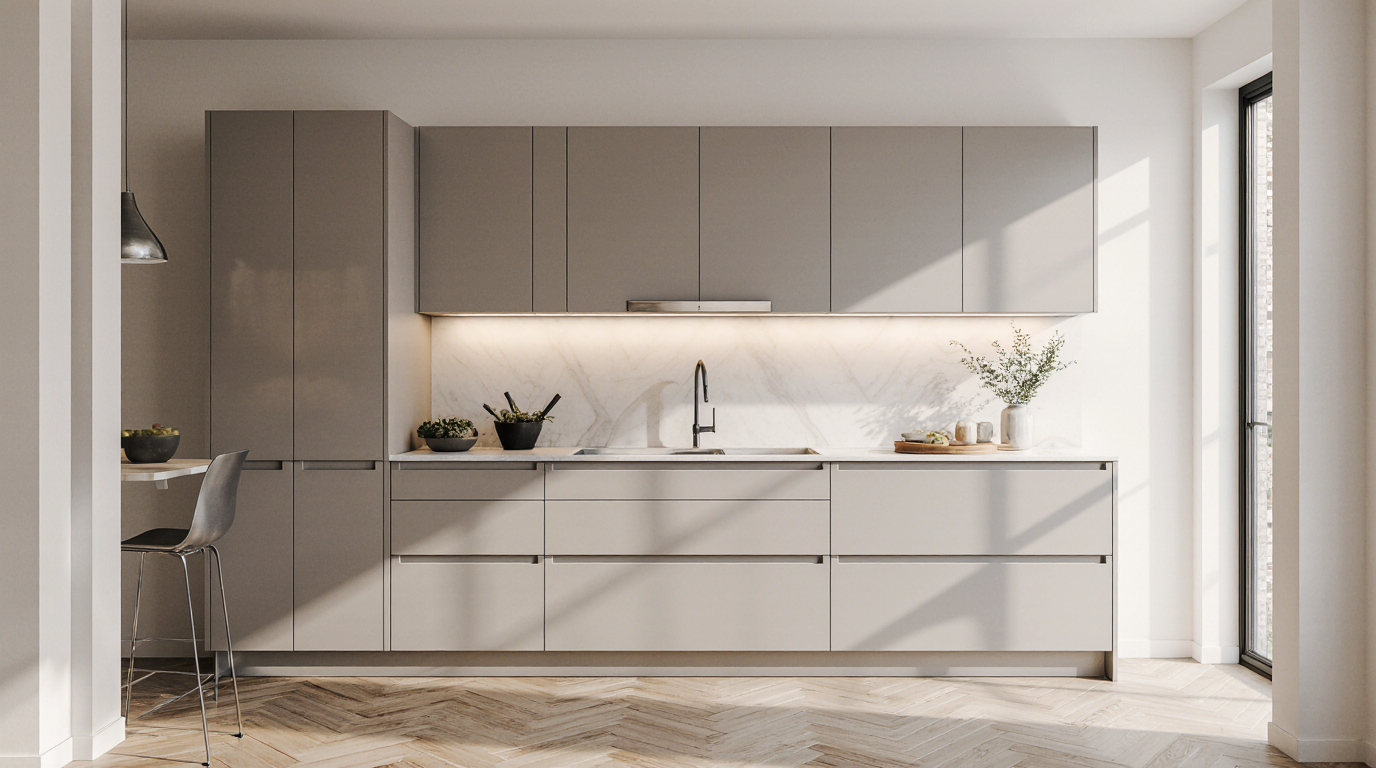
After the initial design concept, we immediately move to material specification, focusing on humidity-resistant cores and corrosion-proof hardware. Only then do we finalize aesthetic choices like door styles and colors—be it a classic modern white cabinet or a bold dark green. Once materials are locked in, we submit the complete package to the local building department and, crucially, any applicable HOA or condo association board for review.
Key Selection Criteria for Sarasota Homeowners
- Verified Local Installations: Ask to see projects that are at least five years old and located west of I-75. This is the only way to verify how a company's materials and installation methods hold up to our climate.
- HOA/Condo Board Experience: The firm must demonstrate a clear process for navigating design review boards. Ask for specific examples of submissions to associations in communities like The Concession or Harbor Acres.
- In-House vs. Subcontracted Installation: Understand who is responsible for the installation. A team that directly controls the installers can better manage quality and adapt to the on-site conditions of a Sarasota renovation.
- Hurricane Code Compliance: For any work involving wall modifications, ensure the contractor understands how to properly anchor cabinetry to meet Florida Building Code requirements for wind load, especially in high-rise buildings.
Comparing Material Approaches for a Modern Look
The term "modern cabinets" can refer to several different construction methods and materials. For a Sarasota homeowner, the choice is not just about looks; it's about long-term performance and value. Below is a comparison based on what I’ve seen succeed and fail in our specific market.
| Feature | Acrylic / High-Gloss Laminate on Marine Plywood | Painted Hardwood (e.g., Maple) | Textured Melamine / Wood-Look Laminate |
|---|---|---|---|
| Humidity Resistance | Excellent. The non-porous surface and stable core resist swelling and warping. | Fair. Prone to hairline cracks at joints as wood expands and contracts. | Good to Excellent. Dependent on the quality of the edge banding and substrate. |
| Salt Air Corrosion | Surface is impervious. Overall durability depends on stainless steel hardware. | The paint finish is vulnerable to chipping, which can expose wood to moisture. | Surface is resistant. Edges are the weak point if not perfectly sealed. |
| Cost | High initial investment. | Moderate to High. | Moderate. Offers the look of a modern cabinet wood without the instability. |
| Maintenance | Low. Easy to clean, does not require refinishing. | High. Requires touch-ups for chips and periodic checks of joint stability. | Low. Highly durable and scratch-resistant surface. |
When a Full Custom Modern Approach Isn't the Right Choice
There are situations where commissioning a fully custom modern kitchen is not the best path. If your renovation budget is tight or the property is an investment rental where durability trumps high design, a semi-custom line that uses high-quality thermofoil doors on a plywood box can be a more practical solution. While it may not offer the infinite color and size options of true custom, the factory-sealed surfaces provide excellent moisture resistance at a lower price point. It’s a pragmatic trade-off I’ve recommended for projects where the return on investment for a high-end custom build just wasn’t there.
A Practical Checklist for Hiring in Sarasota
To protect your investment, your vetting process must be adapted to our local market. A contractor who does great work in a dry climate may not have the specific technical knowledge needed here. Use these points to guide your decision.
- Verify the cabinet maker's supplier for core materials. Ask specifically if they offer marine-grade plywood or other water-resistant composite panels.
- Request a written specification for all hardware, confirming it is at minimum 304-grade stainless steel for all hinges, pulls, and drawer slides.
- Ask for their standard procedure for sealing cabinet boxes and doors. Do they seal all six sides of every component before assembly?
- Confirm they carry appropriate liability and workers' compensation insurance valid in the state of Florida.
- Review their process for handling HOA/condo association approvals, including who is responsible for preparing and submitting the required architectural drawings and material samples.
- Discuss their warranty in detail. Specifically, does it cover issues related to humidity, such as warping or delamination? Many standard warranties have climate-related exclusions.
- Check their license status with the Florida Department of Business and Professional Regulation (DBPR).
Decisions That Determine the Outcome of Your Project
After overseeing dozens of modern kitchen installations in Sarasota, I can trace project success or failure back to a few key decisions made by the homeowner. The first is accepting that materials suitable for other parts of the country are simply not viable here. Resisting the upcharge for a marine-grade substrate, which can be around 15-20% more than standard plywood, is a classic example of saving money upfront only to spend far more on repairs later.
Another critical decision is designing the kitchen in concert with the home's mechanical systems. A stunning, handleless kitchen with precise gaps will fail if the home's dehumidifier is undersized or poorly maintained. The cabinetry is part of an ecosystem, and you have to plan for the entire system, not just the boxes on the wall.
The Exact Moment Most Homeowners Get It Wrong
The critical error usually happens at the very beginning. A homeowner will spend weeks, sometimes months, finalizing the layout, appliance locations, and color scheme with a designer. Only after the entire aesthetic is emotionally and financially committed to do they bring in the cabinet maker to bid the project. At this point, they discover that the specified materials are unsuitable for the climate, or the desired oversized doors are structurally unstable. The correct approach is to engage a reputable, local cabinet maker *during* the design phase, not after. This allows material science and structural limitations to inform the design from day one, preventing costly and heartbreaking redesigns.
Practical Answers for Operating in Sarasota
Navigating a renovation here involves more than just design and construction. You have to contend with local regulations, community oversight, and environmental factors that can derail a project if not properly managed.
Navigating Sarasota County Permitting for Kitchen Remodels
If your kitchen remodel involves moving walls, altering plumbing, or changing electrical layouts, a permit from Sarasota County is required. A simple cabinet replacement (a "pull and replace") typically does not. The permit application requires detailed plans. The typical review time for a straightforward interior remodel permit can range from 4 to 8 weeks, a timeline that must be factored into your project schedule, especially if you are a seasonal resident.
HOA and Condo Association Design Review Boards
In master-planned communities or condominium buildings, the HOA or Condo Association has the final say. Their review process is separate from and often more stringent than the county's. They will scrutinize material choices, color palettes, and even the noise and debris management plan for the project. Submitting an incomplete package is the fastest way to get your project delayed by months. A complete submission should include physical samples, manufacturer spec sheets, and the contractor's insurance certificates.
Florida Building Code and Coastal Construction
The Florida Building Code has specific requirements for construction in coastal areas, particularly concerning wind loads. While this most directly impacts windows and exterior walls, it can affect kitchen design. For example, in high-rise condos on the keys, large pantry cabinets or appliance towers must be anchored to the structure in a way that can withstand significant building movement and wind pressures. This is not a standard installation practice in other states and requires a contractor with specific local engineering knowledge.