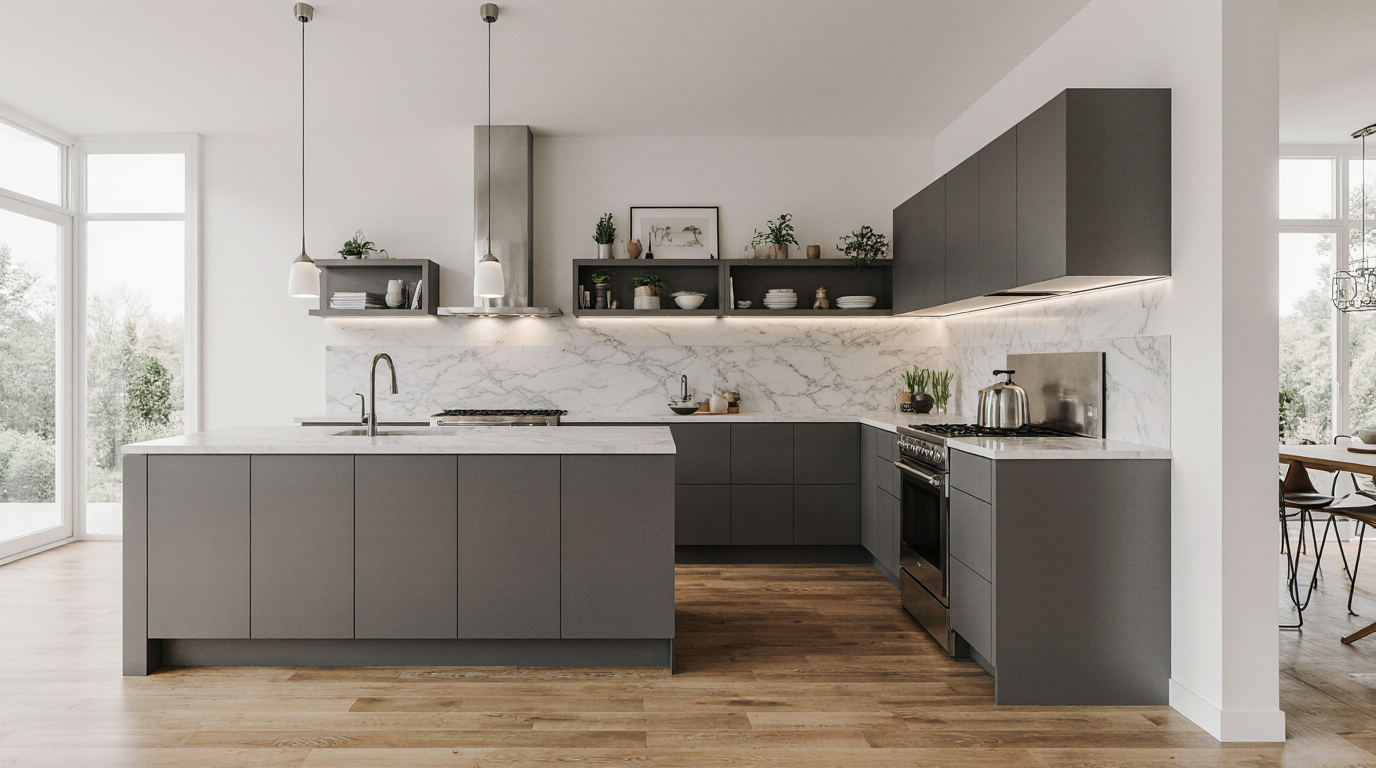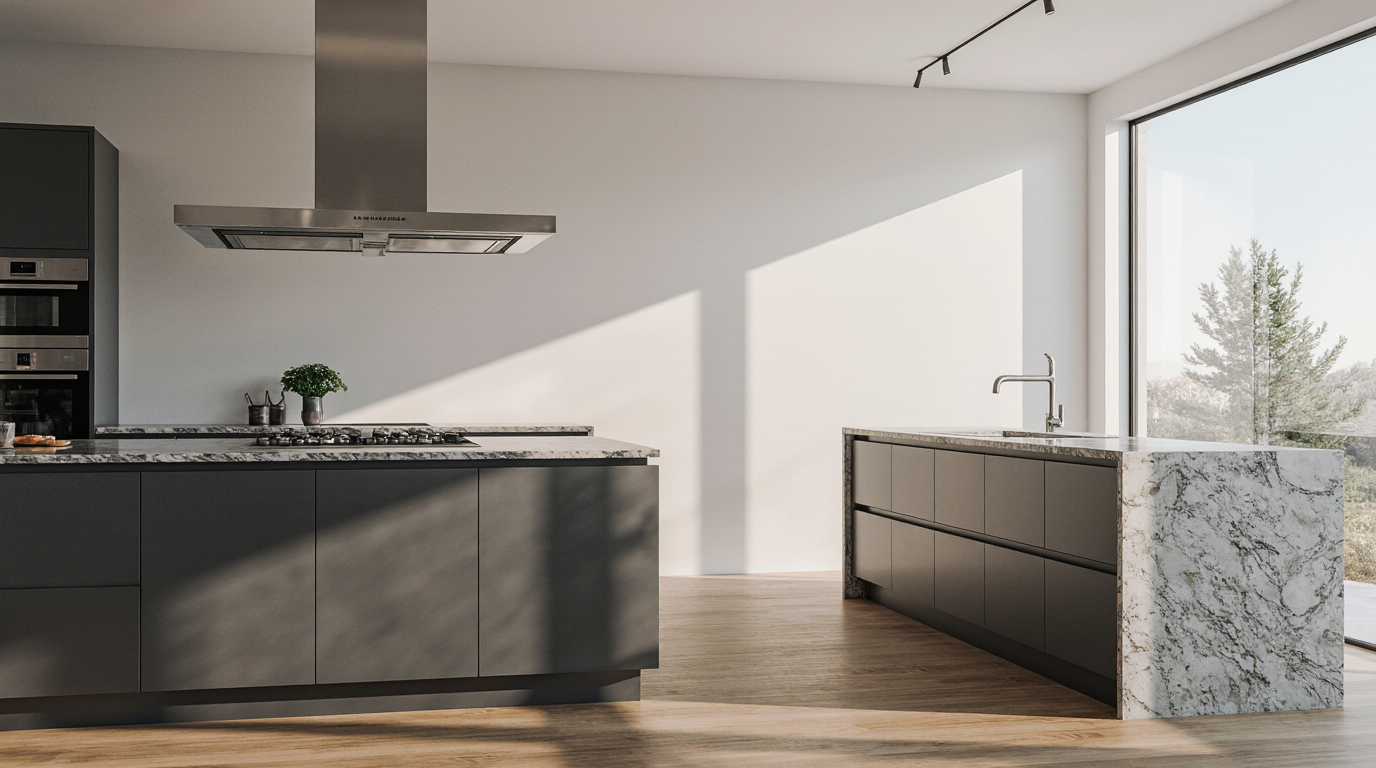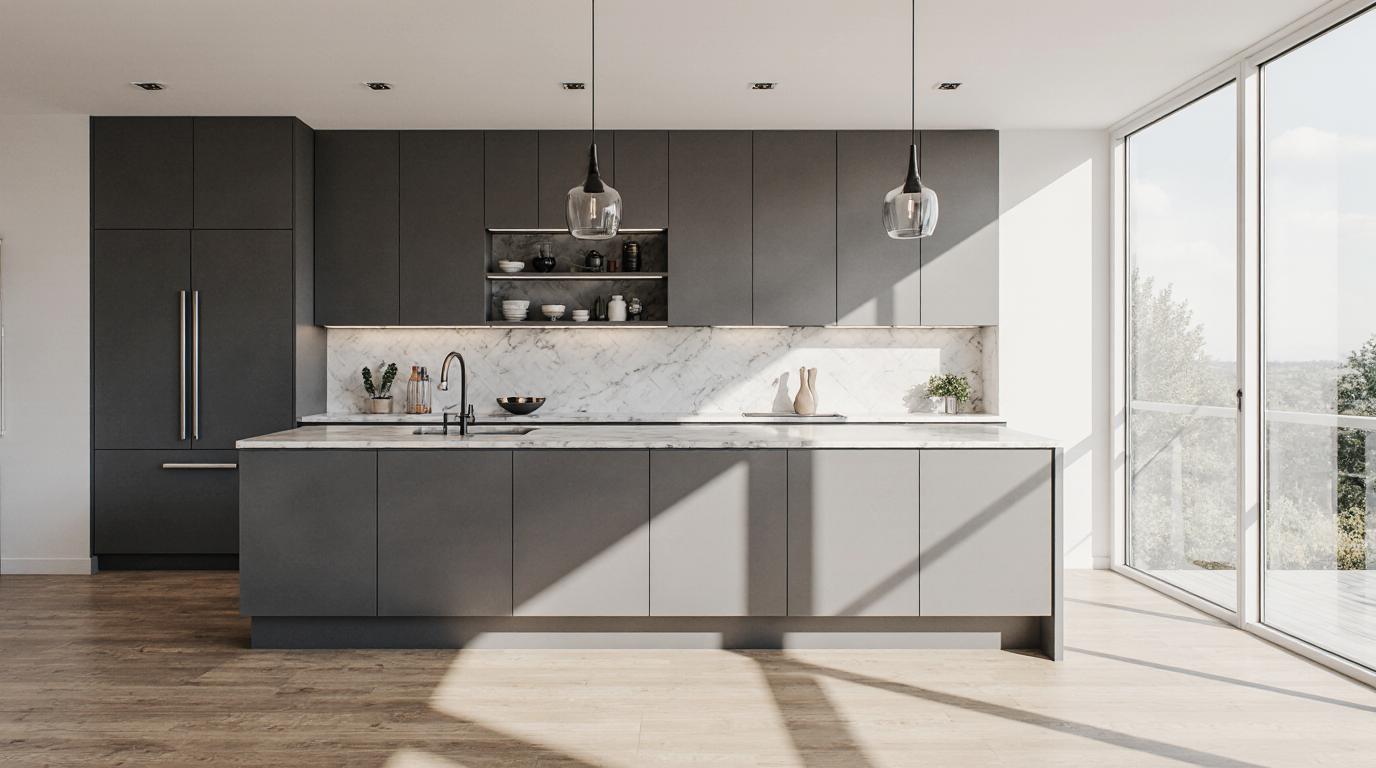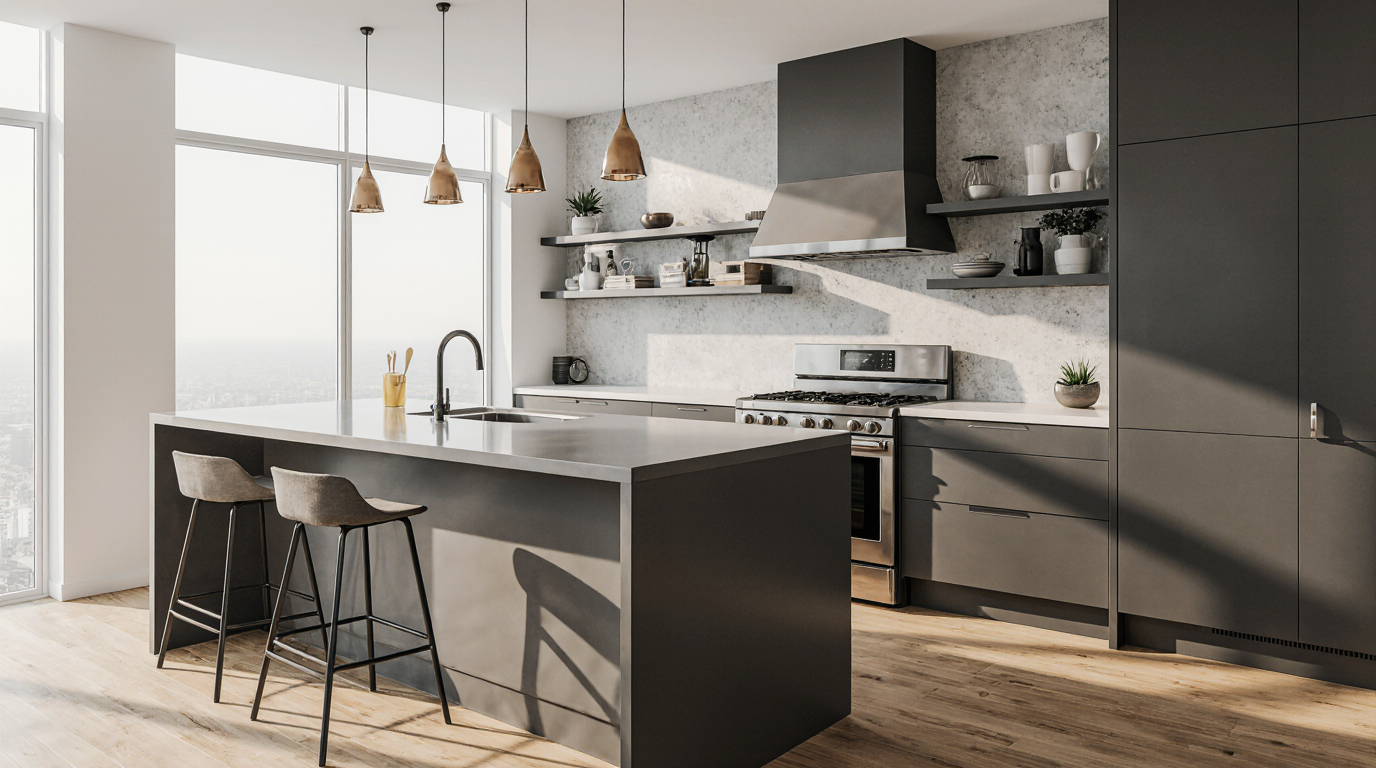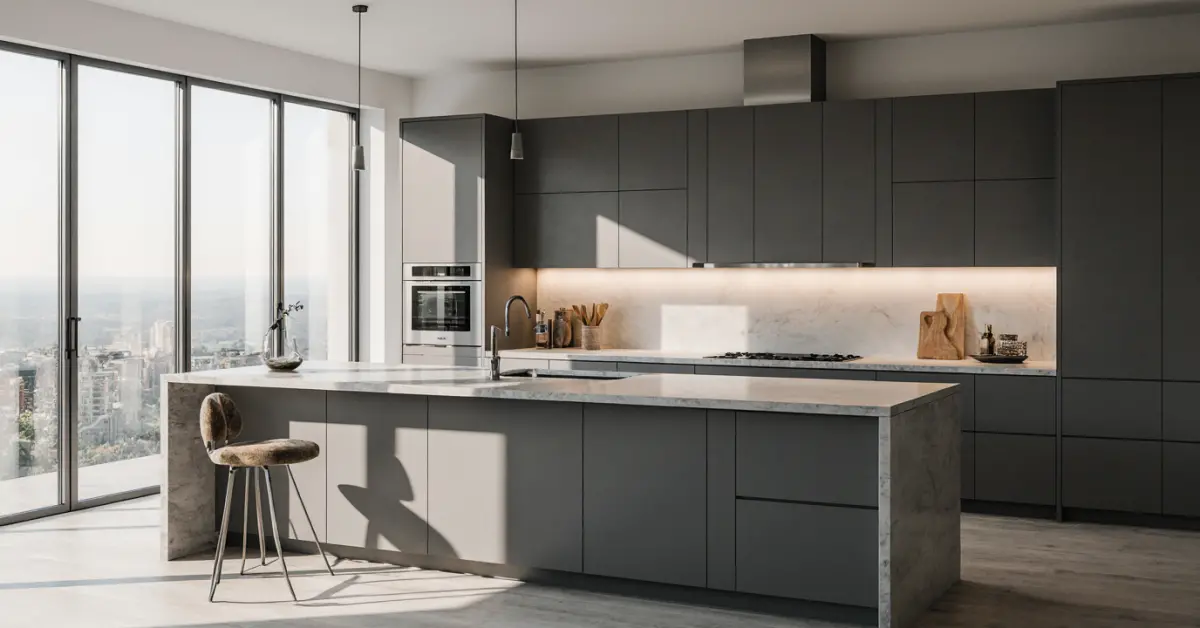
The biggest mistake in designing a modern grey kitchen in Sarasota has nothing to do with the shade of grey. It's focusing on the color before the core material's performance against humidity and UV light. I've seen stunning, high-end kitchens with imported high-gloss grey cabinets begin to delaminate or yellow in under five years simply because the specified product was engineered for a European climate, not the relentless sun and salt air of our barrier islands.
Executive Summary: A Climate-First Approach to Grey Kitchens in Sarasota
In my work across Sarasota, from luxury condos downtown to expansive homes in The Founders Club, I've established a
In my work across Sarasota, from luxury condos downtown to expansive homes in The Founders Club, I've established a clear principle: a successful modern grey kitchen is a feat of material science first and color theory second. The coastal environment dictates that durability cannot be an afterthought. The most critical decision is choosing a finish and substrate combination that is factory-sealed to resist moisture intrusion and formulated with UV inhibitors to prevent the color from shifting under intense sunlight.
- Material Stability: Prioritize marine-grade plywood for cabinet boxes in any home east of I-75 and consider it non-negotiable for properties on the keys.
- Finish Technology: High-gloss acrylics and catalyzed conversion varnishes offer superior resistance to fading and moisture compared to standard thermofoil or paint.
- Hardware Specification: All hardware, including hinges and drawer slides, must be stainless steel or have a corrosion-resistant coating to combat salt air.
- HOA Compliance: Design review in communities like Lakewood Ranch often involves palette restrictions; pre-approval of your specific grey swatch and finish is a mandatory first step.
The Planning Failures That Lead to Faded or Warped Cabinets
The most common planning failures I encounter stem from treating a Sarasota kitchen remodel like one in a less demanding climate. Clients fall in love with a look from a design magazine without questioning the materials' suitability for our specific environmental pressures. This oversight leads to predictable and costly problems down the road.
A frequent misstep is opting for standard MDF (Medium-Density Fiberboard) doors to achieve a perfect, seamless modern look. While stable in dry climates, standard MDF acts like a sponge in our humidity, even when painted. Micro-cracks in the finish allow moisture to penetrate, causing swelling, particularly around sinks and dishwashers. The repair is never a simple touch-up; it often requires complete door replacement.
The Most Expensive Failure: Underestimating UV Impact on Grey Tones
The costliest mistake is ignoring the power of the Florida sun. I consulted on a project in a Siesta Key condo where the homeowner had installed beautiful, light-grey painted modern shaker cabinets. The west-facing kitchen received direct afternoon sun. Within three years, the cabinets exposed to the light had a distinct yellow-green cast, while those in the shade retained their original color. This uneven fading created a two-toned kitchen, and the only solution was a complete, professional refinishing of all cabinetry, costing nearly 40% of the original cabinet budget.
The Process for a Durable Modern Kitchen in Practice
A project built to last in Sarasota follows a strict, climate-informed sequence. The process begins not with design, but with a thorough site assessment to understand humidity levels, sun exposure, and airflow. This information directly influences the material and finish recommendations that follow.
Once a material is selected—for example, a high-gloss acrylic slab door or a solid wood frame with a marine-grade plywood panel for a modern shaker style—we proceed to fabrication. Every component is sealed on all six sides before assembly. This is a critical step often skipped by lower-cost cabinet makers, but it's the single most effective defense against moisture-induced warping. Installation involves specialized techniques, like using corrosion-resistant fasteners and ensuring proper ventilation behind appliances.
Selection Criteria for a Sarasota Homeowner
- Warranty Against Fading and Delamination: Ask for specific warranty language covering color stability and adhesive failure due to heat or humidity. A standard limited lifetime warranty often has exclusions for environmental damage.
- Country of Origin and Climate Testing: Favor products from manufacturers based in, or with extensive testing in, hot and humid climates. European cabinets, while beautiful, are often not formulated for our conditions.
- HOA Documentation Package: Ensure the cabinet provider can supply the necessary samples, color codes (e.g., Sherwin-Williams SW 7064, Passive), and specification sheets required for submission to architectural review boards in communities like Palmer Ranch.
- Local Project Portfolio: Ask to see installations that are at least five years old in the Sarasota area, specifically near the water. This is the only true test of a product's long-term performance.
Comparing Grey Cabinet Finishes for a Coastal Environment
Choosing the right finish is a balance of aesthetics, budget, and resilience. The visual difference between a painted finish and a high-gloss acrylic may seem subtle at first, but their performance over a decade in a Sarasota home is dramatically different. Below is a practical comparison based on projects I've managed here.
| Finish Type | UV & Fade Resistance | Moisture Resistance | Typical Cost Index |
|---|---|---|---|
| High-Gloss Acrylic | Excellent | Excellent | 1.5x - 2.0x |
| Catalyzed Varnish (on wood/MDF) | Good to Very Good | Very Good | 1.2x - 1.6x |
| Standard Cabinet Paint | Fair to Good | Fair | 1.0x (Baseline) |
When a Fully Custom Grey Kitchen Isn't the Right Choice
There are situations where this level of investment is not the best path. For a rental property or a home you plan to sell within a few years, the premium for marine-grade construction and high-performance finishes may not provide a return. In these cases, a high-quality stock cabinet line with a durable thermofoil finish can offer a similar modern grey aesthetic at a lower price point, with the understanding that its lifespan will likely be shorter.
A Safe Hiring Checklist for Your Cabinet Project
Vetting a cabinet professional in our market requires looking beyond the showroom. A beautiful portfolio doesn't guarantee a grasp of the technical requirements for coastal construction. Use this checklist to ensure you're hiring a partner who understands the local challenges.
- Verify they carry General Liability and Workers' Compensation insurance specific to Florida.
- Confirm their experience with projects governed by Sarasota County building permits, including knowledge of local inspection processes.
- Ask for their specific protocol for sealing cabinet boxes and door components against humidity.
- Request a list of at least three local projects completed more than three years ago that are located on or near the water.
- Ensure the contract explicitly states the use of marine-grade plywood or moisture-resistant substrates if specified.
- Clarify their process for navigating HOA design review, including who is responsible for submitting documentation.
- Discuss their hardware sourcing and confirm that stainless steel or zinc-alloy corrosion-resistant options are standard.
The Decisions That Determine the Project's Longevity
After managing dozens of modern kitchen projects, I can pinpoint two decisions that separate a stunning, long-lasting kitchen from one that fails prematurely. The first is allocating budget priority to the unseen elements: the cabinet box material, the finish quality, and the hardware. It's tempting to spend on statement countertops or appliances, but if the cabinets underneath are failing, the entire investment is compromised.
The second is resisting the urge to value-engineer the finish. A client once switched from a specified catalyzed varnish to a standard paint to save about $3,000 on a large kitchen. Two years later, the cabinets around the stove and sink showed significant wear and moisture damage, requiring a costly on-site refinishing that far exceeded the initial savings.
The Exact Moment the Majority Gets It Wrong
The critical error happens right at the beginning. Most homeowners start by collecting color chips and focusing on the exact shade of grey. They spend weeks debating between a warm greige and a cool slate. The correct starting point is to request material samples, not color samples. You should be comparing a sample of high-gloss acrylic to a lacquered MDF door and a painted modern wood cabinet door. Feel them, expose them to sunlight, and even leave a drop of water on them. Choose the technology first, then select your perfect grey from within that technology's available palette.
Practical Answers for Operations in Sarasota
Navigating the local logistics of a kitchen remodel can be complex. The rules set by the city, county, and individual community associations directly impact your project's timeline and cost. Here are answers to common operational hurdles.
How HOA Reviews in Lakewood Ranch Impact Cabinet Choices
In master-planned communities like Lakewood Ranch, the Homeowners Association (HOA) Architectural Review Committee has significant authority. For a kitchen visible from exterior windows, they may have regulations on colors. Even for interior-only projects, any work involving plumbing or electrical changes requires a submission. Expect a 30- to 60-day review period. Submitting a vague "modern grey cabinets" proposal will be rejected; you must provide the exact material sample, finish type, and manufacturer spec sheet for approval before ordering any materials.
Florida Building Code and Cabinet Installation in Coastal Homes
While the Florida Building Code doesn't dictate cabinet aesthetics, it does have implications for installation, especially in new builds or major renovations in high-wind zones (common for waterfront properties on Bird Key or Longboat Key). The code requires secure anchoring of all building components. This means your installer must use appropriate fasteners and techniques to ensure upper cabinets are securely attached to the wall framing to prevent them from detaching during a major storm event. This is a life-safety issue, not just a design choice.
Navigating Permitting with Sarasota County
If your kitchen remodel involves moving walls, altering plumbing, or changing electrical layouts, a permit from Sarasota County is required. A simple cabinet replacement (a "pull and replace") typically does not. The permit process adds time and cost. As of recently, a standard interior remodel permit application can take 4-8 weeks for review. Factoring this into your timeline is essential, especially for seasonal residents who have a fixed window for construction work to be completed.