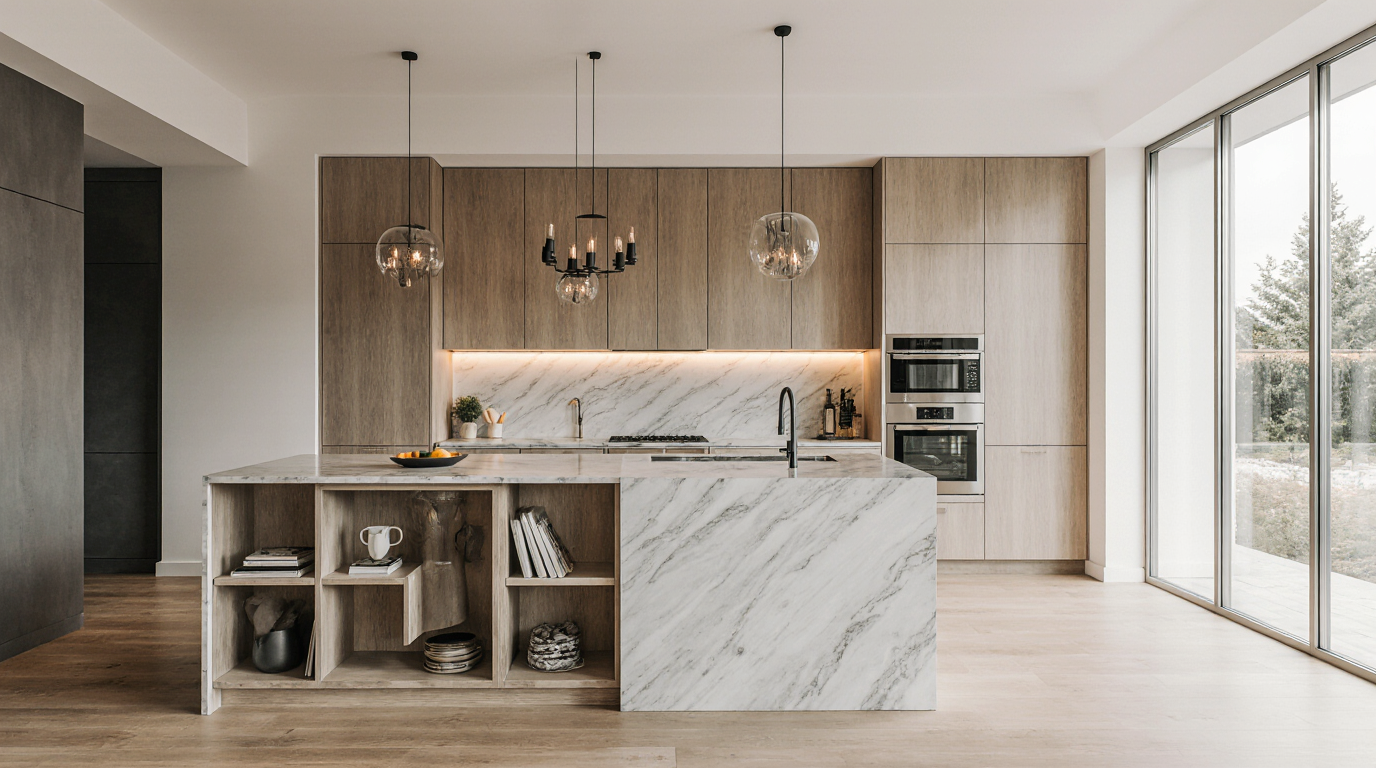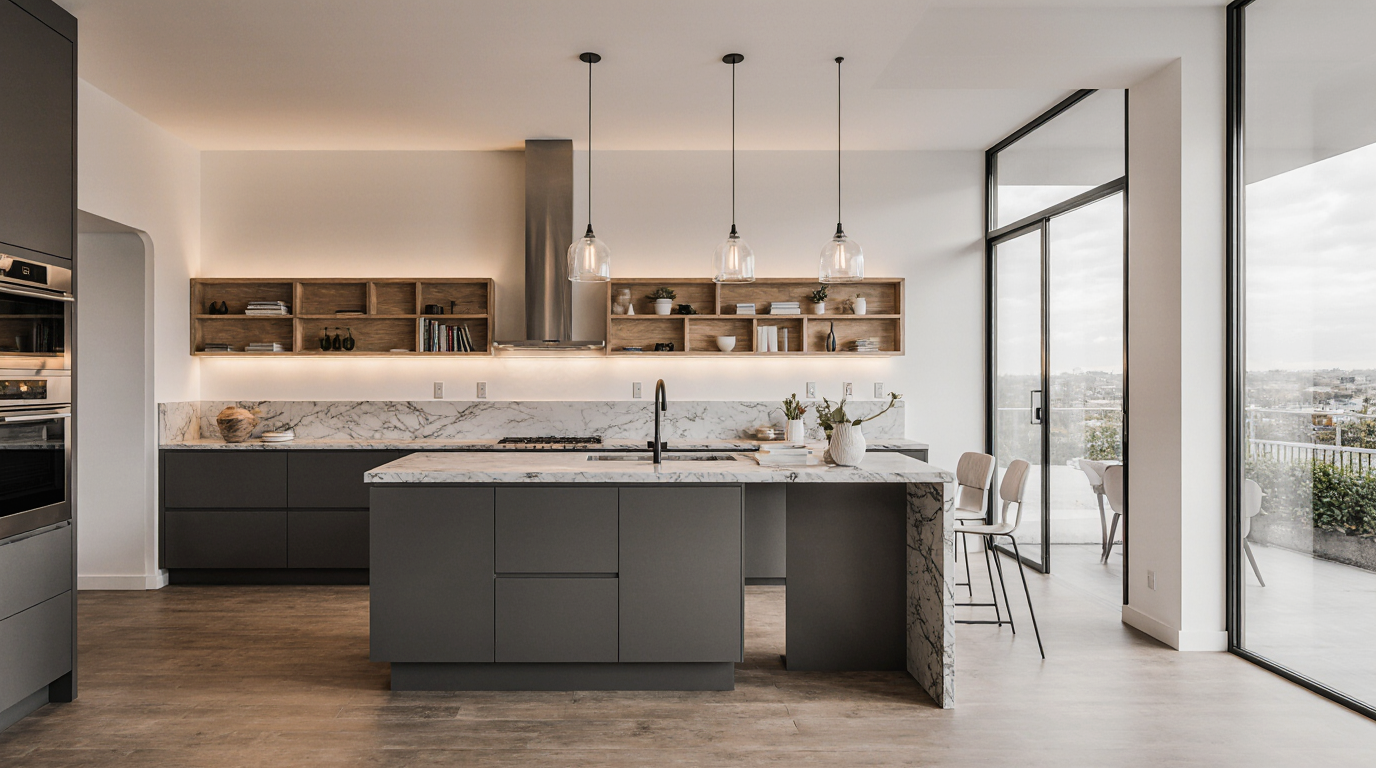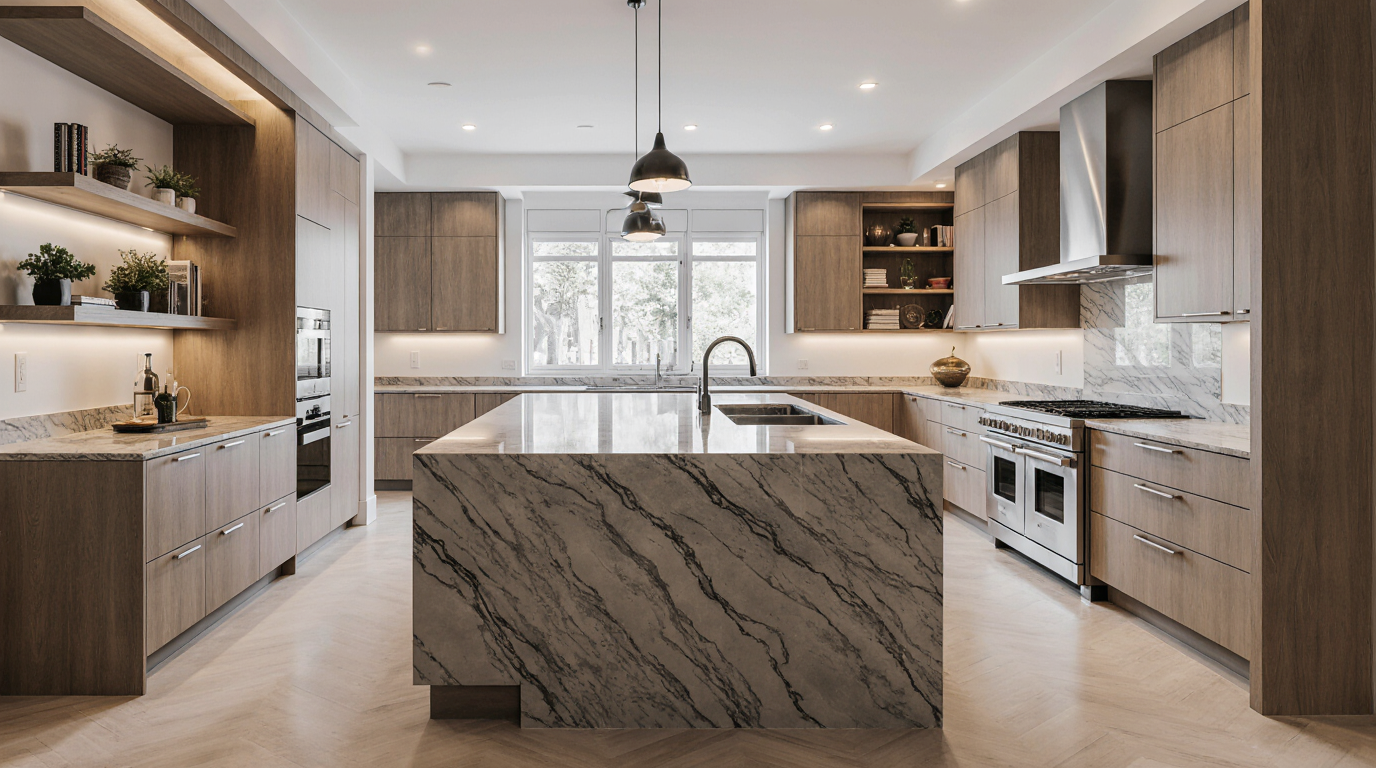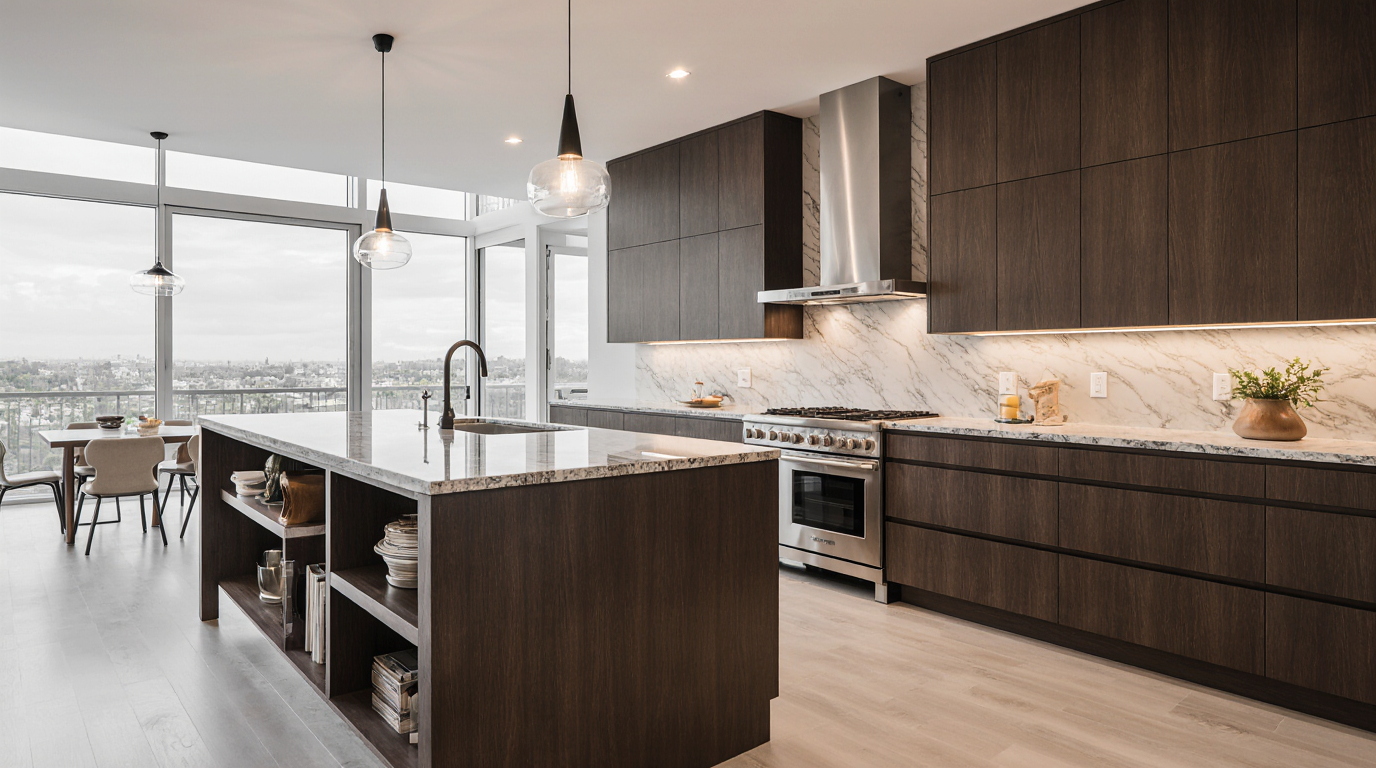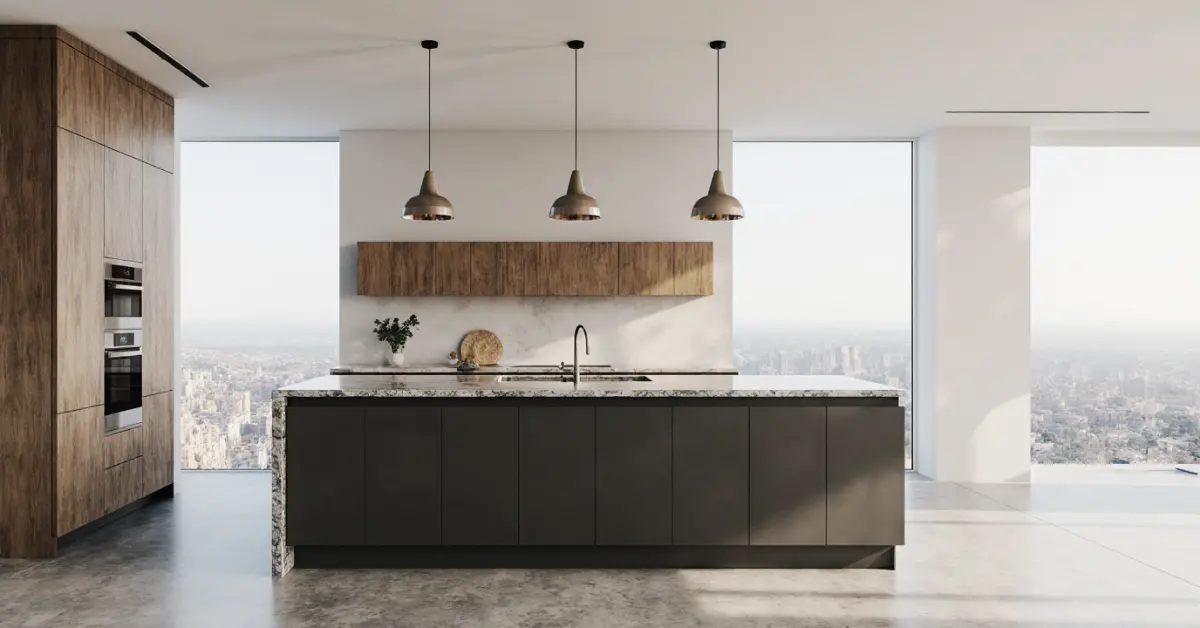
The most critical decision in designing a luxury modern kitchen in Sarasota isn't selecting the Calacatta marble or the Gaggenau appliances. It's understanding that the specifications for a waterfront home on Siesta Key must fundamentally differ from those for a new build in Lakewood Ranch, even if the aesthetic is identical. Ignoring this is the primary reason I see stunning, six-figure kitchens show signs of failure within three to five years.
Executive Summary: Achieving a Resilient Modern Kitchen in Sarasota
From my direct experience executing high-end projects here, a successful luxury modern kitchen in Sarasota hinges on
From my direct experience executing high-end projects here, a successful luxury modern kitchen in Sarasota hinges on material science and climate-specific engineering, not just aesthetics. The pervasive humidity and salt air are not minor considerations; they are the central design constraints. True luxury is not just how a kitchen looks on day one, but how it performs against warping, corrosion, and delamination by year five. The focus must be on technical specifications that look effortless but are engineered for this exact coastal environment.
- Material Specification: Prioritize marine-grade substrates (not just standard MDF), corrosion-resistant hardware (316 stainless steel), and finishes with high UV resistance.
- Ventilation Strategy: Integrate high-CFM, externally vented range hoods and consider whole-home dehumidification systems to manage ambient moisture, which is the primary enemy of modern cabinetry.
- Code & HOA Compliance: Factor in a minimum of 60-90 days for HOA design review board approvals in communities like The Concession or Lakewood Ranch, and ensure all structural elements meet the Florida Building Code's High-Velocity Hurricane Zone (HVHZ) requirements where applicable.
- Long-Term Performance: Acknowledge that the seamless, handleless look of European modernism is unforgiving; any material movement due to humidity becomes immediately visible and compromises the entire design.
The Planning Failures That Compromise Sarasota Kitchens
The most common missteps I encounter happen long before construction. They are rooted in applying design principles that work perfectly in drier, less demanding climates but fail spectacularly here. A client sees a stunning kitchen in a magazine based in New York or Los Angeles and wants to replicate it, not realizing the material choices are a recipe for disaster in Florida's humidity.
Another frequent error is underestimating the approval labyrinth. Clients often finalize material orders before securing HOA approval, only to find their chosen exterior vent location or window modification is denied by the architectural review committee. This forces costly re-orders and can easily add months to the project timeline, a critical issue for seasonal residents.
The Most Expensive Failure: Ignoring Substrate Composition
The costliest mistake I’ve seen, time and again, is focusing on the surface finish while ignoring the cabinet box and door core. A client will invest heavily in a flawless, high-gloss acrylic or Fenix NTM finish, but it's bonded to a standard-grade medium-density fiberboard (MDF). Within a few Sarasota summers, I’ve been called to projects where humidity has caused the substrate to swell, creating visible telegraphing and delamination at the edges. The fix is not a repair; it’s a complete replacement of all door and drawer fronts, a devastating and entirely avoidable expense.
The Process for a High-Performance Modern Kitchen
A properly executed project follows a strict sequence prioritizing technical validation over aesthetic selection. The process is not about picking colors first; it's about engineering a system that can handle the local environment. We build the technical "envelope" of the kitchen before filling in the design details.
It starts with a site assessment that includes humidity readings and an evaluation of the home's existing HVAC and ventilation. From there, we develop a material palette that is pre-vetted for Sarasota's climate. Only after the core materials and engineering are defined do we move into layout, appliance selection, and final finishes. This reverses the typical design process but is essential for longevity here.
Material and Vendor Selection Criteria for Sarasota
- Substrate Verification: Insist on samples of the core material, not just the finish. Ask for technical data sheets specifying marine-grade plywood or high-density, moisture-resistant board. A standard answer of “furniture board” is a red flag.
- Hardware Specification: All functional hardware, including hinges and drawer slides, must be specified with a corrosion-resistant finish. Brands like Blum and Grass offer options, but you must explicitly request them. Standard zinc-plated steel will show rust spots.
- Fabricator Location and Acclimatization: Using a local or regional fabricator is a distinct advantage. Their materials are already acclimatized to the ambient humidity, reducing the risk of expansion or contraction after installation.
- HOA Submission Package Experience: The designer or builder must have a proven track record of creating successful submission packages for Sarasota's major HOAs. Ask to see examples of drawings they've had approved in communities like Longboat Key Club or Prestancia.
Comparing Modern Cabinetry Systems vs. Alternatives
For a true luxury modern aesthetic, imported European systems or high-end custom fabrications are the primary choices. However, semi-custom lines are often presented as a cost-effective alternative. The table below outlines the critical differences in the context of a Sarasota home.
| Feature | Custom/European Systems | Semi-Custom Cabinetry | Stock Cabinetry |
|---|---|---|---|
| Core Material Options | Marine-grade plywood, moisture-resistant HDF, aluminum frames available. Full control. | Limited to manufacturer's standard offerings; often particleboard or standard MDF. | Almost exclusively standard-grade particleboard with thin melamine or foil. |
| Humidity/Salt Resistance | High, when specified correctly with appropriate materials and hardware. | Moderate to low. Finishes and hardware are not typically designed for coastal conditions. | Very low. Prone to rapid swelling, delamination, and corrosion. Unsuitable for this market. |
| Design Flexibility | Virtually unlimited. Precise integration with appliances and architecture is possible. | Limited to standard cabinet sizes and available modifications. Can create layout compromises. | Extremely limited. Design is dictated by available box sizes, not project needs. |
| Typical Lead Time | 12-24 weeks, plus shipping for European brands. | 6-12 weeks. | 1-3 weeks. |
When a Full Custom Approach Is Not the Right Choice
Despite its advantages, a full custom or high-end European system is not always the best fit. If your timeline is extremely tight (under four months) or if the property is intended as a short-term investment or rental, the significant upfront cost and long lead time may not provide a suitable return. In these specific cases, a high-quality semi-custom line with the best available moisture-resistant options can be a pragmatic compromise, provided you accept a shorter functional lifespan.
A Safe Hiring Checklist for Your Sarasota Project
Verifying a design firm or builder's capability for a luxury modern project in this climate goes beyond looking at a portfolio of pretty pictures. The questions you ask should be technical and specific to our environment.
- Confirm their liability and workers' compensation insurance is active and sufficient for the project's value.
- Ask for at least two local references for modern kitchen projects completed more than three years ago, and ask those references specifically about material performance.
- Request a detailed explanation of their strategy for moisture mitigation and ventilation within the kitchen design.
- Verify their familiarity with the permitting process through the Sarasota County Construction Services portal and typical inspection sequences.
- Ask how they handle material acclimatization on-site before installation begins.
- Inquire about their standard warranty and what it covers regarding material failure due to humidity or climate conditions.
- If on a barrier island, confirm they understand the specific Florida Building Code requirements for coastal construction and anchoring.
Decisions That Determine the Final Outcome
The success of a luxury modern kitchen in Sarasota is ultimately determined by a series of choices that prioritize performance over pure aesthetics in the early stages. I’ve seen that the clients who have the best outcomes are those who embrace the technical constraints of our climate as part of the design challenge, rather than fighting against them.
One of the most impactful decisions is committing to a comprehensive ventilation plan. This isn't just about a powerful range hood; it’s about creating airflow and managing ambient humidity. This might mean integrating the kitchen renovation with an HVAC upgrade or a whole-house dehumidifier. It's an added expense, but it acts as an insurance policy for the six-figure investment in cabinetry.
The Exact Moment the Majority Gets It Wrong
The critical error usually happens at the very beginning, during the initial design consultation. The conversation becomes centered entirely on the visual—the door style, the color, the countertop. The most important first question is not 'What do you want it to look like?' but 'Where is the project located and what is the home's air-handling capability?' By shifting the initial conversation to the technical foundation, we prevent clients from falling in love with a design concept that is climatically inappropriate and destined for failure.
Practical Answers About Operations in Sarasota
Navigating the local administrative landscape is just as important as the design itself. Delays and budget overruns are often born from a misunderstanding of these non-design-related hurdles.
Navigating Lakewood Ranch Design Review
For any significant kitchen remodel in a community like Lakewood Ranch, the Design Review Committee (DRC) approval is a mandatory first step. Their review goes beyond aesthetics. If you are moving walls, changing window sizes, or altering exterior vent locations for a range hood, you will need to submit a full architectural plan. A typical review cycle can take 30-45 days, and that's if the submission is perfect. An incomplete package can reset the clock, making professional guidance essential.
Understanding Florida Product Approval for Windows and Doors
If your kitchen design involves replacing a window or a sliding glass door, the new unit must have a Florida Product Approval number and meet the specific wind-load requirements for your exact location in Sarasota County. This is not optional. Using a non-approved product will cause the project to fail inspection, halting all work. This can have a cascading effect on cabinet installation and countertop templating, creating significant delays.
Permitting for Kitchen Remodels in the City of Sarasota
A full kitchen gut renovation in the City of Sarasota requires a building permit. This process involves submitting plans that detail any structural, electrical, and plumbing changes. As of recent fee schedules, plan review fees and associated permit costs can run into the hundreds or even low thousands of dollars. The timeline from submission to permit issuance is typically 3-6 weeks, a period that must be factored into the overall project schedule before any demolition begins.