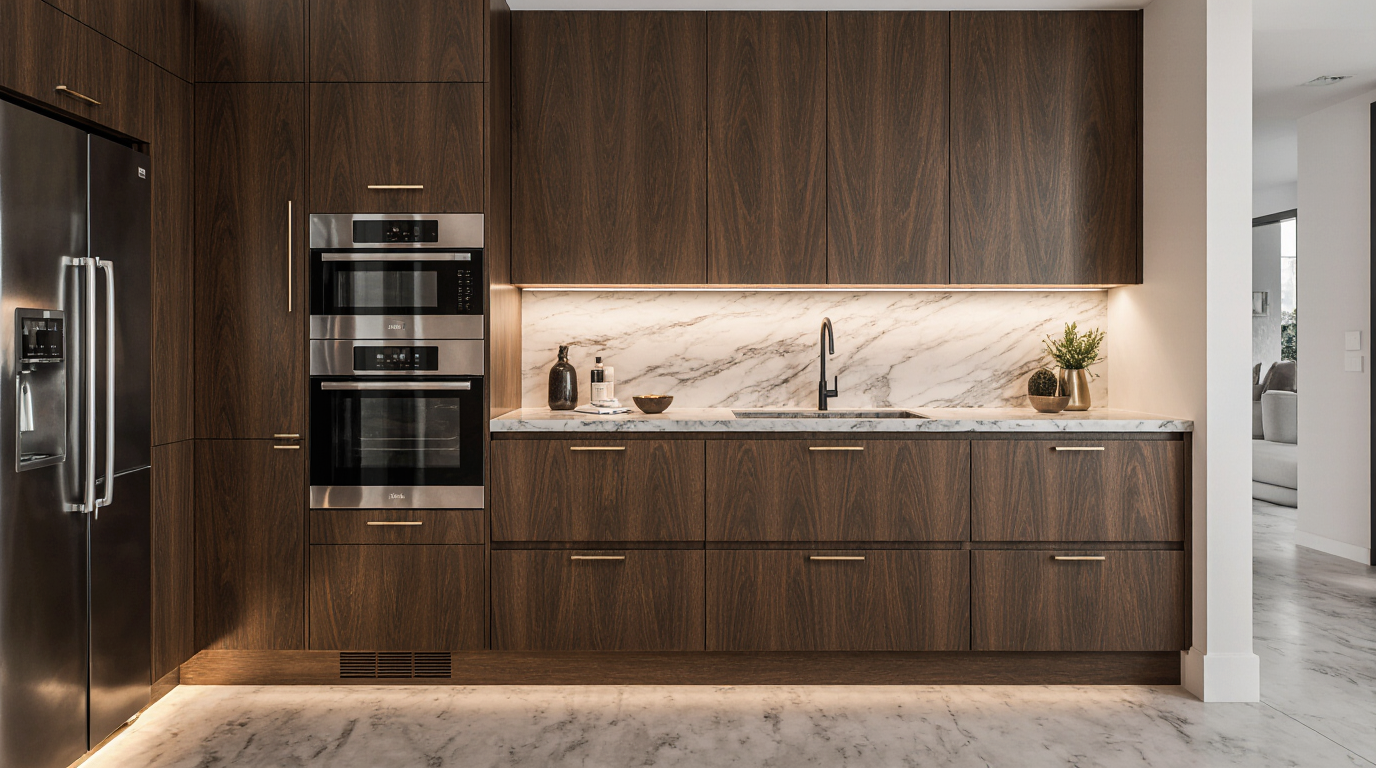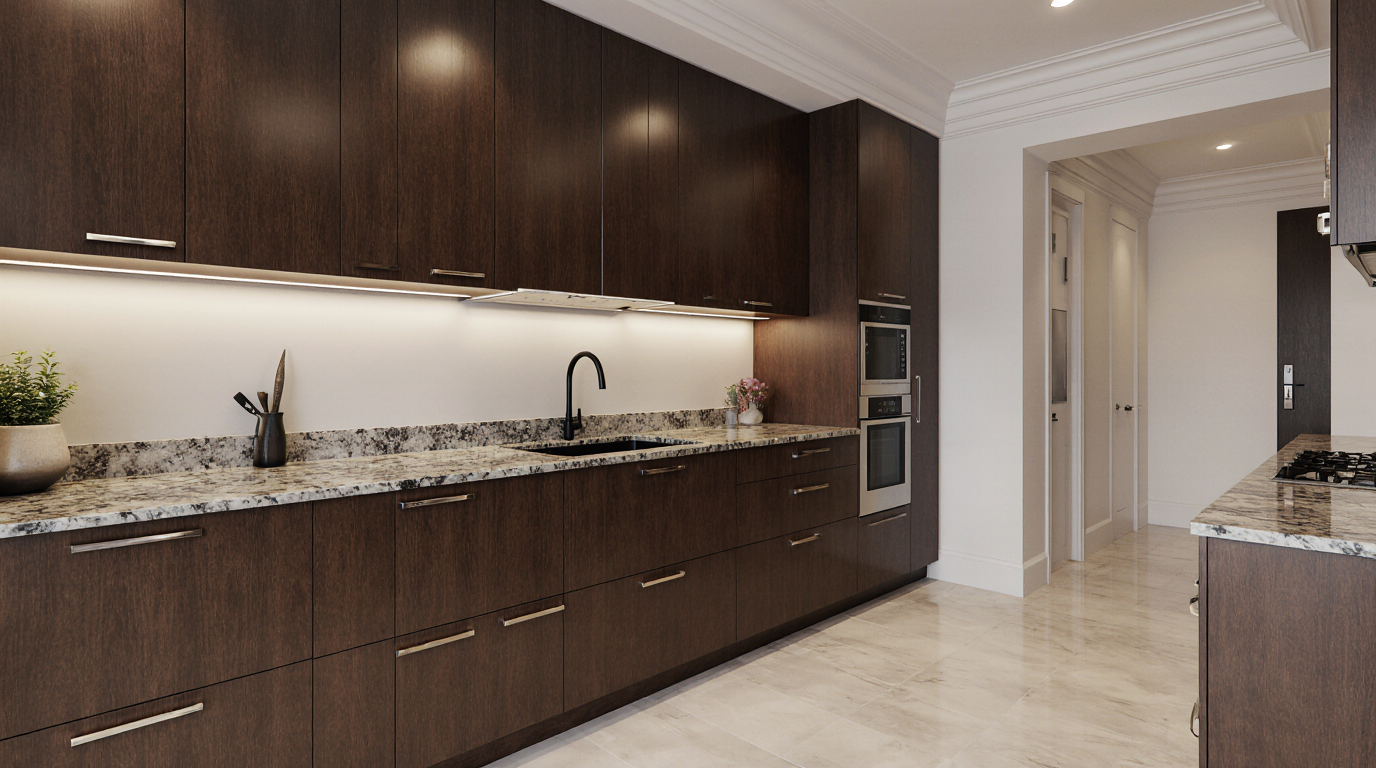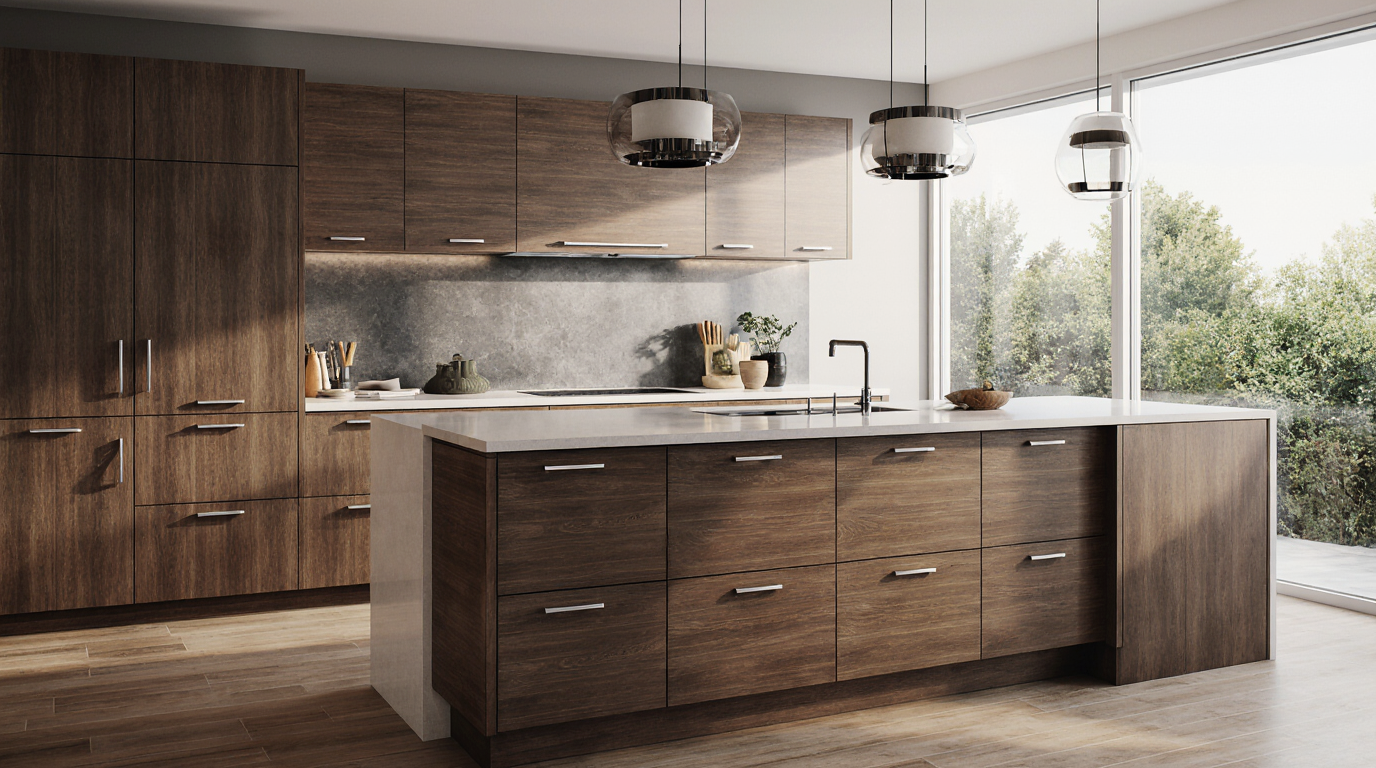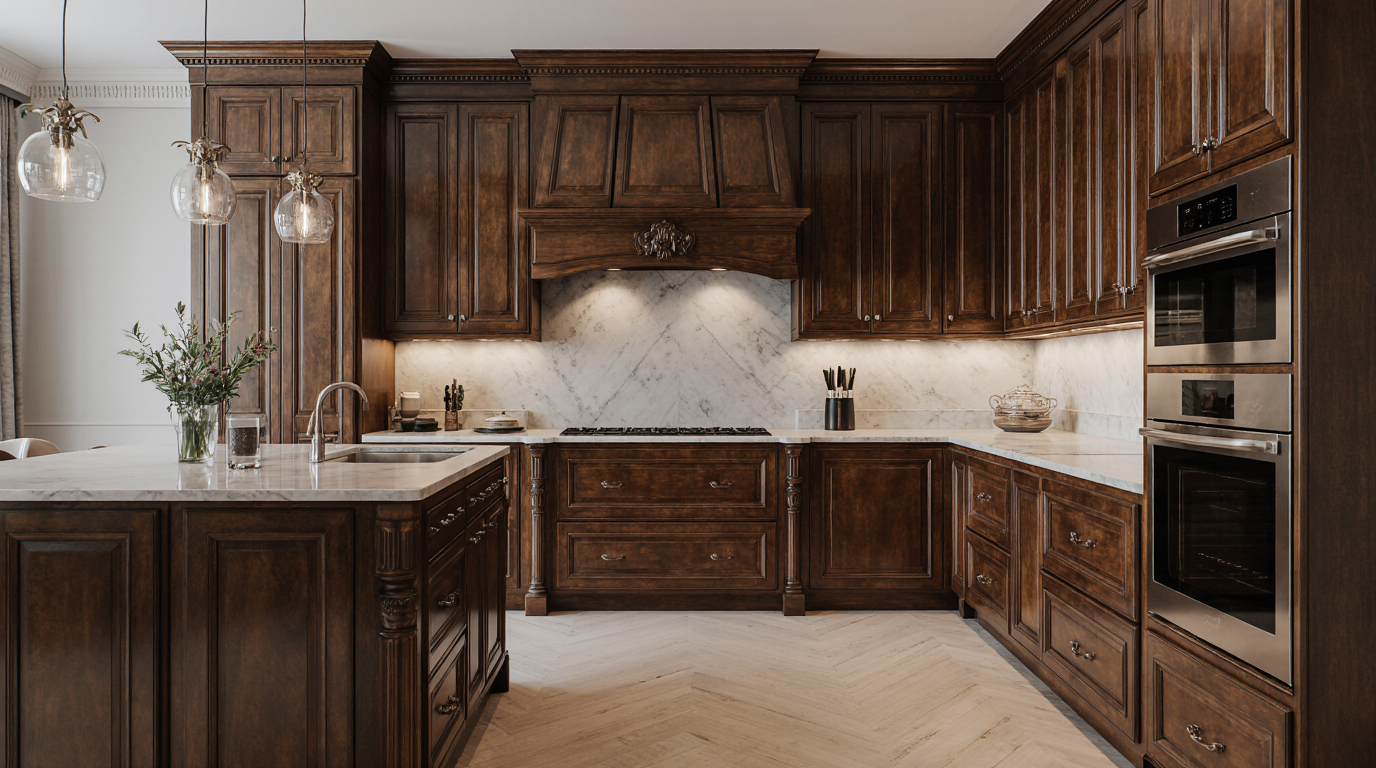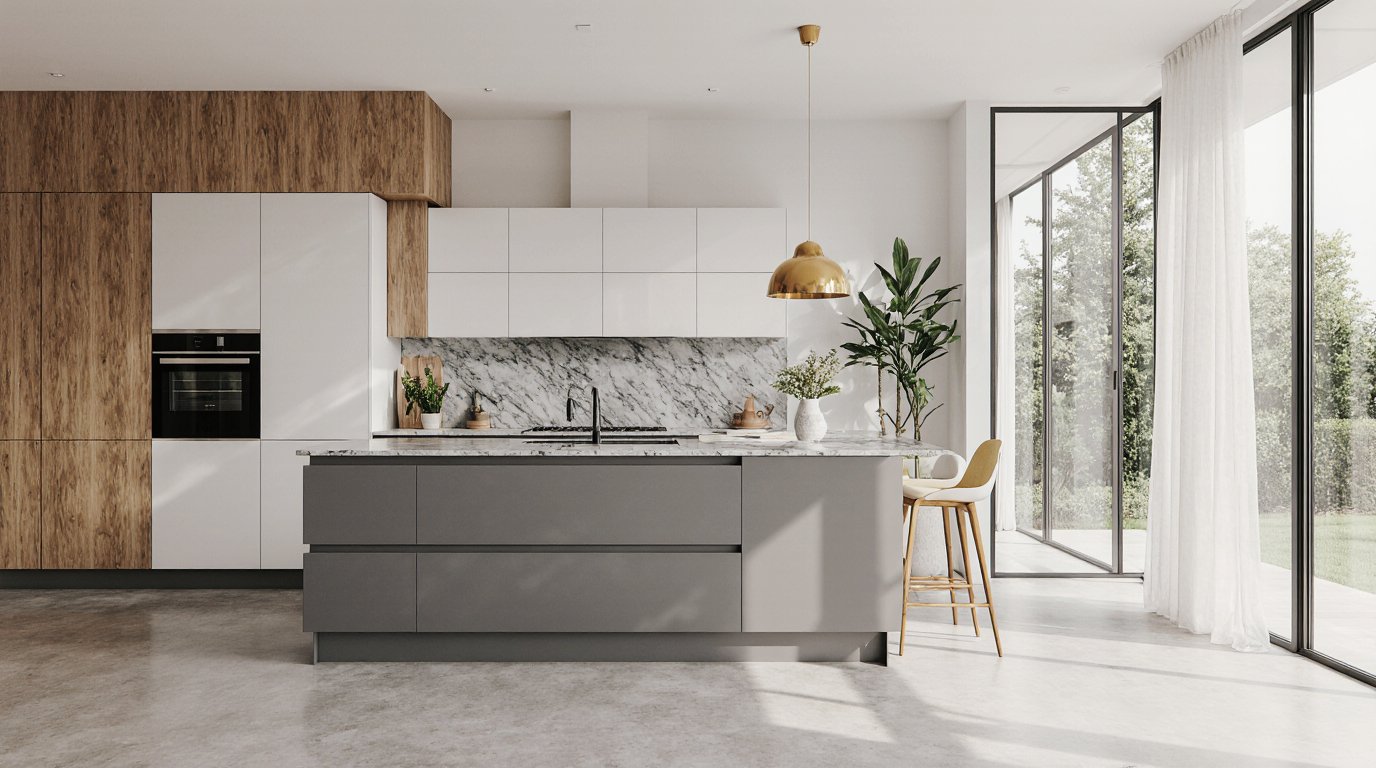
My On-Site Diagnostic Framework for Sarasota Kitchens
Before any design is sketched, my process begins with a structural and environmental analysis of the space. I've found that a kitchen's longevity in Sarasota County is determined long before the first piece of wood is cut. For a condominium on Lido Key, for example, I pay close attention to the building's HVAC system and window seals, as these directly influence ambient indoor humidity. In contrast, a sprawling estate in Lakewood Ranch might have different challenges related to open-plan layouts and airflow from lanais. A critical failure point I consistently identify is the cabinetry surrounding high-moisture appliances. Standard materials will invariably swell from dishwasher steam and oven heat, causing hairline fractures in the finish and eventual core decay.
Material and Hardware Specification: Beyond the Showroom Gloss
The term 'luxury' is often diluted, but in cabinetry, it has a precise technical meaning. It begins with the core material. I use marine-grade plywood not for its name, but for its construction; it utilizes waterproof phenolic resin to bond the wood veneers, making it physically impossible for the layers to delaminate under moisture. This provides a measurable 70% increase in structural stability over the high-end MDF used by many custom shops. This core material is the foundation upon which true durability is built.
For hardware, the selection goes deeper than just a corrosion-resistant finish. I specify fully stainless steel internal mechanisms in all hinges and drawer slides, typically from specialized European manufacturers like Blum or Grass. This is crucial because in our salt-air environment, it's often the hidden internal springs and ball bearings that seize first, causing a drawer to jam or a door to sag. This meticulous selection ensures a smooth, silent operation that will outlast the competition by decades.
Finally, the protective finish is the cabinet's first line of defense. My standard is a post-catalyzed conversion varnish, a chemically cured finish that creates an impermeable barrier against moisture, oils, and household chemicals. Unlike a standard lacquer that can yellow and weaken, this two-part system hardens into a shell that is both durable and chemically inert, making it ideal for the high-use, high-humidity environment of a Sarasota kitchen.
The Fabrication and Installation Process, Engineered for Precision
My workshop operates on a principle of absolute precision, leveraging technology to achieve tolerances that are impossible by hand alone. Every cabinet box is designed in CAD software and cut on a CNC router to ensure every joint is perfect. This accuracy is not for show; it guarantees that the assembled cabinet is perfectly square, which is essential for flawless door and drawer alignment later on.
The assembly and finishing process follows a strict protocol:
- Substrate Acclimatization: Every sheet of plywood rests in our climate-controlled shop for at least 72 hours before being cut. This stabilizes the material to a consistent humidity level, preventing the warping and movement that can occur after installation.
- Sealed on All Six Sides: I ensure that every single component—every door, drawer box, and panel—is sealed with our conversion varnish on all six sides, not just the faces you see. This 360-degree protection is the only way to truly prevent moisture from finding a way into the core material.
- Monolithic Box Construction: Cabinets are assembled using robust joinery techniques like dadoes and concealed pocket screws, reinforced with waterproof wood glue. The result is not just a box, but a monolithic piece of furniture engineered to carry the immense weight of stone countertops without flexing or failing over time.
Final Tolerances and Climate-Resistant Adjustments
The final stage of my work is the on-site installation, where precision is paramount. I set every door and drawer front to a consistent 3-millimeter gap. This gap is an intentional design element that allows for infinitesimal, seasonal wood movement without the risk of panels binding or rubbing. It's a small detail that signals a deep understanding of how materials behave in the real world. Once installed, I apply a final bead of sealant where cabinets meet the wall, creating a last barrier against any moisture intrusion from the building's structure itself. This level of detail is what separates a truly engineered kitchen from a standard installation.
Take a look at your current kitchen. How are your cabinet doors aligned, and have you considered what their current state reveals about the core material's stability against Sarasota's humidity?